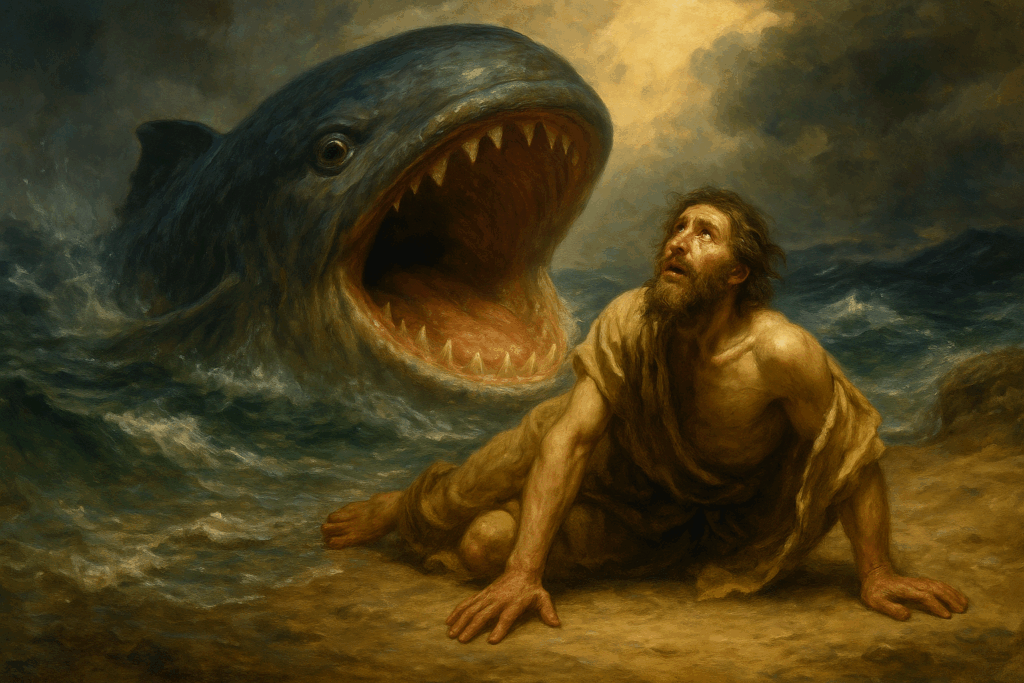
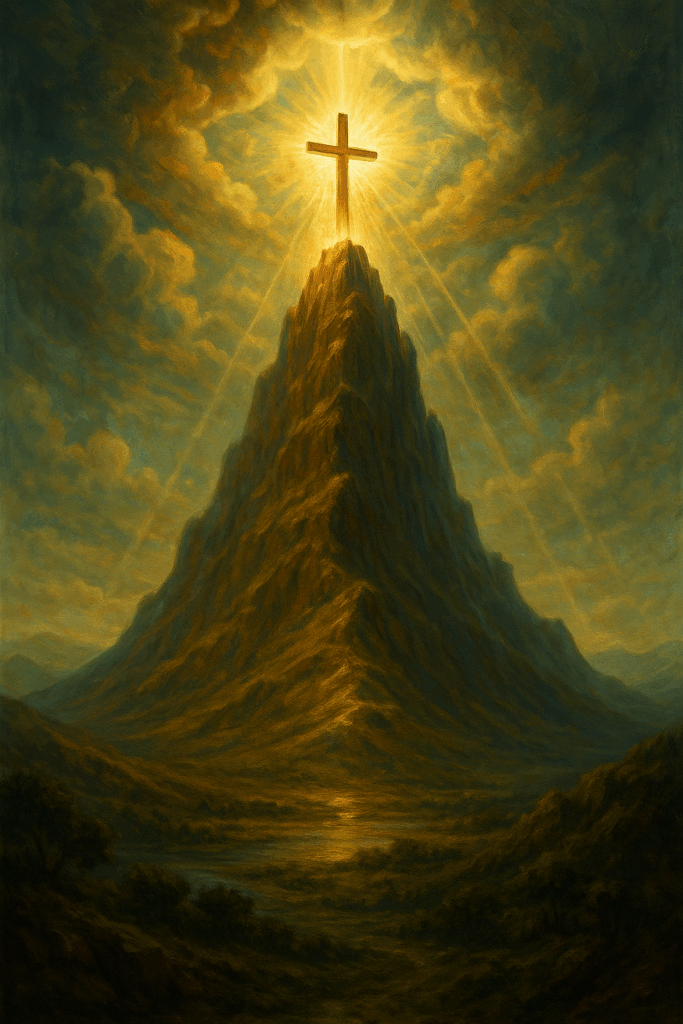
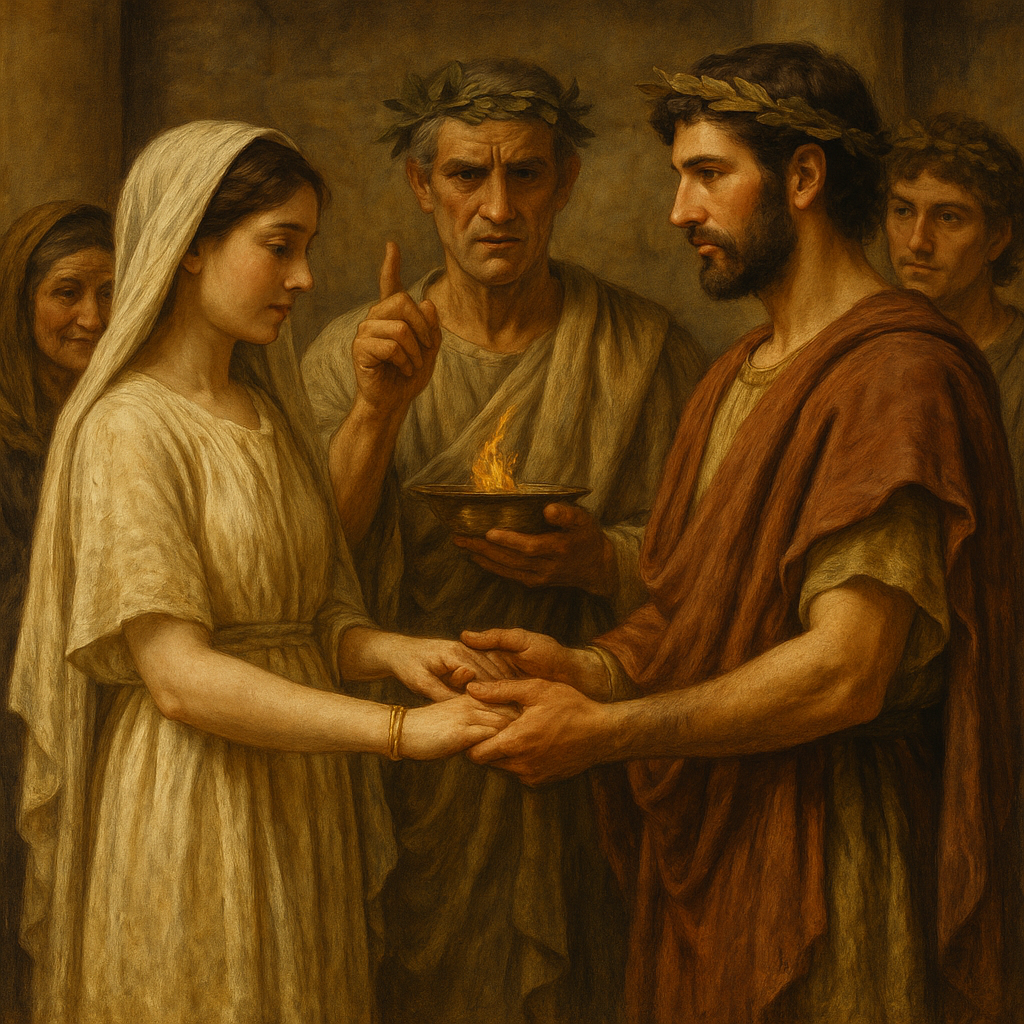
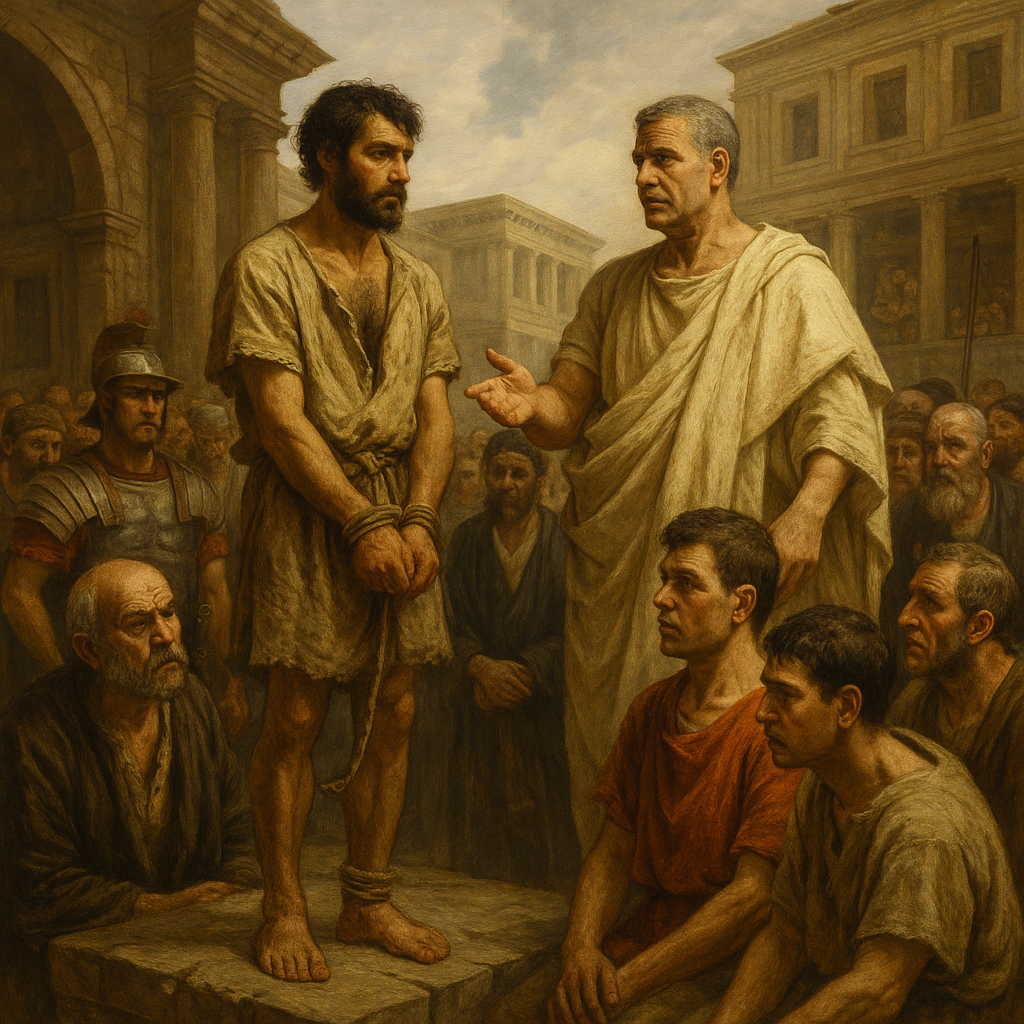
The story of Jonah, read on Yom Kippur, is more than a tale about a reluctant prophet. It is a mirror held up to Israel, especially the northern tribes who tasted the brutality of Assyria. Imagine how deep their resentment: this nation that had uprooted them, scattered them, and desecrated their land was now being invited into covenant mercy. Like Israel, Jonah flees God’s call to be a light to the nations and instead runs from the presence of Adonai.
The book traces Israel’s story in miniature. Jonah offers himself: “Pick me up and throw me into the sea,” surrendering to judgment as Israel once did when exiled. The sea, the ancient symbol of chaos engulfs him. Reeds wrap his head as if crowning him with his own rebellion. He descends to She’ol and like David, he cries from the pit, “I have been banished from before your eyes, yet I will look again toward your holy temple.” Even in exile, Israel’s longing is for the Holy Temple.
The fish that swallows Jonah is not some kind of marine monster as we understand Jonah and the whale story. In the ancient imagination, it is a chaos-creature represented by Assyria. Jonah inside the fish is Israel inside exile—swallowed by the power it despises. Yet from within, he prays. Adonai speaks to the fish, and it vomits him onto dry land representing stability, fertility, security. It is a rebirth, a chance to fulfill the mission he had fled.
Jonah preaches a forty-day warning. The people of Nineveh fast, don sackcloth, and even the king humbles himself, removing his robe like an ANE enthronement ritual: humiliation before exaltation. But Jonah seethes. Like Israel watching its oppressor repent, he resents God’s mercy: “I knew you are gracious and compassionate, slow to anger” (Exod. 34). Under his sukkah, he broods as God exposes his heart.
Jonah stands as Israel’s mirror and really our own mirror: chosen to bring light to the nations but resisting that call. The message of Jonah and the whale reminds us that God’s covenant purpose is much larger and His mercy extends even to those we would rather see judged. His grace reaches much further than even we can imagine. That’s our reminder this Sukkot…it’s the Festival of the Nations—all nations—a call to join God’s covenant.
Toledot, this week’s Torah portion, is the story of birthings—movements from disorder into new creation. While often translated as genealogy, history, or account, the word goes much deeper: it means to bring forth children, to beget, to travail. It is the language of covenant and creation, of life produced when two realities meant to be one finally join together.
The first toledot in Scripture is not human at all. It is cosmic: “These are the toledot of the heavens and the earth…” (Gen. 2:4). At first glance this seems odd. How can heaven and earth give birth? But the text is hinting at a profound unity—almost a marriage—between God’s realm and humanity’s realm. What their union produces is creation itself.
Heaven, God’s domain, and earth, humanity’s domain, are meant to function as one integrated space. That has always been the goal of the biblical story: heaven and earth reunited so that the “sons of God” can be birthed—the ones who inherit and steward creation toward its intended flourishing. Two spaces brought together in unity, producing a people who bear God’s image and bear His authority.
Sacred Marriage
Creation is presented as a marriage, a sacred joining, where God’s space touches ours and life emerges in harmony. And Scripture keeps telling this story over and over again: heaven and earth were designed to be partners, destined for full union, destined to dwell together as they once did in Eden.
Revelation completes the loop with the same theme: a new heaven and a new earth, no longer two realms, but one restored marriage. What began in Genesis as creation ends in Revelation as new creation—the full maturity of God’s project. And between these two bookends lies the struggle: a fractured world, a divided cosmos, two kingdoms at war—Yahweh and the serpent, order and chaos, covenant and anti-covenant. Nowhere is this conflict more clearly seen than in the Torah portion Toledot, with the tension between Esav and Jacob.
Isaac and Rebekah
This is where Isaac and Rebekah enter the story. We expect toledot to begin with Isaac and a list of his children, but the text surprises us: “Abraham begot (yalad) Isaac.” Isaac is sixty when Rebekah bears the twins, and forty when he marries her. The sequence reminds us that Isaac can bring forth life only because Abraham first brought forth him. Covenant flows forward through sons; the story continues because someone was born.
But Rebekah, like the matriarchs before and after her, is barren. Barrenness in Scripture is never just biological. It is symbolic of primordial chaos—the unformed, unproductive void before God speaks in Genesis 1. A barren woman embodies the de-created world. So when God opens her womb, He is not simply providing a child; He is enacting new creation. This is why the births of Isaac, Jacob, Joseph, Samson, Samuel, and John the Immerser all come through barren women. Every one is a living signpost pointing toward the ultimate new creation: the birth of the Son of God, the true heir, the new Adam.
Rebekah conceives, but the struggle is far from over. In fact, it is just beginning. The Hebrew word used for the twins “struggling” means to crush, be crushed, or oppress. What is happening inside her womb mirrors the cosmic conflict outside it.
Two Kingdoms in Conflict
Two nations. Two kingdoms. Two destinies locked in prenatal combat. “Two goyim are in your womb…” Not merely sons but nations, peoples, worlds, futures. “Two peoples shall be separated…” The word means to divide by breaking apart.
Then the great reversal: “The many, the great, will serve the little, the small, the insignificant.” The unlikely heir becomes the true ruler. The younger becomes the leader.
This is the kingdom pattern from beginning to end—Micah’s ruler born in tiny and insignificant Bethlehem, Isaiah’s “least becoming a thousand,” Yeshua choosing fishermen instead of princes. This is the toledot pattern: God bringing forth what the world does not expect. “But you, Bethlehem Ephrathah, though you are little among the thousands of Judah, from you shall come forth the Ruler…”
Israel, the small nation, prevails and continues to prevail despite the vastness of empires around her. Logic says she should not exist. Scripture says she exists because God brings forth life from unlikely places.
Genealogies and New Creation
The Bible’s story is held together by these birthings—the toledot of the heavens and the earth, the toledot of Adam, the toledot of Noah, the toledot of Abraham, the toledot of Isaac, the toledot of Jacob, and finally the toledot of Yeshua the Messiah. Matthew opens with this line: “The book of the genesis (toledot) of Jesus Christ, the son of David, the son of Abraham.” The story loops back to Abraham, then forward to the new humanity.
And the birthings are not over. Toledot is still happening. We are living in the long stretch between creation and new creation—between promise and fulfillment. And the rhythm remains unchanged: new life out of barrenness, order out of chaos, kingdom rising through the unlikely. God is still bringing forth children, still writing toledot, still moving heaven and earth toward unity—one new birth at a time.
John picks up where Genesis left off, completing the seven-day pattern. Genesis opens with God creating the world through Word and Breath; John begins with the Word made flesh—the Light Himself stepping into human history. Both Genesis 1 and John 1 unfold through seven days, a week of forming and filling Word and Spirit working together until creation reaches its goal: the union of heaven and earth.
In the ancient world, a king’s enthronement brought order to the chaos, and it was said that these two spheres earth became one—shalom restored.
In Genesis, the seventh day crowns the work: The heavens and the earth were completed (Gen 2:1). The Hebrew kallah “completed” can also mean bride, the one who completes her husband. Creation week ends with a marriage: heaven and earth joined as one.
John’s Creation Week
John’s Gospel follows the same rhythm:
Day 1: John bears witness to the Light, the source of order.
Day 2: The Lamb of God who will remove human rebellion.
Day 3: Disciples rise up to follow their King.
Day 4: Nathanael beholds heaven opened with angels ascending and descending on the Son of Man, the bridge uniting heaven and earth.
Day 7: “On the third day,” a wedding in Cana becomes the climax of new creation.
Cana (Kanah) means nest, a place of new life.The Spirit who once hovered over the waters like a mother bird over her nest, an ancient idiom for the Temple, now rests upon Yeshua, the true Temple who will be raised up. And water becomes wine—the lifeblood of new creation.
The realms unite once more, not in a building but in a Person. Through Yeshua, the presence of God now fills humanity itself. And we are called to live as dwelling places of His Presence, bringing heaven’s order into earth’s chaos.
“Our Father who art in heaven, hallowed be Thy Name.
Thy kingdom come, Thy will be done, on earth as it is in heaven.”
Our culture looks as though its being reshaped into the image of empire. Like Rome of old, it molds humans to look and act less like image-bearers of the Creator and more like subjects of the beast. The latest iteration of Empire continues to rob us of dignity and redefine our very humanity—calling for allegiance that should belong only to the King of Kings. And when people mirror empire, they no longer reflect God’s image but the distorted image of the beast.
This is the central crisis of our time. We are witnessing a culture shift where the foundations of Judeo-Christian faith have been dismantled and replaced with empire’s values: power without justice, pleasure without restraint, freedom without accountability. This isn’t new. Empire has always sought to remake people into its own image. And when God’s people forget their calling, they too can begin to look more like Rome than like Yeshua.
Life Under Empire
The early church knew this tension firsthand. Their lives were ruled by fear, subject to the whims of emperors who demanded loyalty not just politically but religiously. Caesar was worshiped as “lord and savior.” To refuse was scandalous, treasonous, even dangerous.
For Christians, faith was not a private matter of conscience but a bold declaration of allegiance to God’s kingdom in defiance of Rome’s order. To declare “Yeshua is Lord” was to renounce Caesar’s lordship. It was both a political and spiritual statement rolled into one.
Believers were branded as atheists for denying the gods of Rome. They were charged with cannibalism for celebrating the Lord’s Supper—eating the body and drinking the blood. They were slandered with incest for calling one another “brother” and “sister.” Suspicion hung heavy in the air. A knock in the night could mean betrayal, arrest, or execution.
Persecution was not occasional. Under Rome’s emperors like Nero or Diocletian, Christians lost property, were exiled, tortured, or publicly executed. Crucifixions lined the highways. Others were burned alive as human torches. Still others were thrown to wild beasts in the arena while crowds cheered. These were spectacles of humiliation meant to remind everyone that Caesar, not Christ, was lord.
The Paradox of Persecution by Rome
But there’s a paradox: persecution did not crush the church. It purified it.
Believers cared for widows and orphans, shared food with those who had lost jobs and property and welcomed in the stranger. Facing death, they sang hymns, prayed for their executioners, and held fast to hope. To be baptized was to risk your life. Faith was not cultural habit—it was a costly allegiance.
Tertullian’s words still ring true: “The blood of the martyrs is the seed of the church.” Rome tried to humiliate Christians, but instead the church grew stronger. Humiliation became humility, humility became strength, and strength became bold witness.
Empire’s Playbook
Empire’s methods have never changed. It always follows the same playbook:
Dehumanize: Reduce people to tools of production, soldiers for conquest, or consumers for profit.
Desensitize: Numb consciences through entertainment, distraction, addictions and violence.
Dismantle the family: Undermine the God-given structure of marriage, parenting, and community.
Reshape society: Reprogram culture to reflect the beast’s values instead of God’s.
This is not unique to Rome. Abraham lived under the rule of the Chaldeans. Israel endured Pharaoh’s tyranny in Egypt. Judah suffered exile in Babylon. And the early church walked faithfully under Rome. Every generation of God’s people has faced the same challenge: will we bear the image of the beast, or the image of God?
The Image-Bearers’ Call
The Bible declares that humans were created in God’s image, designed to rule creation under His authority with justice, righteousness love, and wisdom. But empire aims to twist our divine vocation. It convinces people that their worth lies in power, status, devotion to the system. It robs humans of their calling to reflect God’s reign.
That’s why the issue is not just survival under empire but identity. Who do we reflect? Who do we serve? The serpent’s deception in Eden was to distort human image-bearing. Pharaoh tried to enslave it. Babylon tried to erase it. Rome tried to humiliate it. And empire today tries to desensitize us until we forget who we are.
Lessons From the Past
So how do God’s people live faithfully under empire? The Bible gives us a roadmap:
Abraham trusted God enough to leave his homeland and step into the unknown, building a covenant family in a land he did not know.
Israel trusted God to deliver them from Pharaoh, then learned covenant life in the wilderness, where they had to be reshaped and reprogrammed.
Exiles in Babylon gathered faithfully, praying, keeping covenant, refusing to bow to idols even when threatened with fire or lions.
The early church carried the Gospel into cities across the Roman world, knowing it might cost them their lives, but confident in their true allegiance to Yeshua.
Each generation resisted assimilation by remembering their true foundation.
Our Foundations
Paul put it this way: “For no other foundation can anyone lay than that which is laid, which is Jesus Christ” (1 Cor. 3:11). If empire has robbed us of our foundations, then we rebuild on Him. We don’t return to Caesar’s circus games, Pharaoh’s bricks, or Babylon’s idols. We build on the Cornerstone—the crucified and risen King.
Our current culture has been systematically dismantling the Judeo-Christian guardrails that once protected and held society together. The family is now so fractured. Truth is distorted. Dignity is cheapened. Entertainment desensitizes, politics polarizes, and the economics or corporatism enslaves. But Scripture calls us to resist. To reclaim our true vocation. To be reshaped not by empire but by the Spirit of God.
The Kingdom That Cannot Be Shaken
The book of Revelation presents the great unmasking of empire—showing what it truly is: a beastly power destined to fall. No matter how powerful, no matter how terrifying, empire is temporary. Yeshua is the true ruler whose kingdom will never end. His resurrection broke the back of empire and unveiled the only kingdom that lasts.
That’s why the call of the early church still stands for us: resist desensitization, resist dehumanization, resist the destruction of our covenant life. Cling to Yeshua, the King of Kings.
The choice is clear: will we look like Rome—or will we look like Christ?
The Torah opens Chayyei Sarah with an unusual phrase: vayihyu chayyei Sarah, “and the lives of Sarah were…” Her life is spoken of in the plural, hinting that her story is one of layers, repetitions, and echoes. The grammar suggests that Sarah’s life unfolds in cycles, that her story needs to be read more than once to be fully understood.
Sarah seems a kind of second or restored Eve reimagining Eve’s purpose as mother of the living. If Eve’s story begins in the garden and moves outward into exile, Sarah’s story begins in barrenness and moves toward a restored garden—the matriarch through whom Eden’s promise begins to be replanted in the land.
The theme of doubling is present even in the geography. Sarah dies in Kiryat Arba, “the city of four,”recalling the four rivers that flowed from Eden. She is buried in Hebron, whose name carries the meaning of joining, coupling, or binding. This is followed by Machpelah, the “doubled cave,” from kafal, meaning to fold or duplicate. According to rabbinic tradition, Machpelah had two chambers and was itself a doubled space.
The text describes Abraham’s purchase of the cave, the field, and all the trees within its boundaries in Edenic detail. The rabbis saw Machpelah as nothing less than the entrance to the Garden of Eden. Abraham, they said, caught the fragrance of Eden there—the lingering scent of a world before exile.
The purchase of Machpelah is a legal transaction. Abraham negotiates with Ephron the Hittite in the public gate where witnesses gather. The Hittites address Abraham as a nasi elohim, a prince of God, acknowledging his authority and sacred standing.
When the land is transferred to Abraham, it becomes the very first piece of the promised land legally possessed. The field, the cave, and the trees create a kind of micro-Eden—an earthly sanctuary awaiting the resurrection. Abraham is anchoring Israel’s future in holy ground.
Mamre: A Replanted Garden of Encounter
Machpelah lies beside Mamre, a place already steeped in divine encounters. Mamre means “fatness,” a symbol of abundance and divine favor, calling to mind the goodness of Eden. The terebinth and oak groves of the region were ancient symbols of sacred space and divine presence—natural sanctuaries in the world of the ancient Near East.
Here Abraham built an altar. Here God appeared to him. Here the three mysterious visitors shared a covenantal meal under the shade of ancient trees. Mamre becomes a restored meeting place between God and humanity, a garden moment where God’s divine presence rests among the trees.
The setting is saturated with Edenic imagery: shade, fellowship, blessing, abundance. Mamre is not Eden, but it resonates with Eden’s symbology, becoming a place where promise and presence converge.
Mamre sits on the Judean ridge near Hebron, one of the highest elevations in the region. Ancient tradition viewed mountains as cosmic pillars linking heaven and earth. Eden, too, was imagined as a mountain from which the rivers flowed downward into the world. Mamre thus becomes a proto-mountain sanctuary, The geography reinforces this theology: God meets Abraham in a place elevated above ordinary life, surrounded by trees, overlooking the land of promise. Mamre is a mountain-garden where heaven once more touches earth.
The Search for a Wife
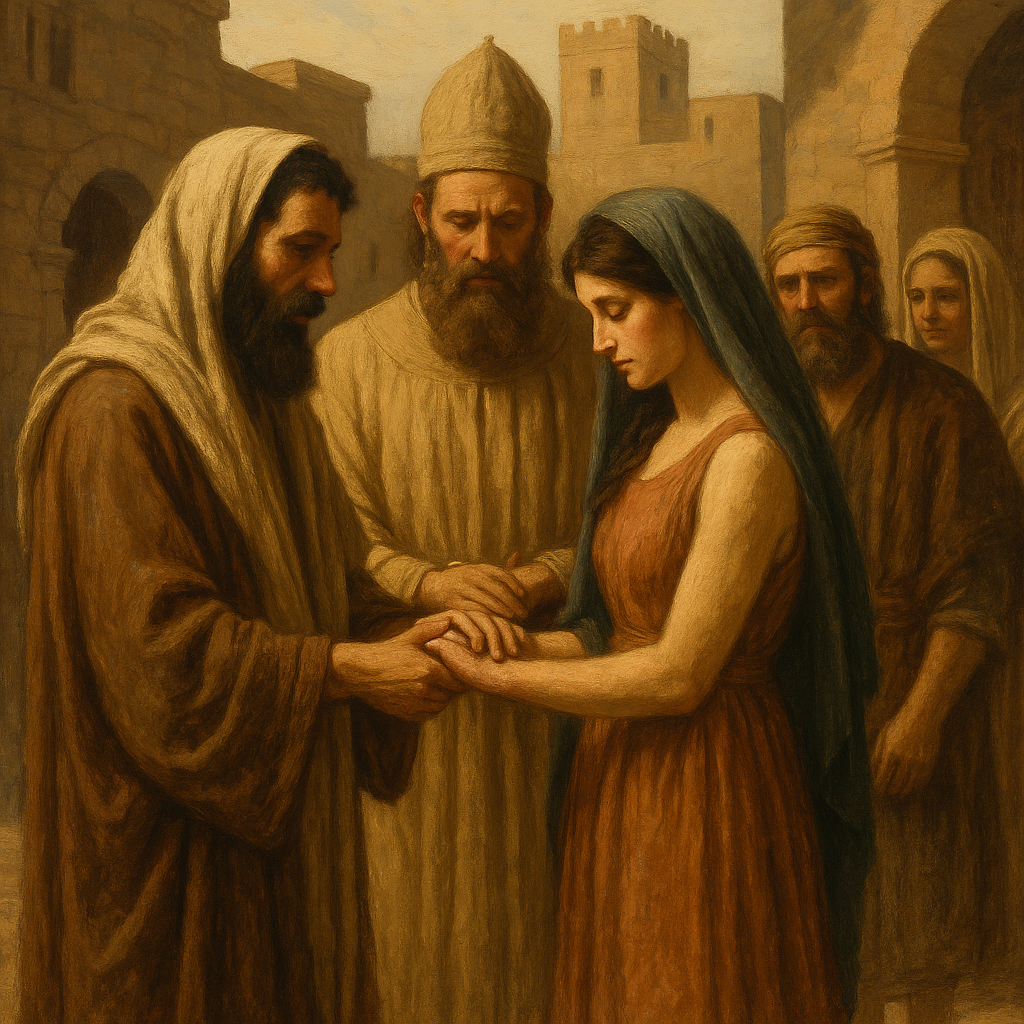
The next event shifts to Abraham’s servant seeking a wife for Isaac. The story unfolds with emphasizing the ongoing theme of doubling. At the well, Eliezer prays for a sign. Rebekah appears and enacts the sign precisely, offering water to him and to the camels. Wells in Scripture represent life, abundance, and covenant blessing. Many biblical betrothals occur at wells, making them symbolic thresholds.
Rebekah becomes a renewed echo of Sarah, who herself was a renewed echo of Eve. When Isaac brings her into Sarah’s tent, he is comforted—an indication that Sarah’s legacy continues through Rebekah, and the matriarchal mantle passes from one Eve-figure to the next.
Isaac in the Field: The Return to Eden’s Prayer
Later, we find Isaac “meditating in the field” at the moment Rebekah arrives. The rabbis linked this to the same phrase, si’ach sadeh, in Genesis 2:5, a phrase connected with the shrubs of the field before the creation of man. They saw in it an early hint of prayer, contemplation, and divine presence.
Isaac’s field would become an idiom for the Temple—a sacred space where God and humanity meet. The sages also used “the King in the field” to describe the nearness of God during the month of Elul, awaiting His bride. Rebekah’s arrival in this moment becomes a restored Eden encounter, a reunion at the threshold between earth and heaven.
Abraham’s Death and Another Double Reunion
Abraham’s death at 175 is described using a wordplay to suggest completeness and satisfaction. His sons Isaac and Ishmael bury him together, another doubled scene of reconciliation and restoration.
Brothers once divided are now reunited at the entrance to Eden’s gate. The pattern is complete: the mother of covenant is first buried in a doubled cave, now the father of covenant is buried in the same place and the sons stand side by side in unity for the first time in years. The cycle of doubles concludes with reconciliation and peace.
A Replanted Eden at the Heart of the Promise
When all these threads are gathered together, Chayyei Sarah becomes more than a narrative of death or burial. It becomes a renewed story of Eden. The garden imagery: trees, mountains, wells, groves, altars, covenants flows through the text.
Machpelah is the seed for future resurrection. Mamre a meeting place for divine presence. Rebekah becomes the living continuation of Sarah’s promise. Isaac meditates in a field that is both Temple and Garden. Abraham secures a foothold in the land that will one day blossom with the fullness of Eden.
In this way, Chayyei Sarah is not the story of a life ending. It is the story of life doubling back, echoing forward, and rooting itself once again in the soil where God will walk again with His people in perfect intimacy. It is Eden in seed form, waiting for its resurrection.
In this Torah portion, the deaths of Sarah and Abraham become like bookends—two pillars framing a story of companionship, covenant, and restoration. Their lives were bound together, and their deaths are bound together as well. Between these bookends unfolds the betrothal of Isaac and Rebekah, a union that itself echoes Eden: the joining of man and woman, the renewal of life, the covenantal blessing that multiplies into generations. The rhythm of doubles—two lives, two deaths, two sons reunited, two wells, two matriarchs—and through them, the companionship that is meant to heal the fractures of exile.
This theme of pairing and union reaches back to the very first marriage in Genesis: “A man shall leave his father and mother and be joined to his wife, and the two shall become one flesh.” Eden’s joy is located not only in its trees and rivers but in covenantal union—fruitfulness, fellowship, life shared. This is why Yeshua speaks of Himself as the Bridegroom and His people as the Bride.
And yet the echoes of Eden do not erase the world we actually live in. This is in no way a judgment upon the divorced, the widowed, or the single. The Torah’s Edenic imagery is not restricted to biological unions; it is a picture of divine companionship. For those whose stories include loss, grief, or unexpected paths, Scripture offers a deeper truth: “Your Maker is your Husband.” The God who walked with Adam and Chavah in the garden walks with every soul who trusts Him. The richness, blessing, and fruitfulness of Eden are not limited to marriage but are gifts God gives to all who dwell with Him.
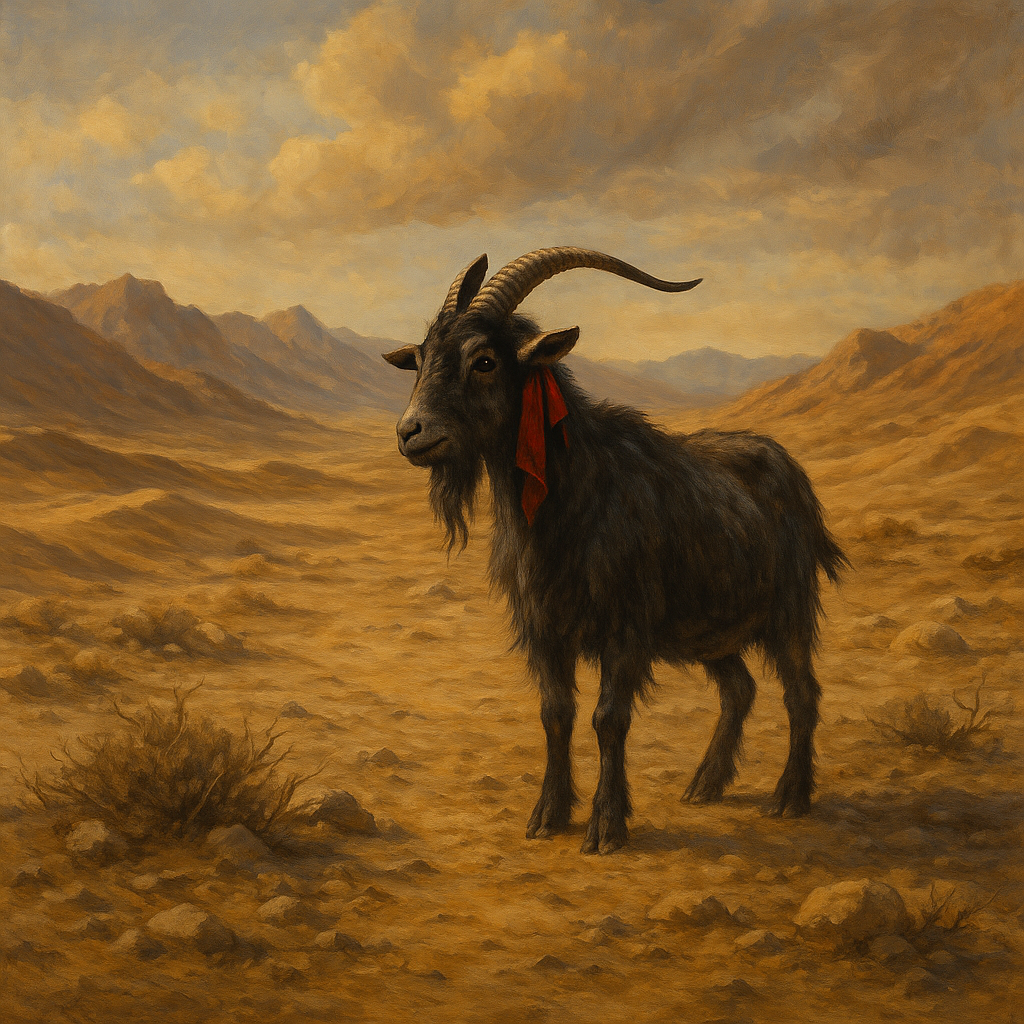
Each year on Yom Kippur, two goats stood before the high priest in Jerusalem—one chosen “for the Lord,” the other designated “for Azazel,” the wilderness goat figure associated in early Jewish tradition with chaos, impurity, and the demonic realm. The first goat was sacrificed and its blood carried into the Holy of Holies to cleanse the sanctuary. The second goat, the wilderness goat, had the sins of Israel placed upon its head, after which it was driven outside the camp and into the wilderness.
Later rabbinic tradition preserves a stark detail: the wilderness goat was pushed off a cliff so that Israel’s sins could never find their way back into the camp. The message was clear. One goat restored holiness within the sanctuary; the other, the wilderness goat, removed pollution from the community. Yet the ritual, powerful as it was, remained temporary. The goat could bear sins away for a time but could not conquer them; the ritual had to be reenacted every year.
The Wilderness Goat symbolizes Exile and Chaos
In the Hebrew imagination, the wilderness was more than a wasteland. It represented the borderlands of creation—the space where the ordered world gave way to chaos, danger, and scarcity. It was the place of wild beasts, demons, and de-creation, and symbolically the space tied to exile.
Yet paradoxically, it was also the place where God reshaped His people. Israel’s forty-year wandering was both a discipline accompanied by God’s mercy, the crucible where the nation was humbled, tested, and ultimately restored at Sinai. The wilderness held both judgment and new creation, the threat of death and the possibility of transformation.
Yeshua Driven Into the Wilderness
Immediately after His baptism and anointing as the beloved Son—the Spirit drove Yeshua into that same wilderness (Mark 1:12). This was not a retreat into solitude but a deliberate symbolic confrontation with the forces Israel had battled for centuries.
Second Temple writings such as 1 Enoch and Jubilees associate Azazel with haSatan, the adversary and accuser. If the goat “for Azazel” carried Israel’s sins into the domain of demonic powers, then Yeshua’s entry into the wilderness is the counter-movement: He enters the realm where sin was banished in order to defeat the power behind it.
The wilderness goat wandered into chaos and never returned; Yeshua enters the same chaos but emerges victorious. He becomes the faithful Israelite who withstands temptation, the obedient Son who succeeds where Adam and Israel failed, and the greater Moses who ascends the mountain without compromise.
Outside the Camp: The Wilderness Goat and the Crucified King
The connection between Yeshua and the wilderness goat becomes even clearer within the passion narratives. Hebrews notes that Jesus “suffered outside the gate in order to sanctify the people through His own blood” (Heb. 13:12). Like the wilderness goat, He is expelled beyond the sacred boundaries, crucified outside Jerusalem’s walls—symbolically a place of exile. There, on Roman wood instead of jagged cliffs, He bears the burden of Israel’s sin “in His own body on the tree” (1 Pet. 2:24). In Him the two goats converge: like the goat “for the Lord,” His blood purifies the true heavenly sanctuary; like the goat for Azazel, He carries sin outside the camp into death itself. But the great reversal lies in what happens next. Unlike the goat, Yeshua does not remain in exile. He returns with victory.
Exile Reversed: Retracing the Yom Kippur Path
The desert geography illuminates this reversal. The wilderness goat traveled eastward from the Temple, across the Kidron Valley, up the Mount of Olives, and down into the Judean wilderness toward the Dead Sea—the great basin. It symbolized Israel’s sin being carried away from the presence of God.
But Yeshua retraces this route only in reverse. He begins His ministry east of the Jordan, moves westward into the wilderness, ascends the Mount of Olives, and ultimately enters Jerusalem. It is the path of homecoming where Israel once walked as they returned from Babylonian exile.
Yeshua embodies the return. He is both the rejected David who fled Jerusalem weeping over the Mount of Olives during Absalom’s rebellion and the restored king who later crossed the Jordan in triumph. He is both the burdened goat who enters the wilderness and the victorious Son who returns without sin. The path of exile thus becomes the path of restoration.
The Crimson Thread and the Once-for-All Offering
Second Temple tradition also remembered a crimson thread tied to the goat’s horns, which was said to turn white when the ritual was accepted—a sign that Israel’s sins had been cleansed. Another crimson thread hung at the Temple’s Nicanor Gate, also turning white when atonement was granted.
But these were signs of temporary relief, yearly reassurances that God had once again removed impurity from His people. Hebrews insists that Yeshua’s offering is “once for all” (Heb. 10:10). In Him the sign becomes the substance. No yearly banishment is required; no symbolic goat must be sent into the desert. Sin is not simply carried away—it is abolished at its roots.
The Wilderness Rewritten as the Place of Victory
With Yeshua, the wilderness itself is reinterpreted. The terrain once associated with exile and demonic threat becomes the arena of divine triumph. The forces that held humanity in bondage are confronted and overcome. The chaos that once devoured becomes the doorway to new creation. The realm of Azazel, long associated with impurity, becomes the battleground where Yeshua binds the strong man and inaugurates the kingdom of God. What was once the place where Israel’s sins were sent to die becomes the place where resurrection begins.
The New Exodus Has Begun
This is also the heart of the New Exodus. Yeshua’s journey—through the waters of the Jordan, into the wilderness, up the mountain, and into the city—traces Israel’s story and brings it to completion. He descends into the realm of exile and emerges to lead His people home. The writer of Hebrews therefore invites believers to follow Him “outside the camp” (Heb. 13:13) and to share in His path of suffering and resurrection. To go to Him outside the camp is to join Him in His confrontation with the forces that enslave, and to return with Him in the power of new creation.
In this great reversal, Yeshua emerges as the once-for-all wilderness goat, the returning Son of David, and the Divine Warrior whose victory transforms the landscape of atonement. He turns wilderness into worship and exile into Eden. In Him the end of the story comes into view: the God who once sent a goat away now sends His Son back to gather the nations home. Through Him, the wilderness is not the end; it is the doorway through which new creation dawns.
The Sin-Bearer Who Comes Back
This is the heart of the gospel’s inversion. The wilderness goat removes Israel from sin for a year; Yeshua removes sin from Israel forever. The goat goes out and never returns; Yeshua goes out and comes back in resurrection glory. The goat’s death provides temporary relief; Yeshua’s death inaugurates the age to come. He is the true sin-bearer whose return signals the end of exile.
The prophet Hosea ministered in the eighth century BCE to the Northern Kingdom of Israel, just before its collapse to Assyria around 722 BCE. The nation was unraveling—spiritually, politically, and morally. What began as covenant loyalty under Yahweh had deteriorated into idolatry, corruption, and dependence on foreign powers. Hosea became the living embodiment of God’s heartache over His unfaithful people.
Yahweh instructs Hosea: “Go, take to yourself a wife (Gomer) of whoredom… for the land commits great whoredom by forsaking Yahweh.” (Hosea 1:2) It’s a shocking command. Gomer’s unfaithfulness mirrors Israel’s own— the northern tribes chasing after foreign gods and political lovers like Assyria. Her adulteries dramatize a covenant people who have forgotten their Husband. Yet as Hosea pursues Gomer, Yahweh’s steadfast love is revealed and His promise to one day “allure her into the wilderness” (Hosea 2:14), the place where the relationship first began.
When Assyria invaded (2 Kings 17), the northern tribes were conquered and carried into exile, effectively disappearing among the nations. Hosea describes this as being “hedged in with thorns” (2:6)—cut off and walled in by their own choices. A return to wilderness life separated from the camp of Yahweh. The marriage had dissolved. Israel became a wandering bride, estranged from her covenant home.
A New Bridegroom Appears in the Pattern of Hosea
Centuries later, Yeshua of Nazareth deliberately travels through Samaria—the heartland of the former Northern Kingdom, the soil for the heartbreak of Hosea. The Samaritans, descendants of Israelites intermarried with foreigners brought by Assyria (2 Kings 17:24–33), practiced a syncretized faith—retaining fragments of Yahweh’s worship mixed with pagan influence.
At Jacob’s well near Sychar, Yeshua encounters a Samaritan woman. The entire scene unfolds like a living echo of Hosea’s prophecy. Yeshua tells her she has had five husbands, and the one she now has “is not your husband.” On the surface, this exposes a broken life; at a deeper level, it reflects the story of her people. She embodies exiled Israel spiritually unfaithful yet still sought by her true Husband.
Israel Reborn in One Woman
In the time of Hosea, Israel had “married” the gods of foreign nations. Now, this Samaritan woman personifies that same history, joined to one empire after another. The phrase “you have had five husbands” carries deep symbolic weight, reflecting the five empires that ruled and seduced Israel:
Assyria – the conqueror that scattered the tribes.
Babylon – that absorbed the remnants.
Persia – that allowed return yet maintained control.
Greece – that reshaped faith through Hellenism.
Rome – the present empire, ruling without covenant.
Each “marriage” represents compromise and captivity aligning with empire instead of Yahweh. The sixth who “is not your husband,” represents Rome, the current ruler holding Israel captive.
Thus, when Yeshua names her five husbands, He is recounting Israel’s long exile in miniature. The woman at the well becomes Israel herself—the unfaithful bride, now confronted by her returning Husband.
The Bridegroom at the Well
In Scripture, wells are places of betrothal. Rebekah met Isaac’s servant at a well; Jacob met Rachel there; Moses met Zipporah there. Every time, a marriage followed. John’s Gospel draws from this same imagery. Yeshua meets the woman not in Jerusalem or at a temple, but at a well—the symbolic place for covenant renewal.
He steps into the role of Hosea, but with divine authority. He is not merely a prophet reclaiming a wayward wife. He is now the Bridegroom Himself, offering living water—the water of communion, the reversal of exile’s drought. The wilderness has become a well.
Parallel Stories of Redemption
The stories of Hosea and Gomer and Yeshua and the Samaritan woman are parallel narratives—two encounters separated by centuries yet united by covenant love. In the time of Hosea, Yahweh commands His prophet to marry an unfaithful woman as a living parable of divine mercy: “I will allure her and speak tenderly to her” (Hos. 2:14). Centuries later, Yeshua fulfills that promise by seeking another unfaithful woman in Samaria.
Just as Hosea bought back his estranged wife, Yeshua enters the land of Israel’s exile to redeem His own. At the well, He offers living water—the restoration of intimacy between God and His people. What Hosea experienced takes shape in living form: the divine Husband reclaiming His bride.
Restoration from Exile
The woman’s transformation is immediate. “Come, see a man who told me everything I ever did!” she cries. Her testimony becomes the first ripple of Israel’s restoration. The once-ashamed woman becomes the first herald of good news to her people. Her village becomes the firstfruits of the northern tribes’ return.
Hosea had prophesied, “In the place where it was said, ‘You are not My people,’ they shall be called ‘children of the Living God’” (Hos. 1:10). Now, that promise blooms at the well. Samaria, the land of betrayal, becomes the land of reconciliation.
The five husbands: Assyria, Babylon, Persia, Greece, and Rome also represent humanity’s endless cycle of false saviors, systems we “marry” to survive. But none can satisfy. They all leave us thirsty. Only the covenant love of the Bridegroom can restore the wellspring of life.
The Voice Across the Centuries
The Samaritan woman’s encounter marks a turning point in redemptive history. The story that began in Hosea—with betrayal, judgment, and longing—finds its resolution in Yeshua, who comes to reclaim His wandering bride.
From the wilderness of Hosea to Samaria’s well, the same voice calls: “I will betroth you to Me forever… in faithfulness, and you shall know Yahweh.” (Hosea 2:19–20)
A simple birthing stool sat in the center of the mud-brick house. Despite wear and tear from generations of use, the brick stool was still sturdy enough. Many Hebrew babies had passed through it, but another birth was about to take place. Despite the modest surroundings, the birth of Moses would be far from ordinary.
Two Hebrew midwives attended Jochebed as she labored. Their steady hands would remain true to their calling, regardless of what happened next. With one final push, a loud cry filled the house. Exhaustion swept over Jochebed. The color returned to her hands as she slowly released her grip on the birthing stool. Joy and relief were palpable but followed quickly by pangs of fear. She’d given birth to a baby boy and named him Moses.
The midwives nodded in approval. Shiphrah, meaning “brightness like the stars,” placed a hand behind Jochebed’s head and stared knowingly into her eyes. Both women smiled softly at the challenge before them. Though Pharaoh had ordered the death of every Hebrew baby boy, the midwives had never considered obeying him. Their calling was to preserve life.
Puah, meaning “to glitter,” was the younger of the two midwives. She hummed a familiar Hebrew melody as she rubbed the baby Moses with dried myrtle leaf powder. She wrapped him in white swaddling cloth before handing him to his mother. According to the Hebrew sages, it was Adar 7 on the Hebrew calendar—a date that now speaks of the birth of Moses birth and his death.
Big sister Miriam beamed with delight. She watched intently as baby Moses began to nurse. Aharon, just a toddler at the time, cooed loudly to celebrate the arrival of a brother. Their father, Amram, a Levite, sang in hushed tones with priestly dedication: “Hear O Israel the Lord our God is One! Blessed be the Name of His Glorious Kingdom for all Eternity!” Amram sensed the presence of Yahweh in that moment, and his heart swelled with joy. A warm radiance filled their home, and Jochebed and Amram declared, “Glory to God in the highest, and shalom on the earth.” The proud parents saw that their baby Moses was “good”—a reflection of the light at creation, penetrating the chaos of slavery that oppressed their lives.
As the women focused their attention on mother and child, Amram stood watch. He heard the sound of heavy footsteps in the distance—Egyptian soldiers. He looked at his wife and lifted a finger to his lips. The family froze. Even baby Moses grew quiet.
Israelite slaves had built the Pharaoh’s expansive kingdom. Hard work calloused their hands and strengthened their bodies, and now Pharaoh feared an uprising of the enemies he’d created. He sent taskmasters to break their backs, but he could never truly subjugate their hearts. Even in slavery, the Israelites thrived. A population explosion in the Hebrew quarter caused Pharaoh great anxiety, and he convinced himself that his empire was in danger.
Based on their reading of the constellation Orion—the embodiment of their god Osiris—Egyptian astrologers predicted that a liberator would rise up from among the Hebrews. This sign in the heavens only furthered Pharaoh’s obsession. Every night in his private chambers, he stewed over reports of secret births. Realizing the midwives had defied his orders to quietly kill the male infants at birth, Pharaoh decreed all Hebrew baby boys be cast into the Nile—a judgment to be carried out in the name of Amon, the god of divine order. The cries of grieving mothers echoed through the narrow streets of Goshen as babies were drowned in unfathomable numbers. The wailing of her Israelite sisters tormented Jochebed throughout her pregnancy. The sorrow was immeasurable, and it left an indelible trauma that threatened the very social fabric of the Israelite community. Mothers and sisters who had once gathered to support each other found themselves turning away from pregnant neighbors, unable to bear the grief.
Yet, despite Pharaoh’s best efforts, Moses was born. And his life meant the restoration of Israel’s life. Amram’s skilled hands created a sanctuary for his son. For three months the family hid the growing infant behind a false brick wall covered in papyrus. Jochebed nursed her son Moses in the darkness, her hand readied to cover his mouth if his cries became too loud. Then, on Sivan 6, an auspicious day on the Hebrew calendar, Jochebed knew they could hide him no longer. The baby’s cries grew stronger, and visits to the land of Goshen by the Egyptian soldiers became more frequent.
Jochebed recalled her ancestor, Noah, who built a large floating vessel that carried God’s presence and preserved life. Inspired by this, her husband, Amram, and a few trusted elders constructed a miniature reed hut, sealing it with tar and pitch. They worked at night after long days of labor for Pharaoh.
Pharaoh’s palace dominated the eastern Nile Delta—the part of the land of Goshen where the Israelites had settled. The vast complex consisted of temples, halls, and elite villas centered around a grand ceremonial lake whose waters were connected to the Nile by a series of canals. The Temple of Amon, towering beside the river, welcomed pilgrims who arrived by boat to worship the god and to perform ritual acts of service. Beyond the temple lay Pharaoh’s private bathhouse. The sanctuary-like setting featured beauty treatments for spiritual purification. There, members of the royal household sought connection with the divine through water.
Among those who visited daily was the daughter of Pharaoh—a young woman highly educated in royal protocol. She often watched the reed barges floating downstream from temple to temple, carrying sacred images of Egypt’s gods—like the god Horus, of whom Pharaoh was the incarnation. These floating shrines, built from papyrus, symbolized divine protection and a renewed connection between Heaven and Earth. In observing these quiet morning rituals, the princess found freedom from her royal duties.
The princess’s bathing routine was common knowledge among the Hebrew slaves, whose eyes and ears missed nothing.
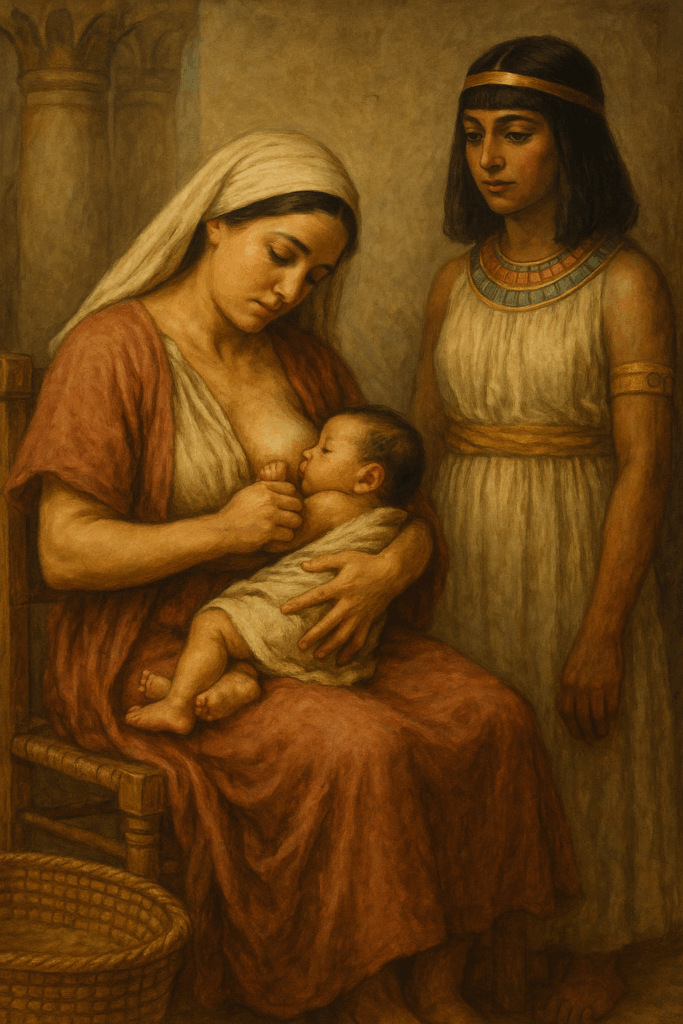
Jochebed and Miriam gently nestled Moses into the papyrus hut—the scent of the Nile’s damp reeds hung in the air. A tearful Jochebed pressed her lips to his forehead uncertain if she would ever hold him again. They pushed the basket from the banks of the river, just within reach of the royal bathing site. The little ark blended well with the sacred barges sailing the Nile. Miriam hid nearby in the reeds, watching and waiting—her young shoulders bearing the weight of her brother’s fate.
The princess descended to the river to bathe when her eyes immediately spotted something unusual. As she and her attendants waded into the water, a small reed shrine caught her attention. It was unlike the grander floating oracles for the gods of Egypt that she knew so well—smaller, cruder, yet somehow compelling. She gestured to her maid servant who retrieved the shrine and pushed it to shore. Pharaoh’s daughter hesitated—her hand hovering over the small reed basket. She heard a baby’s cry, faint but unmistakable. As she lifted the lid, she knew at once that she was looking upon a Hebrew child. His dark features bore the marks of a people she had been taught from birth to despise.
The god Horus immediately flashed through her mind. Sky god and protector of Pharaoh, she knew he was the embodiment of kingship. His destiny was to defeat chaos and rule in justice. The parallels were too clear to ignore. Horus had also been hidden among the reeds of the Nile by his mother to save him from his evil Uncle Seth—who tried desperately to prevent Horus from claiming the throne. Isis drew her son out of water, nursed him in secret, and kept him hidden from danger. It was a story the princess had been told since childhood. So, was this infant like Horus under divine protection? Was this a sign from the gods?
Pharaoh’s daughter was highly knowledgeable in the organization of Egypt’s pantheon, but she also remembered the old stories told by senior servants in the royal court—stories of a man named Joseph, who had once risen to second in command under Pharaoh, and of Yahweh, the God whom Joseph worshiped. Staring down at the baby whose bright eyes pierced her soul, she sensed she was looking at a living image of that invisible God, Yahweh.
Miriam took a deep breath and stepped carefully from among the reeds, rehearsing word for word the message her mother had given her.
“I have a Hebrew wet nurse for the child?” she said as the princess caught her gaze.
The princess nodded softly, acknowledging the girl’s connection to the infant. She knew well there were many mothers in mourning from whom to choose—women whose arms ached for their lost babies. She understood this nurse must be tied to the child—perhaps being his own mother.
Before handing him over for a time, the princess named the baby Moses, meaning to draw out of water—an Egyptian name that would bridge two worlds.
Six women had played a role in the birth of Moses: First, of course, were the midwives, whose names spoke of Yahweh’s splendor and whose hands had preserved countless Hebrew sons; his own mother, whose name signified divine glory and whose faith would soon be tested; and his sister, Miriam, whose name meant rebel—a quality expressed through her own defiance of Pharaoh’s decree. Then was the Egyptian princess, the unlikely rescuer of the Hebrew infant. She was recognized in Egypt as the daughter of the hidden one—Amon, the god of Egypt’s creation. Her compassion would obscure the boundaries between oppressor and oppressed. And finally, there was the unnamed handmaiden of the princess.
And so, Moses, the deliverer of Israel, was raised up in Pharaoh’s court—steeped in Egyptian wisdom but bound to Yahweh through an unbreakable bond of faith. During those precious nursing years, Jochebed instilled in her son a deep love for Yahweh and His people. She poured into Moses an innate ability to hear God’s voice amid the noise of the Egyptian gods, and she filled him with the knowledge of his destiny—deliverer and shepherd of his people. The seeds she planted would lie dormant for decades, but they would later take root and grow. They would bloom at the foot of a burning bush where the God of Israel would personally visit Moses.
It was for such a time that Moses, a child of two worlds, was born—saved by water to birth a nation through water.
The identity of the Pharaoh of the Exodus is uncertain. Some Egyptologists, such as David Rohl, argue that Pharaoh Ahmosis I was the most likely candidate. Ancient historian Josephus shared that belief. Josephus was likely influenced by the linguistic similarity between “Moses” and “Ahmosis,” both meaning “to draw out of water.” The Tempest Stele erected by Ahmosis I describes storms and cosmic disruptions reminiscent of the biblical plagues in Egypt. Ahmosis was said to be the incarnation of Horus, the god of kingship, whose birth bore a striking resemblance to that of Moses. I tend to lean toward the Ahmosis I theory, despite its speculative nature.
Pharaoh Ahmosis I (1539–1514 BCE) inaugurated the New Kingdom and 18th Dynasty, aligning perfectly with Exodus 1:8—”a new king over Egypt who did not know Joseph.” Other historical events strengthen this connection. Ahmosis expelled the Hyksos, a Semitic people who had ruled Lower Egypt, and who likely exacerbated tensions in the land. Were they the Hebrew slaves? The Hebrew word for Moses’s basket, “tevah,” is an Egyptian loanword. Rather than the small woven-reed basket we generally imagine, Egyptian tradition reveals that reed hut-like shrines regularly floated down the Nile carrying divine images.
The Torah portion, Vayera (And He appeared) contains one of the most puzzling and provocative events in all of Scripture: the binding of Isaac, the Akedah. Few passages generate more debate. One area for further exploration is the language of enthronement.
In The Greatest Exodus, I explore the Divine Warrior’s role as one who ascends mountains, leads processions, proclaims victory, and takes his seat upon the throne to share a covenant meal. The same pattern appears in Genesis 22. The story is more than a test of obedience—it’s a drama of royal succession, covenant inheritance, and divine enthronement woven through the bond between a father and his beloved son.
“Take your son, your only son, whom you love…” and go to the land of Moriah, and offer him there as a burnt offering.”It’s a haunting declaration. With perhaps enthronement overtones.
In Ancient Near Eastern culture—Babylonian, Mesopotamian, and Assyrian alike—this kind of phrasing belonged to the world of kingship. When a ruler spoke of “my beloved son” or “my only son,” he was naming the heir to his throne, the chosen one who would inherit both land and kingdom. The beloved son was the vessel of kingdom continuity.
Kings across Mesopotamia legitimized their rule by introducing themselves as “chosen” or “beloved” of the gods. In royal inscriptions, the title “beloved of the god” carried both affection and authority—it meant divine sanction. David’s own name in Hebrew, Dawid, literally means “beloved.” The word itself echoes this ancient royal idiom.
So, when God tells Abraham to take “your only son, whom you love,” the language strikes the tone of royal inheritance. Isaac is the son of promise, the chosen heir, the one destined to receive and carry the covenantal kingdom forward. But first, he must ascend the mountain.
The Burnt Offering as Royal Food
The command is not only to take the son, but to “offer him as a burnt offering.” In Israel’s worship, the burnt offering (olah) was unique—it was wholly consumed. None of it was eaten by the priests. It was considered, in a sense, Yahweh’s food. In the ANE world, meals often sealed royal covenants or enthronement ceremonies. Here, the “food” of the offering becomes the medium of divine communion.
The mountain of Moriah thus becomes a meeting place between heaven and earth—a cosmic throne room. The ascent is not random. It’s the setting of a royal ritual: a father and son ascending the mountain together, carrying wood and fire, preparing a sacrifice that will confirm divine promise.
Royal Selection and the Beloved Son Isaac
In the ANE imagination, kingship was not just political—it was cosmic. The king was the mediator of divine order, the representative of the gods on earth. When a new king was chosen, he underwent ritual purification, some kind of act of humiliation, anointing, and a symbolic sacrifice or offering to the gods to receive legitimacy.
That background reframes the Akedah. The binding of Isaac is more than a test—it’s an enthronement drama. The son of promise is bound but spared as he emerges as heir of the covenant. This is not so much the story of a father losing his son—but the story of a royal covenant being sealed, and divine purpose being realized.
From Moriah to the Jordan: The Beloved Son Theme Continues
Fast forward to Matthew 3:17. The heavens split open, the Spirit descends like a dove, and a voice declares, “This is my Son, whom I love; with him I am well pleased.” The Greek echoes the Hebrew ratzah—to be delighted, to take pleasure in. The same divine essence that hovers over the waters of creation now rests upon Yeshua as He emerges from the Jordan River.
Here again we see enthronement language. The Son is chosen, affirmed, and anointed. The Ruach descends as at the beginning—hovering like a mother bird—an image of divine nurture and creative power. The pattern repeats: ascent, anointing, declaration. Yeshua stands as the greater Isaac—the beloved Son who will ascend another mountain carrying the wood of His own sacrifice.
The Akedah, the binding of Isaac, prefigures the coronation of the Son who will conquer death, the Divine Warrior whose throne is established through obedience and surrender.
What makes Genesis 22 so extraordinary is how it both resonates with and subverts the ANE royal ideal. In Mesopotamian myths, the beloved son inherits the throne of a god; in Israel’s story, the beloved son, Isaac inherits the covenant of the one true God. The throne is not a seat of empire but a promise of blessing. The test is not one of conquest like ancient kings but one of trust. The Divine Warrior’s victory is not won by slaying rivals but by surrendering the most precious thing—and finding resurrection on the mountain.
Mountain Imagery and the Third Day
The text notes that Abraham “rose early in the morning,” split (bāqahʿ) the wood for the offering, and “on the third day” lifted his eyes and saw the place afar off. That word bāqahʿ—to split or cleave—is used elsewhere for cosmic openings: the heavens splitting, the sea parting, even the veil of the temple tearing at the death of Yeshua. Each signals the opening of the kingdom and the revelation of the divine presence.
And “the third day” is the biblical message for resurrection, new birth, new creation. The son who was as good as dead is raised up, restored, and confirmed as heir. The mountain becomes the site of both sacrifice and enthronement.
From the Ram’s Horn to the King’s Trumpet
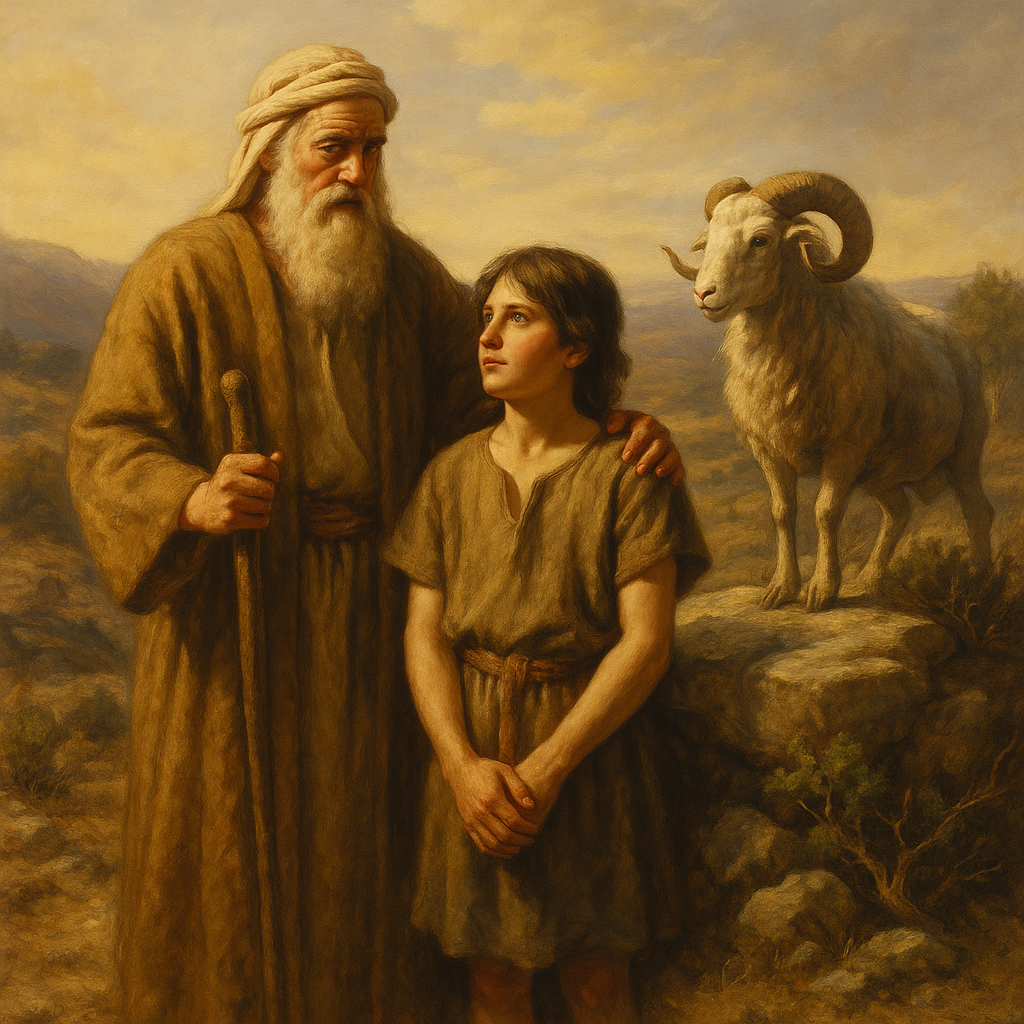
Jewish tradition reads the Akedah at Rosh HaShanah—the Day of the Shofar, the awakening blast of Yom Teruah, the coronation of the King. At the story’s climax, a ram appears, caught by its horns in a thicket. Horns, that in later generations, announce enthronement. The sound that once marked substitution now heralds kingship. The ram becomes the emblem of the beloved son redeemed and the king enthroned.
When Abraham “saddled his donkey” to ascend the mountain with his son, Isaac it foreshadowed another royal procession. Centuries later, Solomon, the son of David, descended to the Gihon Spring, was anointed with oil, and then ascended on a donkey to be enthroned at the temple. The pattern repeats: descent to the waters, anointing, ascent to the mountain, enthronement.
The binding of Isaac stands at the root of this sacred rhythm. From Abraham and Isaac to Solomon, from the Jordan to Golgotha, the mountain is always calling the beloved son upward.
So perhaps Genesis 22 is a story that showcases royal commissioning. The beloved son, Isaac tested, affirmed, and enthroned on the mountain of obedience. The covenant meal, the burnt offering, and the ram’s horn all point toward the Divine Warrior who will one day climb His own mountain, bear His own wood, and open heaven itself.
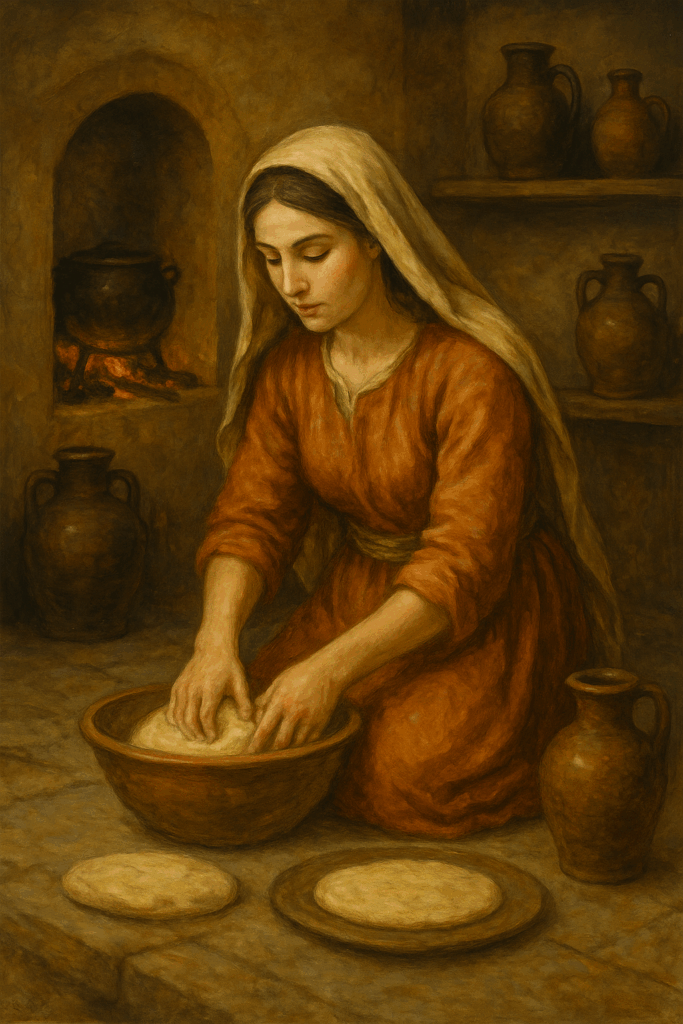
In Matthew’s Gospel, bread becomes a sign of covenant, inclusion, and abundance. When Yeshua feeds the multitudes, He unveils the pattern of God’s redemptive plan through bread — the people eat, are satisfied, and they gather up the leftovers. The two feeding miracles in Matthew, the five thousand and then the four thousand, are not repetitions but rather layers of the kingdom’s expansion—from Israel to the nations. The feedings find their connections to the story of Ruth and the story of the Canaanite woman.
The first feeding (Matt. 14:13–21) unfolds in Jewish territory. Yeshua takes five loaves and two fish, blesses them, breaks them, and feeds the crowd. The five loaves recall the Torah, the covenantal instruction given to Israel, and the twelve baskets of leftovers mirror the twelve tribes. This scene reveals Yeshua not just the new Moses, but a greater Moses, giving heavenly bread to His covenant people in the wilderness. The people eat, are filled, and there are left overs — divine provision for Israel.
Faith That Opens Heaven
Immediately following this miracle, Matthew shares another encounter: the story of the Canaanite woman (Matt. 15:21–28). The geography shifts from Jewish to Gentile territory — from Galilee to the region of Tyre and Sidon by the Mediterranean Sea signaling that something new is about to break open.
The woman who approaches Yeshua is a Canaanite, a descendant of Israel’s ancient enemies, yet she addresses Him with faith: “Son of David, have mercy on me!” Her words stand in stark contrast to Israel’s religious leaders, who question and resist His authority. This Gentile woman recognizes what many in Israel do not — that the promised King of David’s line has come. Her daughter is “severely tormented by a demon,” a haunting image of her nation enslaved to spiritual chaos. Her cry is not only maternal but symbolic: a plea for deliverance from the dominion of darkness.
Yeshua’s reply sounds severe: “I was sent only to the lost sheep of the house of Israel… It is not right to take the children’s bread and throw it to the dogs.” Yet this becomes an invitation for her faith to speak. Like Ruth the Moabitess, humbling herself to glean the fallen grain, this woman kneels and answers, “Even the dogs eat the crumbs that fall from their master’s table.” Her faith has crossed the boundary. Heaven will open, and the bread of heaven will be given to the nations in the feeding of the 4000.
The Table of Ruth and the First Bread of the Nations
The Canaanite woman’s faith is the hinge between the two feedings in Matthew. Immediately after her story comes the feeding of the four thousand (Matt. 15:32–39). The setting is Gentile territory — the Decapolis region east of the Galilee. The symbols tell the story:
Four evokes imagery of the four corners of the earth — the nations.
Seven baskets of leftovers recall fullness and completion; savah (“to be satisfied”) shares the same letters as sheva (“seven”).
The people eat, are satisfied, and there is abundance leftover — but this time it is the nations being filled from Israel’s bread.
Where the first feeding was bread for Israel, this one becomes bread for the nations. Between them stands the faith of a Gentile woman — the bridge from one table to the next.
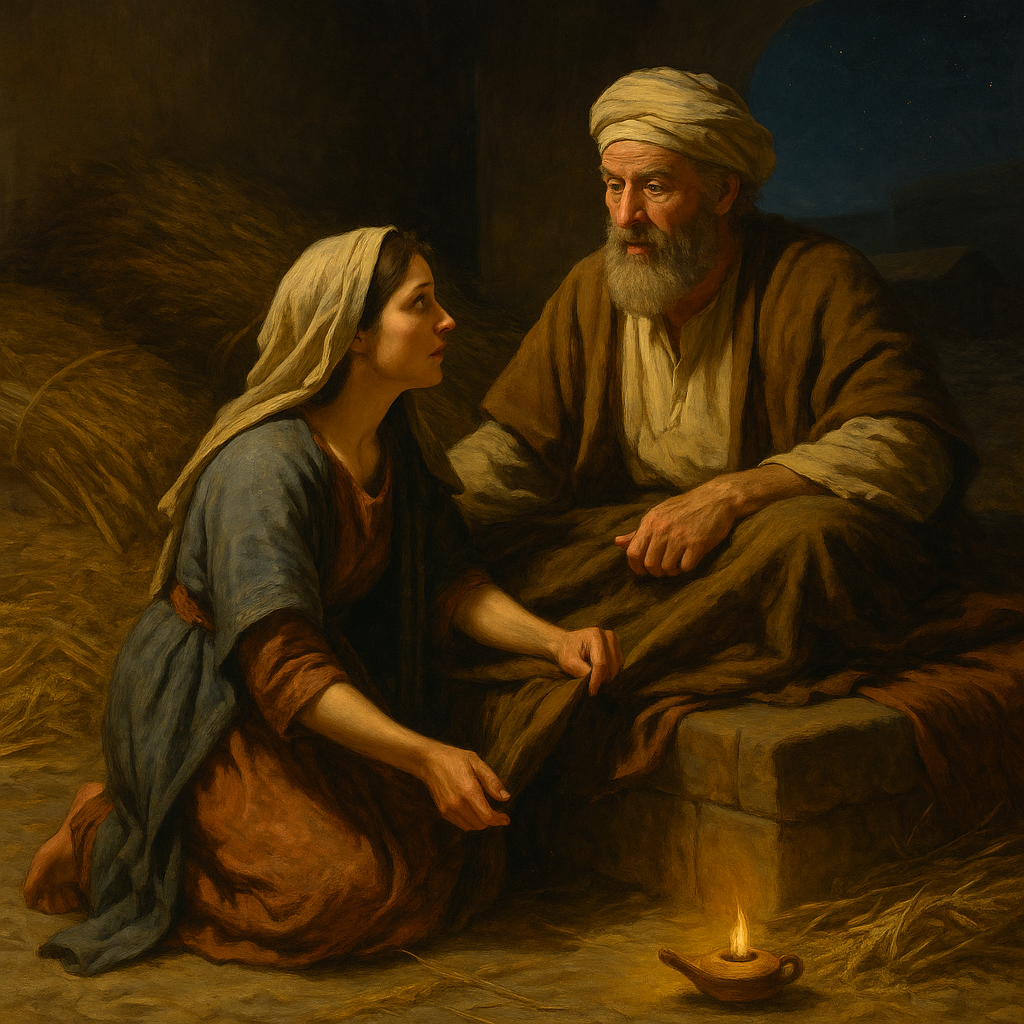
This pattern reaches back to Ruth. When Ruth, the Moabitess, comes to Bethlehem, the “house of bread,” she asks to glean among the sheaves. She is an outsider seeking mercy, humbling herself to pick up what falls from another’s harvest. Ruth “happens” upon the field of Boaz, the redeemer, whose name means “strength.” At mealtime he invites her, “Come here, eat some bread, and dip your morsel in the wine vinegar.” Ruth sits among the harvesters — a Gentile among Israelites — and “ate until she was satisfied and had some left over.” The language is identical to that used in the feeding of the 5,000 and 4,000 in Matthew.
The echoes are unmistakable: bread, fullness, and leftovers. Boaz commands his reapers to leave extra grain for her, just as Yeshua commands His disciples to gather up the fragments so that nothing is lost. Boaz blesses Ruth: “May the Lord repay your work, and a full reward be given you by the Lord God of Israel, under whose wings you have come for refuge.” Yeshua blesses the Canaanite woman in the same spirit: “Woman, great is your faith!” Her faith is so great — greater even than that of the disciples — that it becomes the catalyst for bread to be poured out upon the Gentiles of that region.
Faith as the Doorway
Ruth and the Canaanite woman mirror one another:
Both are outsiders who seek refuge under Israel’s God.
Both approach in humility and perseverance.
Both receive abundance beyond measure.
Their faith doesn’t steal Israel’s blessing; it multiplies it. Through them, the covenant table widens. The faith of Ruth brought forth King David — and ultimately the Messiah. The Canaanite woman’s faith anticipates the Great Commission in Matthew 28, where the bread of heaven is carried by Yeshua’s disciples to the four corners of the earth. What begins at Israel’s table becomes a feast for the world.
The Mountain of Fullness
In Matthew, both feedings take place on mountains, the meeting points of heaven and earth. Each mountain scene: the Sermon on the Mount, the Transfiguration, and the Great Commission marks a step in the revelation of Yeshua as the Shepherd-King. On this mountain of bread, He conquers not armies but hunger; not enemies but ethnic separation. The seven baskets of fullness (sheva / savah) mark a new creation, bread that satisfies all peoples from the hand of the King of Kings. The faith of outsiders has opened the storehouse of heaven, and the world is filled.
In Yeshua, the Greater Boaz, the Bread of Heaven is broken — first for Israel, then for the nations. Those who come hungry, humble, and believing find themselves seated at His table, filled and satisfied, with abundance left over.
The Expanding Table of the Kingdom
The story of bread in Matthew is the story of covenant expansion — of a table that keeps growing. From Ruth gleaning in Bethlehem’s fields to the Canaanite woman kneeling before Yeshua, the pattern repeats: humility opens favor, faith opens heaven, and bread opens covenant.
The grain gleaned by Ruth become the loaves that feed the nations through the Messiah who came from her line. The loaves are multiplied on Yeshua’s mountain. The covenant meal that began with Israel now extends to all creation — a feast of satisfaction (savah) for every nation, tribe, and tongue. The Bread of Heaven never diminishes when shared — it always multiplies.