Author: Dinah Dye

Sodom

Sodom: The First Passover and the Pattern of Redemption

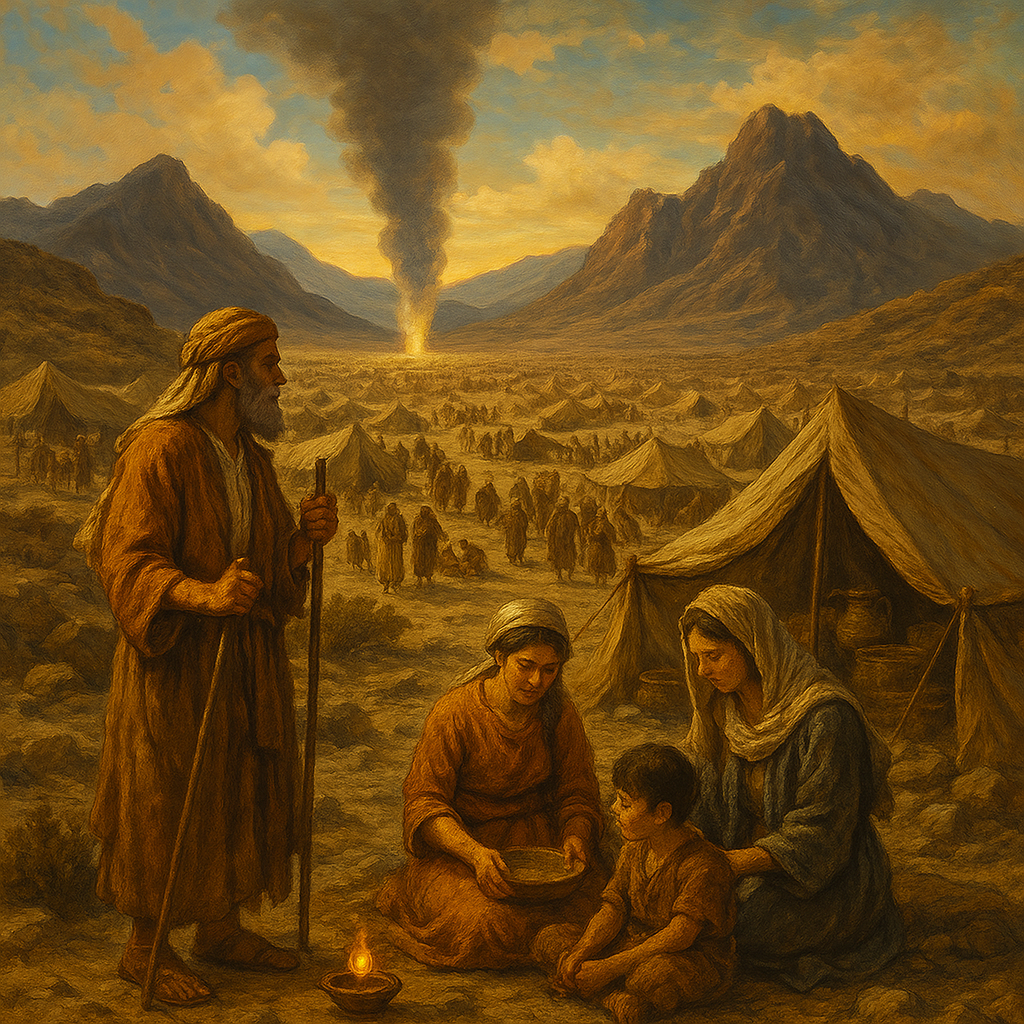
There’s an Exodus thread woven through Genesis, an early current of redemption that flows through the story of Abraham and Lot. It begins not with Moses and Pharaoh but with Lot standing at the threshold of his house before fire and brimstone are poured out in judgment. Before the plagues of Egypt, before the blood on the doorposts, before Israel’s hurried meal in the night, there was another Passover almost hidden from view. The destruction of Sodom in Genesis 19 is a proto-Exodus, a revelation of Yahweh’s redemptive pattern that will echo throughout Israel’s story until it reaches fulfillment in the final deliverance of Revelation.

The First Passover Table

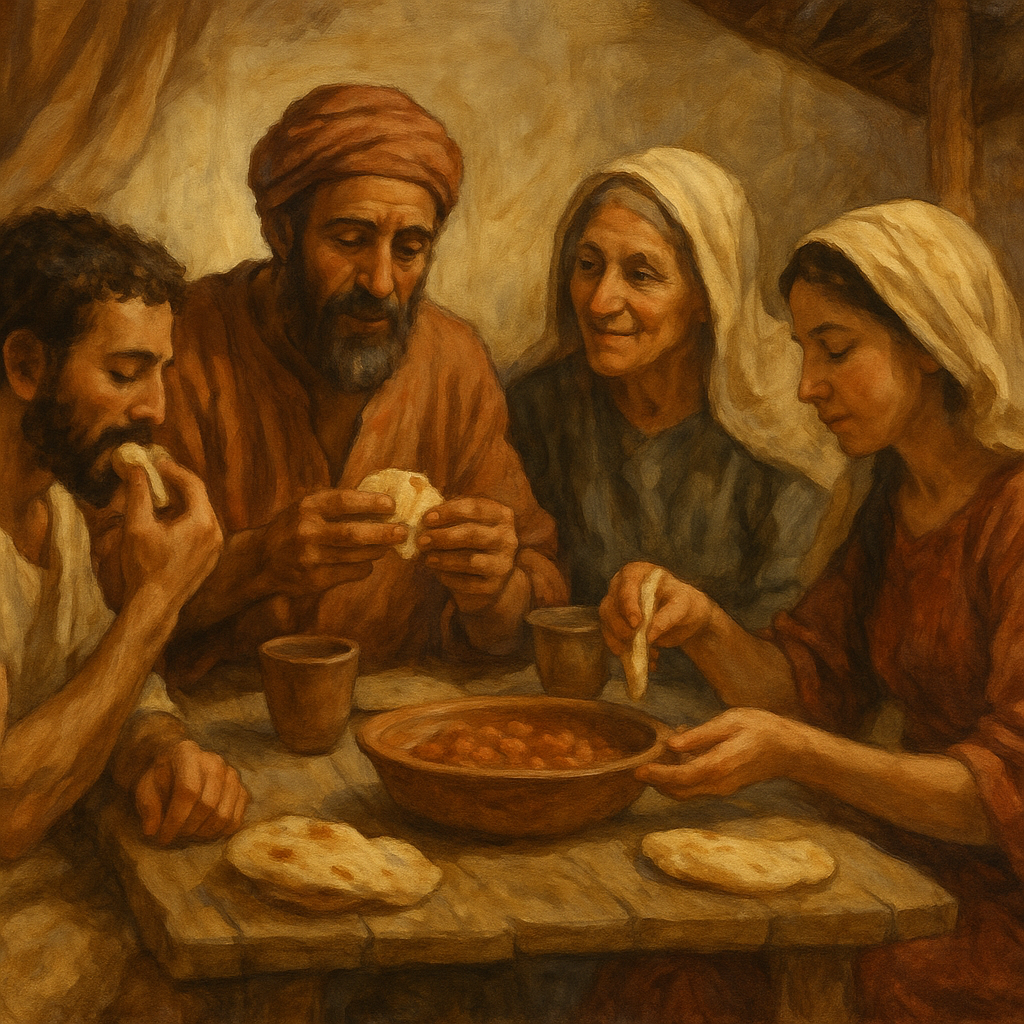
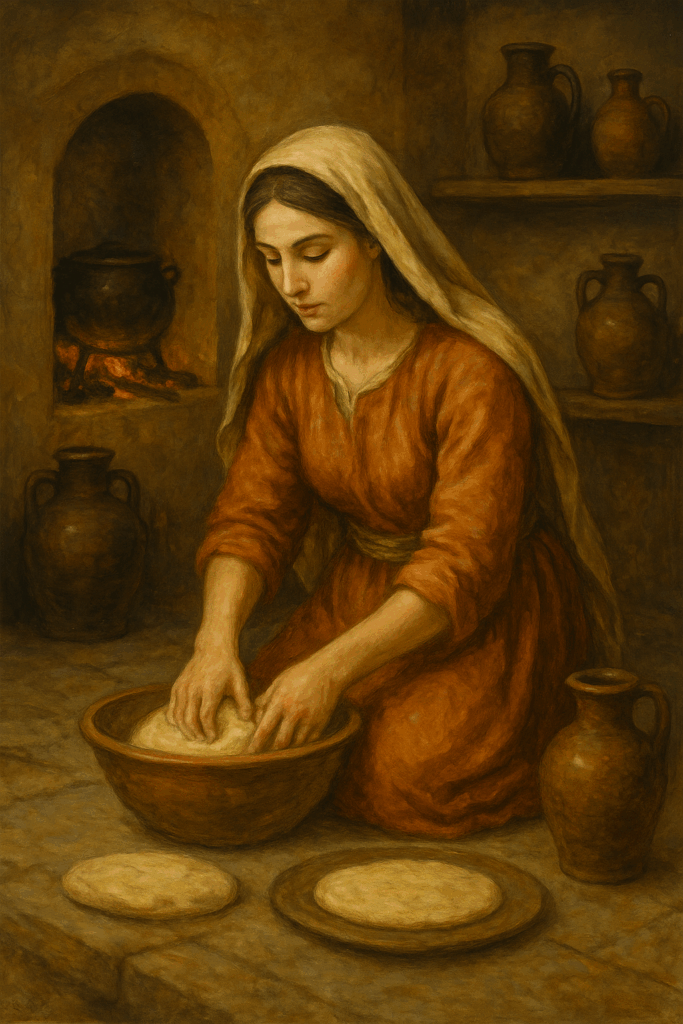
When the angelic messengers enter Sodom, Lot welcomes them into his home with a meal: “And he made them a feast and baked unleavened bread (matzot), and they ate” (Gen. 19:3).

This is the first mention of matzot in Scripture. Why specify unleavened bread unless the writer wants the reader to hear Passover overtones? This detail suggests a comparison: Lot, like Israel centuries later, hosts divine messengers, serves matzot, and stands on the brink of destruction. Both narratives unfold at night, both involve a covenant meal within a protected space, and both end with salvation for those inside and judgment for those who are outside.

Unleavened bread symbolizes a sense of urgency as well as separation from corruption—the bread of exile, eaten by those who must depart quickly because judgment is near. In Sodom it is consumed on the eve of fire; in Egypt, on the eve of deliverance. Lot’s table becomes the first Passover table, the prototype of the meal eaten in haste as divine judgment passes over.

The Shut Door: Threshold for Salvation

The story then turns on a single line: “They brought Lot into the house and shut the door.” (Gen. 19:10)

The closed door becomes a sacred boundary, a separation between chaos and communion—just as the blood-sealed doors of Exodus 12 marked the boundary between life and death. Inside the house lies fellowship and light; outside, blindness and destruction. Lot’s home becomes a miniature sanctuary, a small ark floating in the flood of the corruption of Sodom. His doorway is a symbolic threshold pointing to Passover.

When the men of Sodom press against the door, demanding to defile the messengers, the scene is visually dramatic. The house becomes holy ground; the mob outside represents the world of unrestrained appetite and gratuitous violence. When the angels strike them with blindness, they can no longer find the door.

This moment foreshadows Exodus 12, when Israel’s homes become sanctuaries in miniature, each sealed by blood as Yahweh passes through the land. In both stories, divine protection is localized tied to a dwelling, a table, and obedience to God’s word.

The Fire, the Furnace, and the Plagues

At dawn Yahweh rains down fire and brimstone from heaven (Gen. 19:24), and Abraham later sees “smoke rising like the smoke of a furnace” (19:28). The Hebrew word kivshan, “furnace” will resurface later to describe both Egypt’s brick furnaces (Ex. 9:8–10) and the fiery presence of Yahweh at Sinai. The repetition seems deliberate. What befalls Sodom is not a random natural disaster event but rather covenantal judgment—the consuming fire of a God who binds mercy and justice together.

The plagues of Egypt mirror the same pattern: hail mixed with fire, darkness over the land, and the cry of the condemned. Each episode is a de-creation, the unraveling the ordered world of Genesis 1. Fire replaces light, chaos replaces blessing, and the fertile valley that once looked “like the garden of Yahweh” (Gen. 13:10) becomes a wasteland—a kind of burned-out Eden.

The Righteous Remnant and the Urgency of Escape

The angels urge Lot: “Flee for your life! Do not look back!” (Gen. 19:17). The command anticipates Moses’ instruction to Israel: “Eat it in haste, for the Lord will pass through to strike Egypt.” (Ex. 12:11–12). Both narratives speak of urgency—in this hour of deliverance there is no time for hesitation.

When Lot delays, the angels take him by the hand and send him out. This gesture reappears in Deuteronomy 4:34, where God “takes Israel by the hand” to send them from Egypt, and again in Isaiah 42:6, where Yahweh takes His servant by the hand to bring light to the nations. A visual that is prophetic: humanity is rescued not by merit but by divine compassion.

The same contrast appears in the blindness of the men of Sodom. As they grope for the door, unable to find their way in, Isaiah’s promise echoes that God’s servant will “open blind eyes and bring prisoners out of the dungeon.” It’s the Exodus pattern: the wicked blinded by judgment, the righteous led out by God’s own hand.

Sodom as Egypt: Exodus by Fire

Later, Scripture makes the connection explicit. Deuteronomy 29:23 describes judgment on the land as “the overthrow of Sodom and Gomorrah.” Isaiah 1:9–10 and Jeremiah 23:14 both liken Jerusalem and Egypt to Sodom—symbols of corruption and oppression. In each, divine messengers are rejected, the innocent suffer, and judgment falls from above.

Sodom, then, likened to a future Egypt and an Exodus not through the sea but through fire. Lot and family, a righteous remnant, flee under angelic escort while the city of rebellion is destroyed behind them. The same God who will later split the Red Sea first splits the sky with fire, delivering His people through the judgment rather than around it.

Lot’s wife looks back longing for what she was about to lose and so becomes a pillar of salt—a monument to old ways. She mirrors Israel’s later desire to “turn back to Egypt,” trading freedom for familiarity. Her look backward exposes that which always pulls humanity toward its former bondage.

From Sodom to Sinai to Calvary

The pattern that begins in Genesis 19 continues through the Exodus and reaches its climax at the Cross. In Sodom, angels enter the city to rescue Lot and his household; in Exodus, Yahweh enters Egypt to confront Pharaoh and free His people; in the Gospels, the Word becomes flesh—and God Himself enters the world to redeem humanity.

Each story centers on a sacred meal: Lot’s matzot, Israel’s Passover lamb, and Yeshua’s Last Supper, where He breaks the unleavened bread and declares, “This is My body.” Each features a doorway—Lot’s shut door, Israel’s blood-stained threshold, and the blood on the Cross itself.

In all three, judgment falls as chaos: fire on Sodom, plagues on Egypt, and at Calvary, the full weight of divine justice borne by Christ. And in every case, deliverance follows—Lot from the burning city, Israel from bondage in Egypt, humanity from the dominion of sin and death.

The pattern reveals the architecture of salvation: divine visitation, covenant meal, sealed threshold, judgment outside, and deliverance within. From Sodom’s night to Egypt’s Passover to Golgotha’s hill, God enters the realm of death to rescue the remnant who trust His word.

Revelation: The Final Exodus

The pattern doesn’t end with Egypt. Revelation replays it on a cosmic stage. Babylon (now Rome) is the last empire is called “Sodom and Egypt” (Rev. 11:8), the twin emblems of human rebellion. Fire falls again, the earth shakes, and a voice calls, “Come out of her, My people, lest you share in her plagues” (Rev. 18:4).

The final Exodus is a deliverance not from one city but from the entire corrupted order of creation. The same elements reappear:

  • A divine visitation (the Lamb and His angels),
  • A covenant meal (the marriage supper of the Lamb),
  • Judgment by fire (the lake of fire replacing Sodom’s sulfur),
  • A new household sealed by God’s name, safe within the radiant walls of the New Jerusalem.

What began with a door shut in Sodom ends with gates that never close in the city of God.

From Chaos to Covenant

Sodom’s story becomes a roadmap for redemption—from Lot’s house to Sinai’s mountain, from the Upper Room to the descending city of Revelation. Each stage reveals the same divine rhythm: Yahweh visits, separates, redeems, and dwells among His people. Genesis 19 is the revelation of the Exodus pattern.

God saves a remnant, closes the door behind them, and re-creates the world from the ashes. The story that began with unleavened bread in Lot’s house ends with the feast of the Lamb, when the final Exodus is complete— the redeemed will dwell forever in His house.
Sodom
Son

Son of God: Augustus or Yeshua

The story of Caesar Augustus was carefully crafted to present him as more than human. In the volatile years after Julius Caesar’s assassination, Rome needed a stabilizing figure who could rise above the bloody rivalries of ambitious men. Octavian, Caesar’s grand-nephew, was adopted into Caesar’s line and transformed by propaganda into Caesar’s rightful heir. This adoption was not a trivial legal formality. With Julius Caesar declared divine by the Senate, Octavian inherited the title divi filius, Son of God. In a world where bloodlines, divine favor, and political spectacle intertwined, this title mattered. It secured in the public mind that Augustus stood in alliance with the gods themselves, chosen to carry their will into the world.

Myth and the Seed of the Serpent

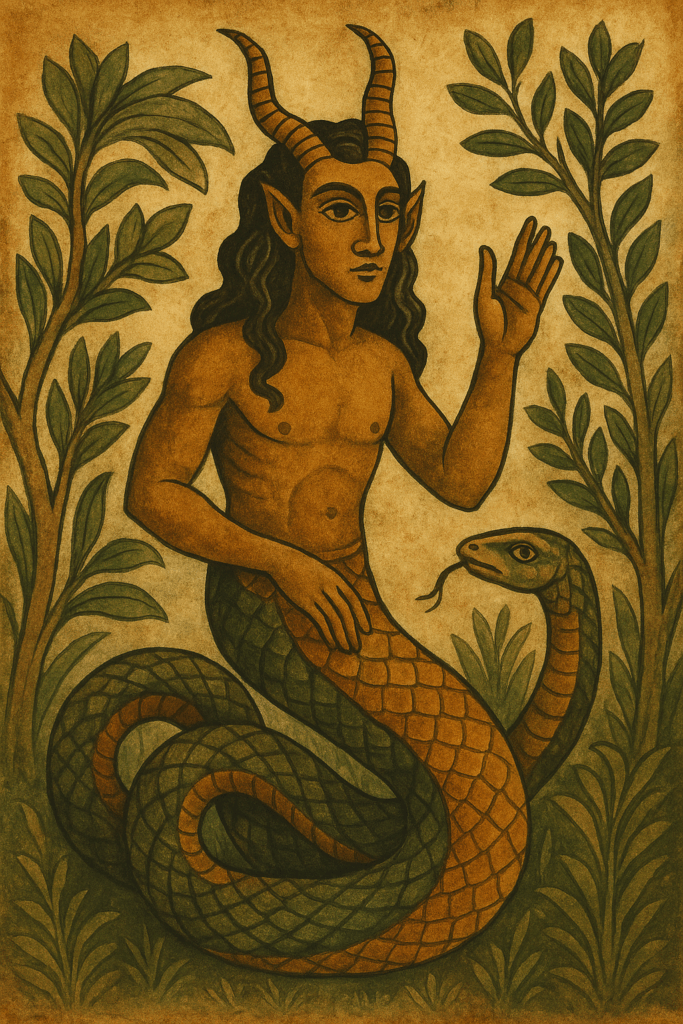
But the story did not stop with adoption. Roman imagination reached back further to anchor his origin in myth. Legends whispered that his mother, Atia—niece of Julius Caesar—had been impregnated by the god Apollo. One Roman tale went so far as to claim that Apollo came to her in the form of a serpent. That image is chilling when read through the lens of Scripture. It makes Augustus, quite literally, the seed of the serpent—his kingdom built on conquest, domination, and fear. Yet Genesis had promised another Son, the seed of the woman, who would crush the serpent’s head. Two sons. Two seeds. Two kingdoms. One rules by the sword; the other by the cross.

Augustus and the Roman Script for Greatness

And on the human side, Augustus’ lineage traced through generations of civic leaders, military commanders, and magistrates, men who had demonstrated Roman masculine virtue on the battlefield and in the Senate. Adoption, divine begetting, and distinguished ancestry—three strands of legitimacy woven together—fashioned Augustus as the man destiny demanded. Rome proclaimed him the bringer of peace, the embodiment of divine will, and the one through whom the world would be set in order.

This was the Roman script for greatness. Elite men became larger than life by blending human and divine origins. Power was validated by myth, ancestry, and achievement. Augustus’ ascent to power was not just about politics; it was about cosmic legitimacy. He was Caesar’s heir, Apollo’s son, and the scion of a noble family. With such credentials, who could doubt his right to rule?

The True Son of God Enters the World

Into that same world stepped Yeshua of Nazareth. He too bore the title Son of God, but in a way that undercut Rome’s propaganda at its very root. Where Augustus’ claim was propped up by Senate decrees, myths of lustful gods, and family pedigree, Yeshua’s was rooted in an entirely different story. His adoption was not by a deified Caesar but by the living God of Israel. At his baptism in the Jordan, a voice from heaven declared: “This is my beloved Son, in whom I am well pleased.” That moment was not a political invention; it was divine proclamation. The title Son of God in his case was not the language of imperial propaganda but the language of covenant kingship. It echoed the words spoken over Israel’s kings in the Psalms: “You are my Son; today I have begotten you.”

Contrasting Conceptions: Apollo and the Spirit

The conception stories diverge even more dramatically. Augustus’ legend claimed the intrusion of Apollo upon a woman of noble stock. Yeshua’s story spoke of the Spirit overshadowing a humble virgin from an obscure village in Galilee. No temples adorned Nazareth, no Senate decrees celebrated Mary’s womb. Instead, heaven’s glory clothed itself in humility. The incarnation was not a god’s lust but God’s love, not the grasping of power but the self-emptying that Paul later described in Philippians 2.

The Genealogies of Power and Grace

And what of family pedigree? Augustus pointed to generations of generals and statesmen. Yeshua’s genealogy included the scandal of Tamar, the outsider Rahab, the foreigner Ruth, the adulterous union of David and Bathsheba, and the humble obscurity of Mary and Joseph (Matthew 1). His line testified to God’s redemptive grace. Where Rome sought prestige in unbroken legacies of masculine dominance, the Messiah’s ancestry revealed God’s power at work in weakness, scandal, and exile.

This is precisely what made Yeshua’s claim as the true Son of God so dangerous, so subversive, and ultimately so explosive. He embodied a different kingdom. Augustus ruled by domination; Yeshua ruled by surrender. Augustus enforced “peace” (the famed Pax Romana) through military might; Yeshua offered shalom through the blood of the cross. Augustus’ empire thrived on corruption, violence, and fear; Yeshua’s kingdom was built on service, forgiveness, and love. To proclaim Yeshua as Son of God in Caesar’s world was not a pious religious claim. It was a political statement, a rival proclamation of allegiance to another King. Such language could and eventually did get you killed.

The Clash of Empires

The contrast between the two kingdoms could not be starker. Rome sought to order the world through conquest. The kingdom of God turns the world upside down. Rome exalted those who grasped power; God exalted the one who emptied himself. Rome enforced submission through fear; Yeshua invited surrender through love. Rome promised peace through the sword; Yeshua secured peace through the cross.

The Enduring Kingdom of God

And herein lies the challenge. Every age has its Caesars—leaders and systems that seek to claim divine sanction for their rule, promising peace and stability while demanding allegiance and control. They may not call themselves sons of Apollo or claim descent from Julius Caesar, but they still traffic in myths of greatness, the cult of power, and the worship of empire. Against them all, the Gospel still speaks the same subversive word: Jesus is Lord, and Son of God and Caesar is not.

The kingdom of God exposes the emptiness of the world’s empires. It calls us to rethink power, authority, and victory. Power comes not in self-assertion but in surrender to the will of God. Authority is not seized but received through service. Victory is not achieved through corruption and violence but through self-giving love. The cross, Rome’s tool of humiliation, became the throne of the world’s true King.

The Kingdom That Will Not Fall

Augustus’ empire crumbled into history, one among many that have risen and fallen. But Yeshua, the true Son of God, His kingdom endures as reality. His resurrection proved that his way—the way of surrender, service, and sacrificial love—is stronger than the sword, greater than Caesar, and victorious over death itself.

Son
covenant meal

Covenant Meal Conquers Exile

Covenants are not written only on stone; they are eaten at the table. From Sinai’s feast to the Passover lamb, meals have bound God and His people in loyalty, blessing, and life. But Yeshua lifts the covenant meal to its highest fulfillment when He declares, “I am the bread of life.” In Him, exile is overturned, hunger is stilled, and the curse is broken. To come to Him is to enter by way of covenant meal, to sit at the table of blessing, and to taste the bread of heaven that endures forever.

Blessing, Curse, and Covenant Loyalty

In the Torah Israel has a stark choice: blessing or curse, life or death, covenant loyalty or exile. Moses’ words framed Israel’s destiny around covenant faithfulness. To obey God’s commands meant dwelling in the land in blessing; to forsake Him meant being driven out, exiled from His presence. Covenant was not an abstract arrangement but a lived reality—anchored in worship, in obedience, and most powerfully, in meals shared with God.

The Bread of Life as Covenant Revelation

It is this very framework that shapes Yeshua’s teaching in John 6:35–51. When He declares, “I am the bread of life,” He is not speaking of bread as nourishment per se. He is unveiling covenant. To “eat” is to ratify the covenant meal, to seal a relationship with God at His table. Whoever eats of Him enters into covenant life, a bond that carries the blessing of endless provision and eternal fellowship.

Coming to Yeshua: Entering Covenant and Ending Exile

The Hebrew word bo, “to come” or “to enter” captures this movement. To come to Yeshua is to step into covenant, to enter a reality where hunger and thirst are no more. Unlike the threat of exile in Deuteronomy, where covenant breakers were cast out of the land, Yeshua promises, “Whoever comes to Me I will never cast out.” The Greek word ekballo, “to drive out,” mirrors the Hebrew garash, the term used when God expelled nations from the land or exiled Israel for covenant unfaithfulness. To be driven out is to break covenant, to fall into chaos and separation. But Yeshua turns this on its head: in Him, there is no casting out—only welcome, belonging, and restoration.

Covenant Meals Throughout Scripture

This covenant meal pattern runs deep through Scripture. In Exodus 34:11, God declared, “Behold, I am driving out before you the Amorite, the Canaanite, the Hittite, the Perizzite, the Hivite, and the Jebusite.” Israel was warned not to make covenant with idols or to eat of pagan sacrifices, lest they bind themselves to corruption and judgment. Meals sealed covenants, for good or ill. To share at the wrong table was to step into curse. Yeshua reclaims this reality with divine authority.

Yeshua and the Wilderness of Exile

Just as He drives out (ekballo) demons in the New Testament, casting chaos from the land, so He makes space for His people to dwell in covenant blessing, free from the snares of false worship. The wilderness story reveals the depth of this mystery. Mark tells us that the Spirit “drove” (ekballo) Yeshua into the wilderness, thrusting Him into the place of exile and testing, where demons lurked and wild beasts roamed. This was the landscape of chaos, where Israel had stumbled again and again. But Yeshua remained faithful. He endured temptation, resisted the adversary, and emerged as the true Son who conquers exile. Because of His victory, those who eat of Him, the bread from heaven, are not abandoned to the wilderness of exile but raised up to eternal life.

Covenants are Sealed with a Meal

Here lies the covenant mystery unveiled: every covenant in Scripture is sealed with a meal. At Sinai, the elders ate and drank in God’s presence after the covenant was given. In the land, the Passover meal became the yearly sign of Israel’s loyalty. But now, in John 6, Yeshua reveals Himself as the covenant meal. “The bread that I will give for the life of the world is My flesh.” To eat His flesh and drink His blood is to seal the covenant meal with Him, to share in the very life of God.

The Bread from Heaven and the End of Exil

This is not an ordinary provision. The manna in the wilderness is a covenant meal that sustained Israel for a day, but those who ate still died. Yeshua is the bread from heaven, given not for a moment but for eternity. He rolls back the exile, restores us to the place of blessing, and invites us to Eden’s table once more. In Him, covenant loyalty is not a burden but a feast, not a threat of curse but the promise of endless life.

The Covenant Feast That Endures Forever

To eat of Him is to embrace the covenant meal of blessing, to share in the meal that binds heaven and earth together. He is the bread that satisfies not for a season but forever, the food that lifts us out of exile and sets us in the presence of God. In Yeshua, the covenant meal and the bread of life become one. Whoever comes to Him will never hunger, never thirst, and never be cast out—but will feast forever in the presence of the King.

covenant meal
menorah

Asherah to Menorah

Deuteronomy 16:21 issues a striking command: “You shall not plant for yourself any tree, as a wooden image, near the altar which you build for yourself to the LORD your God.” At first glance it seems like an odd prohibition. But in the ancient world, it cut to the heart of how people imagined the presence of the divine. And the presence of the divine was imagined in tree shaped image like the menorah.

The Pagan Practice of Sacred Trees

The nations around Israel regularly planted sacred trees or set up wooden poles, often called Asherah, beside their altars. They were symbols of divine presence, markers of sacred space, and visible signs of the axis mundi—the cosmic pillar linking heaven, earth, and the underworld. To place such a tree at an altar was to declare that this was the place where heaven touched earth—the sacred center of the world.

In the Canaanite pantheon, Asherah was the consort of El, later attached to Ba’al, and her presence was represented by these wooden images or sacred groves. Archaeology has uncovered traces of Asherah symbols even among Israelites, like the menorah, showing how deeply ingrained this practice was in the ancient imagination. Across the Near East, the cosmic tree motif flourished. In Mesopotamia, stylized trees of life appeared on palace walls, flanked by guardians, images of kingship and fertility. In Egypt, the “djed” pillar represented cosmic stability. In Ugarit, Asherah was tied to mountains, groves, and seas. To plant a tree by an altar was to claim that this place was aligned with the center of the universe.

But Israel’s God forbade such symbols. Yahweh would not share HIs altar with rival deities. He Himself was the center. His sanctuary was the true meeting place of heaven and earth. To plant an Asherah near His altar would suggest that His presence depended on the same requirements as the gods of the nations.

The Eden Connection

This prohibition cannot be understood apart from Eden. The garden itself was a sanctuary, a holy space where God walked with humanity. At its center stood two trees: the tree of life represented by the menorah and the tree of the knowledge of good and evil. The tree of life was the true axis mundi, the living sign that God’s order and life flowed into creation. But the serpent enticed humanity to grasp at the rival tree. Instead of receiving life from God, Adam and Eve reached for wisdom apart from Him. The result was exile, chaos, and death.

The Asherah and Eden’s Rebellion

The Asherah poles of Canaan echoed the same. They were attempts to manufacture divine presence and order apart from the Creator. Planting one beside the altar would have been to reenact Eden’s rebellion. Thus Deuteronomy 16:21 was not only anti-Canaanite; it was profoundly anti-Edenic. Yahweh would not allow His altar, the place where relationship was restored, to be corrupted.

God’s Chosen Tree: The Menorah

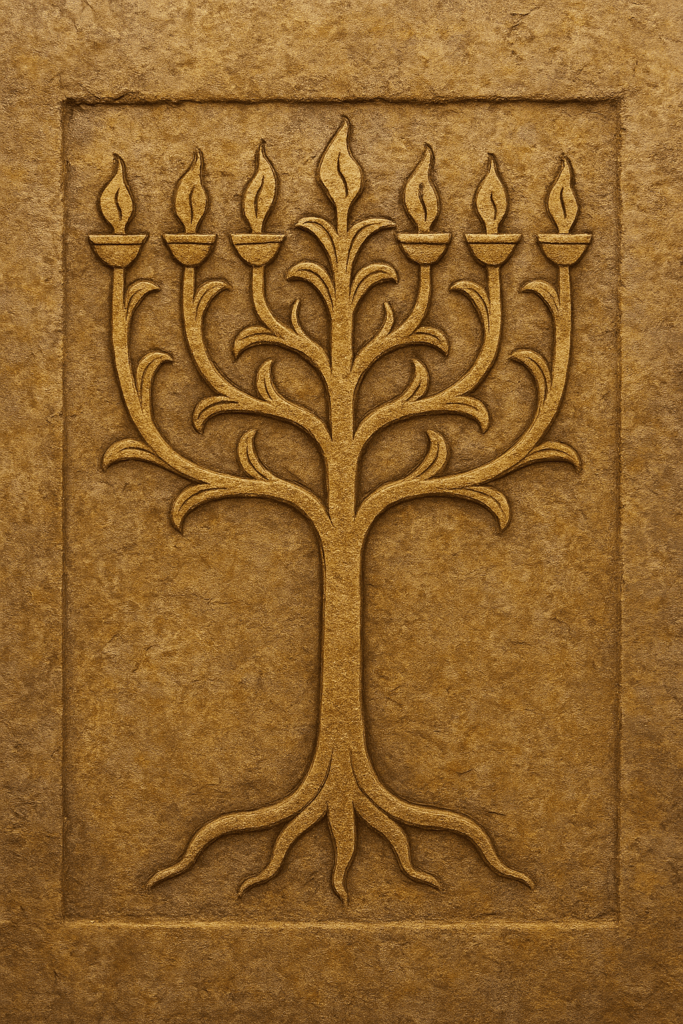
God provided a tree of His own choosing, sanctified and set within His house. In the Holy Place of the tabernacle and later the temple stood the menorah. This seven-branched lampstand or menorah was deliberately designed as a tree, with blossoms, buds, and flowers adorning its branches. Its light burned continually, a living flame symbolizing God’s presence and His wisdom. The menorah was a stylized tree of life shining inside God’s sanctuary as a testimony that true life flows from Him alone.

The Redemption of the Cosmic Tree Motif

In this way, the menorah reversed and redeemed the ancient cosmic tree motif. Where the nations planted Asherah poles to invite their gods, Yahweh Himself placed His tree of light within His dwelling. The menorah proclaimed that life, fertility, and order come not from pagan symbols but from the Creator who sustains His covenant people.

Fulfillment in the Messiah

The story does not end with the menorah. In the New Testament, at Sukkot, the imagery reaches its fulfillment in Yeshua the Messiah. He declared, “I am the light of the world,” echoing the menorah’s perpetual flame. In John’s vision of Revelation, the risen Messiah walks among seven golden lampstands, embodying the role of divine light in the midst of His people. And at the close of Scripture, in the New Jerusalem, John sees the tree of life restored, standing at the center of God’s renewed creation, its leaves bringing healing to the nations.

The True Tree of Life

The Asherah pole promised fertility and wisdom through human effort, ritual, and myth. The menorah pointed to God’s own life-giving presence. And in Messiah, the reality comes into view: the true tree of life is restored, not as an idol planted beside an altar, but as the cross where heaven and earth meet. The cross, Rome’s instrument of death, became the axis mundi of the world—the place where sin and death were broken and where life eternal began.

menorah
Rock

When the Rock Meets the Gates of Hell

In one of the most dramatic moments in Matthew’s Gospel: Yeshua turns to His disciples and declares, On this Rock I will build my congregation, and the gates of Hades will not prevail against it (16:18). To modern ears, it sounds like a nice metaphor. But for His Jewish hearers, the imagery of the Rock carried deep covenant weight.

In the ancient world, rocks were not just any old Rock. These were covenant witnesses—immovable testimonies to agreements and boundaries. A stone was more than a marker; it was an anchor for memory, identity, and allegiance.

In Mesopotamia, kings set up boundary stones called kudurru. These weren’t just landmarks but rather inscribed decrees that were often sealed with curses to invoke divine enforcement. To break that covenant was to invite judgment. In Israel too, stones carried this covenantal role. Joshua set up twelve stones at Gilgal to remember the crossing of the Jordan. Jacob raised a stone at Bethel to mark his vow. Even altars of uncut stone were declarations of faithfulness, standing for generations as public witnesses of God’s dealings with His people.

But Israel’s confession went further. Unlike the inert stones of the nations, Yahweh Himself was the Rock. “The Rock, His work is perfect, for all His ways are justice” (Deut. 32:4). He was not merely represented by stone; He was the living guarantor of covenant faithfulness—enduring, immovable, unchanging. To call Yahweh the rock was to declare Him the foundation of Israel’s life, security, and hope.

The Covenant Confession

That’s the backdrop for Matthew 16. Yeshua asks His disciples, “Who do you say that I am?” Peter replies: “You are the Messiah, the Son of the living God.” This isn’t a theological answer—it’s a covenant oath. It echoes Sinai, where Israel pledged: “All that the Lord has spoken we will do.” Israel was formed at Sinai by their covenant loyalty to Yahweh. Now, the new covenant assembly, the ekklesia would be formed by loyalty to Yeshua as Messiah and Son.

The Rock is Messiah Himself. And the confession of His kingship is the covenant marker. To declare Yeshua as Son of God is to stand as if on covenant ground as immovable as stone.

The Gates of Hades: A Cosmic Counter Claim

And Yeshua chose the location carefully. They were in Caesarea Philippi, at the base of Mount Hermon, a mountain infamous in Jewish tradition as the site of cosmic rebellion (1 Enoch 6). The Watchers descended here, unleashing violence, sorcery, and idolatry upon the earth. At its base was a gaping cavern, the shrine of Pan, called in the first century the Gates of Hades. Out of that cavern flowed one source of the Jordan, itself a threshold river tied to promise, inheritance, and covenant.

But Caesarea Philippi was not neutral space. The cliff face was carved with shrines to Caesar and Pan. It was a mountain of idolatry, a monument to pagan empire and fertility cults. For Jews, this place symbolized everything chaotic and corrupt—the very gateway of the underworld.

And it was here that Yeshua made His announcement. Not in Jerusalem’s Temple, not in the quiet of Galilee, but in the shadow of pagan shrines, idols, and demonic activity. Here He declared: “On this Rock I will build my congregation, and the gates of Hades will not prevail against it.”

Yeshua’s words were a direct confrontation, a kind of cosmic counter claim. Where others carved false gods into the rock, He set Himself as the true Rock of covenant. Where pagan priests claimed power at the “gates of Hades,” He declared those gates would not withstand His kingdom. Where Hermon’s traditions told of rebellion and corruption, He established the foundation of order, faithfulness, and new creation.

In the Torah, Israel is urged to cling to God’s words, to remember that life depends on covenant loyalty. Deuteronomy declares Yahweh the Rock whose work is perfect, whose covenant is unshakable. Yeshua’s declaration picks up this very language. He doesn’t discard Israel’s imagery; He fulfills it.

By identifying Himself as the Rock, He claimed for Himself what had been said of Yahweh: the foundation of life, covenant, and hope. By receiving Peter’s confession, He marked out the new covenant oath: allegiance to Him as Messiah and Son. The old covenant assembly formed at Sinai is now mirrored in the new covenant congregation formed at Caesarea Philippi. Both are founded on confession, loyalty, and trust.

The Unshakable Community

The promise matters: “The gates of Hades will not prevail against it.” The covenant community built on Yeshua’s kingship is unshakable. Nations rise and fall. Empires boast and collapse. Shrines crumble into dust. But the confession of Messiah as Son of God endures.

The ekklesia is called to stand firm on the Rock and to push back against the gates. Our identity is not in the shifting sands of culture or empire, but in the immovable covenant of Messiah. We are heirs of Sinai, but more, we are citizens of the kingdom whose Rock has already overcome death.

And so, the question still comes: “Who do you say that I am?” The covenant hinges on the confession: “You are the Messiah, the Son of the living God.” That confession marks us as part of the assembly built on the Rock.

In a world of shrines and idols—whether carved in stone or etched into glowing screens, the covenant people of God are called to stand on the Rock. We face our own “gates of Hades”: cultural rebellion, political chaos, personal storms of death, loss, or despair. But the promise remains. Those gates will not prevail.

Rock
parousia

Yeshua’s “Parousia” on the Mount of Olives

Devarim and Matthew 24: A Shared Pattern

The Torah portion Devarim if often tied to Matthew 24. At first glance the connection may seem tenuous. Moses standing east of the Jordan preparing Israel for the Promised Land, Yeshua sitting east of Jerusalem preparing His disciples for the end of the age while speaking of His parousia. Yet beneath both moments lies a shared pattern rooted in the ancient Near Eastern world: the cosmic mountain.

The Cosmic Mountain in the Ancient Near East

In the ANE imagination, the cosmic mountain stood as the primary symbol of divine presence, authority, and cosmic order. It was the sacred center, the navel of creation, the place where heaven and earth converged. Here gods were enthroned, kings ascended their thrones, and cosmic decrees were issued. Israel’s story reframed this pattern. Sinai, Zion, and the Mount of Olives each became stages where Yahweh’s kingship was revealed and reasserted.

Yeshua on the Mount of Olives

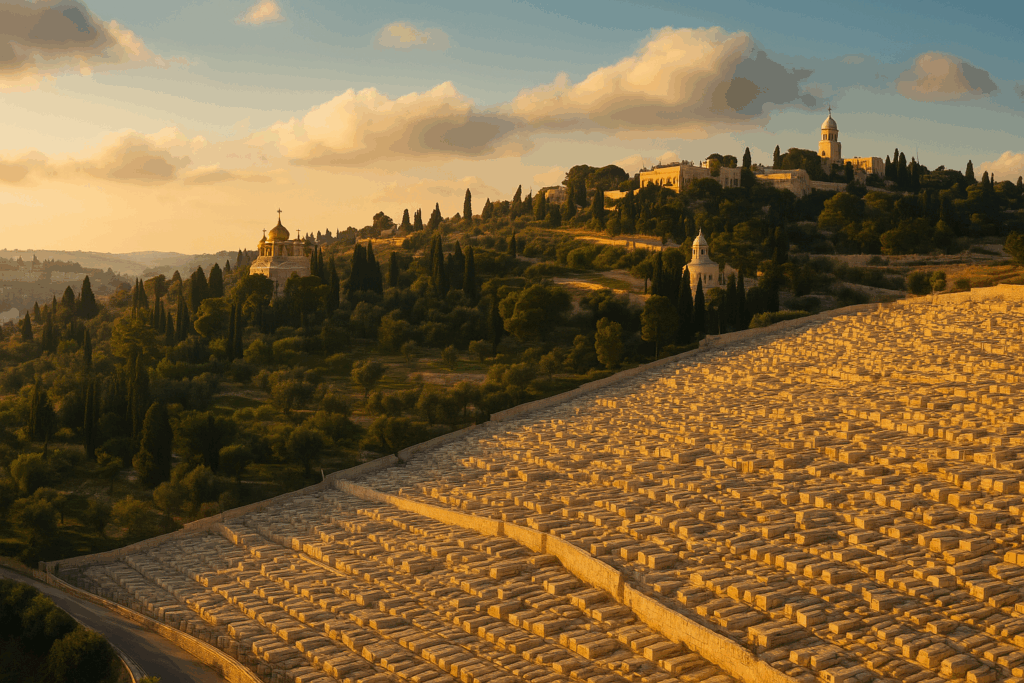
So imagine the scene in Matthew 24. Yeshua had just left the Temple. The disciples, stunned by His prophecy of its destruction “not one stone here will be left upon another” follow Him eastward. They cross the Kidron Valley and climb the Mount of Olives, that ridge long shadowing Jerusalem from the east. There, with the Temple still in full view, He sits. His disciples come privately, and ask: “Tell us, when will these things be? And what will be the sign of Your coming (parousia), and of the end of the age?” (Matt. 24:3).

The Meaning of Parousia

That word, “coming,” is parousia. It does not simply mean arrival in the sense of showing up. It carries the weight of presence, royal presence. In the Greco-Roman world, a parousia was the official visit of a ruler or emperor. His return to a city was heralded as his “second coming.” When he arrived, his presence was felt in unmistakable ways: military parades, decrees of clemency, feasts of abundance, public games, distributions of food and gifts. His coming reasserted dominion and celebrated sovereignty.

To ask Yeshua about His parousia was politically charged, subversive in the extreme. In a world where Caesar was hailed as “Son of God,” “Lord,” and “Savior,” the disciples were asking Yeshua: When will You come in glory as the true King? When will Your dominion be revealed, not Rome’s?

And notice: Yeshua does not answer this question from the Temple Mount. He speaks from the Mount of Olives. The choice is deliberate. Because the Presence has relocated.

Prophetic Background of the Mount of Olives

Ezekiel saw it long ago. When the glory of Yahweh departed from the First Temple, it did not vanish into thin air. The prophet describes the Glory rising, leaving the threshold, and coming to rest east of the city on the Mount of Olives (Ezek. 11:23). The mountain became the place of divine presence, awaiting the day of return.

The prophets saw more. Zechariah envisioned the Day of the Lord when Yahweh Himself would descend to fight for His people. His feet would stand on the Mount of Olives, the very place where He had departed, and the mountain would split under the weight of His arrival. From that place the Lord would reign as King over all the earth (Zech. 14:4–9).

The Relocation of God’s Presence

The pattern is unmistakable. Yeshua’s Olivet Discourse is not simply a teaching on end-time signs; it is a declaration that He Himself is the Glory returning to the mountain. The location interprets the message. Though the current Temple is destined for ruin, the Presence of God is not lost. It has shifted to a new cosmic mountain.

The Mount of Olives in Yeshua’s Mission

This is why the Mount of Olives becomes such a focal point in Yeshua’s mission. It is the place where He prays and sweats blood before His arrest. It is the place where Judas leads the soldiers to betray Him. It is the place of testing, like Sinai was for Moses and Elijah. And most significantly, it is the place of His ascension. From the Mount of Olives He rises into heaven, clothed in resurrection glory, enthroned at the right hand of the Father. The angels promise His disciples that “this same Yeshua… will return in the same way you saw Him go” (Acts 1:11). In other words, His parousia will mirror His ascension back to the Mount of Olives.

The Sign of His Coming

In Matthew 24 the disciples ask for a sign of His coming. Yeshua warns them of false messiahs, wars, earthquakes, famines the shaking of creation itself. Yet the deepest sign is theological, not geopolitical: the Presence at that time has shifted. The Temple will be destroyed stone by stone, but the Presence has taken His seat on this mountain for now. His parousia is bound to the faithfulness of God who promised that His Glory would one day return to reign.

A Place of Reversal and Hope

This mountain is also the place of reversal. David once fled Jerusalem weeping, climbing the Mount of Olives in exile as Absalom seized the throne. Yet he returned in triumph. Yeshua retraces that royal path. He ascends Olivet not as an exile but as the greater Son of David, the rejected King who will return in power.

So what does all this mean for us? It tells us that in Yeshua’s day the cosmic mountain has moved. And it reminds us that God’s Presence is revealed in the enthroned Messiah. And it assures us that His parousia, His royal presence, is already breaking into history even as we await its final unveiling.

The True Sign of His Parousia

The disciples asked: What will be the sign of Your coming, and of the end of the age? The answer, in part, is that the end of the age, which referred to the destruction of the Temple by Rome in the first century, will come and the Presence will relocate to the Mount of Olives as shown in the book of Acts. When the old order crumbles, the King ascends. When the Mount of Olives becomes a throne room where heaven and earth meet.

The sign of His parousia is not merely political upheaval or cosmic disturbance. It is the Presence of Yahweh in Yeshua, enthroned on the mountain, coming again as the true Son of God, Lord, and Savior. Caesar may stage his parades, but the nations will see the Son of Man coming on the clouds with power and great glory.

parousia
wilderness

The Wilderness: Punishment or Preparation?

Is the wilderness a curse or a gift? Is it the place where covenant breakers are banished to suffer, or is it the crucible where God forms His people for life with Him? The answer, as with much in the Bible, is not either/or but both/and. The wilderness is punishment and preparation, exile and encounter, judgment and mercy. To walk through the wilderness is the stage where chaos and creation wrestle, and where God trains His people to bear His image faithfully into the land.

From the beginning, the Torah frames covenant blessing and curse in terms of creation and de-creation. To walk in covenant loyalty is to dwell in ordered abundance: fruitful fields, flowing streams, healthy families, and victory over enemies. To break covenant is to invite the undoing of creation. Barrenness invades the womb, the earth withholds her bounty, the rains dry up, and enemies devour the land.

The wilderness embodies this unraveling. It is the antithesis of Eden—a “great and terrible place” filled with fiery serpents, scorpions, famine, and thirst. Instead of a well-watered garden, there is dust. Instead of shade trees, there is blazing sun. Instead of harmony, there is threat. In covenantal terms, the wilderness is what happens when humanity rejects the Creator: chaos breaks loose, and death reigns.

For Israel, the wilderness was the visible consequence of rebellion. Their grumbling, their golden calf, their refusal to enter the land—all led to God’s decree that an entire generation would perish in the desert. The wilderness was punishment for covenant failure.

And yet, judgment is not the whole story.

The Hebrew word yasar, often translated “discipline,” runs like a thread through the Torah. The wilderness was not only a place of punishment—it was the Father’s training ground. As Moses tells the people:

“Know then in your heart that as a man disciplines his son, so the Lord your God disciplines you” (Deut. 8:5).

Discipline, biblically, is never merely retribution. It is restorative, corrective, and creative. God strips away Egypt’s influence, rewires their minds, humbles His people, and teaches them dependence on His voice. For forty years He trained Israel to live not by bread alone, but by every word that comes from His mouth.

The wilderness became a paradoxical place of provision. In the chaos, God sustained His people: manna from heaven, water from the rock, clothes that did not wear out, feet that did not swell. What looked like punishment was also preservation. God was teaching His people that life flows not from circumstances but from covenant fidelity.

The Pattern of Creation

The story of the wilderness mirrors the creation story itself. In Genesis, God speaks into the formless void and orders chaos into cosmos. In Exodus and Deuteronomy, He speaks into Israel’s chaos and orders them into a people. The refrain of Genesis—“And God said”—echoes: man lives by every word that proceeds from God’s mouth.

Covenant life is creation life. Obedience to God’s mitzvot is not bondage but participation in the creative rhythm of the universe. To obey is to align with the voice that once called light from darkness and fruit from the ground. To disobey is to tear at that fabric, plunging existence back into wilderness.

Thus, the choice is stark: remember the Giver and flourish, or forget Him and unravel. Pride and arrogance threaten to undo the blessings as surely as idolatry does. Israel is warned not to say, “My power and the strength of my hands have produced this wealth for me.” Creation thrives only when the Creator is remembered.

When covenant is restored, creation itself flourishes. The land yields grain, wine, and oil. Herds multiply. Health replaces disease. Enemies are subdued. The Genesis mandate to be fruitful, multiply, fill, and subdue is renewed. The wilderness was not wasted time—it was preparatory space, the threshing floor where slaves were transformed into a kingdom of priests.

The wilderness was the long way around, but it was the only way. God was not merely getting His people out of Egypt; He was getting Egypt out of His people.

Yeshua and the Wilderness Test

This pattern is picked up and fulfilled in Yeshua’s life. After His baptism in the Jordan—the river of covenant threshold—the Spirit drives Him into the wilderness. As Israel was tested forty years, He is tested forty days. As Israel faced serpents, hunger, and idolatry, so He faces the adversary himself.

The parallels are striking. Israel’s hunger was met with manna; Yeshua’s hunger is met with the devil’s offer to turn stones into bread. Israel tested God at Massah, demanding water; Yeshua refuses to put the Lord to the test when urged to throw Himself from the Temple heights. Israel bowed before the golden calf; Yeshua resists the lure of false worship when offered the kingdoms of the world.

Each temptation is a mirror of Israel’s failure—and Yeshua responds by quoting from the Torah, “Man shall not live by bread alone…” He clings to the very words Moses used to remind Israel of their calling. Where Israel forgot, Yeshua remembers. Where Israel grumbled, Yeshua trusts. Where Israel bowed to idols, Yeshua bows only to the Father.

Even the numbers speak. Forty years in the desert for a disobedient nation; forty days in the wilderness for the faithful Son. The testing of Israel revealed a heart of rebellion; the testing of Yeshua revealed a heart wholly aligned with the Father’s will.

And just as Israel emerged from the wilderness prepared to enter the land, so Yeshua emerged from the wilderness ready to begin His public ministry. His wilderness victory is the foundation for His healings, His teaching, His authority over storms and demons. Before He could subdue the chaos around Him, He first conquered the chaos within the wilderness of testing.

In Yeshua, we see the true Israel, the obedient Son who embodies covenant fidelity and ushers in new creation.

The Wilderness Today: Our Training Ground

For us, the wilderness is more than geography. It is the condition of life in a broken world, the trials and tests that strip away illusions of self-sufficiency. Our wilderness might look like illness, loss, uncertainty, or temptation. But the purpose is the same: to train us in dependence on God’s word, to shape us into a people who live by His order rather than chaos.

The question is not whether we will walk through wilderness—we all will. The question is whether we will see it as punishment only, or as preparation for promise. If we resist His discipline, we remain enslaved to chaos. If we submit, we emerge as priests and heirs, ready to steward His new creation.

The wilderness is where punishment meets preparation, where judgment becomes discipline, and where chaos is reshaped into order. Israel’s forty years were not wasted—they were the womb of a nation. Yeshua’s forty days were not failure—they were the victory of the true Son.

So it is with us. The wilderness is not the end but the means. It is the crucible where God trains us to live by His word, so that through us, His order can flourish in the world.

The wilderness may be “great and terrible,” but it is also holy ground. It is where we learn that life is not sustained by bread alone, but by every word that proceeds from the mouth of God.

wilderness
generations

The Forty Two Wilderness Journeys & Forty-Two Generations

Did you know that the forty-two wilderness encampments in the Torah portion, Massei, line up with the forty two generations in Matthew’s genealogy of Yeshua? That is no accident. These are not two different stories. They are one story—woven together by the Spirit, meant to show us the great journey of God’s people from slavery to promise, from exile to home, from chaos to new creation.

The sages counted forty-two distinct encampments during Israel’s forty-year trek through the wilderness. Each stop was not random but commanded by God. Every resting place shaped Israel into a holy congregation, preparing them for the land of promise.

Think about those stations: from the chains of Egypt to the shelter of Sukkot, from the bitter waters of Marah to the refreshing springs of Elim, from the testing of Pi-Hahiroth to the very doorstep of the Promised Land at Dophkah. Each camp was part of Israel’s transformation. The wilderness became a spiritual classroom.

God stripped away the excesses of Egypt and the grip their idols had on Israel. He taught the generations contentment. He trained them to depend on Him alone for food, water, protection, and life itself. Yes, the journey was hard—snakes slithered in the dust, wild animals stalked the edges, hunger and thirst gnawed at them, the desolation of the desert pressed in. But every miracle reminded them that their survival came from His hand alone.

The forty-two encampments mark movement from chaos to order, from emptiness to fullness, from darkness to light. They echo creation itself, when God hovered over the formless void and spoke life into being.

The Forty-Two Generations

Matthew begins his Gospel with a genealogy structured in three sets of fourteen—a total of forty-two generations. From Abraham to David, from David to the exile, from the exile to the Messiah. This was deliberate. Just as Israel’s wilderness journey had forty-two stages, so too the unfolding of redemptive history finds its culmination in forty-two generations.

Abraham represents promise. David represents kingship. The exile represents the end of self-rule. And Yeshua represents fulfillment—the One who completes Israel’s journey and brings the story home.

The generations of Yeshua is not just a historical list. It is a declaration: history itself is a wilderness journey. Every generation marks an encampment, every name a step along the way, every life a thread in God’s grand design. And the destination is clear—the Messiah, the Son of God, the new Joshua who leads His people into the Promised Land of new creation.

Yeshua as Israel’s Fulfillment

Yeshua’s own life follows the same pattern as Israel’s. He passes through the waters at His baptism in the Jordan, just as Israel passed through the Reed Sea. His immersion marks the new entry point into God’s kingdom.

Then He is driven into the wilderness, where He faces the serpent, the Satan, the Pharaoh of this age. Where Israel failed in their testing, He overcomes—defeating the gods of empire not with armies but with faithfulness and the Word of God.

Then He ascends the mountain. Like Moses on Sinai, Yeshua goes up a mountain in Galilee, sits in authority, and delivers the Torah anew in the Sermon on the Mount. He presents Himself not just as a teacher but as God’s own voice on the mountain—the living Lawgiver, the divine Word made flesh.

The Outsiders in the Story in the Generations

And look at who Matthew chooses to highlight the generations in Yeshua’s line. He doesn’t just list kings and patriarchs as was common in that day. He includes five women in the generations—all wilderness figures in their own right. Tamar, Rahab, Ruth, Bathsheba, and Mary.

Each one lived through chaos, shame, or loss in a world stacked against them. Each one was an outsider—Gentiles, outcasts, sinners by reputation. And yet each was carried by God’s grace into the Biblical story of redemption. Matthew is showing us that the final encampment, the last of the generations, is not just about Israel. It is about the whole world. The Messiah comes to deliver all humanity.

That’s why this isn’t just history. It’s a modern story too. We are all on a journey, continually moving from chaos to order, from bondage to freedom, from exile to new creation. And like Israel, like Abraham, like Ruth, like Yeshua Himself, we face storms along the way.

Storms expose us. They strip away what is comfortable and show us what really matters. Recently in Texas, floods devastated entire communities. Whole families were swept away in moments. Children left orphaned, neighborhoods washed into ruin. The stories were unbearable—funerals where three and four family members were mourned at once. Homes became watery graves.

And yet, in the chaos, light broke through. Volunteers like the Cajun Navy risked their lives to rescue strangers. Firefighters, police officers, and ordinary neighbors worked without rest to comfort the grieving and save the stranded. The storm exposed devastation—but it also revealed courage, compassion, and selflessness.

Every storm asks the same question: How will you respond?

And the Bible is full of storm stories. Abraham faced famine and dislocation. David endured betrayal from his own son. Ruth lost her husband and chose exile with her mother-in-law. Their storms shaped them—not by what happened, but by how they responded.

Abraham built altars and called on the name of the Lord. David poured out his heart in psalms of lament and trust. Ruth clung to Naomi with loyalty and courage, choosing faith over bitterness. None of them were perfect. Abraham lied to save himself. David committed adultery and murder. Ruth was of the Moabite generations, descended from a people Israel despised. But God worked through them—not because they were flawless, but because they turned to Him in the storm.

That is the real test. Not the storm itself, but our response to it. Will we let the chaos define us? Or will we submit to God and let Him shape us into people of faith?

Our Journey to New Creation

The forty two encampments of Israel and the forty-two generations of Matthew remind us that our lives are not random. Every step, every trial, every storm, every victory is part of God’s redemptive design. He is leading us somewhere.

The wilderness still teaches us today. It teaches us to live with contentment, to depend on God, to be generous, to value heaven over earth. It teaches us that storms will come—but storms are never the end. The end is new creation.

The forty-two encampments and the forty-two generations tell us that history is marching toward redemption. And the question for us is the same as it was for Israel, the same as it was for Abraham, David, Ruth, and the disciples: How will we respond to the storm?

Because in the end, the only thing we carry through the wilderness is not our wealth, not our success, not even our survival. What we carry is our character, our faith, and the way we treated others when the waters rose.

generations
wisdom

Wisdom as the Foundation for House Building

From the beginning, God designed Lady Wisdom to be a builder. The book of Proverbs declares, “By wisdom a house is built, and by understanding it is established” (Prov. 24:3). The Hebrew word for “build” (banah) is closely related to the word for “understanding” (binah). This connection tells us something profound: true building requires discernment. It takes more than bricks, walls, or even good intentions to establish something that lasts. It takes wisdom—the kind that can distinguish between good and evil, truth and deception, life and death.

This is the unique strength of the wise woman who builds her house. She doesn’t just decorate space or manage the household. She becomes the foundation, the framework, and the guiding pattern through which her home, her family, and even her community are shaped.

Lady Wisdom does not merely construct physical walls; she weaves mental, emotional, spiritual strength into the very fabric of her home. Her work echoes the women in the wilderness who stitched together the Tabernacle coverings and curtains—thread by thread, layer by layer—until the presence of God had a dwelling place. The wise woman does something similar. She knits together prayer and discernment, guidance and encouragement, discipline and compassion. What emerges is not just a “house,” but a sanctuary, a place where God’s presence can be encountered.

Her building work mirrors creation itself. In the beginning, the Spirit of God hovered over chaos. Into that void, God spoke order, separating light from darkness and filling emptiness with life. So too, the wise woman—formed in His image—brings order into the chaos around her. She tames disorder with patience. She counters despair with hope. She transforms emptiness with hospitality.

The First Builder is Wisdom

When God formed the first woman, Scripture tells us He took Adam’s tzelah, often translated as “rib,” though the word also carries the sense of “side” or better yet “image.” God built (banah) this part of Adam into the woman (Gen. 2:22). This is the first time in Scripture that the word banah is used of a person. God was not merely fashioning a companion—He was establishing the archetypal builder of the house.

The woman’s vocation parallels that of Betzalel, the craftsman chosen to construct the Tabernacle. Betzalel’s name means “in the image of El.” He was filled with the Spirit of God, endowed with wisdom, understanding, and knowledge, to design and build the sanctuary (Exod. 31:1–5). In the same way, the woman was formed in God’s image, given these same divine qualities, and entrusted with the work of constructing, nurturing, and sustaining life. She is a master builder, echoing both the design of creation and the holy Tabernacle where God dwells with His people.

The concept of the woman as helper is not well understood—as ezer or helper she is not subordinate but a deliverer-ally, one God repeatedly calls upon to rescue and protect for His purposes. And she is herself a house—a living, breathing sanctuary of life. She nurtures, teaches, models, intercedes, organizes, comforts, and shapes the next generation. She embodies the divine pattern of hospitality, covenant, and stewardship.

The wise woman’s work points to the greater sanctuary: the community of God’s people. Just as Israel was called to be a dwelling place for the Lord among the nations, so the wise woman’s household becomes a microcosm of that reality. And in the New Testament, this pattern expands to the worldwide assembly—the Church—as the Spirit knits together men and women alike into a living temple. No single person bears the full weight of that role, but within the whole community, wisdom finds its perfect expression.

Stitching the World Back Together

In a world fraying at the seams, the wise woman becomes like a holy seamstress. Wisdom stitches it back together—one prayer, one conversation, one act of courage at a time. She mends broken spirits with compassion, repairs wounded hearts with encouragement, and reinforces faith with her steadfast devotion. Her work is often unseen, uncelebrated, and undervalued. But in God’s economy, it is indispensable.

Her house, then, is not just a physical dwelling. It is a witness to the world. It is a sanctuary of protection, a place of instruction, a shelter in the storm, and a reflection of the One who builds and designs all things in perfect order. To enter such a house is to encounter a glimpse of the kingdom of God breaking into the present.

A Witness to God’s Order

Ultimately, Lady wisdom represents women who build and reflect the nature of God Himself. Just as He brought order out of chaos, so she brings life out of disorder. Just as He crafted creation with intention, so she shapes her household with care. Just as He welcomed humanity into His dwelling, so she opens her home as a place of refuge and belonging.

To be a woman of wisdom is to participate in God’s own work of creation and redemption. Her calling is not small or secondary—it is central to God’s plan for His people. Her house, her influence, her legacy become living testimonies of divine wisdom at work in the world.

The wise woman builds her house not with stone, wood, or mortar, but with wisdom, understanding, and knowledge. These materials endure long after physical walls crumble. They shape generations. They preserve faith. They create sanctuaries where God is worshiped and known.

In every age, but especially in times of chaos, the wise woman’s house becomes a beacon. It tells the world that God is a God of order, that His people are a people of hope, and that wisdom still weaves strength into fragile human lives.

wisdom
Skip to content