Author: Dinah Dye

pattern

Study Bible Tools: Pattern recognition in Creation

When people study the Bible, they often have trouble seeing the Scriptures as a unifed whole. One of the most important tools is learning to recognize patterns. Biblical pattern recognition means noticing recurring structures, themes, symbols, cycles, and repeated narratives that appear again and again. Instead of treating passages as isolated texts, we need to see how everything connects. Names, numbers, geography, identities, rituals and architectural elements that repeat. These patterns form meaning. They are the Bible’s internal language.

This approach wasn’t invented by modern interpreters. Ancient Near Eastern literature was intentionally layered. Writers used repetition, inversion, mirroring, and numerical sequencing as normal methods for interpretation. Scripture is built this same way. Chiastic structures, creation-shaped story arcs, wordplays, key numbers, and recurring figures reappear as a part of the overall design. Scripture is not built on fragments of text.  The Bible is a coordinated story, woven across generations by the biblical writers.

Creation as the Master Pattern

The Bible’s first and most foundational pattern is creation. Creation is not simply the moment the world comes into existence; it is the structure into which the rest of the biblical story fits. Genesis 1–2 serves as the blueprint: God confronts chaos, brings order, forms sacred space, installs His image-bearers, blesses them, and then rests as King. That sequence, moving from disorder to ordered life, becomes the model for everything that follows.

Genesis opens with tohu va-vohu, formlessness and emptiness—the ancient symbol of instability. In the ANE world, the waters of the deep represented ungoverned, unbounded and untamed regions. The Spirit hovering over the darkness is the turning point. The quickening agent to creation. And God does not destroy the deep; He shapes it. His word speaks to disorder and elevates it into a structure that is fruitful and full of life. This is creation as the Bible defines it: God raising up that which is lacking, chaotic, and unformed into an ordered, inhabited sacred space by the power of His Spirit.

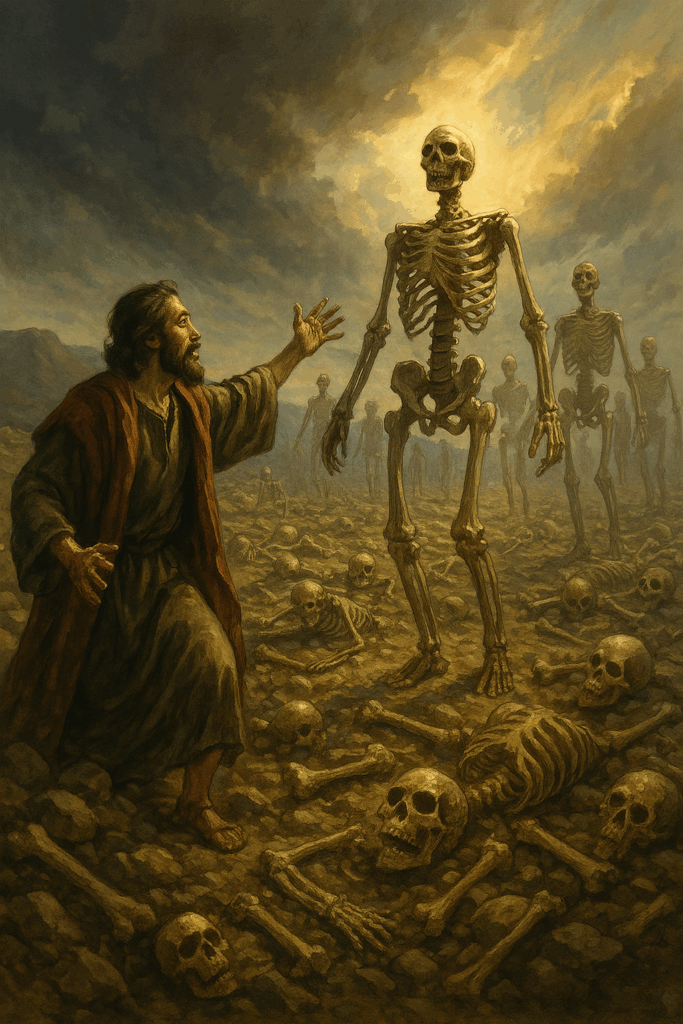
Once you know the pattern, you begin to see it everywhere. Israel trapped at the sea is lifted from danger as the waters divide. Sinai wrapped in cloud, fire, and trembling rock sees the once slave population in Egypt being re-formed into a nation. Ezekiel’s valley of bones, a picture of exile and death, becomes a living people when the prophet speaks breath to dry bones. And the resurrection, the final new creation, raises humanity from mortality into eternal life. Creation is God always forming, filling, and restoring.

Creation as Elevation

The biblical story never treats chaos, collapse, or dysfunction as a permanent state. God repeatedly descends into the broken places in order to lift up His people. Redemption scenes are simply creation scenes being replayed with judgment, rescue, and covenant renewal.

Israel’s history continually illustrates the pattern. The Bible, then, is not a stack of disconnected stories. It is architectural in nature — like a temple with every stone set with intention. Creation is the design that holds it all together.

Creation Patterns Throughout Scripture

The biblical writers deliberately echo Genesis throughout the entire Bible to show continuity. For example, the Exodus story mirrors creation as waters are subdued and a people are formed. The Tabernacle is constructed as Eden-like in miniature. Psalms use creation language to describe divine kingship over the nations. The Gospels announce new creation in Yeshua using the imagery of the garden, breath, and Spirit.

Seeing the creation pattern can help modern readers see the big picture. There’s a single narrative. God elevates, forms, fills, blesses, governs, and rests. That same rhythm underlies the flood, Abraham’s covenant, Israel’s deliverance, the establishment of David’s throne, the incarnation, the cross, and the resurrection. Creation in “pattern recognition” helps us to see God’s elevating work every time He acts.

Ezekiel 37 — A Creation Replay

Ezekiel’s vision of the valley of dry bones is perhaps one of the clearest examples. The scene represents creation in reverse. Israel is in exile. They’ve lost their identity. There’s no central temple, no kingdom, and nothing left to build from. Israel sees itself as “cut off,” like a felled tree that can no longer bear fruit. In ancient symbolism, trees represented kingdoms, so Israel is a kingdom of dead trees.

God asks the key question: “Can these bones live?” From a human perspective, the answer is no. But chaos is always where God begins to work. He instructs Ezekiel to speak, to bring divine breath into the void. Genesis is being deliberately echoed — breath entering dry bones. Bones are reconnected, structure returns and the nation will rise again. Israel is not merely revived; she is re-created.

Ezekiel 37 is a replay of Genesis. From chaos and disorder to the hovering of the Spirit, and a people restored to life for a sacred purpose. It also anticipates the Gospel, where resurrection becomes the final elevation: humanity lifted from death, crowned with glory, and restored to God’s design.
pattern
pattern

Reading Daniel’s Cosmic Language in Its Ancient World Setting

Cosmic Lights and Fallen Kings

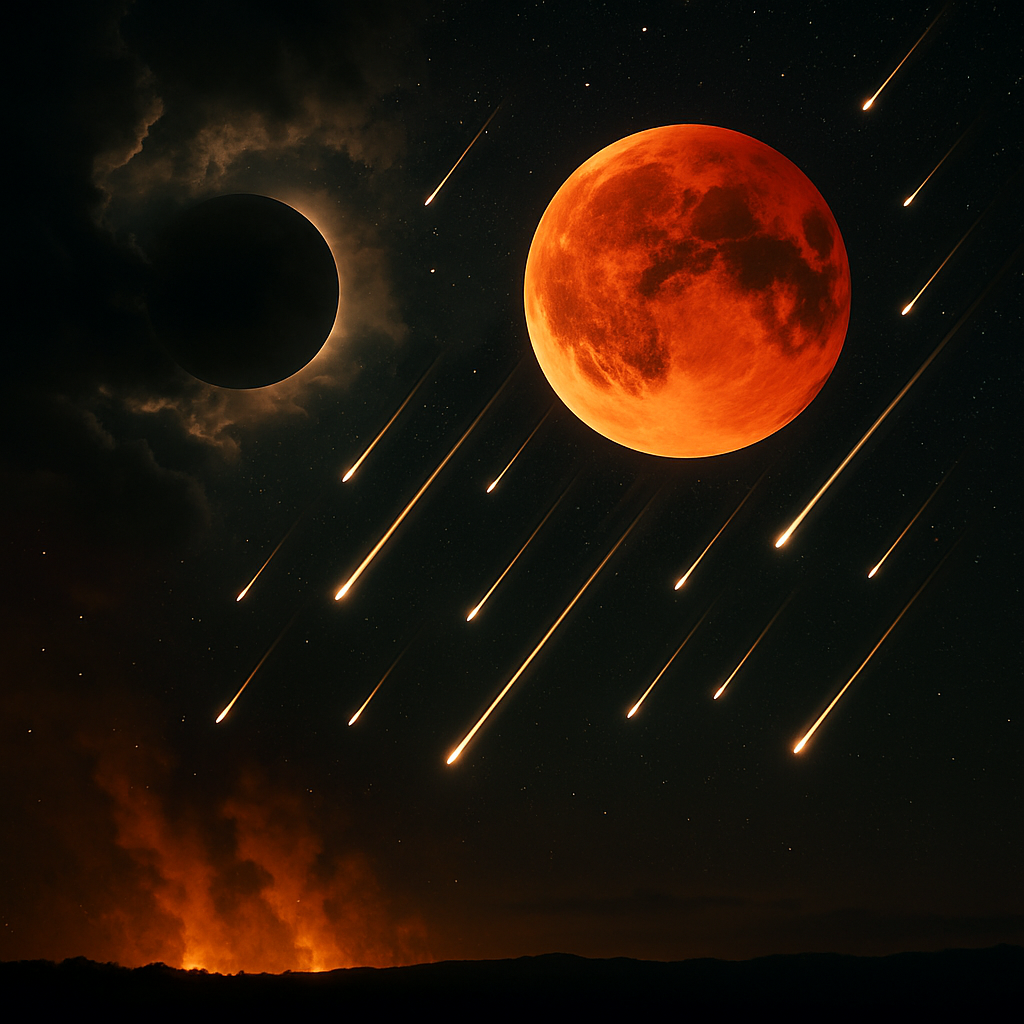
When Scripture speaks of the sun darkening, the moon turning to blood, stars falling, and the powers of heaven shaking, our modern sensibilities picture complete cosmic collapse. But Daniel, the prophets, and Yeshua’s disciples would not have heard such astronomical disaster. Instead, in the ancient imagination, heaven was the political sphere for kingship. Sun, moon, and stars symbolized thrones, rulers, and gods. Their dimming meant rulers falling, kingdoms collapsing, and idols being dethroned.

The rhythms of life—planting, growing, and harvesting cycles were all evidence of divine order. When those cosmic rhythms were shaken, it suggested something amiss in the political realm. When the prophets spoke of lights failing, they weren’t warning of eclipses necessarily. They were declaring that human systems were crumbling under the weight of their own corruption.

Babylon’s kings took on starlike identities, tying their glory to the patterns in the skies. Nebuchadnezzar himself is the image of a fallen star in Isaiah 14: exalted, then humiliated. This is Daniel’s cosmic language—heaven shaking because thrones are shaking, dominions are failing because tyrants are failing.

Daniel’s Visions and the Fall of Empire

Daniel’s life unfolded in Babylon, the empire that razed the temple and hijacked temple vessels for its own purposes. In his visions, the shaking of heaven means the shaking of empire itself. The gods of Babylon, linked to lights in the sky, seemed triumphant when Jerusalem fell. But Daniel saw differently: the heavens would tremble, for Yahweh’s kingdom cannot be overthrown. His cosmic kingdom will endure forever. This language unmasks the fragility of every empire boasting eternal dominion.

The Son of Man Enthroned in Glory

Into that cosmic drama rises Daniel’s mysterious figure: the Son of Man. In Daniel 7, He comes “with the clouds of heaven” to the Ancient of Days. Modern readers hear second coming language. But Daniel saw it in terms of enthronement.

In Israel’s world, clouds belonged to Sinai and ascents to holy ground: Moses climbs into a cloud to encounter Yahweh. So, the Son of Man ascends in clouds to the throne room, receiving kingdom, dominion, and everlasting authority. Greek uses the word parousia to describe the royal arrival of kings. This is Daniel’s vision: the regal arrival of One like the Son of Man at His enthronement.

The apostles declared that this took place through resurrection and ascension. His rising is victory over the enemy that is death; His ascension is coronation. What Daniel foresaw in symbols, the Gospels proclaim through a visible manifestation.

Heralds, Kingdom, and the Gathering of the Loyal

Daniel’s vision continues with the nations mourning and the angels gathering the elect. When kings fell, entire tribes lamented; their security and identity died with the throne. Yet the Bible reshapes this lament: the fall of tyrants is the dawn of hope for the nations. The heavens shake because the true throne stands.

Then come the messengers. Angels are dispatched for proclamation. They are heralds, announcing victory and summoning the faithful to gather around the enthroned King. Ancient kings sent envoys ahead to declare triumph and assemble subjects for procession. Daniel’s imagery draws from the same ritual.

The biblical story reveals: Sinai formed a covenant assembly at the mountain. Zechariah foresaw Yahweh standing in triumph upon the Mount of Olives. Yeshua ascended from that same mountain with the promise of return. Heaven and earth meet in the King’s enthronement.

And beneath that vision is another pattern: whenever God moves to establish His reign, chaos rises to resist. The serpent in Eden. Pharaoh in Egypt. Amalek in the wilderness. Satan in the desert. Yet the pattern always ends the same: the King defeats the adversary and rest and enthronement follow.

Daniel’s cosmic language does not forecast the end of the universe. It announces the end of every rival throne. The heavens shake because the Son of Man has taken His seat. His kingdom is the one that advances.

cosmic
breath

Rosh HaShanah and the Breath that Built the World

Genesis does not open with a clash of gods or the chaos of ancient war stories. It opens with breath. Seven Hebrew words—like seven exhalations—form the opening sentence of Scripture. In the beginning God created the heavens and the earth. In those seven words/seven breaths, heaven and earth are bound together, creation takes shape, and covenant begins. Sound becomes architecture for the new world. Creation, in the biblical imagination, is born not from conquest, but from divine life shared.

Ancient Patterns are Elevated

The world of the ancient Near East told a different origin story. Babylon’s creation epic imagines Marduk splitting the chaos goddess in two to build his world from her corpse. Order came from violence; mastery meant bloodshed.

Genesis, though, answers with a reversal. Yahweh does not conquer anything. He speaks. His breath moves across the deep like a mother bird hovering over her nest. Light expands, seas retreat, land rises up, and life comes forth from His voice. Battle is not the creative power here. Sound is the structure of the cosmos.

Jewish tradition says that words are breath, and the signature of life. When God forms Adam and then exhales into his nostrils, the Bible is describing more than mystical imagery—this is enthronement language. In a world where breath meant the royal right to rule, as in Egypt, Genesis offers a radical claim: God shares His own breath with humanity. Kingship is bestowed on the one chosen for this task.

Creation, Covenant, and Kingship

The patterns are found in Egypt, Mesopotamia, and beyond. Priests in Egypt tried to awaken statues and royal bodies through these rituals. The god Ptah touches Pharaoh’s lips with the ankh to transfer divine life and authority. Breath meant giving legitimacy. Breath was what made kings and gave them their authority.

But Genesis takes that familiar ancient symbol and turns it on its head. God breathes on Adam. Humanity becomes His image, His agent, His royal priesthood. The breath in Adam’s lungs is the same breath that called light into being. How profound! God sharing His own life-force with His image bearers.

The pattern repeats. At Sinai, the same breath shakes the mountain. Fire, thunder, trembling ground, and the shofar blast all radiate from the presence of God. His Spirit hovers again—not over waters, but over a people being shaped into a nation—a new creation nation. Collectively, Israel becomes a new humanity: Spirit, sound, covenant. They are not given tablets alone, but something even more compelling— divine encounter.

And, again in exile, Ezekiel hears the call: “Come from the four winds, O breath, and breathe into these slain, that they may live.” The dry bones rattle, reconnect, stand, and finally inhale. Breath rebuilds a nation just as it once built the world. The nation is resurrected and returning to the land it was exiled from—a picture of the restoration of Adam and Eve returning to the garden.

In the New Testament, the arc reaches its high point. After resurrection, Yeshua breathes on His disciples: “Receive the Holy Spirit.” Messiah breathing life into His new creation—into a new humanity once again. It is Genesis One all over. Breath restores authority, it commissions the mission, and it places the divine presence inside ordinary people.

The Shofar: Breath is Remembered

This is what Rosh Hashanah and the coronation ritual looks like. The shofar is air forced through the horn of a ram—a living echo of the divine released on creation’s first day. Its blasts remember:

  • hovering over the waters,
  • filling Adam,
  • trembling breath at Sinai,
  • reviving dry bones,
  • Messiah imparting to His own.

It is breath returning to God in worship through His people. It is the memory of creation carried by the Spirit from the four winds of heaven.

When the shofar sounds on Rosh Hashanah, this is not just a ritual. God’s people are bearing witness to the true source of life and authority—the One who forms without violence, enthrones without domination, and shares breath rather than demands it. In a world that still tries to build empires through force, Scripture insists on another kingdom: one born from the Voice of God.

So, when the deep cry of the shofar blasts, go back to Genesis. To the hovering Spirit of God over the waters of chaos. To the divine speech that animates dust, shapes nations, restores exiles, and fills disciples. To the God whose breath continues creating and remaking our world in His image.

Rosh Hashanah is meant to serve as the memory of creation and the promise of renewal. It is the day when the Voice becomes a proclamation and humanity is reminded who shares their lungs. And the Voice that spoke the cosmos into being still speaks to us now.

breath
Jacob's ladder

Jacob’s Ladder at Bethel: The Stones That Formed a Temple and Pointed to Messiah

Most of us know Jacob’s ladder as a childhood Bible image—angels climbing a stairway to heaven while Jacob sleeps under the stars by a stone. The old spiritual sings, “We are climbing Jacob’s ladder… soldiers of the cross.” But in the Torah portion V’yetze (and he left), Jacob’s ladder is far more than a dream. It is the moment when heaven and earth meet at a single stone. The ladder or “sulam” really a ramp or stair—reveals Jacob himself becoming a living temple, a human Bethel or House of God. The four different stones he encounters at his head, at the pillar, at the well, and at the border reveal a pattern of creation, covenant, and new life.

In the ancient Near Eastern world, such stones were temple markers, miniature cosmic mountains, royal monuments, and legal witnesses. In Genesis, they show Yahweh breaking chaos and building His house through Jacob. The trajectory of Jacob’s ladder leads directly to Yeshua in John 1—the One who declares Himself the true Bethel, the Temple in flesh.

Bethel: Jacob’s Ladder and the Birth of a Living Temple

Jacob flees eastward from Beersheba just as Adam once fled east from Eden. His story is framed by four stone encounters—each a boundary marker steeped in ancient Near Eastern symbolism. Stones in that world were memorials, legal witnesses, temple foundations, and royal inscriptions—miniature mountains where heaven touched earth.

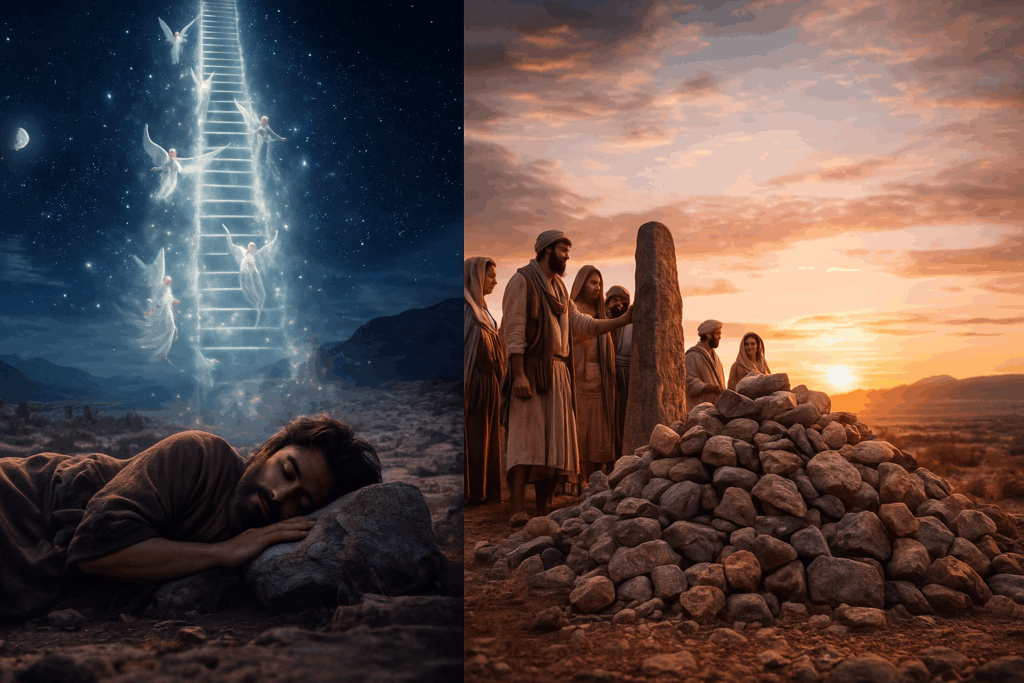
Jacob’s first night sets the pattern. Exhausted, he lays his head on a stone. That stone becomes the foundation for the most important vision of his life: a ramp rising from earth to heaven, with angels ascending and descending. Jacob wakes trembling, declaring, “This is none other than the House of God, and this is the gate of heaven.” He sets the stone upright, anoints it with oil, and consecrates it as a pillar, echoing ancient temple-dedication rites. A replication of Jacob’s ladder.

Bethel becomes the site of Jacob’s commissioning, the moment he becomes a living temple—a carrier of divine presence, a mobile sanctuary in the same pattern as the future tabernacle. The House of God is no longer fixed to a locale. It is attached to a man whom God has chosen.

From Bethel to Bethuel: The Cosmic House Meets the Human Household

Immediately after encountering the heavenly house, Jacob journeys to Bethuel, the household of Rebekah’s father. The names Bethel (House of God) and Bethuel (man of God, God dwells in him) echo one another. Bethel marks God’s cosmic dwelling; Bethuel marks the earthly family through whom His covenant will continue. Jacob’s journey from Bethel to Bethuel becomes a symbolic descent from the divine realm into the human realm.

The image of Jacob’s ladder is mirrored in John 1. Yeshua tells Nathanael that he will see “heaven opened and the angels of God ascending and descending upon the Son of Man.” Yeshua identifies Himself as the new Jacob’s ladder, the new Bethel—the living Temple where heaven and earth meet. And as Jacob enters Bethuel to form a covenant family, Yeshua gathers around Himself a renewed household of God.

The Stone at the Well: Life Released and Chaos Overturned

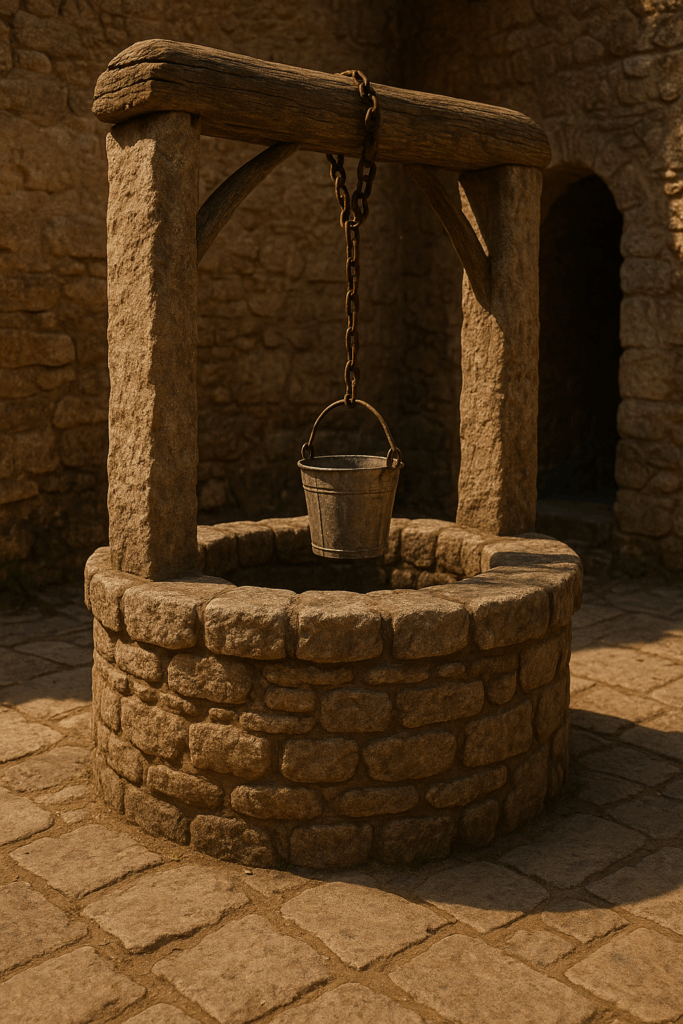
The stone theme continues in Haran. Jacob approaches a well that is covered with a massive stone. Wells symbolize life, fertility, covenant, and marriage. A stone that seals up a well symbolizes barrenness or the blockage of life.

Normally several shepherds were required to move the stone. Yet when Jacob sees Rachel, he rolls it away alone. This is not simply strength; it is also symbolism. Jacob removes the obstacle to life, opening the way for new creation. Like the opening of the Red Sea the sealed well becomes a life giving spring.

This foreshadows the stone rolled away at Yeshua’s tomb—the final overturning of chaos, barrenness, and death. Jacob’s act at the well signals that he is becoming a life-bringer, a patriarch through whom the twelve tribes, the living house of Israel will emerge.

The Covenant Boundary Stones: Jacob’s Exodus and Return

The final stone appears in Genesis 31. After twenty years, God commands Jacob to return, saying, “I am the God of Bethel, where you anointed the pillar and made a vow to Me.” Jacob’s story circles back to the first stone; the temple moment at Bethel anchors everything that follows.

Jacob sets up another pillar, and the whole family gathers stones to make a heap. This heap, or gal meaning to roll away, becomes the site of a covenant meal, a peace treaty, and a boundary line marking Jacob’s liberation from Laban’s oppression. It is Jacob’s exodus moment, the turning from exile toward home.

In the ancient world, stone pillars (stelae) marked victories, treaties, territories, and divine appearances. Jacob’s heap stands as a legal witness that God has delivered him, restored him, and established him in the land—just as the twelve stones of Sinai and the twelve stones of the Jordan stand as national covenant markers.

Jacob the Temple, Yeshua the Final Temple

Across these four stone encounters—the head-stone, the pillar, the well-stone, and the boundary-stone—Jacob is gradually transformed into a living temple. At the stone of Bethel he becomes the place where heaven and earth meet; at the anointed pillar he is consecrated as God’s chosen heir; at the well he becomes a giver of life, rolling away the obstruction that symbolizes chaos and releasing the waters of new creation; and at the boundary-stone he emerges as the liberated patriarch returning from exile to the land of promise.

Jacob’s ladder follows the biblical arc of creation, covenant, exile, return, and new creation. Yet the pattern reaches its fullness only in Yeshua, who becomes the true ladder or ramp joining heaven and earth in John 1 where angels are ascending and descending, the cornerstone of God’s living temple in Psalm 118 and Ephesians 2, the One who rolls away the stone of death in Mark 16, and the giver of living water in John 4. The stones ultimately point beyond Jacob to the Temple made flesh, the true Bethel through whom all nations are blessed.

Jacob's ladder

Hannah’s prayer in the bible — woman praying at temple

Hannah’s prayer in the bible: From Barrenness to New creation

Hannah’s warrior Prayer

Hannah’s prayer is in the book of Samuel. It opens, not with a king or a battle or a prophet, but with a woman in crisis. Hannah stands in the long line of barren matriarchs—Sarah, Rebekah, Rachel, women whose empty wombs reflect something deeper than personal longing. Barrenness in Scripture is never merely about infertility. It is a symbol of de-creation, the return to the primordial state before God spoke life into existence. Hannah is herself a living Genesis 1:2—tohu v’vohu, the emptiness and the void. Hers is story that God delights to transform. Hannah’s prayer reveals a powerful pattern of new creation and divine warrior reversal.

Elkanah: God Possesses

Even the names in the opening verses hint at creation imagery. Her husband is Elkanah, “God has created” or “God possesses,” a name that echoes the Creator-King who forms life from chaos. He is the son of Tohu, the same word used of the cosmic wilderness before creation. Hannah’s rival wife is Peninnah whose name carries the idea of a precious stone. She produces children easily—reflecting the ancient Near Eastern world where the highest honor for a woman was to bring forth sons. But Hannah, meaning grace, bears nothing but ridicule. Peninnah becomes her tzarah—her adversary, her tormentor, the embodiment of chaos taunting creation.

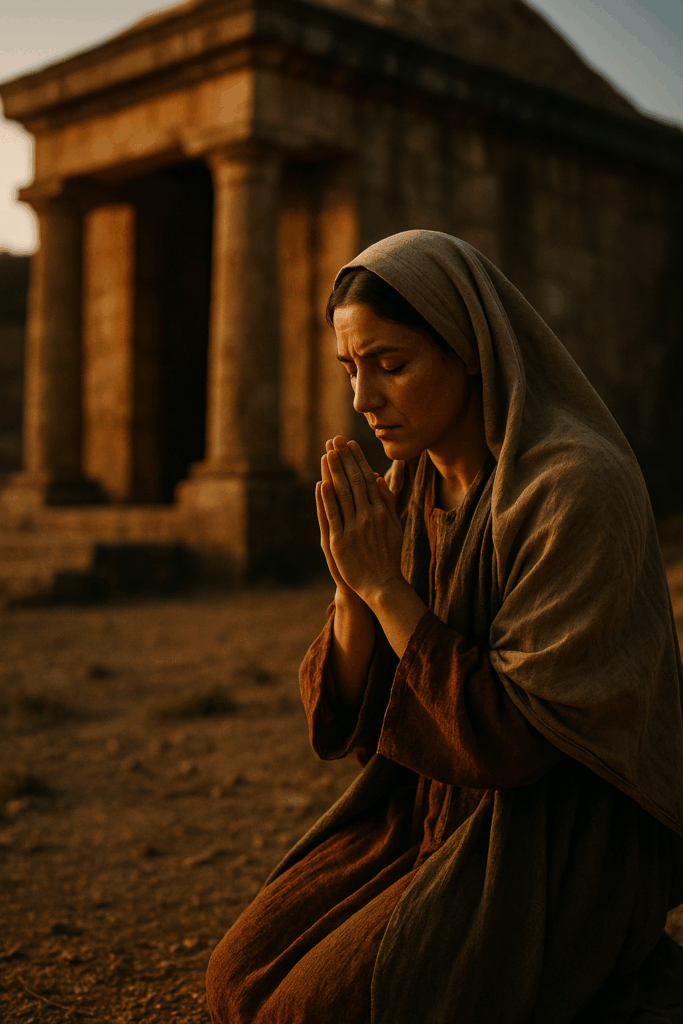
Each year the family ascends to Shiloh, possibly at the turn of the year, around the great fall festivals, when Israel gathered to remember God’s kingship, His covenant, and His ongoing creation of the world. There, in what might very well be a Yom Kippur setting of affliction and fasting, Hannah refuses to eat and weeps before Adonai. She cries out that God would “remember” her—evoking Rosh Hashanah, the Day of Remembrance, the coronation of the King, the sounding of the shofar that awakens creation from slumber. Her prayer is a cosmic cry for God to once again speak order into chaos.

Eli the priest misreads her silent prayer and accuses her of being drunk—perhaps an ironic hint of the spiritual dullness in Shiloh’s leadership. But Hannah is not drunk; she is a “woman of oppressed spirit,” a soul pressed down by chaos caused by infertility, ready for God to act. When Eli finally blesses her and sends her away, the text shifts. And at “the turn of the year”—a phrase implying festival imagery—Hannah conceives and bears a son. She names him Sh’muel, “God has heard,” an echo of shema, the great cry of Israel. A new creation is beginning.

The Rise of the Divine Warrior King and Hannah’s Prayer

But it is Hannah’s prayer of Thanksgiving after Samuel’s birth that unveils the true nature of her story. This is not a quiet thank-you note to God; it is a holy war song, a battle hymn announcing the rise of God’s anointed king. Her song sits at the chiastic center of Samuel’s birth narrative, the turning point upon which the book pivots. Samuel will anoint David, the shepherd-warrior who will become Israel’s great king. And Hannah, in her song, becomes the first herald of this divine warrior storyline.

Hannah’s prayer mirrors the Song of Moses and the Song of Deborah, the classic Divine Warrior hymns of Israel. She speaks of horns lifted high, a symbol of royal strength. She smiles over her enemies, not because of personal vindication, but because God has shattered the proud and lifted the humble. “There is no Rock like our God,” she declares—evoking the cosmic mountain, the foundation of creation upon which all stability rests. The bows of the mighty are broken. The stumbling are girded with strength. The barren woman gives birth to seven—perhaps an allusion to the seven-day creation, the full restoration of life from nothingness.

Hannah’s prayer proclaims that Adonai kills and makes alive, brings down to Sheol and raises up—language that stretches beyond her own story to the resurrection hope embedded in Israel’s Scriptures. God raises the helpless from the dust and seats the poor with nobles—images that resonate with the divine council, the heavenly courtroom where God enthrones His chosen ones. The pillars of the earth belong to Adonai, the cosmic architecture that joins heaven and earth. And then comes the climax: “He will give strength to His king and exalt the horn of His anointed one.”

There is no king in Israel at this time. Saul has not yet been born. David is generations away. But Hannah sees beyond her own deliverance. Hannah’s prayer prophesies the coming Messiah, the ultimate Divine Warrior who will overthrow chaos and establish God’s kingdom permanently. Her womb becomes the battleground where God overturns de-creation and brings forth the one who will prepare the way for King David.

“My Soul Magnifies the Lord”

Hannah’s prayer reverberates through the ages, echoing through Mary’s song in the New Testament (Luke 1.46-55). A young mother to be sings of God bringing down the mighty, lifting the lowly, filling the hungry, and scattering the proud. Her song is a declaration that the Davidic Warrior King has arrived in her womb and for that she says, “My soul magnifies the Lord.” Yeshua will be the final Davidic King, the fulfillment of Hannah’s vision, the One whose birth signals holy war against death, chaos, and every enemy of God.

Hannah’s prayer and her story follows a pattern in the biblical narrative. Her barrenness turning into birth mirrors the way God brings life out of places that are empty and unproductive. Her weakness becoming strength reflects the way God raises up His image-bearing warriors from unlikely places. And her humiliation turning into honor anticipates divine enthronement. Samuel, the child born from her de-creation state, will anoint David; David will foreshadow the Messiah; and the Messiah will ultimately bring the restoration of creation itself. In Hannah’s life we see the whole arc of God’s redemptive story, moving from chaos to new creation through the rise of God’s anointed king.

Hannah’s prayer is cosmic.

It is not personal thanksgiving; it is warfare.

It is the announcement that God fights for the powerless and overturns the world.


Hannah’s prayer in the bible

Hannah’s prayer in the Bible — woman praying at temple
temple pattern

Creation Temple Pattern in the Bible

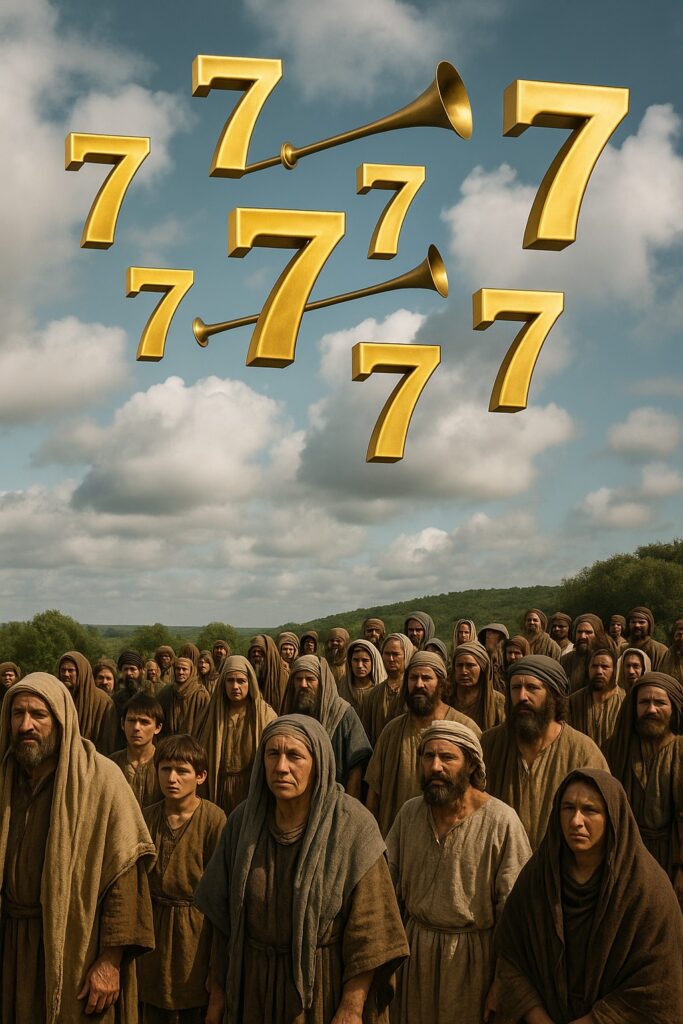
Here we are again at Beresheet, “in the beginning.” A story that starts not with chaos but with a pattern. The first seven words of Scripture form a covenant preamble, an oath that sets the stage for everything that follows. What follows is the seven days of creation, a temple in the bible, of forming and filling, of separating and joining, until the whole cosmos becomes one unified day: the Sabbath, the seventh, the day of divine rest. This is picture of the temple pattern in the bible.

From the start, God was building a house—a cosmic temple, a temple pattern, for His presence to dwell and the number seven was its blueprint. Throughout the Bible, “seven” isn’t just symbolic of completeness or perfection, it really signals a finished cosmos, a world brought into order where God can rest.

Seven Day Temple Pattern in the bible

The ancient world knew this temple pattern well. Across the Near East, gods built temples in seven days or dedicated them through seven-day festivals. When Baʿal defeated the sea/yamm or chaos, his temple was constructed in seven days, and His throne called “his resting place.” The Bible, however, re-interprets the number seven as a Yahweh centered reality.

Scripture carries the imagery everywhere: seven lamps on the menorah, seven weeks to Shavuot, seven seals and trumpets, patterns of seven throughout the festival cycle, sevenfold patterns in the tabernacle speeches and Exodus texts. Each “seven” marking a transition from work to rest, from building to indwelling, from chaos to creation. Genesis 1–2 is itself a cosmic temple story where God builds, then rests, and enthroned.

So, what does this mean for us? It means this is the year for building up, not tearing down. You are part of God’s temple cycle. Every seventh day, every sacred festival, every rhythm of life is an invitation to order your world for His dwelling place. Build your home, build new habits, build relationships, build community around divine rest—so that the King of Glory may rest in your midst.

BUILD your world—and let God’s presence fill what you have built. Be your own temple pattern in the bible.

temple pattern

tower of babel

The Tower of Babel: The Nations are Scattered

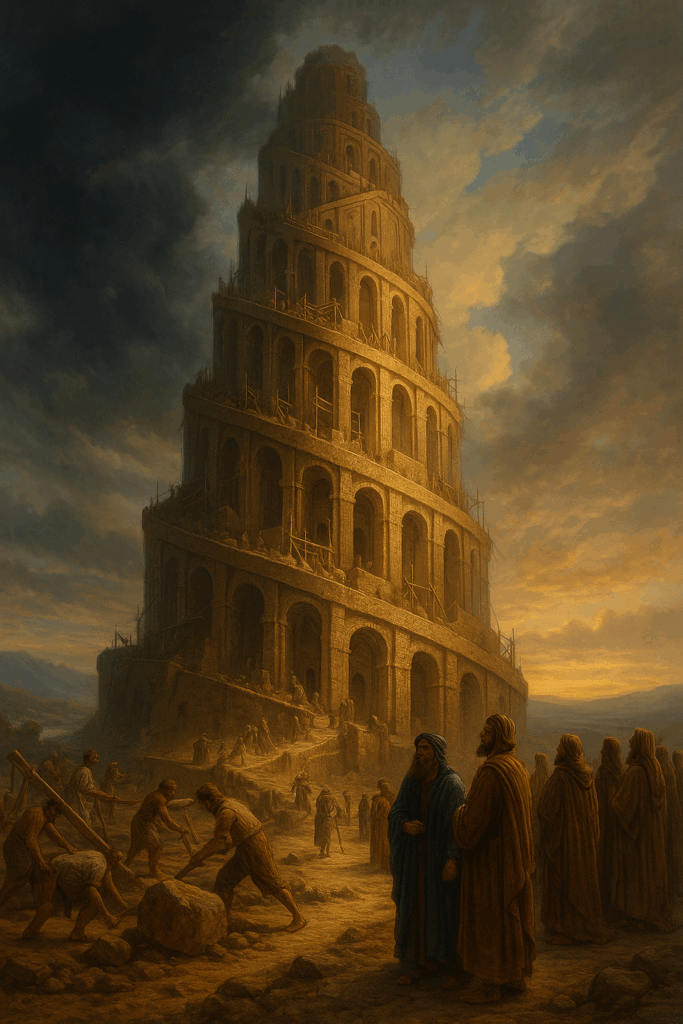
The Tower of Babel stands as the clearest example of humanity’s attempt to seize heaven on its own terms. Ancient creation stories told of gods at war with one another—trampling, binding, and scattering rivals to build new worlds. Babel follows that same pattern of conquest. Humanity builds its own tower, a ziggurat of self-made glory, longing to “make a name” for themselves and unify heaven and earth without God. In the ancient world, the enthroned king was to be the one who joined heaven and earth. At Babel, humanity tried to crown itself.

So, God confused their language (a word play on Babel), breaking the illusion of a single, powerful empire. The Tower is human engineering that crumbled into fragments of speech, and the great city scattered across the earth. Yet their scattering was not the end of the story. Out of the nations, God called one man, Abraham, through whom He would bless all the families of the earth. Babel’s rebellion would one day be answered by divine restoration. This moment at the Tower of Babel marks the breaking point where human pride confronted divine sovereignty.

Tower of Babel: Tabernacles will Reverse it and Bring them Home

That restoration comes into focus at Sukkot, the Feast of Tabernacles, the Feast of Ingathering, also called the Festival of the Nations. During Sukkot, Israel offered seventy bulls, symbolically interceding for the seventy nations of Genesis 10, the very nations scattered at the Tower of Babel. What pride had divided, worship would gather. Zechariah foresaw the day when all nations would go up to Jerusalem to celebrate Tabernacles, when every tongue would once again speak one language—the language of praise to Yahweh. The harvest of the nations, the reunion of languages after the Tower of Babel, the restoration of communion with God all converge in this feast.

It was a tower of pride vs Sukkot as a booth of humility.

It reached upward to grasp heaven while Sukkot welcomes heaven coming down to dwell with us.

It divided the nations while Sukkot gathers them in worship under one King.

What began as rebellion at the Tower will be reversed when all nations gather again under one King. This Sukkot, we celebrate the great reversal of Babel in Yeshua, the true dwelling of God among humanity. “The Word became flesh and tabernacled among us” (John 1:14). In Him, heaven and earth are joined again, and the scattered are coming home.

tower of babel
breath

Great Salvation

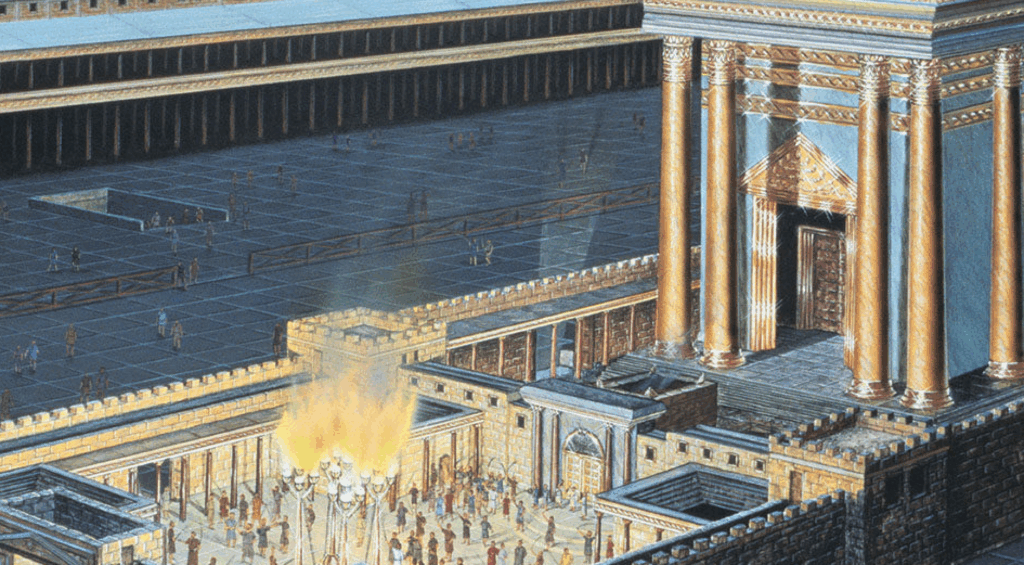
The Feast of Tabernacles (Sukkot) concludes with Hoshana Rabbah, or the Great Salvation. It is the seventh day of the feast, when priests in the Temple circled the altar seven times, waving palm and willow branches, crying “Hoshana: Save us now!” and blowing the shofar. The ritual echoed Israel’s ancient memory: the wilderness wanderings had ended, and God’s presence had guided them to the promised land. They built booths to remember how the Divine Presence—cloud by day, fire by night tabernacled among them.

Forty-two encampments marked their journey, and at the end, a Sukkot type fulfillment. At Jericho, the priests once again marched seven times around the city and on the seventh day— blowing trumpets, carrying the ark of covenant, the visible throne of God’s Presence and Jericho’s walls fell by worship. The conquest of Canaan had begun with a Sukkot-like procession: the Divine Presence taking possession of the land. This feast points to the Great Salvation that God promised from the beginning.

Forty-two Generations leads to the Great Salvation

Generations later, Matthew’s Gospel mirrors this pattern. He lists forty-two generations from Abraham to Messiah, six cycles of seven, announcing that the seventh has dawned. The wandering has reached its destination. “The Word became flesh and tabernacled among us.” (John 1:14). The conquest of the world has begun with a special Sukkot.

Yeshua is the living tabernacle of Divine Presence whose likely birth at Sukkot fulfills the ancient pattern: God once dwelled in a tent among Israel, then entered the land at Jericho, and now dwells in human flesh. Immanuel “God with us” is a declaration of the end of the wilderness journey and the final Hoshana Rabbah, the Great Salvation. Yeshua Himself is the Great Salvation that Sukkot anticipates.

The shofar is sounding announcing the Presence has returned and is dwelling among us. The long journey has converged in Him, Yeshua the Messiah. Draw near to Him and you’ll be drawing near to the Presence of God. Here’s to the Great Salvation: Chag Sukkot Sameach.

Great Salvation
living water

Wisdom: The Return of Living Water

Every fall, pilgrims filled Jerusalem for the Feast of Tabernacles. A special ceremony, the “Rejoicing of the House of the Water drawing,” saw the high priest descend to the Pool of Siloam to draw a flask of water then carry it up in procession to the Temple. It was tied to living water or mayim hayim.

Once a year, this water was poured out into one of two bowls attached to the altar—the other was for wine. A libation of joy for rain, harvest, and renewal. Yet this water-drawing ceremony was more than just a prayer for rain; it was a ritual with cosmic implications. The waters poured out were returning to the Gihon Spring (the location of enthronement for Israel’s kings) to testify that creation still answered to its Creator.

By Yeshua’s day, the rite had become the most joyful moment of the year: a symbol of divine blessing, the outpouring of both rain and the Spirit. Water represented Torah, the stream of wisdom by which the world is sustained. Ben Sira (from Wisdom literature) said of wisdom, “Those who drink from me will thirst no more.” Wisdom, like living water, nourishes the soul and flows out as the Spirit of God.

The Day of the Great Salvation

On this last and greatest day, Hoshana Rabbah, Yeshua cried out, “If anyone thirsts, let him come to Me and drink.” He was claiming to be the true source of living water. This libation, along with the river that flows out from Ezekiel’s temple, and the Gihon that once watered Eden all converged in Him at this very moment.

Gihon means “to gush forth,” from the same root as gachon or “belly” in Leviticus 11:42, where the vav in gachon marks the center letter of the Torah. The rabbis said this is where wisdom and life flow from. This is where true living water comes from.

So, when Yeshua declared, “From within Him shall flow rivers of living water,” He was revealing Himself as the new Gihon, the wellspring of divine wisdom, Spirit, and renewal. The Feast of Tabernacles is celebrating the return of the glory that filled the Temple to now flowing through the One who is Wisdom embodied.

And where do we find perfect wisdom…In our Messiah Yeshua the anointed one who provides living water.

living water
cheek

Turn the Other Cheek Challenges Roman Culture

The Roman world was built on power, rank, and humiliation. To keep order, Rome relied on a system that shamed the weak and exalted the powerful. This is the context for turn the other cheek. Public humiliation was policy. It kept people in their place, reinforced hierarchy, and reminded subjugated peoples they were subjects, not equals. To lose honor in that culture was to lose life itself. Any retaliation mean certain death, submission meant loss of dignity.

Into this world, Yeshua taught a radically different and subversive way. He didn’t encourage His disciples to fight humiliation with revenge, nor to accept it passively. Instead, He showed them how to transform humiliation into humility by exercising creative, nonviolent resistance that exposed injustice and retrained human instinct.

First, He says: “If someone strikes you on the right cheek, turn to him the other also.” This meant a backhanded slap to the right cheek or turn the other cheek. It was the severest insult, declaring you beneath the one striking you. Normally, this demanded retaliation or legal recourse. Yeshua offers another way. Turning the other cheek meant the insulter would strike with an open hand—this was the gesture of an equal. Humiliation is flipped. The system is exposed.

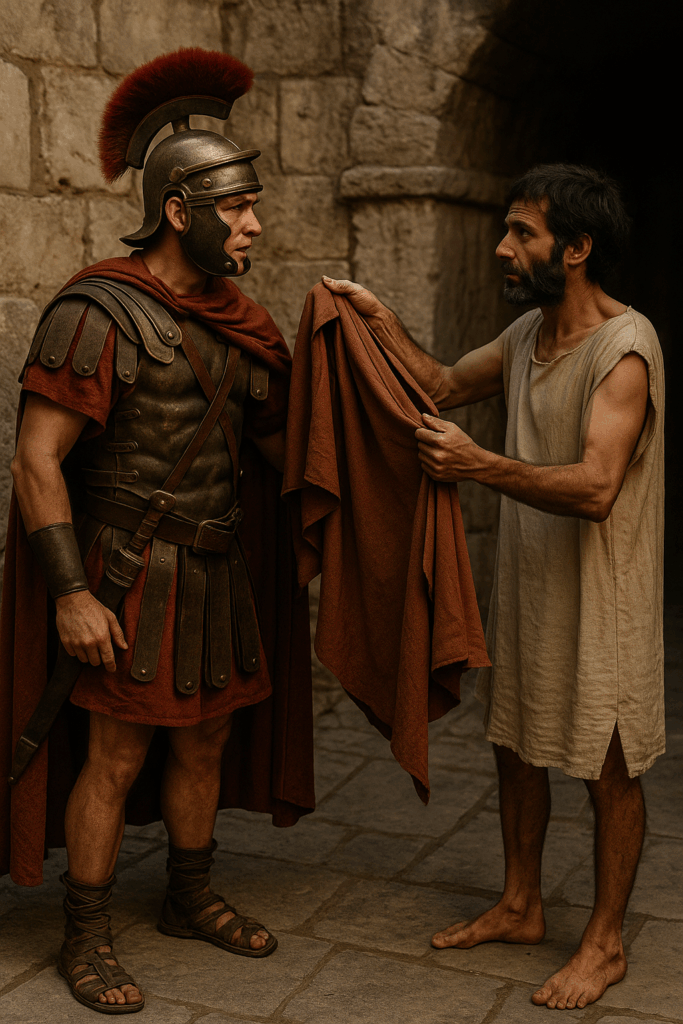
Second: “If someone wants to sue you for your tunic, give him your cloak as well.” The poor generally owned only a tunic and a cloak. Torah law protected the cloak as essential for survival. To sue for a tunic was already abusive. But giving up both garments left one naked—an intolerable shame in Jewish culture. But now the oppressor is the one shamed for stripping you bare. Again, humiliation is reversed.

Third: “If anyone forces you to go one mile, go with him two.” Soldiers could compel civilians to carry their packs for one mile. It was demeaning servitude. But imagine choosing to carry the burden farther. What was humiliation now shows dignity. And the soldier must confront the absurdity. The one forced to submit now redefines the act entirely. Humiliation is once again reversed.

In each case, Yeshua offers resistance that is neither passive nor vengeful. Empire’s humiliation against the weak is now turned back on itself. In its place stands kingdom humility: service, dignity, generosity. And these are not weakness. This stand requires courage and trust and recognition that true honor comes from God not from empire’s system.

We too live in systems of rank and shame. Our instincts are to fight back or shrink away. Yeshua shows a third way: stand firm, resist injustice, and respond with humility rooted in God’s justice. In doing so, we reveal a different kingdom. And that’s the real meaning of turn the other cheek.

cheek
Skip to content