
The Great Reversal of Seed and Land
Abraham’s world was filled with uncertainty. Kingdoms rose and fell, cities flourished and disappeared, and the future of a family depended upon the survival of its descendants and the land they would inherit. Against this backdrop, the Torah portion Vayera (Genesis 18–22) unfolds through a series of unique reversals. A barren woman will produce a son—the seed of the future. A prosperous city will be reduced to ashes. A family facing extinction will produce descendants through incest. A child abandoned in the wilderness will survive, while Abraham’s promised son will be bound upon an altar, potentially facing death.
At the heart of these stories lies a question that reaches back to Eden and forward to Messiah: Will the promised Seed survive, and will the Land remain the place where God’s purposes can be fulfilled?
The preservation of the Seed and the fulfillment of the promise do not depend upon human fertility, political power, or human efforts to secure the future. They depend upon the God who appears, who sees, who intervenes, and provides.
Beneath the Trees of Mamre
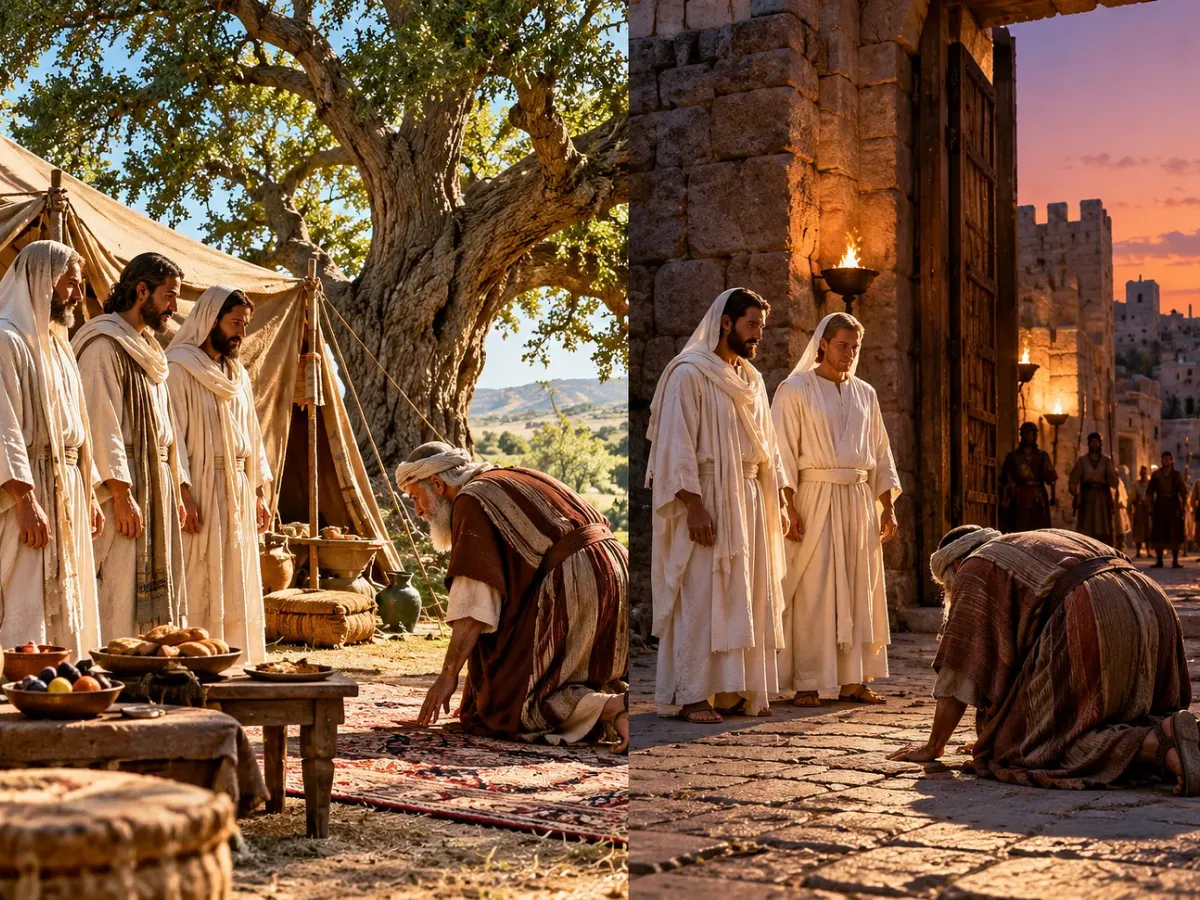
Adonai appears to Abraham among the great trees of Mamre. Abraham is sitting at the entrance of his tent during the heat of the day when he sees three men standing nearby. He runs to meet them, bows toward the ground, and offers water, rest, and food.
This setting showcases trees, a tent, an entrance, and the appearance of the Divine Presence. It recalls Eden, where humanity once enjoyed fellowship with God. Abraham has already built an altar near Mamre’s trees, marking a place of worship and divine encounter.
Abraham is a sojourner with no permanent inheritance. Yet beneath those trees, Adonai announces that Sarah will bear a son. She is well beyond childbearing years. Her womb has never produced a child, and the natural possibility of conception has passed. Nevertheless, the promise of an innumerable multitude rests upon this barren woman.
The reversal reveals that where life is impossible, God will produce life. Abraham has neither the descendants nor the territorial possession that would ordinarily establish a great nation, yet both are guaranteed by divine promise. His tent contains the promise of permanence through seed and land.
The Tent and the City
Genesis 19 opens with an encounter that somewhat mirror Abraham. Lot is sitting at the gate of Sodom when two angels arrive in the evening. Like Abraham, he rises to meet his visitors, bows toward the ground, and offers hospitality, inviting them into his house for food and lodging.
There are many similarities within these two accounts, but there are also differences that reveal two very different worlds.
Abraham sits at the entrance of his tent beneath the trees in the brightness of day. Lot sits at the gate of a city as evening approaches. Abraham’s visitors announce the birth of a son. Lot’s visitors announce the destruction of a city. The patriarch’s tent becomes a place where life is promised, while the city becomes a place where violence and corruption are exposed.
The city gate was a center of authority, judgment, commerce, and civic life in the ancient Near East. Lot’s presence there suggests his integration into Sodom’s society. Abraham, meanwhile, remains outside the urban world —dwelling in a temporary shelter.
Ordinarily, the city would represent security, permanence, and power, while the tent would suggest vulnerability and impermanence. But the patriarch receives the promise of an enduring future, while the established city loses its future altogether.
This contrast hints at the tension between the garden and the rebellious city in the opening chapters of Genesis. Cain builds a city after his exile, while Babel becomes the setting for humanity’s attempt to establish a name and collective security apart from God. Sodom represents another expression of that disorder.
As darkness falls, the men of Sodom surround Lot’s house and demand access to his visitors. The violence exposes a community where hospitality, justice, and the protection of the vulnerable have collapsed. This contrasts with Abraham’s household, which represents righteousness and justice for future generations.
Sodom possesses houses, gates, and established institutions, but none can preserve it from judgment. Abraham possesses only a tent, yet within that tent rests the promise to the nations.
Two Wombs and the Future of the Seed
The contrast between Sarah and Lot’s daughters is revealed through the seed.
Sarah is barren and beyond childbearing. Lot’s daughters are young and capable of producing children. Yet Sarah receives the promise of life through divine intervention, while Lot’s daughters believe their family’s future has been destroyed along with Sodom.
After escaping the city, Lot and his daughters withdraw into a cave. Believing there is no man available through whom they can preserve their father’s line, the daughters intoxicate Lot and conceive children through him. Moab and Ben-Ammi become the ancestors of the Moabites and Ammonites. Yet generations later, Ruth the Moabitess enters the covenant family of Israel and becomes an ancestor of David and ultimately Yeshua the Messiah, another reversal in which a lineage born through incest becomes part of the promised Seed.
The Seed and the Land
The promise to Abraham was never limited to descendants. God promised both seed and land, a place where the covenant people could flourish and where His Presence would dwell among them.
This connection suggests another reversal. Sarah dies, and Abraham purchases the field and cave of Machpelah, including its trees, near Mamre. The woman whose barren womb produced the promised son is buried in the first piece of Canaan that Abraham legally acquires.
The first tangible possession of the promised land is in actuality a burial place. Death becomes the occasion through which Abraham secures a permanent foothold in the inheritance promised to his descendants.
The seed has been born, but the land is not yet fully possessed. Nevertheless, both promises are moving toward fulfillment.
The Binding of the Promised Seed
The Akeidah, or binding of Isaac is the climax of this Torah portion. The son whose birth overcame Sarah’s barrenness is placed upon an altar. Everything appears to be moving toward the destruction of the very seed through whom the covenant must continue.
At the decisive moment, Adonai intervenes. Isaac is spared, and a ram is offered in his place.
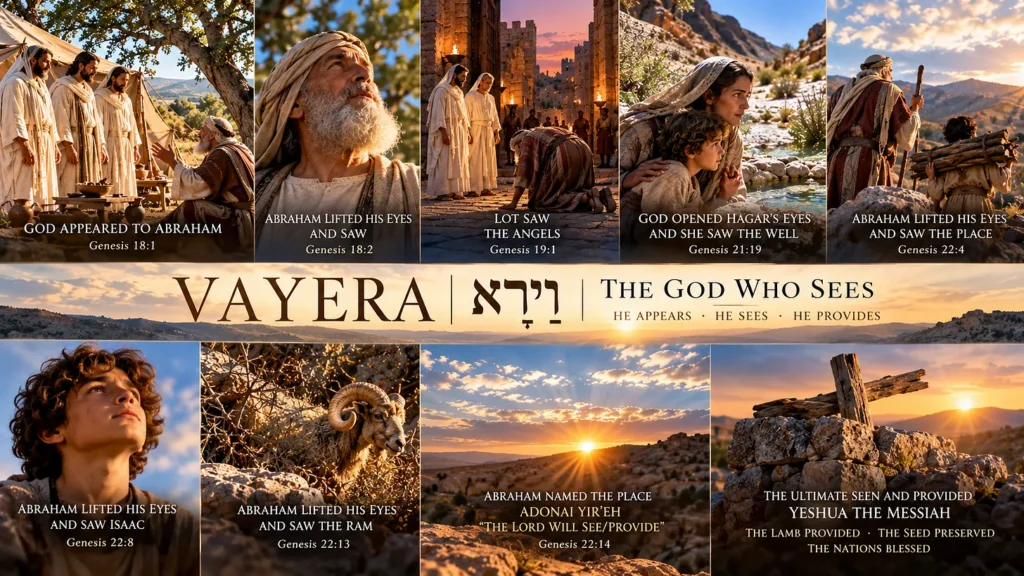
Abraham names the place Adonai Yir’eh, the Lord will see or provide. This brings us back to Vayera, “And He appeared.” The Hebrew root ra’ah, meaning to see, runs through the entire portion. Abraham sees the visitors at Mamre. Lot sees the angels. Hagar’s eyes are opened to see the well. Abraham lifts his eyes and sees the ram.
The God who appears is the God who sees and provides.
The narrative that began with the announcement of a son ends with his preservation and the reaffirmation of a multitude of descendants. God declares that Abraham’s seed will possess the gate of his enemies and that through his seed the nations will be blessed.
This reversal anticipates the greater victory accomplished through Yeshua. Isaac is spared death through a substitute. Yeshua enters death and rises from it, breaking its ultimate dominion. What appears to be the destruction of the promised Seed becomes the means through which life is extended to the nations.
When the World Descends into Chaos
Vayera speaks to a world troubled by violence, moral confusion, corruption, and the breakdown of institutions. The patterns of Sodom are not confined to the ancient world. Human societies can still normalize exploitation, abandon justice, violate sacred boundaries, and place their confidence in systems that appear permanent but remain fragile.
Abraham himself intercedes for Sodom, appealing to God’s justice and mercy. His descendants are called not merely to survive a corrupt world but to practice righteousness and justice within it.
Scripture never promises that cities will not fall, nations will not suffer, or the righteous will never face death. It promises something greater: the forces of chaos will not overturn God’s purposes for Creation.
The promised Seed is threatened repeatedly, yet the covenant survives. The land is contested, its inhabitants are exiled, and creation itself groans under corruption. The forces of chaos may threaten the seed and ravage the earth, but they cannot extinguish the covenant purposes of God.
The final vision is not the triumph of Sodom or the permanent loss of Eden. It is the restoration of heaven and earth, the return of the Tree of Life, and the dwelling of God among His people. The Seed survives, and the promise of the Land endures.
Our world may appear to be moving toward Sodom, but God’s covenant purposes are moving us toward the New Jerusalem.
The promised Seed will prevail, creation will be liberated, and through the resurrection of Yeshua the Messiah, the Presence that once filled the Garden is now filling a renewed heaven and earth.
Leave a Reply