
The Mother of Nations
Rebekah at the Heart of Isaac’s Genealogy and the Future of the Promised Seed
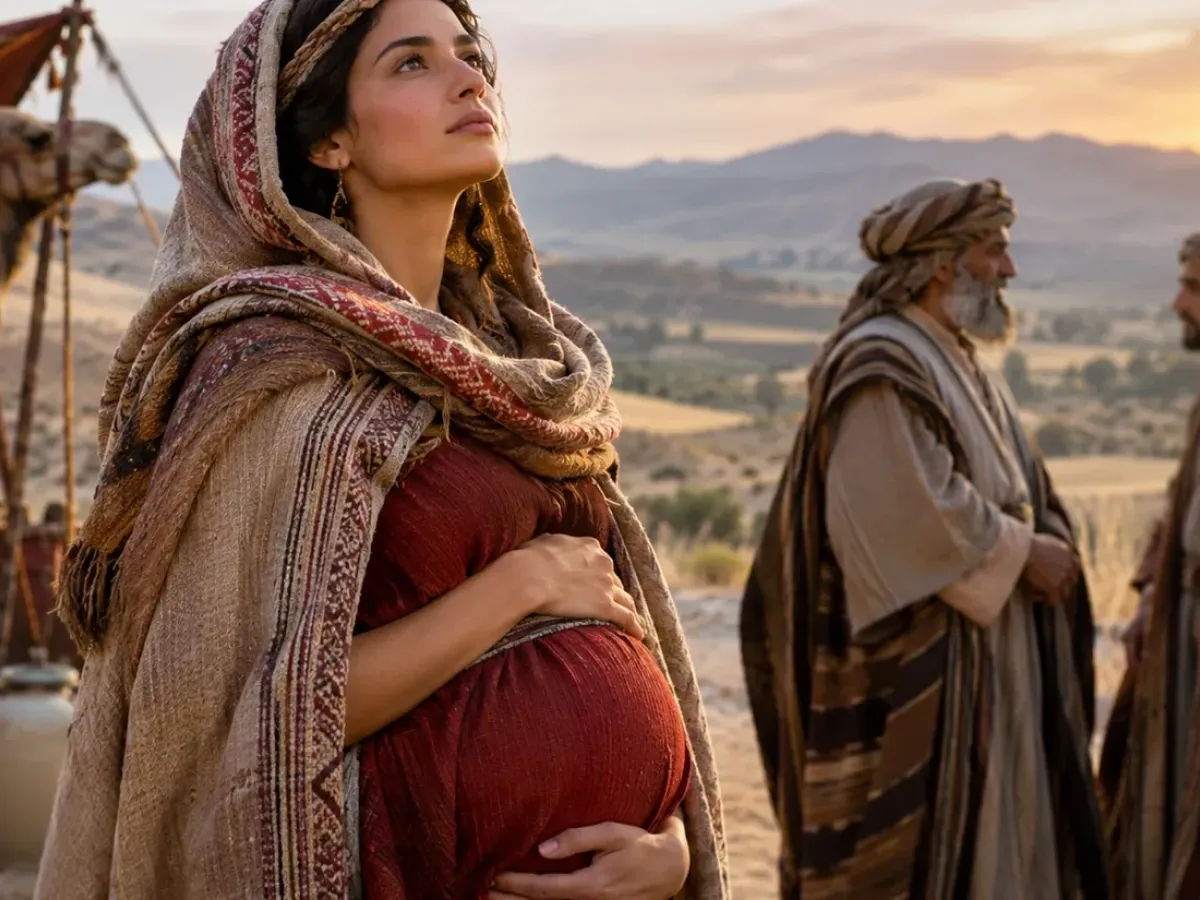
The Torah portion Toledot (genealogies) opens with a statement that seems straightforward enough: “These are the generations of Isaac, Abraham’s son. Abraham fathered Isaac” (Genesis 25:19). We would expect the narrative to proceed with an account of Isaac’s descendants, his accomplishments, and his role in carrying forward the covenant established with Abraham. Where does Rebekah fit into this?
Instead, the writer turns immediately to Rebekah. Her ancestry is identified, her barrenness becomes the central problem, and the divine revelation concerning the future of the covenant is given directly to her.
This is a departure from an ancient patriarchal genealogy. Isaac is introduced through his father Abraham, whose covenant status has already been established. But Rebekah receives a more detailed introduction, identifying both her father and brother and emphasizing their connection to Aram. The narrator then moves from her ancestry to her womb, where the future of two nations is taking shape.
Why does the genealogy of Isaac focus on Rebekah? And why is the destiny of the promised Seed revealed to her rather than to Isaac?
The Woman at the Center of Isaac’s Genealogy
Rebekah is “the daughter of Bethuel the Aramean of Paddan-aram, the sister of Laban the Aramean.” Both men are identified as Arameans, while Isaac is identified simply as Abraham’s son.
The Hebrew word toledot, commonly translated “generations,” comes from the root yalad, meaning to bear or beget. Throughout Genesis, the toledot formula introduces the history that proceeds from a particular person or family, not necessarily a biography of the person named.
This genealogy creates a contrast. Abraham fathered Isaac, but Isaac’s ability to father the next generation is confounded by Rebekah’s barrenness. The continuation of the covenant, therefore, cannot be assumed simply because Isaac is Abraham’s legitimate heir.
Rebekah belongs to the extended family of Abraham’s brother Nahor. She comes from Paddan-Aram in northern Mesopotamia, the ancestral world from which Abraham had departed. Both leave their ancestral households and enter a future designated by God’s promise. Abraham is called to become the father of a great nation; Rebekah will become the mother of Jacob who bears the name Israel.
From the Nations to the Covenant Family
In the Table of Nations, Aram is listed as the fifth son of Shem, Noah’s son. Another Aram appears among the descendants of Abraham’s brother Nahor. Although a direct genealogical relationship between these individuals cannot be established, both references place the name Aram within the ancestral world described in Genesis.
Historically, the Arameans became clearly identifiable as a people several centuries after the traditional period associated with Abraham. The designation in Genesis may reflect terminology familiar to a later audience.
The family that will become Israel is formed through Abraham’s calling, Isaac’s marriage to Rebekah, and Jacob’s return to Laban’s Aramean household. Jacob spends twenty years there, where almost all his children are born. The family takes shape through these continuing connections with Aram.
The connection is preserved even in the Passover Haggadah. The Maggid, the telling of Israel’s redemption from Egypt, draws upon Deuteronomy 26:5, Arammi oved avi, traditionally rendered in the Haggadah as “My father was a wandering Aramean.” Israel’s annual remembrance of redemption reaches back to its ancestral connections with Aram, recalling a vulnerable family whose future depended upon God’s covenant faithfulness.
This brings us back to the original promise to Abraham: “In you all the families of the earth shall be blessed” (Genesis 12:3).
God calls one man out of the nations, establishes a covenant with him, and promises that through his Seed the nations themselves will receive blessing. The election of one family serves a much larger purpose.
Rebekah is not a Gentile convert in the later biblical sense; she is Abraham’s relative. Nevertheless, her journey from Aram to Canaan reminds us that Israel’s formation takes place within a wider world of peoples and ancestral relationships.
The Barren Womb and the Promise of New Creation
“Isaac prayed to the Lord for his wife, because she was barren. And the Lord granted his prayer, and Rebekah his wife conceived” (Genesis 25:21).
Once again, the promised Seed encounters an obstacle threatening the covenant’s continuation. Sarah had been barren, and now Rebekah is barren. The same problem returns in the next generation. Isaac was forty when he married Rebekah and sixty when the twins were born. Twenty years pass between marriage and childbirth, yet the narrator compresses those years into a brief statement about Isaac’s prayer and God’s response.
The promised future depended upon God’s intervention. God promises Abraham that He will make him exceedingly fruitful and that nations and kings will come from him. Yet the women through whom the covenant must continue repeatedly experience barrenness.
The barren womb becomes a setting for new creation. The future of God’s covenant people depends upon His power to bring forth what human circumstances cannot produce.
Two Nations Within One Womb
An unusual struggle takes place between the children within Rebekah’s womb. The Hebrew verb suggests conflict. Deeply troubled, Rebekah goes to inquire of the Lord: “If it is thus, why am I?”
God tells her: “Two nations are in your womb, and two peoples from within you shall be separated; one people shall be stronger than the other, and the older shall serve the younger” (Genesis 25:23).
God does not just announce twin sons. He speaks of nations and peoples. Their struggle anticipates the future history of Israel and Edom.
And it is Rebekah who receives this revelation.
In the ancient world women were often treated as property and their voices carried little authority. Rebekah is not a passive figure in the covenant story but a woman who seeks God for herself and receives a revelation that will determine the future of nations. God entrusts to her knowledge that will shape the destiny of Israel and the promised Seed.
Isaac has prayed for her conception, but the text does not record God speaking to him about the twins. The divine oracle is entrusted to Rebekah. She knows that the ordinary order of inheritance is about to be overturned. The older will serve the younger.
This challenges the established expectations surrounding the firstborn, who ordinarily enjoyed priority in inheritance and family authority.
Both sons descend from Abraham through Isaac and Rebekah. Yet before either is born, God announces that the expected order will be reversed.
Paul draws attention to this in Romans 9:10–12, emphasizing that God’s purpose was announced before the twins were born or had done anything good or bad. The covenant’s future would not be determined by the customary privileges of birth order.
The narrator has deliberately placed that revelation in Rebekah’s hands, upending the way the ancient Near Eastern world operated.
The Seed and the Nations
Throughout the Abraham narratives, the promised Seed has faced repeated threats. Sarah’s barrenness threatened Isaac’s birth. The binding of Isaac on Moriah threatened his survival. Sarah’s death introduced the question of inheritance, and Abraham’s purchase of Machpelah established his first legal possession in the promised land.
Now the issue is no longer whether the promised Seed will survive, but which son will carry the covenant forward. Rebekah’s womb becomes the place where that distinction is revealed.
Following the Flood, the nations emerge from Noah’s descendants. At Babel, humanity is scattered. From among those nations, God calls Abraham and promises that all the families of the earth will be blessed through him.
Paul describes this in Ephesians 2, where those once strangers and foreigners become fellow citizens and members of God’s household. Jew and Gentile are reconciled through Messiah and brought together as one new humanity.
The separation of Jacob and Esau is not identical to the later division between Jew and Gentile. Rather, Rebekah’s story belongs to the larger biblical account of God establishing a particular covenant people through whom His purposes for the nations will ultimately be fulfilled.
Rebekah belongs to the history of women whose lives became decisive in the unfolding of God’s promises. Before Jacob and Esau enter the world, the future of the promised Seed has been declared. The God who called Abraham from among the nations reveals to Rebekah how the covenant will continue through the next generation.
The movement of Scripture is from the nations to one chosen family, through that family to Israel, and through Israel’s Messiah back to the nations: God chose one family from among the nations so that, through Yeshua, Jew and Gentile might be united as one redeemed people, fellow citizens and members of God’s covenant household.
At a time when there’s so much uncertainty and the future looks bleak and increasingly beyond our control, Rebekah’s story reminds us that God’s covenant promises do not depend upon human strength, political power, or favorable circumstances. The God who brought forth nations from a barren womb remains faithful to His covenant, and we can trust Him to preserve His people and accomplish His purposes, regardless of what unfolds around us.
Leave a Reply