Tag: covenant

place

The Place He Chose: What it means for God to put His Name among His people.

One of the great biblical themes is “the place that the LORD your God will choose to put His Name.” Moses directs Israel to one location where sacrifices are offered and covenant life is centered. This is the sacred center—the place where heaven and earth meet because God Himself chooses to dwell.

In the ancient world, names carried far greater significance than they do today. A name represented identity, character, authority, and existence itself. God reveals Himself to Moses as the One “who was and is and is to come,” the eternal One whose very Name declares His unchanging existence. To place His Name somewhere is to establish His presence, His rule, and His covenant authority there.

The Hebrew word is makom, meaning “place.” In Jewish tradition, HaMakom, “The Place,” becomes one of God’s titles. God, in a very real sense, is the Place. He is the One in whom all creation exists and finds its stability. The sacred place is where His presence is established, where His covenant is confirmed, and where His people come to stand before Him.

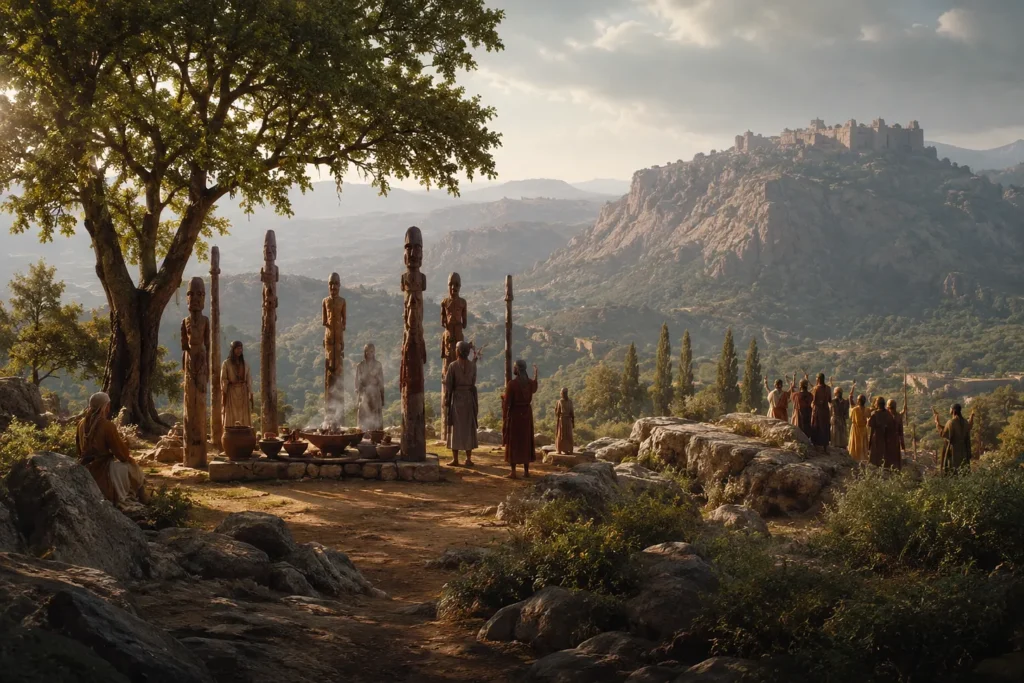
The nations saw sacred space differently. They believed their gods inhabited mountains, hills, and sacred groves. Elevated places became centers of worship. Every leafy green tree could become a place of fertility worship. Sacred poles and carved images marked locations where particular deities were believed to dwell. Every locality possessed its own sacred center. The nations themselves determined where their gods would reside.

Moses’ repeated reference to “the place where the LORD your God will choose to put His Name” only becomes clear when viewed against the ancient world’s understanding of sacred space. Every civilization believed there was a sacred center—the point where heaven and earth touched and where the divine realm intersected with human existence. It was considered the heart of reality itself, the place from which order flowed into the world and where creation was continually sustained.

Temples and sanctuaries were always built at this sacred center. But before a temple could be constructed, the sacred center first had to be identified. In the surrounding cultures this was often determined through oracles, omens, or divination. An image of the deity was then installed to validate the site’s sacred status, while the architecture of the sanctuary carefully reflected and protected its holiness.

Elevated mountains and hills naturally became favored locations because they symbolized the meeting point between heaven and earth. These sanctuaries functioned as miniature worlds, places where rituals and ceremonies renewed the relationship between the gods and humanity. In many ways they were understood as a microcosm of paradise—a center where the ordered world overcame the forces of chaos.

Israel also possesses a sacred center, but unlike the nations, it is never established by human initiative. The place is holy for one reason alone: the living God chooses it. From Eden onward, sacred space exists only because God establishes His presence there. It is where creation is restored and where His covenant people gather before Him.

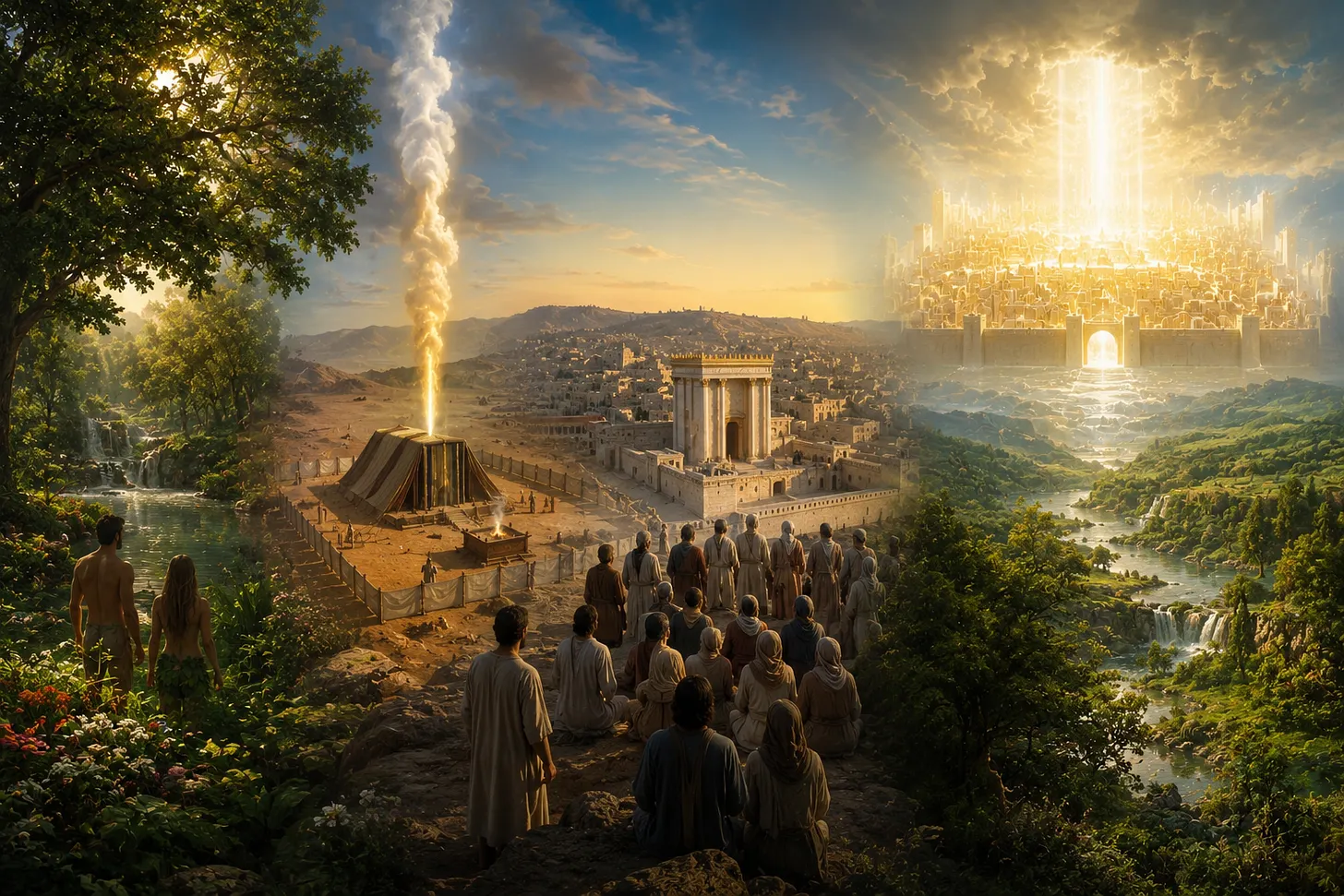
The nations chose where their gods would live. Israel waited for God to choose the place of His dwelling. The sacred center did not originate from human imagination. It originated from divine initiative. God planted the garden. He placed Adam and Eve within it and walked among them. Eden became the first sacred center because God caused His presence to dwell there.

After humanity’s exile from Eden, God continually establishes places where His presence dwells. The patriarchs encounter Him in their tents and at divinely appointed locations. The Tabernacle in the wilderness becomes the center of Israel’s camp, where the glory of God dwells among His covenant people. Solomon’s Temple becomes the place where God causes His Name to dwell in Jerusalem.

Jerusalem certainly became that place within Israel’s history, yet it pointed beyond itself toward something greater.

The prophets looked beyond the earthly Temple toward a renewed creation where God’s presence would once again fill the entire world. The New Testament reveals that promise unfolding through the Messiah. John declares that “the Word became flesh and dwelt among us.” The language deliberately echoes the Tabernacle. God once again dwells among humanity, not in a building made with hands but in the person of Jesus Himself.

What began in a garden, moved through a tent and a temple, now lives within the covenant community. Revelation brings the entire movement to its glorious conclusion as the New Jerusalem descends from heaven. No temple stands within the city because God Himself dwells there. The whole renewed creation becomes the holy place. Heaven and earth are fully united once again.

God’s purpose has always been to restore His dwelling with humanity until His presence fills the whole earth. God meets His people everywhere through His Spirit. Yet humanity never determines where God dwells. We do not invite Him to bless our agendas, our kingdoms, or our ambitions. Instead, we are invited into His purposes.

God chooses.

We respond.

The place where God puts His Name is ultimately the place where His rule is welcomed. It is where His people willingly bend their will to His until His desires become their own. The sacred center is not defined by geography but by submission. It is the place where our plans yield to His purposes, where our desires are reshaped by His wisdom, and where our lives come into alignment with His covenant.

Throughout Deuteronomy, worship always gathers families, servants, strangers, and entire households before the Lord. They rejoice together in His presence because covenant life is lived in community. God’s dwelling is not simply about private spirituality; it creates a people who live under one King and one covenant.

While the nations scattered worship among countless sacred sites, Israel gathered around one sanctuary because there was one God, one covenant, and one King.

The same remains true today. The place where God chooses to put His Name is the place where His people willingly bend their will to His until His desires become their own. There chaos is overcome by God’s order, divided people become one covenant community, and self-rule is replaced by the reign of God’s Kingdom.

Every covenant community that lives under His rule bears witness to the day when all creation will become the place where He has chosen to put His Name.
place
enemy

Who Is Your Enemy…Why Moses and Jesus Are Fighting the Same Battle!

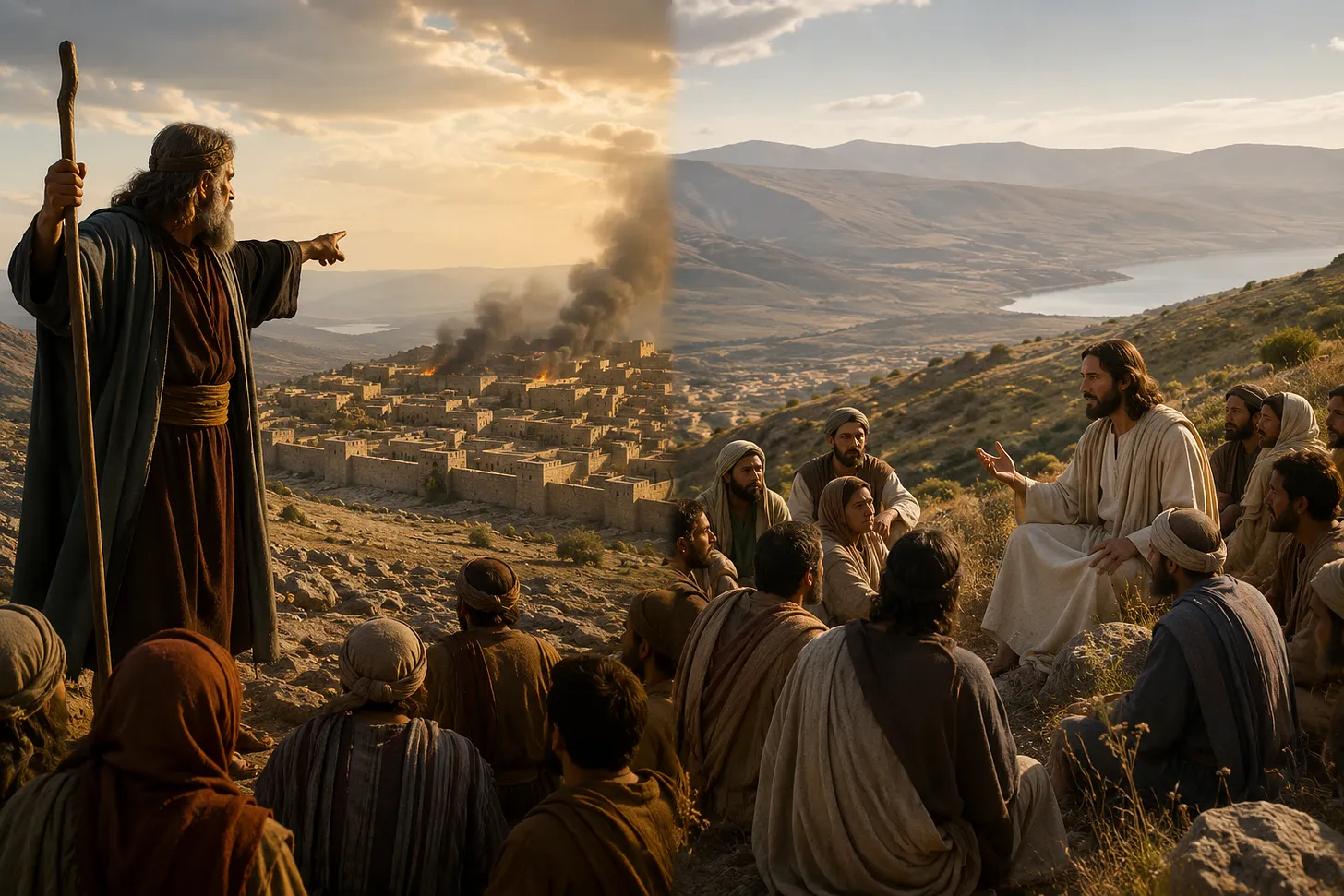
Some of the most difficult passages in Scripture are those that seem to contradict God’s ways. As Israel stands on the plains of Moab preparing to enter the Promised Land, God commands the people to drive out the nations before them, show them no pity, burn their carved images, and leave nothing that might entice them into compromise. Yet in the Sermon on the Mount, Jesus tells His disciples, “Love your enemy and pray for those who persecute you.” At first glance, these commands appear impossible to reconcile. How can the God who commanded Israel to destroy its enemies later command His disciples to love theirs?

The tension begins to disappear once we recognize that the real conflict has never been merely about Israel’s opponents. It has always been about humanity’s greatest enemy.

When Moses speaks about the nations inhabiting Canaan, he is not describing random foreign peoples who happened to occupy the land. They represent a rival kingdom whose worship, values, and way of life threaten everything Israel has been called to become. If Israel embraces their gods, she will inevitably embrace their character, no longer reflecting the God in whose image she was created. The greatest danger is not military defeat but the loss of Israel’s identity as God’s covenant people.

Again and again, Moses warns that these nations will become a snare to Israel. The danger is not simply that they occupy the land but that they will capture Israel’s heart. The people redeemed to bear God’s image will gradually begin to reflect the image of the nations instead. That is the threat Moses sees before them.

This is why Moses commands Israel not to covet the silver and gold that adorn their idols or bring those abominations into their homes. Idolatry rarely begins with outright rebellion. It begins with fascination, grows into compromise, and ends in allegiance. God knew that the greatest victory of the Canaanites would not be won on the battlefield but in the hearts of His own people. The conquest would fail long before Israel lost a battle if Israel became Canaanite in heart.

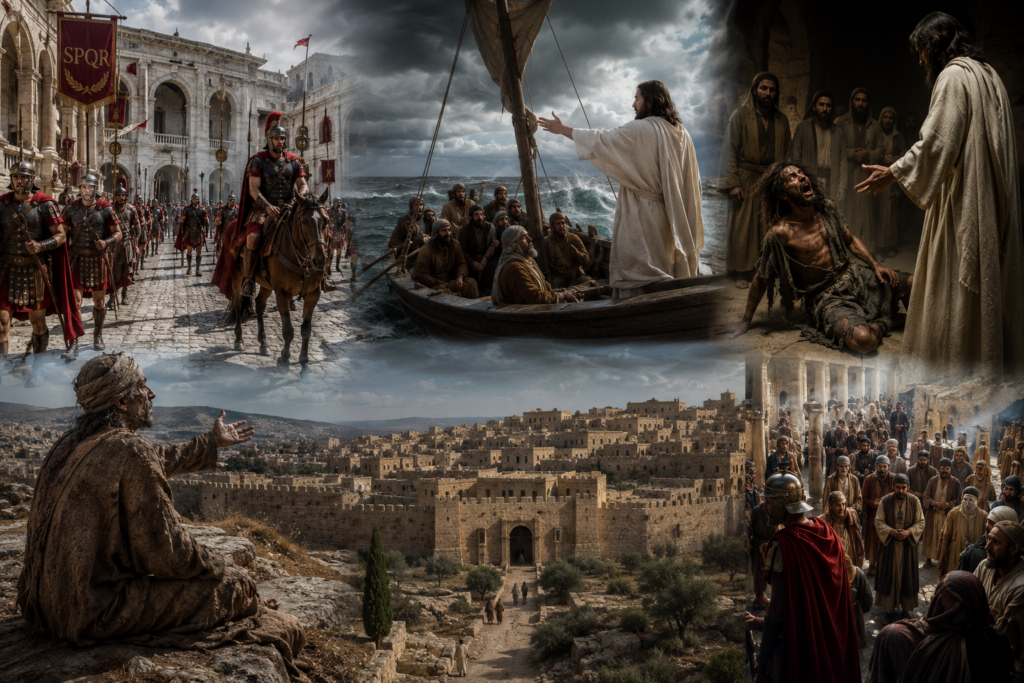
By the time we reach the Gospels, the political landscape has changed. Rome now occupies the land, and Israel lives under foreign rule. Yet Jesus never commands His disciples to overthrow Rome by force or wage war against Caesar.

Instead, He says something that surprises us. “Love your enemies.”

Has God changed His mind? Not at all. The enemy still represents everything that opposes the Kingdom of God. What changes is the place where the battle is fought.

Under Joshua, Israel entered a physical land that had to be cleansed of idolatry. Under Messiah, God’s people become His dwelling place, and the battlefield moves into the human heart. The greatest threat is not so much the army outside the gates. It is the corruption that enters through the gates we abandoned.

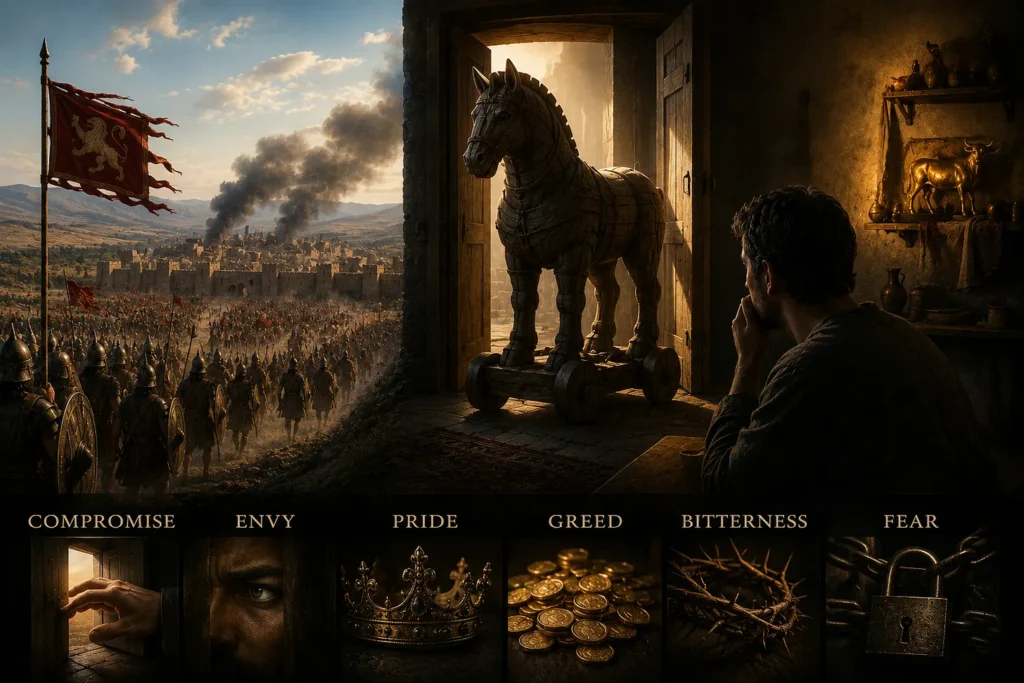
We imagine an external enemy arriving with banners flying and swords drawn.

More often, he enters like a Trojan horse.

He comes disguised as compromise, envy, pride, greed, bitterness, or fear. He hides in the small habits we overlook and the subtle beliefs that slowly reshape both our understanding of God and our understanding of ourselves. Every idol begins by asking for just a little room before demanding the whole house.

Our greatest enemy is not the person standing across from us but the desires that rise within us. James writes that temptation begins when each person is drawn away by his own desires. Long before evil becomes visible in our actions, it has already taken root in the heart. Too often, we open the gates ourselves.

Hatred has a way of reproducing itself. Violence forms violent people. Bitterness reshapes the soul. When we answer evil with evil, we allow the kingdom we oppose to take root within us. The Apostle Paul captures this truth in a single sentence: “Do not be overcome by evil, but overcome evil with good.” The real victory is refusing to mirror and become the enemy.

The command to destroy the enemy is a call to remove everything that seeks to destroy the covenant life of God’s people. Israel was commanded to tear down idols because idols deform human beings. They replace the worship of the Creator with the worship of created things. They rob men and women of the dignity for which they were created.

So who is your enemy? It is not your irritating neighbor. It is not your political opponent. It is not the person who insults you on social media.

enemy

Your enemy is every force that seeks to distort the image of God within you—every thought that leads you from the truth, every desire that pulls you toward selfishness, every idol that demands your loyalty, every habit that weakens your walk, every lie that challenges God’s voice, and every fear that causes you to distrust His promises. Anything that diminishes the dignity and calling of an image-bearer is working against the Kingdom of God.

That is the enemy.

This is why Moses repeatedly tells Israel not to fear the nations. The battle belongs to the Lord. Israel’s calling was never to secure victory by its own strength but to remain faithful while God fought on its behalf. Throughout Deuteronomy, Moses returns to the same exhortation: listen, keep, and do.

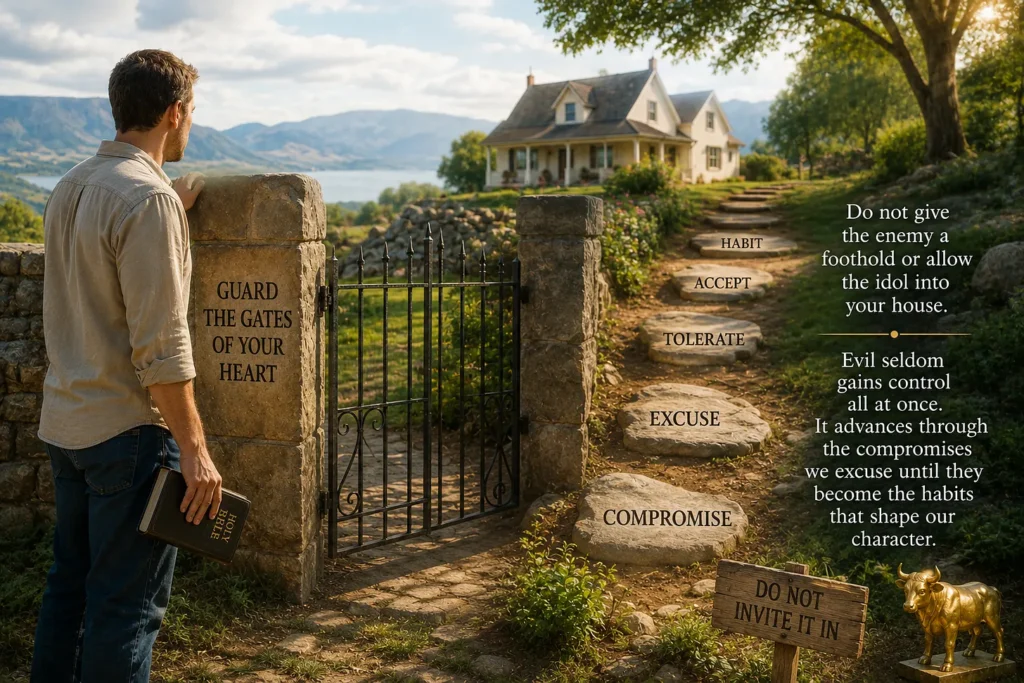
That same calling rests upon the disciple of Jesus. Guard the gates of your heart. Do not give the enemy a foothold or allow the idol into your house. Evil seldom gains control all at once. It advances through the compromises we excuse until they become the habits that shape our character.

The Lord who fought for Israel still fights for His people today. The enemy is whatever seeks to rob us of our calling as God’s image-bearers. Israel was commanded to remove whatever threatened the covenant community from within. Jesus calls His disciples to love those who oppose them while resisting the evil that seeks to deform God’s image in the human heart. Moses and Jesus are not speaking with different voices. They are calling God’s people to the same faithfulness against the same enemy—the one that would destroy God’s image in us.

enemy
foundations

When the Foundations Shake

Many people feel as though the very foundations of life are being shaken. They watch the world around them and wonder what comes next. What will remain if the economic, political, and institutional structures that have shaped modern society continue to crumble? Families who spent decades saving for retirement watch the purchasing power of their money steadily decline. Wars drag on with no clear end, enriching powerful interests while ordinary families bear the cost in lives and livelihoods. Fraud, corruption, and the concentration of wealth and power in the hands of a few leave many wondering whether our institutions still serve the people—or merely preserve themselves.

Thousands of acres of productive farmland are being transformed into data centers while drought grips one part of the country, floods devastate another, and wildfires consume millions of acres. Inflation is eating away at people’s savings. Many are in debt living paycheck to paycheck. Trust in governments, financial institutions, corporations, and even religious leaders continues to erode. Everywhere people look, the pillars that once held society together are weakening.

Throughout history, ancient people naturally looked to the heavens to make sense of what was happening on earth. They did not separate the natural world from the spiritual world as neatly as we do. For them, what happened in the heavens revealed the meaning of what was happening on earth. The lights in the heavens proclaimed God’s order, and when the prophets spoke of those lights being shaken, they were announcing that the established order of human rule was about to be overturned.

The signs did not create history.

They revealed its meaning.

This is the world in which Daniel lived. Babylon’s kings identified themselves with the stars. Their empires appeared as permanent as the heavens themselves. Yet Isaiah mocked the king of Babylon as the bright morning star cast down from heaven. Ezekiel described the King of Tyre in similar language before portraying his downfall. The prophets were not describing astronomical catastrophes. They were announcing that proud rulers who imagined themselves untouchable would be humbled before the God of Israel.

The heavenly lights represented earthly thrones.

Daniel watched Babylon destroy Jerusalem and carry away the vessels of the Temple. From every earthly perspective, Babylon’s gods had triumphed over Israel’s God. Yet Daniel’s visions told a different story. The kingdoms of men would rise and fall, but the Ancient of Days remained seated upon His throne. Every beastly empire would eventually lose its dominion because every human kingdom built upon pride ultimately collapses under the weight of its own corruption.

This is the language Jesus inherited.

When the disciples asked about the destruction of the Temple in Matthew 24, Jesus answered with the language of Israel’s prophets. “The sun will be darkened, the moon will not give its light, the stars will fall from heaven, and the powers of the heavens will be shaken.”

Modern readers instinctively look for future cosmic disasters.

First-century Jews would have recognized prophetic judgment. The Temple stood at the center of Israel’s covenant life. It was the place where heaven and earth met, where God’s presence dwelt among His people. Yet by the time of Jesus, the Temple leadership had aligned itself with political power, burdening the people while protecting its own position. Those entrusted with shepherding Israel had become rulers protecting their own kingdom.

When Jesus announced that the heavenly lights would be shaken, He was declaring that the entire order represented by that Temple system was coming to an end. The destruction of Jerusalem in A.D. 70 was far more than the fall of a city. It was the collapse of a corrupt religious order that had rejected its Messiah.

The cosmic imagery reflected what was happening on earth. Heaven interpreted history.

Daniel’s vision reaches its climax when One like the Son of Man comes with the clouds of heaven to the Ancient of Days. For many modern readers, the clouds immediately suggest the Second Coming. But in Daniel’s vision, the Son of Man is not descending to earth. He is approaching the throne of God to receive an everlasting kingdom. This is the moment of His enthronement.

The New Testament declares that this vision was fulfilled in Jesus’ resurrection and ascension. By His resurrection He conquered death, the final enemy. By His ascension He was enthroned at the Father’s right hand, receiving the kingdom that no earthly empire could ever possess.

This is why the shaking of the heavens is immediately followed by the appearance of the Son of Man. The old order is passing away because the true King has taken His throne.

From His throne the King sends out His heralds. Throughout the ancient world, a newly enthroned ruler announced his reign and summoned his subjects to swear their allegiance. The Gospel follows the same pattern. The King’s messengers go into every nation proclaiming that Jesus now reigns and calling men and women into His everlasting kingdom.

This does not mean Jesus’ words have nothing to say to our generation. They have everything to say.

We also live in a world where institutions lose their way and leaders pursue power instead of justice and people wonder whether the foundations of society are collapsing.

Matthew 24 is not a forecast of modern events.

It is God’s interpretation of one of the greatest covenant judgments in Israel’s history. The lights of heaven were shaken because the old order centered on the Temple was passing away, and the Son of Man had received the kingdom that would never pass away.

Jesus’s words remind us that history has always been marked by the rise and fall of kingdoms, the corruption of institutions, and the collapse of leaders who imagine themselves all powerful. None of those events overturn the reign of the Son of Man. The signs in the heavens do not tell us to fear the future. They remind us that every human kingdom is temporary, but the kingdom of God is eternal.

When the foundations of our world seem to shake, Scripture calls us to lift our eyes to the throne. The heavens still proclaim the same truth they declared in Daniel’s day: the Son of Man reigns. His kingdom alone will endure.

foundatiaons
psalm

Rooted to Rule: The Pattern of Psalm 1

Psalm 1 does not necessarily begin with advice or spiritual reflection—it begins with a claim about reality itself. There is a way of life that produces order, stability, and flourishing, and it begins with a king who is rightly planted in the wisdom of God.

We are accustomed to reading Psalm 1 as a word about ourselves—guidance for personal growth, a description of the righteous life. But that is not where the book of Psalms begins. Psalm 1 lays down the architecture for the entire Psalter. Its message is the necessity of the right king on the throne. When the right king rules, the world is ordered. When the right king is rooted in the wisdom of God, his rule brings flourishing to his realm and to the inner world of those who come under his authority.

The psalm begins with the Hebrew word ashrei. It is generally translated “blessed” or “happy,” but neither quite captures the true meaning. It is a recognition of a state that is publicly visible and undeniable. It carries the sense of flourishing, alignment, and rightness that can be seen and acknowledged within a community. In an honor-shame culture, it is the language of status.

Oh the honor of the one…

This is public recognition of a life rightly ordered.

Psalm 1 is not merely describing a man who feels blessed. It is identifying the one who stands in the place of honor because he has aligned himself with the order of creation as defined by the Torah—the oracles of God, the wisdom that governs the world. The psalm should be read in tandem with Psalm 2. The first introduces the honored man; the second reveals him as the anointed king who stands in the midst of rebellious nations. These two chapters frame the book and establish the kingship that governs everything that follows.

The honored one is defined first by what he refuses. He does not walk in the counsel of the rasha, the wicked. He does not stand in their path. He does not sit in the seat of mockers. These are descriptions of competing systems of order. The rasha represents a world structured apart from God’s wisdom, a world untethered from the wisdom that sustains creation. To walk, stand, and sit in that world is to come under its influence, to be shaped by its assumptions, to align oneself with its vision of reality.

Instead, his delight—his chefetz, his deep longing—is in the Torah of Yahweh because it is the wisdom of God. He meditates on it day and night, not as ritual but as covenantal alignment. The king orders his inner world according to divine wisdom. In doing so, he becomes the site where ordered creation is reestablished.

He will be like a tree.

In the ancient world, kings were often depicted as trees—strong, stable, life-giving. The tree connects heaven and earth, drawing life from deep waters and extending its canopy outward in fruit and shade. The trunk represents stability and endurance, the central structure upon which everything else depends.

This tree is planted—more precisely, transplanted—by streams of water. The language evokes irrigation channels, carefully directed flows of life that sustain the tree in every season. This is Eden language. The rivers of the garden that watered the earth now appear here as the source of the king’s stability—divine wisdom itself. He is intentionally placed within the life system of creation, rooted in the very waters that once flowed from the garden and later from the temple.

His fruit comes in its season. His leaf does not wither.

The Hebrew concept of withering carries the sense of collapse into folly, the unraveling of ordered life. To wither is not merely to dry up; it is to fall into confusion and a lack of discernment. In contrast, the righteous king remains green, enduring, productive. His life is sustained because it is aligned with wisdom. His fruit nourishes others. His leaves, in the language echoed later in Ezekiel and Revelation, become instruments of healing for the nations.

This is kingship as it was meant to be. Not domination, but sustenance. Not instability, but enduring life that radiates outward.

The contrast with Genesis 3 deepens the imagery.

There, the woman sees that the tree is good (tov), pleasing to the eyes, and desirable to make one wise. The language is drawn directly from creation itself. But she evaluates the tree apart from God’s word. She sees, desires, takes, and eats. Wisdom is seized rather than received. What was meant to be given is snatched, and in that moment, God’s wisdom is replaced with human judgment. Eating the fruit of the tree becomes a realignment away from the source of life.

Psalm 1 reverses that movement.

The righteous king does not seize wisdom. He meditates. He does not take; he receives. He does not eat from the tree in rebellion; he becomes the tree through covenantal obedience. His roots go down into the living waters, and from those waters life flows. Psalm 1 produces order through rootedness.

Yahweh knows the way of the righteous.

This is covenantal language. It is relational. The way of the righteous king is upheld because it is perfectly in sync with God’s design. But the way of the rasha is not so. They are like chaff driven by the wind. They are not anchored in the waters of wisdom. They cannot sustain life. They do not endure. Their way perishes, dissolving back into chaos.

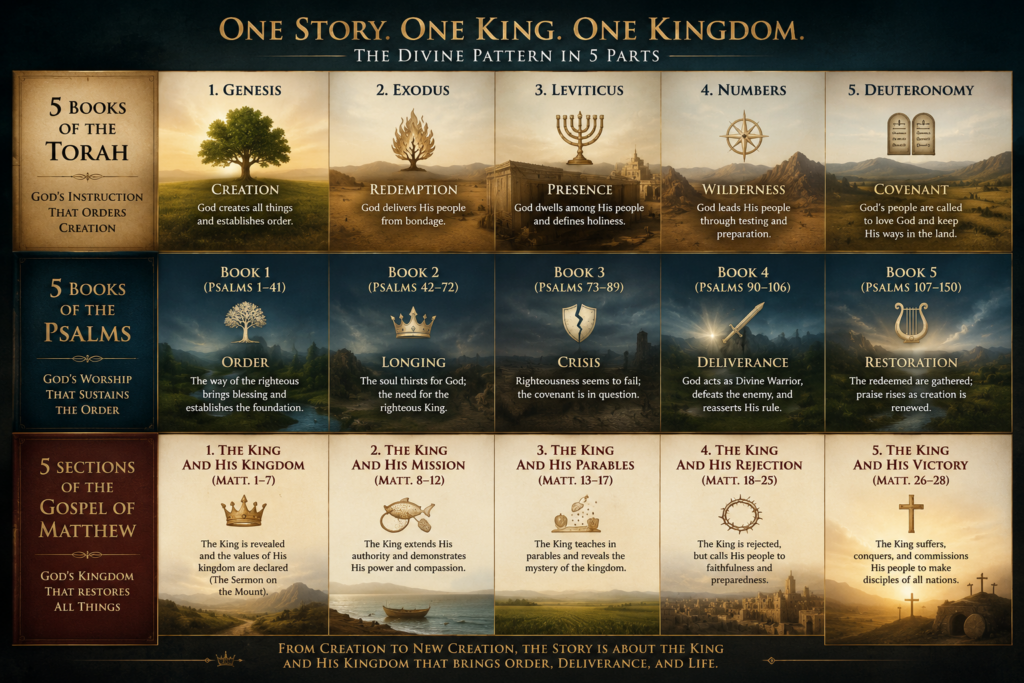
Psalm 1, then, is not an isolated meditation. It is the opening movement of a much larger composition. The book of Psalms is arranged in five books, mirroring the five books of the Torah. Just as the Torah provides the instruction that orders creation, the Psalms provide the liturgical response that sustains that order through worship.

The structure of the five sections of the Psalms traces a kingship narrative.

It unfolds as a movement from order to chaos and back to restoration. It begins with creation grounded in divine rule, where the king—like a tree planted by living waters—embodies the stability of Yahweh’s reign. But that order is contested. Pressure builds, distance from God’s presence is felt, and the need for righteous rule intensifies. The crisis comes when kingship appears to fail, the covenant fractures, and creation itself seems to unravel in exile and disorder.

The turning point is the reassertion of Yahweh’s kingship. He rises as the Divine Warrior (Psalm 104), subdues chaos, and establishes His rule once more. From there, the movement shifts toward restoration. The scattered are gathered, hope is renewed, and the Psalter closes in a rising chorus of praise as creation itself is drawn back into ordered worship under its rightful King.

This is the pattern of Scripture itself. Creation. Exile. Conflict. Divine intervention. Restoration. It is the pattern of Genesis. It is the pattern of the Exodus. And it is the pattern taken up again in the Gospel of Matthew, also structured in five major sections, presenting Jesus as the new Moses, the new Israel, the true King, the Messiah.

Matthew opens with the language of ashrei—the Beatitudes—rendered in Greek as makarios.

Oh the honor of the poor in spirit.
Oh the honor of the meek.
Oh the honor of those who mourn.

In the Roman world, honor belonged to power, wealth, and dominance. In Matthew, honor is reassigned to those whom the empire considers insignificant but publicly identified by God as part of His kingdom. The Beatitudes redefine kingship. They declare that true status belongs to those ordered according to God’s wisdom.

And this is where Psalm 1 finds its fulfillment. It anticipates a person.

The true Ashrei man.
Rooted in living waters.
Embodying wisdom.
The one whose life bears fruit in every season.
The one whose leaves bring healing to the nations.

Yeshua lives the pattern of Psalm 1. He is the tree planted by living waters. He is the wisdom of God made flesh. He is the king who stands unmoved by the counsel of the wicked, who refuses the kingdoms offered through compromise, who remains rooted in the will of the Father even unto death. And in His resurrection, the tree that could not wither, becomes the source of life for the world.

Psalm 1 is an invitation. Not first to self-improvement, but to recognize the sovereignty of the King.

psalm
fulfillment

Why fulfillment, not replacement, tells the true story of Israel and the Church

At a time when debates about Israel, the Church, and biblical prophecy are shaping Evangelical conversations — often in the shadow of rising antisemitism and global unrest — we would do well to ask: How does the New Testament actually relate to the story of Israel and her fulfillment?

Since the early days of Christian history, the relationship between Israel and the Church has often been framed as old versus new, with the Church viewed as Israel’s replacement. This mindset assumes that God’s covenantal purposes depended on Israel’s faithfulness and that the generational covenant promised to Abraham could be reassigned to another people. Over time, that assumption has shaped theology in ways that detach the New Testament from its foundations in the Hebrew Scriptures.

The New Testament does not present Israel as discarded but as fulfilled. Israel’s calling is embodied in one faithful representative. Jesus (Yeshua), the Jewish Messiah, does not stand outside Israel to replace her; He stands within her story as its climax. In Him, Israel’s mission reaches the goal of God’s promise to Abraham, extending outward to bless the nations.

Fulfillment Within Israel’s Story

The early disciples did not see themselves as founders of a new religion. They understood themselves as participants in Israel’s long-awaited renewal. The Jerusalem community was not a breakaway movement; it was the Sinai assembly raised into a New Creation reality. Israel’s vocation, to be a kingdom of priests and a light to the nations, was not revoked but expanded.

The New Testament writers assume the Hebrew Scriptures, festivals, temple structure, and covenant narrative as their interpretive framework. Matthew organizes his Gospel around five major discourses, echoing the five books of Moses. John presents Jesus as the embodiment of divine presence — the glory that once rested in the Tabernacle: “The Word became flesh and tabernacled among us.” Luke situates Pentecost at Shavuot, the festival of covenant renewal and first fruits. Revelation is saturated with temple imagery, Exodus patterns, and prophetic vision. These are not Gentile innovations; they are Jewish proclamations about Israel’s Messiah, firmly rooted in the Old Testament.

When we read the New Testament, we do not find a story of substitution but the unbroken tracing of promise. From the beginning, humanity — Adam — was created as God’s image bearer, commissioned to steward sacred space in the garden and commanded to “be fruitful and multiply, fill the earth and subdue it.” This creational charge established humanity’s vocation to extend God’s ordered presence throughout the world. After exile from Eden and the cleansing of the flood, that vocation narrows through Abraham, Isaac, and Jacob, renamed Israel. The promise extends to the twelve tribes, to a covenant nation, to the Davidic kings, and ultimately to the Servant who fulfills Israel’s calling. The trajectory has always pointed toward the renewal of that original garden mandate: faithful stewardship and the extension of God’s reign over the whole earth.

In Jesus (Yeshua) the Messiah, that calling does not end; it expands — first to the Jew and also to the Gentile. What began in one man extends to a renewed community as Gentiles join Israel’s story rather than replacing it. Together, Jew and Gentile are sent to the four corners of the earth to extend the Kingdom of Heaven. The movement is restorative, not substitutive.

Representation, Not Substitution

This pattern of representation is deeply embedded in the Scriptures. Ezekiel became a living sign, bearing symbolically the iniquity of Israel and Judah. Isaiah speaks of a Servant who both embodies Israel and becomes a light to the nations. Even Caiaphas, in John 11, articulates the idea of representation: it is better for one man to die for the people than for the nation to perish. John interprets this as gathering into one the scattered children of God. One stands for the many. This is representation, not replacement.

Throughout Scripture, God works through chosen representatives — not because they are superior, but because they are entrusted with the weight of covenant vocation. Israel was not chosen for righteousness but because God’s promises to Abraham are irrevocable. With election comes accountability, which includes serious consequences for violating the covenant.

One Covenant, One Unfolding Story

Paul makes this explicit in Romans 11. Gentiles are grafted into Israel’s olive tree; they do not become a new tree. The root remains the patriarchal promise. Paul’s warning is unambiguous: Gentiles must not boast over the branches as though they have supplanted what came before. The metaphor assumes continuity within one unfolding covenant story.

The Gospel writers frame Jesus’ life as a deliberate retracing of Israel’s path. Israel passes through the sea; Jesus passes through the Jordan. Israel wandered for 40 years; Jesus fasted for 40 days. Israel is called God’s son; at His baptism, Jesus is declared the beloved Son. Israel receives Torah on a mountain; Jesus ascends a mountain and teaches with authority. He does not position Himself against Israel but within her story as her faithful embodiment. Fulfillment does not mean replacement.

As a Jewish believer in Jesus, shaped by Torah, temple, and Exodus patterns, I cannot read the New Testament as a Gentile takeover. I read it as Israel’s story reaching its climactic moment. Jesus embodies Abraham’s promise, Moses’ mediation, David’s kingship, and the Servant’s obedience. His death is framed in Passover language. His resurrection unfolds in garden imagery.

When Jesus says, “I will build my ekklesia (church),” He is not inventing something new; He is speaking of rebuilding the covenant assembly. The earliest believers understood this. They worshiped in the Temple, observed the feasts, and saw themselves as participants in Israel’s restoration.

On the final mountain in Matthew’s Gospel, the risen Messiah issues a “go” into all the world that echoes the first “go” spoken to Abraham in Genesis 12. Abraham was sent so that all nations would be blessed through him. Now the promised Seed sends His followers to disciple the nations. What began with one man called outward to bless the earth culminates in the risen King commissioning a renewed community to extend that blessing globally.

If Israel can be replaced, then covenant promises are ultimately conditional and transferable. But if the New Testament presents fulfillment rather than replacement, then the integrity of God’s word stands firm. The God who called Abraham, formed Israel at Sinai, and spoke through the prophets is the same God who raised the Messiah from the dead. His promises are brought to completion.

This is not replacement. It is Israel’s calling brought to its fullness — and extended to the world through her Jewish Messiah.

fulfillment
Sarah

The Life of Sarah: Doubles & Echoes of Eden

The Torah opens Chayyei Sarah with an unusual phrase: vayihyu chayyei Sarah, “and the lives of Sarah were…” Her life is spoken of in the plural, hinting that her story is one of layers, repetitions, and echoes. The grammar suggests that Sarah’s life unfolds in cycles, that her story needs to be read more than once to be fully understood.

Sarah seems a kind of second or restored Eve reimagining Eve’s purpose as mother of the living.  If Eve’s story begins in the garden and moves outward into exile, Sarah’s story begins in barrenness and moves toward a restored garden—the matriarch through whom Eden’s promise begins to be replanted in the land.

The theme of doubling is present even in the geography. Sarah dies in Kiryat Arba, “the city of four,”recalling the four rivers that flowed from Eden. She is buried in Hebron, whose name carries the meaning of joining, coupling, or binding. This is followed by Machpelah, the “doubled cave,” from kafal, meaning to fold or duplicate. According to rabbinic tradition, Machpelah had two chambers and was itself a doubled space.

The text describes Abraham’s purchase of the cave, the field, and all the trees within its boundaries in Edenic detail. The rabbis saw Machpelah as nothing less than the entrance to the Garden of Eden. Abraham, they said, caught the fragrance of Eden there—the lingering scent of a world before exile.

The purchase of Machpelah is a legal transaction. Abraham negotiates with Ephron the Hittite in the public gate where witnesses gather. The Hittites address Abraham as a nasi elohim, a prince of God, acknowledging his authority and sacred standing.

When the land is transferred to Abraham, it becomes the very first piece of the promised land legally possessed. The field, the cave, and the trees create a kind of micro-Eden—an earthly sanctuary awaiting the resurrection. Abraham is anchoring Israel’s future in holy ground.

Mamre: A Replanted Garden of Encounter

Machpelah lies beside Mamre, a place already steeped in divine encounters. Mamre means “fatness,” a symbol of abundance and divine favor, calling to mind the goodness of Eden. The terebinth and oak groves of the region were ancient symbols of sacred space and divine presence—natural sanctuaries in the world of the ancient Near East.

Here Abraham built an altar. Here God appeared to him. Here the three mysterious visitors shared a covenantal meal under the shade of ancient trees. Mamre becomes a restored meeting place between God and humanity, a garden moment where God’s divine presence rests among the trees.

The setting is saturated with Edenic imagery: shade, fellowship, blessing, abundance. Mamre is not Eden, but it resonates with Eden’s symbology, becoming a place where promise and presence converge.

Mamre sits on the Judean ridge near Hebron, one of the highest elevations in the region. Ancient tradition viewed mountains as cosmic pillars linking heaven and earth. Eden, too, was imagined as a mountain from which the rivers flowed downward into the world. Mamre thus becomes a proto-mountain sanctuary, The geography reinforces this theology: God meets Abraham in a place elevated above ordinary life, surrounded by trees, overlooking the land of promise. Mamre is a mountain-garden where heaven once more touches earth.

The Search for a Wife

The next event shifts to Abraham’s servant seeking a wife for Isaac. The story unfolds with emphasizing the ongoing theme of doubling. At the well, Eliezer prays for a sign. Rebekah appears and enacts the sign precisely, offering water to him and to the camels. Wells in Scripture represent life, abundance, and covenant blessing. Many biblical betrothals occur at wells, making them symbolic thresholds.

Rebekah becomes a renewed echo of Sarah, who herself was a renewed echo of Eve. When Isaac brings her into Sarah’s tent, he is comforted—an indication that Sarah’s legacy continues through Rebekah, and the matriarchal mantle passes from one Eve-figure to the next.

Isaac in the Field: The Return to Eden’s Prayer

Later, we find Isaac “meditating in the field” at the moment Rebekah arrives. The rabbis linked this to the same phrase, si’ach sadeh, in Genesis 2:5, a phrase connected with the shrubs of the field before the creation of man. They saw in it an early hint of prayer, contemplation, and divine presence.

Isaac’s field would become an idiom for the Temple—a sacred space where God and humanity meet. The sages also used “the King in the field” to describe the nearness of God during the month of Elul, awaiting His bride. Rebekah’s arrival in this moment becomes a restored Eden encounter, a reunion at the threshold between earth and heaven.

Abraham’s Death and Another Double Reunion

Abraham’s death at 175 is described using a wordplay to suggest completeness and satisfaction. His sons Isaac and Ishmael bury him together, another doubled scene of reconciliation and restoration.

Brothers once divided are now reunited at the entrance to Eden’s gate. The pattern is complete: the mother of covenant is first buried in a doubled cave, now the father of covenant is buried in the same place and the sons stand side by side in unity for the first time in years. The cycle of doubles concludes with reconciliation and peace.

A Replanted Eden at the Heart of the Promise

When all these threads are gathered together, Chayyei Sarah becomes more than a narrative of death or burial. It becomes a renewed story of Eden. The garden imagery: trees, mountains, wells, groves, altars, covenants flows through the text.

Machpelah is the seed for future resurrection. Mamre a meeting place for divine presence. Rebekah becomes the living continuation of Sarah’s promise. Isaac meditates in a field that is both Temple and Garden. Abraham secures a foothold in the land that will one day blossom with the fullness of Eden.

In this way, Chayyei Sarah is not the story of a life ending. It is the story of life doubling back, echoing forward, and rooting itself once again in the soil where God will walk again with His people in perfect intimacy. It is Eden in seed form, waiting for its resurrection.

In this Torah portion, the deaths of Sarah and Abraham become like bookends—two pillars framing a story of companionship, covenant, and restoration. Their lives were bound together, and their deaths are bound together as well. Between these bookends unfolds the betrothal of Isaac and Rebekah, a union that itself echoes Eden: the joining of man and woman, the renewal of life, the covenantal blessing that multiplies into generations. The rhythm of doubles—two lives, two deaths, two sons reunited, two wells, two matriarchs—and through them, the companionship that is meant to heal the fractures of exile.

This theme of pairing and union reaches back to the very first marriage in Genesis: “A man shall leave his father and mother and be joined to his wife, and the two shall become one flesh.” Eden’s joy is located not only in its trees and rivers but in covenantal union—fruitfulness, fellowship, life shared. This is why Yeshua speaks of Himself as the Bridegroom and His people as the Bride.

And yet the echoes of Eden do not erase the world we actually live in. This is in no way a judgment upon the divorced, the widowed, or the single. The Torah’s Edenic imagery is not restricted to biological unions; it is a picture of divine companionship. For those whose stories include loss, grief, or unexpected paths, Scripture offers a deeper truth: “Your Maker is your Husband.” The God who walked with Adam and Chavah in the garden walks with every soul who trusts Him. The richness, blessing, and fruitfulness of Eden are not limited to marriage but are gifts God gives to all who dwell with Him.

Sarah
Isaac

The Binding of Isaac: A Royal Son and the Mountain of Inheritance

The Torah portion, Vayera (And He appeared) contains one of the most puzzling and provocative events in all of Scripture: the binding of Isaac, the Akedah.  Few passages generate more debate. One area for further exploration is the language of enthronement.

In The Greatest Exodus, I explore the Divine Warrior’s role as one who ascends mountains, leads processions, proclaims victory, and takes his seat upon the throne to share a covenant meal. The same pattern appears in Genesis 22. The story is more than a test of obedience—it’s a drama of royal succession, covenant inheritance, and divine enthronement woven through the bond between a father and his beloved son.

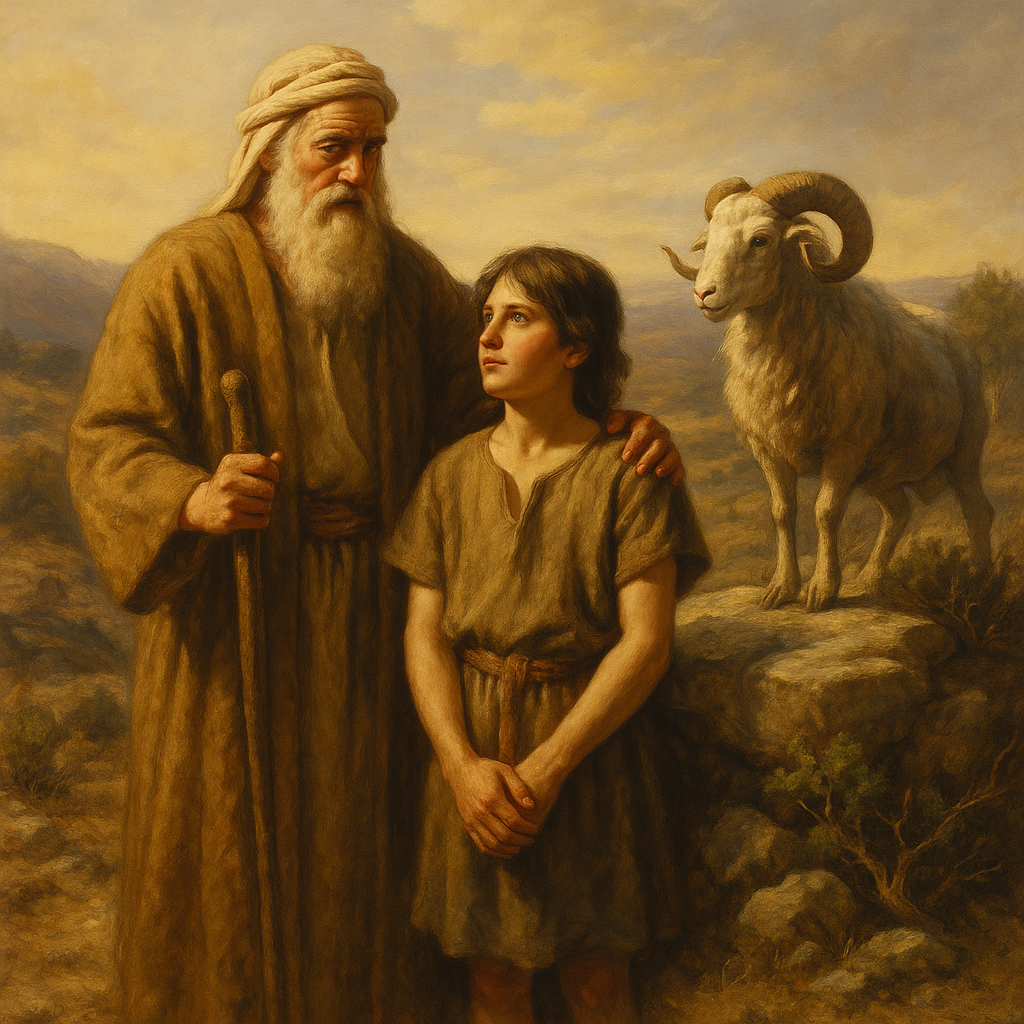
“Take your son, your only son, whom you love…” and go to the land of Moriah, and offer him there as a burnt offering.”It’s a haunting declaration. With perhaps enthronement overtones.

In Ancient Near Eastern culture—Babylonian, Mesopotamian, and Assyrian alike—this kind of phrasing belonged to the world of kingship. When a ruler spoke of “my beloved son” or “my only son,” he was naming the heir to his throne, the chosen one who would inherit both land and kingdom. The beloved son was the vessel of kingdom continuity.

Kings across Mesopotamia legitimized their rule by introducing themselves as “chosen” or “beloved” of the gods. In royal inscriptions, the title “beloved of the god” carried both affection and authority—it meant divine sanction. David’s own name in Hebrew, Dawid, literally means “beloved.”  The word itself echoes this ancient royal idiom.

So, when God tells Abraham to take “your only son, whom you love,” the language strikes the tone of royal inheritance. Isaac is the son of promise, the chosen heir, the one destined to receive and carry the covenantal kingdom forward. But first, he must ascend the mountain.

The Burnt Offering as Royal Food

The command is not only to take the son, but to “offer him as a burnt offering.”  In Israel’s  worship, the burnt offering (olah) was unique—it was wholly consumed. None of it was eaten by the priests. It was considered, in a sense, Yahweh’s food.  In the ANE world, meals often sealed royal covenants or enthronement ceremonies. Here, the “food” of the offering becomes the medium of divine communion.

The mountain of Moriah thus becomes a meeting place between heaven and earth—a cosmic throne room.  The ascent is not random. It’s the setting of a royal ritual: a father and son ascending the mountain together, carrying wood and fire, preparing a sacrifice that will confirm divine promise.

Royal Selection and the Beloved Son Isaac

In the ANE imagination, kingship was not just political—it was cosmic. The king was the mediator of divine order, the representative of the gods on earth. When a new king was chosen, he underwent ritual purification, some kind of act of humiliation, anointing, and a symbolic sacrifice or offering to the gods to receive legitimacy.

That background reframes the Akedah. The binding of Isaac is more than a test—it’s an enthronement drama. The son of promise is bound but spared as he emerges as heir of the covenant. This is not so much the story of a father losing his son—but the story of a royal covenant being sealed, and divine purpose being realized.

From Moriah to the Jordan: The Beloved Son Theme Continues

Fast forward to Matthew 3:17. The heavens split open, the Spirit descends like a dove, and a voice declares, “This is my Son, whom I love; with him I am well pleased.”  The Greek echoes the Hebrew ratzah—to be delighted, to take pleasure in. The same divine essence that hovers over the waters of creation now rests upon Yeshua as He emerges from the Jordan River.

Here again we see enthronement language. The Son is chosen, affirmed, and anointed. The Ruach descends as at the beginning—hovering like a mother bird—an image of divine nurture and creative power. The pattern repeats: ascent, anointing, declaration. Yeshua stands as the greater Isaac—the beloved Son who will ascend another mountain carrying the wood of His own sacrifice.

The Akedah, the binding of Isaac, prefigures the coronation of the Son who will conquer death, the Divine Warrior whose throne is established through obedience and surrender.

What makes Genesis 22 so extraordinary is how it both resonates with and subverts the ANE royal ideal. In Mesopotamian myths, the beloved son inherits the throne of a god; in Israel’s story, the beloved son, Isaac inherits the covenant of the one true God. The throne is not a seat of empire but a promise of blessing. The test is not one of conquest like ancient kings but one of trust.  The Divine Warrior’s victory is not won by slaying rivals but by surrendering the most precious thing—and finding resurrection on the mountain.

Mountain Imagery and the Third Day

The text notes that Abraham “rose early in the morning,” split (bāqahʿ) the wood for the offering, and “on the third day” lifted his eyes and saw the place afar off. That word bāqahʿ—to split or cleave—is used elsewhere for cosmic openings: the heavens splitting, the sea parting, even the veil of the temple tearing at the death of Yeshua. Each signals the opening of the kingdom and the revelation of the divine presence.

And “the third day” is the biblical message for resurrection, new birth, new creation. The son who was as good as dead is raised up, restored, and confirmed as heir.  The mountain becomes the site of both sacrifice and enthronement.

From the Ram’s Horn to the King’s Trumpet

Jewish tradition reads the Akedah at Rosh HaShanah—the Day of the Shofar, the awakening blast of Yom Teruah, the coronation of the King.  At the story’s climax, a ram appears, caught by its horns in a thicket.  Horns, that in later generations, announce enthronement. The sound that once marked substitution now heralds kingship. The ram becomes the emblem of the beloved son redeemed and the king enthroned.

When Abraham “saddled his donkey” to ascend the mountain with his son, Isaac it foreshadowed another royal procession.  Centuries later, Solomon, the son of David, descended to the Gihon Spring, was anointed with oil, and then ascended on a donkey to be enthroned at the temple. The pattern repeats: descent to the waters, anointing, ascent to the mountain, enthronement.

The binding of Isaac stands at the root of this sacred rhythm. From Abraham and Isaac to Solomon, from the Jordan to Golgotha, the mountain is always calling the beloved son upward.

So perhaps Genesis 22 is a story that showcases royal commissioning. The beloved son, Isaac tested, affirmed, and enthroned on the mountain of obedience. The covenant meal, the burnt offering, and the ram’s horn all point toward the Divine Warrior who will one day climb His own mountain, bear His own wood, and open heaven itself.

Isaac
Ruth

Bread for the Nations: Ruth & the Canaanite Woman

In Matthew’s Gospel, bread becomes a sign of covenant, inclusion, and abundance. When Yeshua feeds the multitudes, He unveils the pattern of God’s redemptive plan through bread — the people eat, are satisfied, and they gather up the leftovers. The two feeding miracles in Matthew, the five thousand and then the four thousand, are not repetitions but rather layers of the kingdom’s expansion—from Israel to the nations. The feedings find their connections to the story of Ruth and the story of the Canaanite woman.

The first feeding (Matt. 14:13–21) unfolds in Jewish territory. Yeshua takes five loaves and two fish, blesses them, breaks them, and feeds the crowd. The five loaves recall the Torah, the covenantal instruction given to Israel, and the twelve baskets of leftovers mirror the twelve tribes. This scene reveals Yeshua not just the new Moses, but a greater Moses, giving heavenly bread to His covenant people in the wilderness. The people eat, are filled, and there are left overs — divine provision for Israel.

Faith That Opens Heaven

Immediately following this miracle, Matthew shares another encounter: the story of the Canaanite woman (Matt. 15:21–28). The geography shifts from Jewish to Gentile territory — from Galilee to the region of Tyre and Sidon by the Mediterranean Sea signaling that something new is about to break open.

The woman who approaches Yeshua is a Canaanite, a descendant of Israel’s ancient enemies, yet she addresses Him with faith: “Son of David, have mercy on me!” Her words stand in stark contrast to Israel’s religious leaders, who question and resist His authority. This Gentile woman recognizes what many in Israel do not — that the promised King of David’s line has come. Her daughter is “severely tormented by a demon,” a haunting image of her nation enslaved to spiritual chaos. Her cry is not only maternal but symbolic: a plea for deliverance from the dominion of darkness.

Yeshua’s reply sounds severe: “I was sent only to the lost sheep of the house of Israel… It is not right to take the children’s bread and throw it to the dogs.” Yet this becomes an invitation for her faith to speak. Like Ruth the Moabitess, humbling herself to glean the fallen grain, this woman kneels and answers, “Even the dogs eat the crumbs that fall from their master’s table.” Her faith has crossed the boundary. Heaven will open, and the bread of heaven will be given to the nations in the feeding of the 4000.

The Table of Ruth and the First Bread of the Nations

The Canaanite woman’s faith is the hinge between the two feedings in Matthew. Immediately after her story comes the feeding of the four thousand (Matt. 15:32–39). The setting is Gentile territory — the Decapolis region east of the Galilee. The symbols tell the story:

  • Four evokes imagery of the four corners of the earth — the nations.
  • Seven baskets of leftovers recall fullness and completion; savah (“to be satisfied”) shares the same letters as sheva (“seven”).
  • The people eat, are satisfied, and there is abundance leftover — but this time it is the nations being filled from Israel’s bread.

Where the first feeding was bread for Israel, this one becomes bread for the nations. Between them stands the faith of a Gentile woman — the bridge from one table to the next.

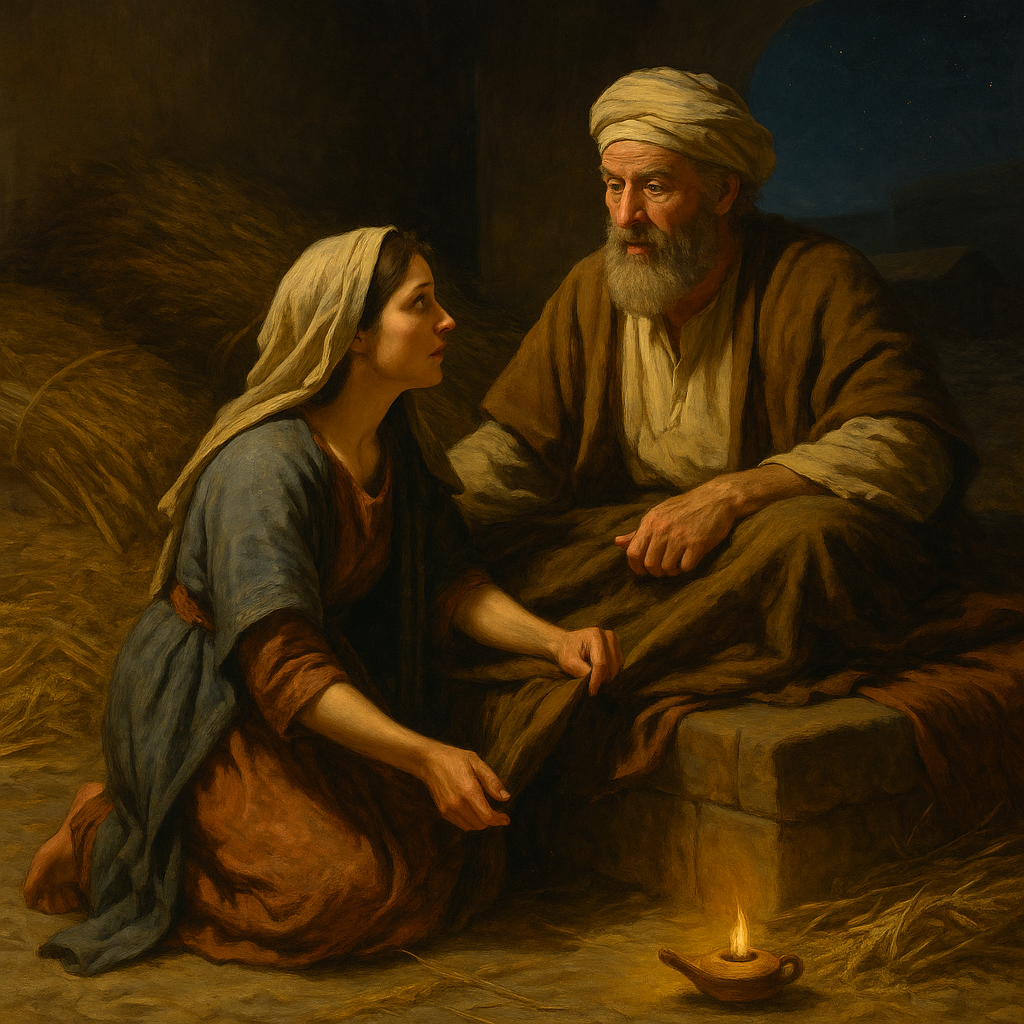
This pattern reaches back to Ruth. When Ruth, the Moabitess, comes to Bethlehem, the “house of bread,” she asks to glean among the sheaves. She is an outsider seeking mercy, humbling herself to pick up what falls from another’s harvest. Ruth “happens” upon the field of Boaz, the redeemer, whose name means “strength.” At mealtime he invites her, “Come here, eat some bread, and dip your morsel in the wine vinegar.” Ruth sits among the harvesters — a Gentile among Israelites — and “ate until she was satisfied and had some left over.” The language is identical to that used in the feeding of the 5,000 and 4,000 in Matthew.

The echoes are unmistakable: bread, fullness, and leftovers. Boaz commands his reapers to leave extra grain for her, just as Yeshua commands His disciples to gather up the fragments so that nothing is lost. Boaz blesses Ruth: “May the Lord repay your work, and a full reward be given you by the Lord God of Israel, under whose wings you have come for refuge.” Yeshua blesses the Canaanite woman in the same spirit: “Woman, great is your faith!” Her faith is so great — greater even than that of the disciples — that it becomes the catalyst for bread to be poured out upon the Gentiles of that region.

Faith as the Doorway

Ruth and the Canaanite woman mirror one another:

  • Both are outsiders who seek refuge under Israel’s God.
  • Both approach in humility and perseverance.
  • Both receive abundance beyond measure.

Their faith doesn’t steal Israel’s blessing; it multiplies it. Through them, the covenant table widens. The faith of Ruth brought forth King David — and ultimately the Messiah. The Canaanite woman’s faith anticipates the Great Commission in Matthew 28, where the bread of heaven is carried by Yeshua’s disciples to the four corners of the earth. What begins at Israel’s table becomes a feast for the world.

The Mountain of Fullness

In Matthew, both feedings take place on mountains, the meeting points of heaven and earth. Each mountain scene: the Sermon on the Mount, the Transfiguration, and the Great Commission marks a step in the revelation of Yeshua as the Shepherd-King. On this mountain of bread, He conquers not armies but hunger; not enemies but ethnic separation. The seven baskets of fullness (sheva / savah) mark a new creation, bread that satisfies all peoples from the hand of the King of Kings. The faith of outsiders has opened the storehouse of heaven, and the world is filled.

In Yeshua, the Greater Boaz, the Bread of Heaven is broken — first for Israel, then for the nations. Those who come hungry, humble, and believing find themselves seated at His table, filled and satisfied, with abundance left over.

The Expanding Table of the Kingdom

The story of bread in Matthew is the story of covenant expansion — of a table that keeps growing. From Ruth gleaning in Bethlehem’s fields to the Canaanite woman kneeling before Yeshua, the pattern repeats: humility opens favor, faith opens heaven, and bread opens covenant.

The grain gleaned by Ruth become the loaves that feed the nations through the Messiah who came from her line. The loaves are multiplied on Yeshua’s mountain. The covenant meal that began with Israel now extends to all creation — a feast of satisfaction (savah) for every nation, tribe, and tongue. The Bread of Heaven never diminishes when shared — it always multiplies.

Ruth
Sodom

Sodom: The First Passover and the Pattern of Redemption

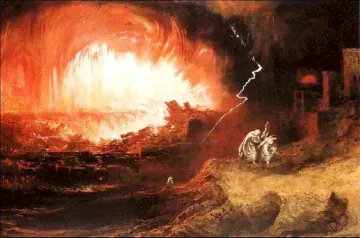
There’s an Exodus thread woven through Genesis, an early current of redemption that flows through the story of Abraham and Lot. It begins not with Moses and Pharaoh but with Lot standing at the threshold of his house before fire and brimstone are poured out in judgment. Before the plagues of Egypt, before the blood on the doorposts, before Israel’s hurried meal in the night, there was another Passover almost hidden from view. The destruction of Sodom in Genesis 19 is a proto-Exodus, a revelation of Yahweh’s redemptive pattern that will echo throughout Israel’s story until it reaches fulfillment in the final deliverance of Revelation.

The First Passover Table

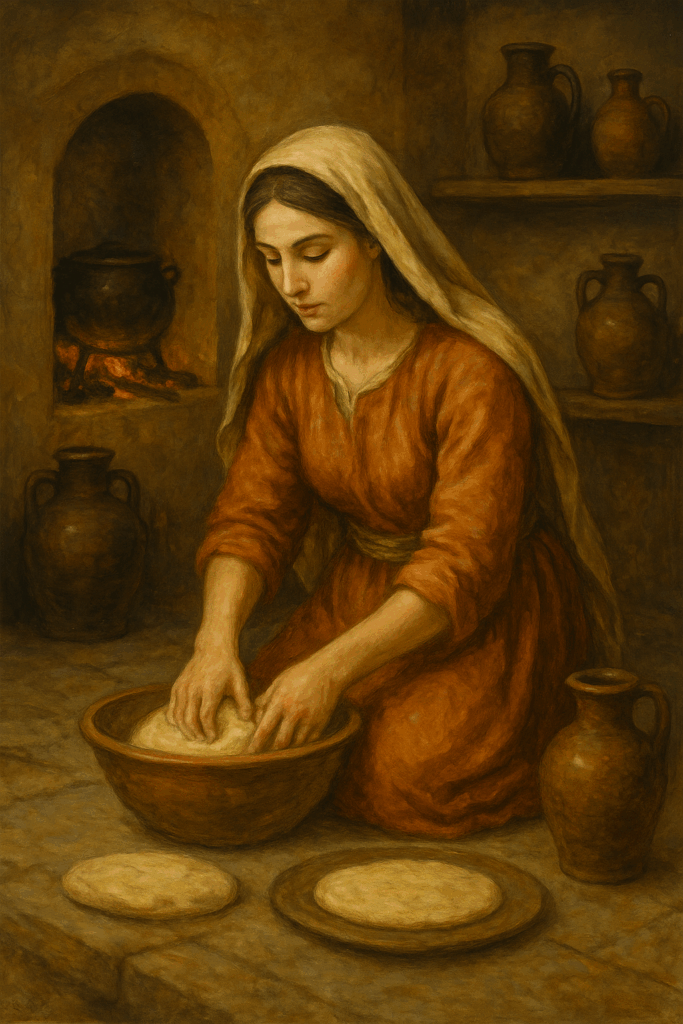
When the angelic messengers enter Sodom, Lot welcomes them into his home with a meal: “And he made them a feast and baked unleavened bread (matzot), and they ate” (Gen. 19:3).

This is the first mention of matzot in Scripture. Why specify unleavened bread unless the writer wants the reader to hear Passover overtones? This detail suggests a comparison: Lot, like Israel centuries later, hosts divine messengers, serves matzot, and stands on the brink of destruction. Both narratives unfold at night, both involve a covenant meal within a protected space, and both end with salvation for those inside and judgment for those who are outside.

Unleavened bread symbolizes a sense of urgency as well as separation from corruption—the bread of exile, eaten by those who must depart quickly because judgment is near. In Sodom it is consumed on the eve of fire; in Egypt, on the eve of deliverance. Lot’s table becomes the first Passover table, the prototype of the meal eaten in haste as divine judgment passes over.

The Shut Door: Threshold for Salvation

The story then turns on a single line: “They brought Lot into the house and shut the door.” (Gen. 19:10)

The closed door becomes a sacred boundary, a separation between chaos and communion—just as the blood-sealed doors of Exodus 12 marked the boundary between life and death. Inside the house lies fellowship and light; outside, blindness and destruction. Lot’s home becomes a miniature sanctuary, a small ark floating in the flood of the corruption of Sodom. His doorway is a symbolic threshold pointing to Passover.

When the men of Sodom press against the door, demanding to defile the messengers, the scene is visually dramatic. The house becomes holy ground; the mob outside represents the world of unrestrained appetite and gratuitous violence. When the angels strike them with blindness, they can no longer find the door.

This moment foreshadows Exodus 12, when Israel’s homes become sanctuaries in miniature, each sealed by blood as Yahweh passes through the land. In both stories, divine protection is localized tied to a dwelling, a table, and obedience to God’s word.

The Fire, the Furnace, and the Plagues

At dawn Yahweh rains down fire and brimstone from heaven (Gen. 19:24), and Abraham later sees “smoke rising like the smoke of a furnace” (19:28). The Hebrew word kivshan, “furnace” will resurface later to describe both Egypt’s brick furnaces (Ex. 9:8–10) and the fiery presence of Yahweh at Sinai. The repetition seems deliberate. What befalls Sodom is not a random natural disaster event but rather covenantal judgment—the consuming fire of a God who binds mercy and justice together.

The plagues of Egypt mirror the same pattern: hail mixed with fire, darkness over the land, and the cry of the condemned. Each episode is a de-creation, the unraveling the ordered world of Genesis 1. Fire replaces light, chaos replaces blessing, and the fertile valley that once looked “like the garden of Yahweh” (Gen. 13:10) becomes a wasteland—a kind of burned-out Eden.

The Righteous Remnant and the Urgency of Escape

The angels urge Lot: “Flee for your life! Do not look back!” (Gen. 19:17). The command anticipates Moses’ instruction to Israel: “Eat it in haste, for the Lord will pass through to strike Egypt.” (Ex. 12:11–12). Both narratives speak of urgency—in this hour of deliverance there is no time for hesitation.

When Lot delays, the angels take him by the hand and send him out. This gesture reappears in Deuteronomy 4:34, where God “takes Israel by the hand” to send them from Egypt, and again in Isaiah 42:6, where Yahweh takes His servant by the hand to bring light to the nations. A visual that is prophetic: humanity is rescued not by merit but by divine compassion.

The same contrast appears in the blindness of the men of Sodom. As they grope for the door, unable to find their way in, Isaiah’s promise echoes that God’s servant will “open blind eyes and bring prisoners out of the dungeon.” It’s the Exodus pattern: the wicked blinded by judgment, the righteous led out by God’s own hand.

Sodom as Egypt: Exodus by Fire

Later, Scripture makes the connection explicit. Deuteronomy 29:23 describes judgment on the land as “the overthrow of Sodom and Gomorrah.” Isaiah 1:9–10 and Jeremiah 23:14 both liken Jerusalem and Egypt to Sodom—symbols of corruption and oppression. In each, divine messengers are rejected, the innocent suffer, and judgment falls from above.

Sodom, then, likened to a future Egypt and an Exodus not through the sea but through fire. Lot and family, a righteous remnant, flee under angelic escort while the city of rebellion is destroyed behind them. The same God who will later split the Red Sea first splits the sky with fire, delivering His people through the judgment rather than around it.

Lot’s wife looks back longing for what she was about to lose and so becomes a pillar of salt—a monument to old ways. She mirrors Israel’s later desire to “turn back to Egypt,” trading freedom for familiarity. Her look backward exposes that which always pulls humanity toward its former bondage.

From Sodom to Sinai to Calvary

The pattern that begins in Genesis 19 continues through the Exodus and reaches its climax at the Cross. In Sodom, angels enter the city to rescue Lot and his household; in Exodus, Yahweh enters Egypt to confront Pharaoh and free His people; in the Gospels, the Word becomes flesh—and God Himself enters the world to redeem humanity.

Each story centers on a sacred meal: Lot’s matzot, Israel’s Passover lamb, and Yeshua’s Last Supper, where He breaks the unleavened bread and declares, “This is My body.” Each features a doorway—Lot’s shut door, Israel’s blood-stained threshold, and the blood on the Cross itself.

In all three, judgment falls as chaos: fire on Sodom, plagues on Egypt, and at Calvary, the full weight of divine justice borne by Christ. And in every case, deliverance follows—Lot from the burning city, Israel from bondage in Egypt, humanity from the dominion of sin and death.

The pattern reveals the architecture of salvation: divine visitation, covenant meal, sealed threshold, judgment outside, and deliverance within. From Sodom’s night to Egypt’s Passover to Golgotha’s hill, God enters the realm of death to rescue the remnant who trust His word.

Revelation: The Final Exodus

The pattern doesn’t end with Egypt. Revelation replays it on a cosmic stage. Babylon (now Rome) is the last empire is called “Sodom and Egypt” (Rev. 11:8), the twin emblems of human rebellion. Fire falls again, the earth shakes, and a voice calls, “Come out of her, My people, lest you share in her plagues” (Rev. 18:4).

The final Exodus is a deliverance not from one city but from the entire corrupted order of creation. The same elements reappear:

  • A divine visitation (the Lamb and His angels),
  • A covenant meal (the marriage supper of the Lamb),
  • Judgment by fire (the lake of fire replacing Sodom’s sulfur),
  • A new household sealed by God’s name, safe within the radiant walls of the New Jerusalem.

What began with a door shut in Sodom ends with gates that never close in the city of God.

From Chaos to Covenant

Sodom’s story becomes a roadmap for redemption—from Lot’s house to Sinai’s mountain, from the Upper Room to the descending city of Revelation. Each stage reveals the same divine rhythm: Yahweh visits, separates, redeems, and dwells among His people. Genesis 19 is the revelation of the Exodus pattern.

God saves a remnant, closes the door behind them, and re-creates the world from the ashes. The story that began with unleavened bread in Lot’s house ends with the feast of the Lamb, when the final Exodus is complete— the redeemed will dwell forever in His house.

Sodom
Skip to content