Tag: worship

place

The Place He Chose: What it means for God to put His Name among His people.

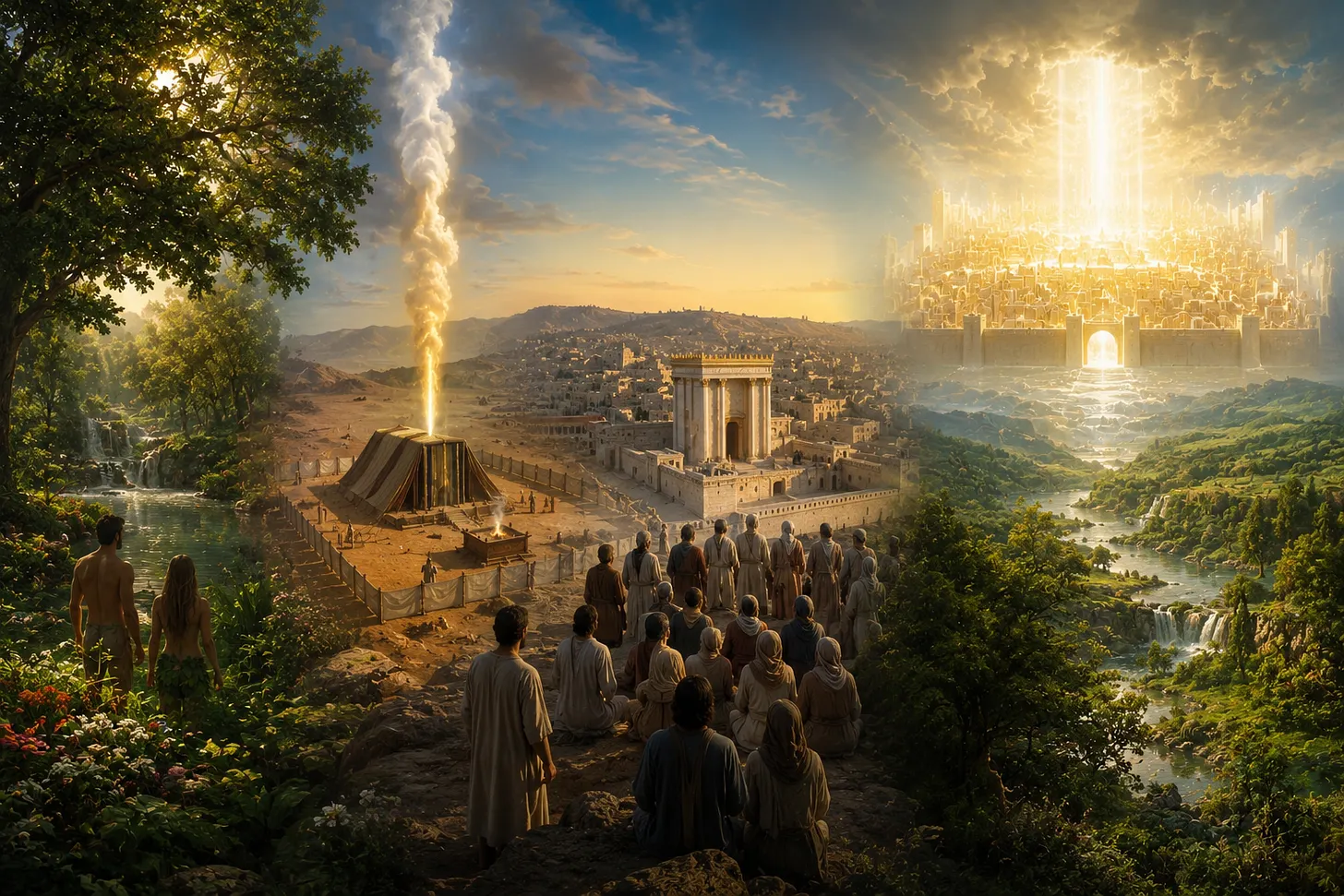
One of the great biblical themes is “the place that the LORD your God will choose to put His Name.” Moses directs Israel to one location where sacrifices are offered and covenant life is centered. This is the sacred center—the place where heaven and earth meet because God Himself chooses to dwell.

In the ancient world, names carried far greater significance than they do today. A name represented identity, character, authority, and existence itself. God reveals Himself to Moses as the One “who was and is and is to come,” the eternal One whose very Name declares His unchanging existence. To place His Name somewhere is to establish His presence, His rule, and His covenant authority there.

The Hebrew word is makom, meaning “place.” In Jewish tradition, HaMakom, “The Place,” becomes one of God’s titles. God, in a very real sense, is the Place. He is the One in whom all creation exists and finds its stability. The sacred place is where His presence is established, where His covenant is confirmed, and where His people come to stand before Him.

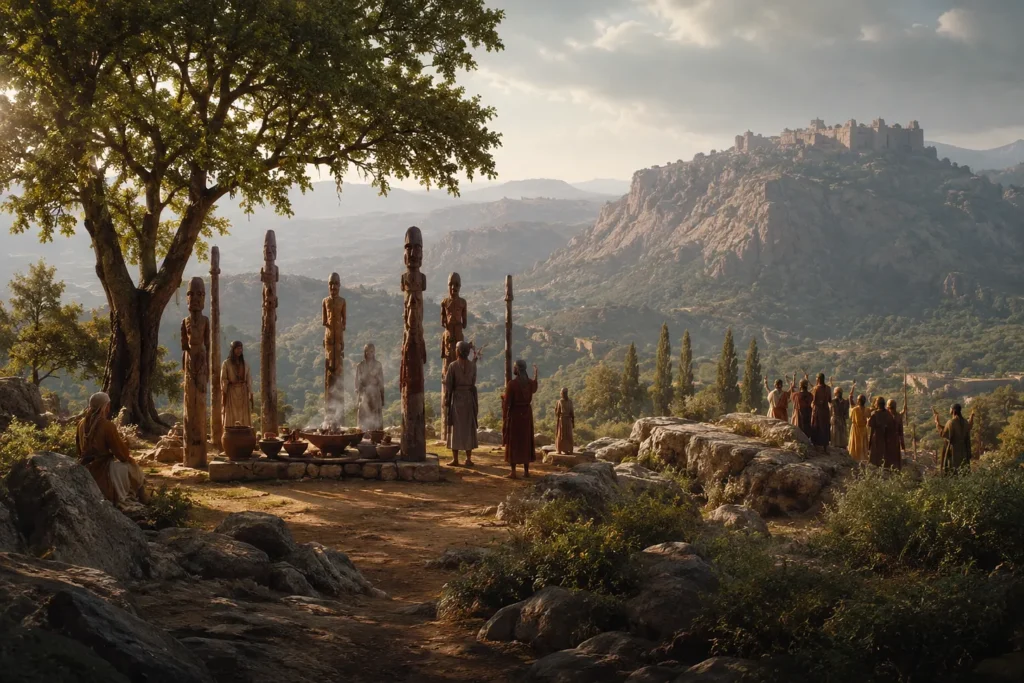
The nations saw sacred space differently. They believed their gods inhabited mountains, hills, and sacred groves. Elevated places became centers of worship. Every leafy green tree could become a place of fertility worship. Sacred poles and carved images marked locations where particular deities were believed to dwell. Every locality possessed its own sacred center. The nations themselves determined where their gods would reside.

Moses’ repeated reference to “the place where the LORD your God will choose to put His Name” only becomes clear when viewed against the ancient world’s understanding of sacred space. Every civilization believed there was a sacred center—the point where heaven and earth touched and where the divine realm intersected with human existence. It was considered the heart of reality itself, the place from which order flowed into the world and where creation was continually sustained.

Temples and sanctuaries were always built at this sacred center. But before a temple could be constructed, the sacred center first had to be identified. In the surrounding cultures this was often determined through oracles, omens, or divination. An image of the deity was then installed to validate the site’s sacred status, while the architecture of the sanctuary carefully reflected and protected its holiness.

Elevated mountains and hills naturally became favored locations because they symbolized the meeting point between heaven and earth. These sanctuaries functioned as miniature worlds, places where rituals and ceremonies renewed the relationship between the gods and humanity. In many ways they were understood as a microcosm of paradise—a center where the ordered world overcame the forces of chaos.

Israel also possesses a sacred center, but unlike the nations, it is never established by human initiative. The place is holy for one reason alone: the living God chooses it. From Eden onward, sacred space exists only because God establishes His presence there. It is where creation is restored and where His covenant people gather before Him.

The nations chose where their gods would live. Israel waited for God to choose the place of His dwelling. The sacred center did not originate from human imagination. It originated from divine initiative. God planted the garden. He placed Adam and Eve within it and walked among them. Eden became the first sacred center because God caused His presence to dwell there.

After humanity’s exile from Eden, God continually establishes places where His presence dwells. The patriarchs encounter Him in their tents and at divinely appointed locations. The Tabernacle in the wilderness becomes the center of Israel’s camp, where the glory of God dwells among His covenant people. Solomon’s Temple becomes the place where God causes His Name to dwell in Jerusalem.

Jerusalem certainly became that place within Israel’s history, yet it pointed beyond itself toward something greater.

The prophets looked beyond the earthly Temple toward a renewed creation where God’s presence would once again fill the entire world. The New Testament reveals that promise unfolding through the Messiah. John declares that “the Word became flesh and dwelt among us.” The language deliberately echoes the Tabernacle. God once again dwells among humanity, not in a building made with hands but in the person of Jesus Himself.

What began in a garden, moved through a tent and a temple, now lives within the covenant community. Revelation brings the entire movement to its glorious conclusion as the New Jerusalem descends from heaven. No temple stands within the city because God Himself dwells there. The whole renewed creation becomes the holy place. Heaven and earth are fully united once again.

God’s purpose has always been to restore His dwelling with humanity until His presence fills the whole earth. God meets His people everywhere through His Spirit. Yet humanity never determines where God dwells. We do not invite Him to bless our agendas, our kingdoms, or our ambitions. Instead, we are invited into His purposes.

God chooses.

We respond.

The place where God puts His Name is ultimately the place where His rule is welcomed. It is where His people willingly bend their will to His until His desires become their own. The sacred center is not defined by geography but by submission. It is the place where our plans yield to His purposes, where our desires are reshaped by His wisdom, and where our lives come into alignment with His covenant.

Throughout Deuteronomy, worship always gathers families, servants, strangers, and entire households before the Lord. They rejoice together in His presence because covenant life is lived in community. God’s dwelling is not simply about private spirituality; it creates a people who live under one King and one covenant.

While the nations scattered worship among countless sacred sites, Israel gathered around one sanctuary because there was one God, one covenant, and one King.

The same remains true today. The place where God chooses to put His Name is the place where His people willingly bend their will to His until His desires become their own. There chaos is overcome by God’s order, divided people become one covenant community, and self-rule is replaced by the reign of God’s Kingdom.

Every covenant community that lives under His rule bears witness to the day when all creation will become the place where He has chosen to put His Name.
place
enemy

Who Is Your Enemy…Why Moses and Jesus Are Fighting the Same Battle!

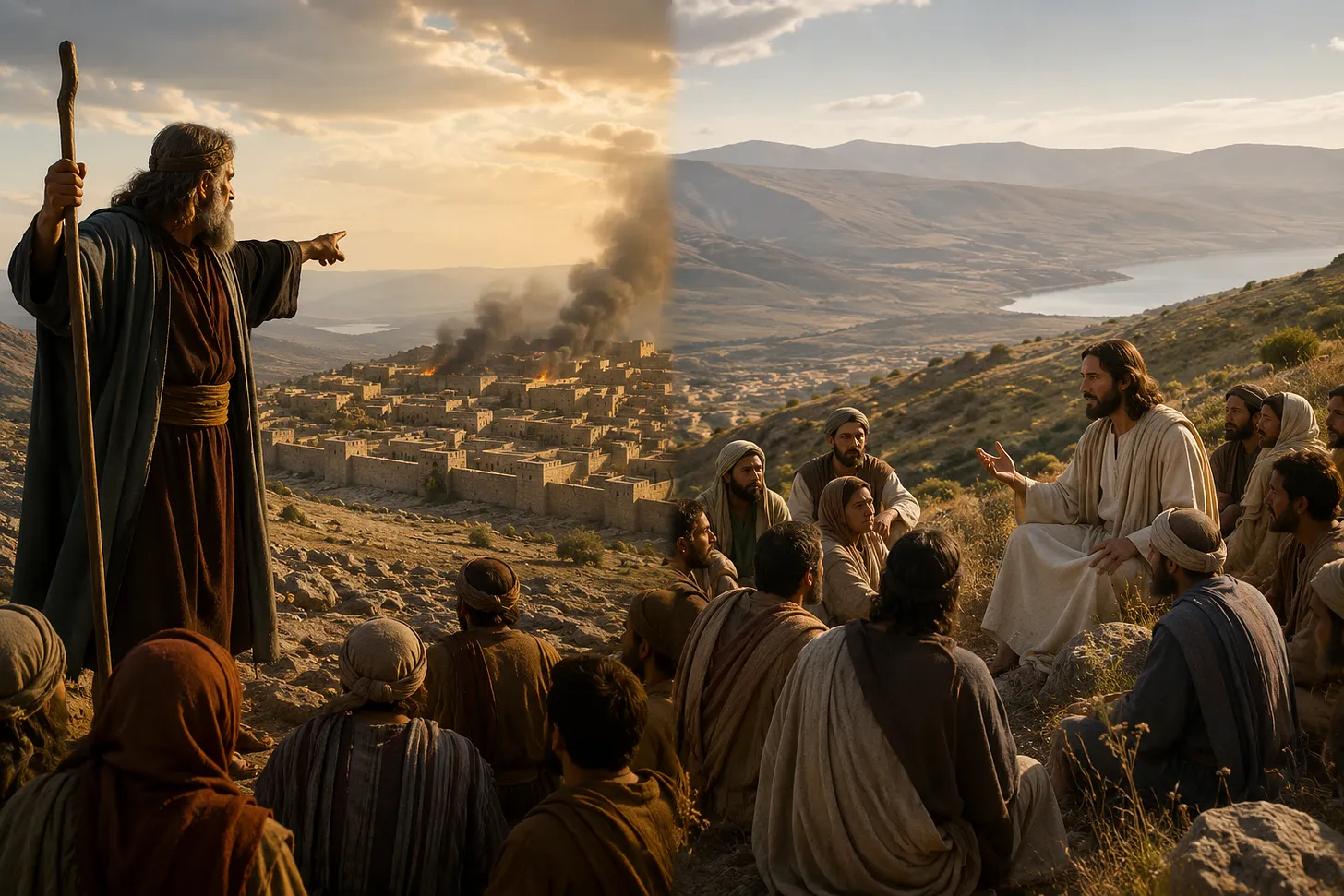
Some of the most difficult passages in Scripture are those that seem to contradict God’s ways. As Israel stands on the plains of Moab preparing to enter the Promised Land, God commands the people to drive out the nations before them, show them no pity, burn their carved images, and leave nothing that might entice them into compromise. Yet in the Sermon on the Mount, Jesus tells His disciples, “Love your enemy and pray for those who persecute you.” At first glance, these commands appear impossible to reconcile. How can the God who commanded Israel to destroy its enemies later command His disciples to love theirs?

The tension begins to disappear once we recognize that the real conflict has never been merely about Israel’s opponents. It has always been about humanity’s greatest enemy.

When Moses speaks about the nations inhabiting Canaan, he is not describing random foreign peoples who happened to occupy the land. They represent a rival kingdom whose worship, values, and way of life threaten everything Israel has been called to become. If Israel embraces their gods, she will inevitably embrace their character, no longer reflecting the God in whose image she was created. The greatest danger is not military defeat but the loss of Israel’s identity as God’s covenant people.

Again and again, Moses warns that these nations will become a snare to Israel. The danger is not simply that they occupy the land but that they will capture Israel’s heart. The people redeemed to bear God’s image will gradually begin to reflect the image of the nations instead. That is the threat Moses sees before them.

This is why Moses commands Israel not to covet the silver and gold that adorn their idols or bring those abominations into their homes. Idolatry rarely begins with outright rebellion. It begins with fascination, grows into compromise, and ends in allegiance. God knew that the greatest victory of the Canaanites would not be won on the battlefield but in the hearts of His own people. The conquest would fail long before Israel lost a battle if Israel became Canaanite in heart.

By the time we reach the Gospels, the political landscape has changed. Rome now occupies the land, and Israel lives under foreign rule. Yet Jesus never commands His disciples to overthrow Rome by force or wage war against Caesar.

Instead, He says something that surprises us. “Love your enemies.”

Has God changed His mind? Not at all. The enemy still represents everything that opposes the Kingdom of God. What changes is the place where the battle is fought.

Under Joshua, Israel entered a physical land that had to be cleansed of idolatry. Under Messiah, God’s people become His dwelling place, and the battlefield moves into the human heart. The greatest threat is not so much the army outside the gates. It is the corruption that enters through the gates we abandoned.

We imagine an external enemy arriving with banners flying and swords drawn.

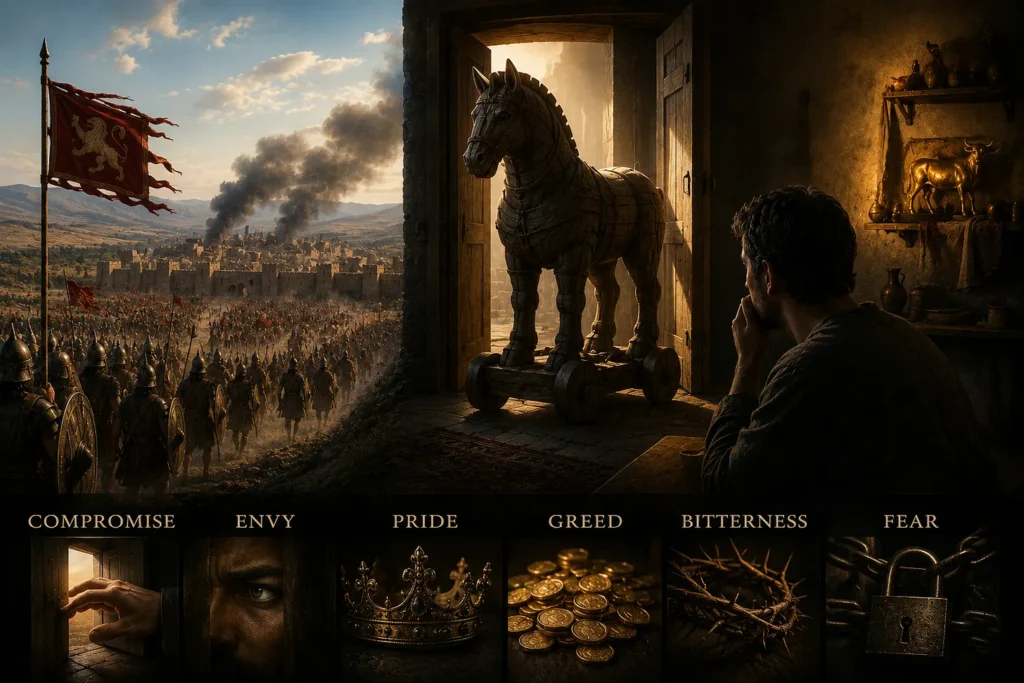
More often, he enters like a Trojan horse.

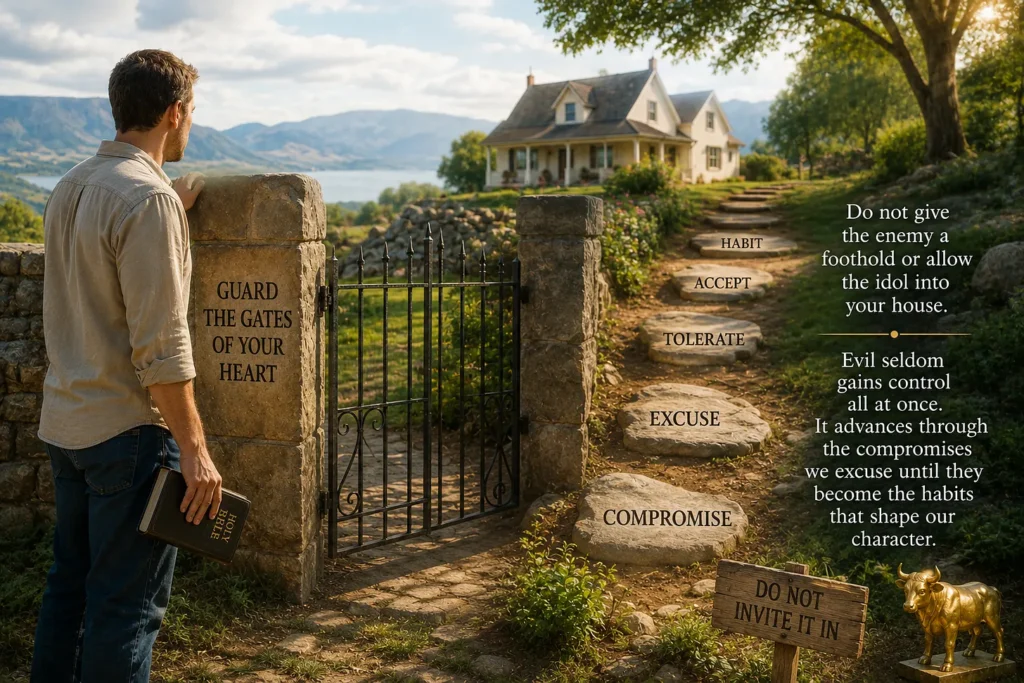
He comes disguised as compromise, envy, pride, greed, bitterness, or fear. He hides in the small habits we overlook and the subtle beliefs that slowly reshape both our understanding of God and our understanding of ourselves. Every idol begins by asking for just a little room before demanding the whole house.

Our greatest enemy is not the person standing across from us but the desires that rise within us. James writes that temptation begins when each person is drawn away by his own desires. Long before evil becomes visible in our actions, it has already taken root in the heart. Too often, we open the gates ourselves.

Hatred has a way of reproducing itself. Violence forms violent people. Bitterness reshapes the soul. When we answer evil with evil, we allow the kingdom we oppose to take root within us. The Apostle Paul captures this truth in a single sentence: “Do not be overcome by evil, but overcome evil with good.” The real victory is refusing to mirror and become the enemy.

The command to destroy the enemy is a call to remove everything that seeks to destroy the covenant life of God’s people. Israel was commanded to tear down idols because idols deform human beings. They replace the worship of the Creator with the worship of created things. They rob men and women of the dignity for which they were created.

So who is your enemy? It is not your irritating neighbor. It is not your political opponent. It is not the person who insults you on social media.

enemy

Your enemy is every force that seeks to distort the image of God within you—every thought that leads you from the truth, every desire that pulls you toward selfishness, every idol that demands your loyalty, every habit that weakens your walk, every lie that challenges God’s voice, and every fear that causes you to distrust His promises. Anything that diminishes the dignity and calling of an image-bearer is working against the Kingdom of God.

That is the enemy.

This is why Moses repeatedly tells Israel not to fear the nations. The battle belongs to the Lord. Israel’s calling was never to secure victory by its own strength but to remain faithful while God fought on its behalf. Throughout Deuteronomy, Moses returns to the same exhortation: listen, keep, and do.

That same calling rests upon the disciple of Jesus. Guard the gates of your heart. Do not give the enemy a foothold or allow the idol into your house. Evil seldom gains control all at once. It advances through the compromises we excuse until they become the habits that shape our character.

The Lord who fought for Israel still fights for His people today. The enemy is whatever seeks to rob us of our calling as God’s image-bearers. Israel was commanded to remove whatever threatened the covenant community from within. Jesus calls His disciples to love those who oppose them while resisting the evil that seeks to deform God’s image in the human heart. Moses and Jesus are not speaking with different voices. They are calling God’s people to the same faithfulness against the same enemy—the one that would destroy God’s image in us.

enemy
worship

Worship and Wrestle: Finding God at Jabbok

The framework that once carried Christianity through American life is collapsing. In the decades following World War II, churches existed within a society that largely reinforced a Christian worldview. Schools, neighborhoods, civic institutions, entertainment, and public discourse all contributed to moral and ethical standards shaped largely by biblical ideas.

That world has disappeared before our eyes.

The challenge facing the church today is not primarily political, institutional, or technological. It is a question of worship. What captures our attention will ultimately shape our affections. Everyday millions of people are formed by the liturgies of distraction, comparison, outrage, self-promotion, and anxiety. The question confronting believers is not merely what we believe, but what has our attention, our loyalty, and ultimately our worship.

Yet this struggle is not new.

From the opening chapters of Scripture, humanity has faced the same fundamental choice. In the garden, the serpent’s temptation was not simply disobedience. It was an invitation to self-exaltation. Humanity was enticed to define good and evil on its own terms, to determine reality apart from God, and to become the source of its own wisdom and authority. The temptation was fundamentally about worship. Would humanity trust the Creator, or seek to take His place?

The same conflict appears in the wilderness. After forty days of fasting, Yeshua confronts haSatan—the adversary. Each temptation offers a shortcut to glory, authority, and power apart from obedience to the Father. Each temptation is a counterfeit form of worship. The wilderness becomes a battlefield where the question is: worship God or worship self.

The same choice confronts every generation. It confronts us now.

We often imagine that transformation happens through dramatic moments, but Scripture consistently portrays character as the result of countless decisions. Every day we choose what will shape us. Every day we choose whether to pursue righteousness or pursue ourselves. Every day we choose responsibility or resentment, trust or anxiety, obedience or self-determination. Over time, these choices become the path upon which we pattern our lives.

The story of Jacob speaks powerfully to our present moment.

Jacob is one of Scripture’s most recognizable portraits of humanity. He is flawed, ambitious, deceptive, manipulative, fearful, and yet remarkably successful. Again and again, he secures what he wants through strategy and persistence. He obtains the birthright. He deceives Isaac. He survives Laban. He accumulates wealth. He builds a household. By every visible measure, Jacob succeeds.

Yet prosperity and transformation are not the same thing.

God has blessed Jacob, but Jacob remains Jacob.

When God calls Jacob to return to the land, he is forced to confront the consequences of his past in the person of his brother Esau. The report from Jacob’s servants is alarming. Esau is approaching with four hundred men. Suddenly all of Jacob’s strategies seem inadequate. The text says he was greatly afraid and greatly distressed. The language evokes pressure and tribulation. Jacob finds himself in a place from which there appears to be no escape—no backup plan.

His first instinct is the same instinct that has governed his entire life. He calculates. He divides the camp. He develops contingency plans. If one group is attacked, perhaps another can survive. Even his prayer reflects the tension between faith and fear. He reminds God of the promises. He asks for deliverance (natzal) from Esau’s hand, using language that later echoes Israel’s deliverance from Egypt. Yet even while praying, Jacob continues arranging gifts and devising ways to appease his brother.

He is still trying to save himself.

Then night falls.

Jacob sends everyone across the river and remains alone. The isolation is key. Throughout Scripture, moments of transformation often occur when every support system and every backup plan has failed. No family. No servants. No flocks. No strategy left. Jacob is finally left with nothing but himself and God.

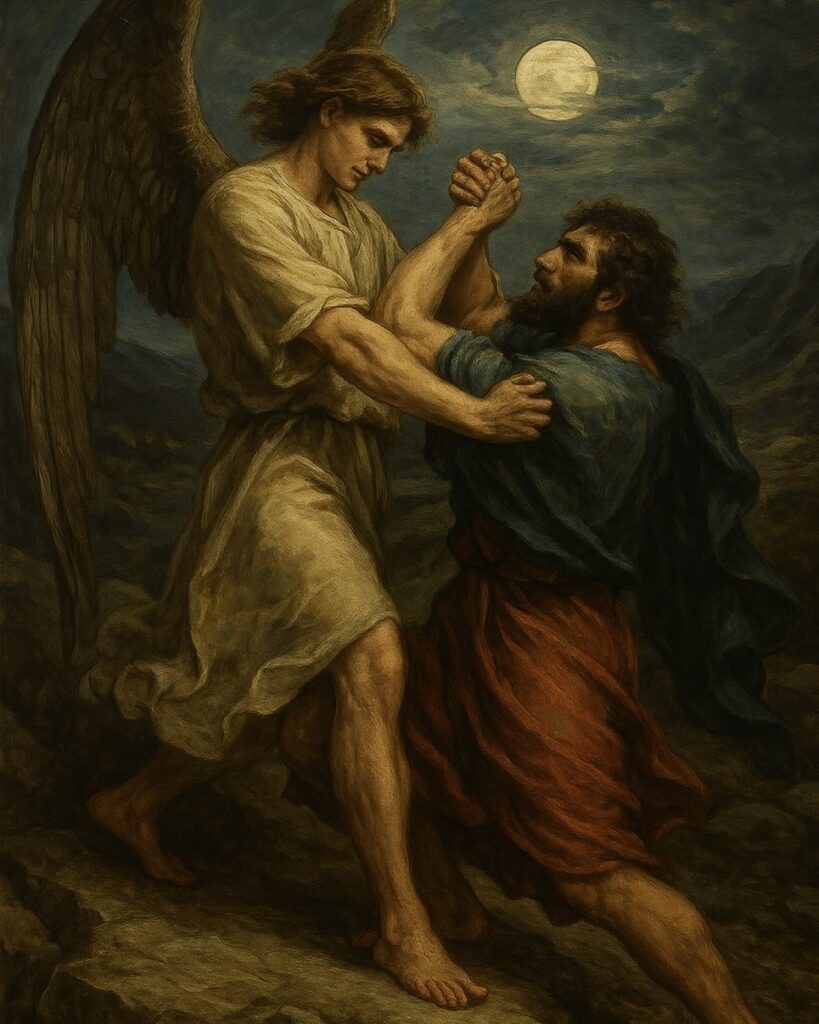
The encounter that follows is one of the most mysterious in all of Scripture. A “man” wrestles with him until the breaking of dawn. The Hebrew narrative is deliberately structured with a series of wordplays that intertwine Jacob’s identity with the place where the encounter occurs. Jacob, Ya’aqov, wrestles, ye’abeq, at the Jabbok River, Yabboq. The words echo one another in a way that simply can’t be accidental.

Many scholars have observed that the rare verb abaq likely carries the imagery of dust being stirred into the air. The scene depicts a violent struggle in the dirt beside the riverbank. Dust rises as these two figures grapple through the darkness.

Jacob has spent his entire life wrestling. He wrestled with Esau in the womb. He grasped his brother’s heel at birth. He fought for inheritance, blessing, prosperity, and security. Every major chapter of his life has been marked by struggle. Now, beside the Jabbok, all those struggles converge into one final encounter.

Many commentators suggest that Jacob is not only wrestling a mysterious divine opponent. He is wrestling his own past, his fears, his identity, and the person he has spent a lifetime becoming.

Dust is significant in Scripture. Humanity was formed from the dust of the earth. Dust reminds us of mortality, limitation, and dependence upon God. Jacob’s struggle unfolds in the very substance that testifies to human weakness. Everything he has trusted in himself is being exposed. His cleverness cannot secure the future. His plans cannot guarantee blessing. His manipulations cannot produce reconciliation.

What Jacob requires cannot come from Jacob. Wrestling is Required

The encounter also bears a striking resemblance to the combat scenes familiar throughout the ancient world. Heroes meet divine beings at rivers, mountains, and wilderness boundaries. The setting is liminal, standing between one reality and another. Darkness, struggle, blessing, and transformation all belong to this pattern. Jacob crosses the Jabbok as one man and emerges as another.

The irony of the story is that Jacob prevails not because he overpowers God, but because he refuses to let go. As dawn begins to rise, he clings to the One who has wounded him. The struggle leaves him limping, yet the limp itself becomes a sign of transformation. The wound ensures that he will never again confuse God’s blessing with his own strength.

When the encounter ends, Jacob receives a new name. The deceiver becomes Israel. The manipulator becomes one who has striven with God and endured. The dust settles. The old identity gives way to something new.

Perhaps this is where the faith community finds itself today.

The collapse of cultural Christianity has brought us to our own Jabbok. The structures and institutions that once reinforced faith are fading. The strategies that once seemed effective are proving insufficient. Like Jacob, we find ourselves standing between an old world that likely cannot be recovered and a future we can’t yet see clearly.

Yet it is often in such places that God does His deepest work.

The questions before us are not ultimately about political and institutional survival. They are questions about worship. Who is God? What is He doing in the world? What is His character? How does He transform human beings? How do we learn to trust Him when the familiar disappears?

Those questions are answered in the presence of God. They are answered through worship. They are answered through the long and often painful struggle of learning to trust Him more than we trust ourselves.

The cultural canopy that once carried Christianity is unlikely to return. But perhaps that is precisely the point. God has often done His most transformative work when His people could no longer rely upon the systems supporting them.

Like Jacob, we will discover that the path forward is found in surrendering our strengths. We will discover that blessing comes after the wrestling. We will discover that reconciliation with others begins with an encounter with God. And we may well discover that the collapse we so feared was actually the place where transformation began.

The choice remains what it has always been: worship God or worship self. Every day that choice stands before us. Every day we decide what will shape our hearts. Every day we choose whether we will cling to our own wisdom or hold fast to the God who meets us in the darkness and carries us into the dawn.

worship
Worship

Worship as the Undoing of Chaos

The portion Bo (Exodus 10–13) brings the Exodus narrative to its climax. The final plagues—locusts, darkness, and death are carefully ordered acts within a larger combat narrative and which challenge Israel’s worship. These chapters reveal that the conflict between Yahweh and Pharaoh is not just political but is cosmic. At stake is the question of who rules the world and by what means order is sustained.

Worship as Liberation: From Forced Labor to Avodah

At the center of this struggle stands a repeated divine command: “Let my people go, so that they may serve me.” The Hebrew verb shalach (“send,” “send away,” “let go,” “release”) suggests a forceful removal. Pharaoh must release what he refuses to relinquish. Yet the purpose of this sending is equally important: “so that they may serve me.” The word avad means both labor and worship. Israel is being transferred from one form of service to another, from forced labor under Pharaoh to voluntary worship/service under Yahweh. The Exodus is a movement from oppressive service to restorative service. Worship is the means by which chaos is undone. It is the solution to world crisis.

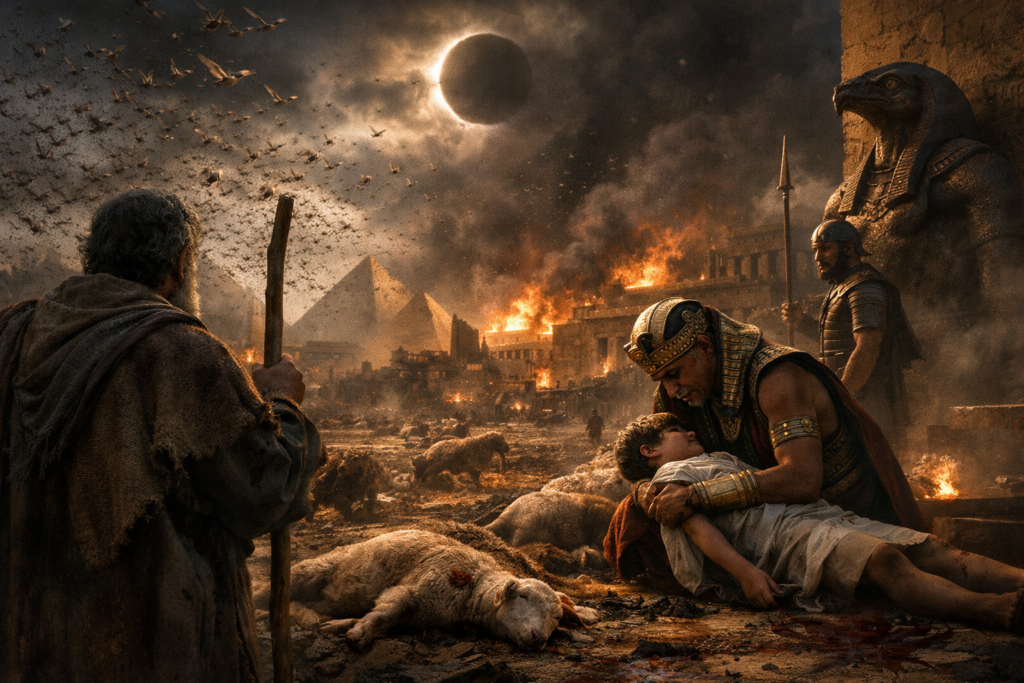
The plagues of Bo reveal how Yahweh dismantles Egypt’s theology of power. Locusts are announced as an invasion that will “cover the face of the earth” and consume what remains after the hail. This is language of de-creation. Egypt’s agricultural abundance, its control over land and food, is stripped away. The darkness that follows is described as thick and tangible, lasting three days. It is a direct challenge to Ra, the sun god. Egypt’s most revered deity is rendered powerless, while Israel remains in light. Creation itself appears to unravel under Yahweh’s command.

Pharaoh’s negotiations during these plagues expose the true nature of his resistance. He offers partial release: the people may go, but their flocks and herds must remain behind. Livestock represented wealth, stability, and future productivity. Pharaoh’s refusal is essentially economic. He will not let go of his “cash cow.” Egypt has relied on Israel’s labor and expertise, particularly in animal husbandry, and Pharaoh is unwilling to surrender his resources. Moses responds with theological clarity: the people must take sacrifices with them, and they will not know how they are to serve Yahweh until they arrive. Worship cannot be dictated by empire. It cannot be scheduled, minimized, or controlled by the very system it seeks to escape.

Divine Combat and the Dismantling of Egypt’s Gods

The final plague, the death of the firstborn, brings the conflict to its most severe point. Throughout ancient Near Eastern mythology, gods established their right to rule through cosmic combat. Creation and kingship were born of conquest. Egyptian religion reflected this worldview. Myths such as Set murdering Osiris or Sekhmet slaughtering humanity at Ra’s command portray a divine order sustained through violence. Pharaoh, viewed as a living god, maintained this order through domination, coercion, and even mass infanticide. His decree to drown Israel’s sons in the Nile was an act of state-sponsored de-creation.

Yahweh’s judgment responds measure for measure. The death of the firstborn is a direct confrontation with Egypt’s theology of power. Pharaoh’s own house is struck, revealing his impotence. In the ancient world, it was the king’s responsibility to preserve order. By failing to do so, Pharaoh is publicly exposed as a false chaos-tamer. The Egyptian people witness the humiliation of their god-king by the invisible God who acts through Moses.

The structure of the plagues reinforces this message. The first nine are arranged in three cycles of three, each building in intensity and followed by a pause. The final plague stands alone as the climax. This rhythmic progression heightens tension. These are strategic strikes. Yahweh uses nature itself as His weapon turning Egypt’s environment against its own gods. Each plague dismantles a specific aspect of Egypt’s pantheon and worldview in real time.

Yet Yahweh’s aim is not destruction for its own sake. Strike by strike, He is liberating Israel not only from physical bondage but from internal slavery—the mindset of empire that equates power with violence and order with domination. The plagues create space in Israel’s heart for true worship. Before they can be reshaped as a covenant people, the gods of Egypt must be slain.

The Exodus plagues, therefore, are a combat sequence. They are a war between justice and oppression, between creation and chaos. In Genesis, God subdues chaos by separating land from sea and filling the void with life. In Exodus, Yahweh again confronts chaos—this time embodied in empire, idolatry, and false worship. He defeats Pharaoh, judges the gods, liberates the oppressed, and begins the long process of restoring a people who have forgotten what it means to be free.

worship
Skip to content