Tag: Temple

foundations

When the Foundations Shake

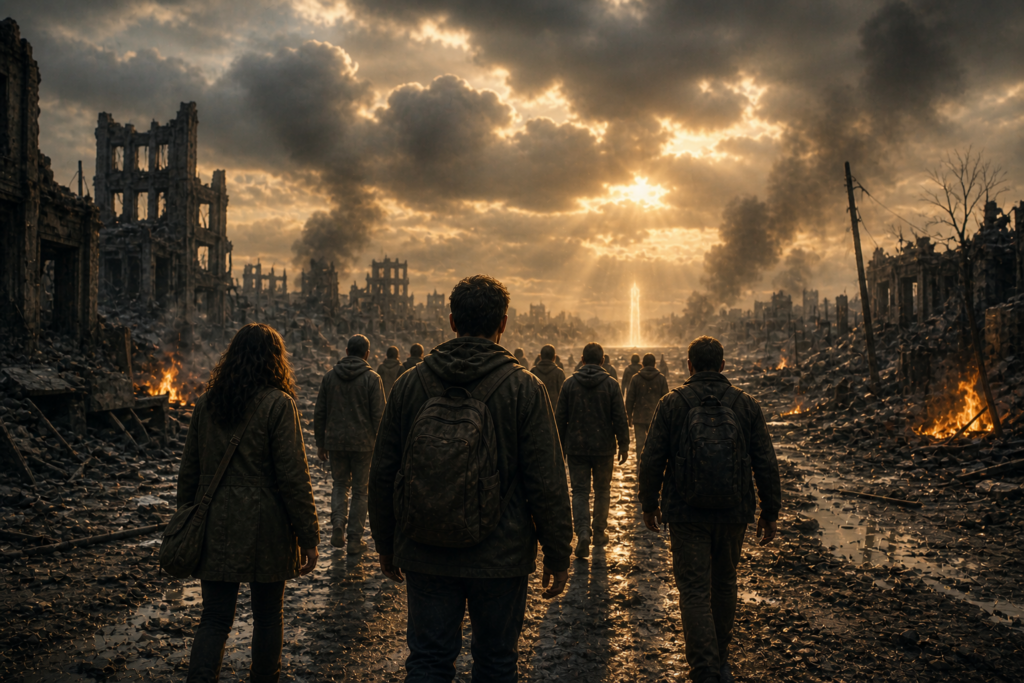
Many people feel as though the very foundations of life are being shaken. They watch the world around them and wonder what comes next. What will remain if the economic, political, and institutional structures that have shaped modern society continue to crumble? Families who spent decades saving for retirement watch the purchasing power of their money steadily decline. Wars drag on with no clear end, enriching powerful interests while ordinary families bear the cost in lives and livelihoods. Fraud, corruption, and the concentration of wealth and power in the hands of a few leave many wondering whether our institutions still serve the people—or merely preserve themselves.

Thousands of acres of productive farmland are being transformed into data centers while drought grips one part of the country, floods devastate another, and wildfires consume millions of acres. Inflation is eating away at people’s savings. Many are in debt living paycheck to paycheck. Trust in governments, financial institutions, corporations, and even religious leaders continues to erode. Everywhere people look, the pillars that once held society together are weakening.

Throughout history, ancient people naturally looked to the heavens to make sense of what was happening on earth. They did not separate the natural world from the spiritual world as neatly as we do. For them, what happened in the heavens revealed the meaning of what was happening on earth. The lights in the heavens proclaimed God’s order, and when the prophets spoke of those lights being shaken, they were announcing that the established order of human rule was about to be overturned.

The signs did not create history.

They revealed its meaning.

This is the world in which Daniel lived. Babylon’s kings identified themselves with the stars. Their empires appeared as permanent as the heavens themselves. Yet Isaiah mocked the king of Babylon as the bright morning star cast down from heaven. Ezekiel described the King of Tyre in similar language before portraying his downfall. The prophets were not describing astronomical catastrophes. They were announcing that proud rulers who imagined themselves untouchable would be humbled before the God of Israel.

The heavenly lights represented earthly thrones.

Daniel watched Babylon destroy Jerusalem and carry away the vessels of the Temple. From every earthly perspective, Babylon’s gods had triumphed over Israel’s God. Yet Daniel’s visions told a different story. The kingdoms of men would rise and fall, but the Ancient of Days remained seated upon His throne. Every beastly empire would eventually lose its dominion because every human kingdom built upon pride ultimately collapses under the weight of its own corruption.

This is the language Jesus inherited.

When the disciples asked about the destruction of the Temple in Matthew 24, Jesus answered with the language of Israel’s prophets. “The sun will be darkened, the moon will not give its light, the stars will fall from heaven, and the powers of the heavens will be shaken.”

Modern readers instinctively look for future cosmic disasters.

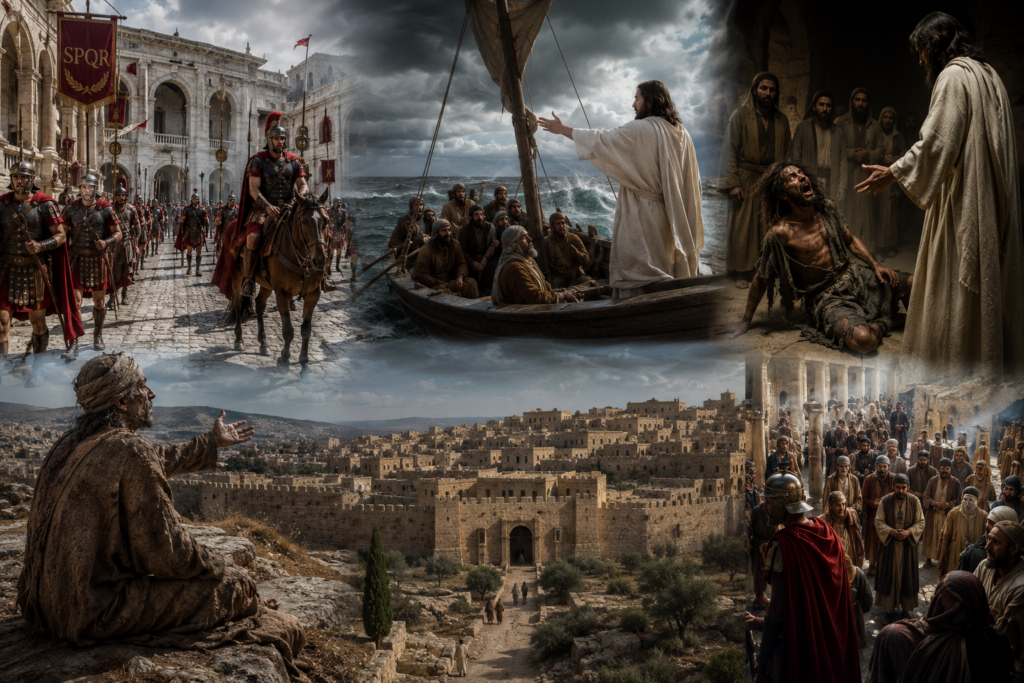
First-century Jews would have recognized prophetic judgment. The Temple stood at the center of Israel’s covenant life. It was the place where heaven and earth met, where God’s presence dwelt among His people. Yet by the time of Jesus, the Temple leadership had aligned itself with political power, burdening the people while protecting its own position. Those entrusted with shepherding Israel had become rulers protecting their own kingdom.

When Jesus announced that the heavenly lights would be shaken, He was declaring that the entire order represented by that Temple system was coming to an end. The destruction of Jerusalem in A.D. 70 was far more than the fall of a city. It was the collapse of a corrupt religious order that had rejected its Messiah.

The cosmic imagery reflected what was happening on earth. Heaven interpreted history.

Daniel’s vision reaches its climax when One like the Son of Man comes with the clouds of heaven to the Ancient of Days. For many modern readers, the clouds immediately suggest the Second Coming. But in Daniel’s vision, the Son of Man is not descending to earth. He is approaching the throne of God to receive an everlasting kingdom. This is the moment of His enthronement.

The New Testament declares that this vision was fulfilled in Jesus’ resurrection and ascension. By His resurrection He conquered death, the final enemy. By His ascension He was enthroned at the Father’s right hand, receiving the kingdom that no earthly empire could ever possess.

This is why the shaking of the heavens is immediately followed by the appearance of the Son of Man. The old order is passing away because the true King has taken His throne.

From His throne the King sends out His heralds. Throughout the ancient world, a newly enthroned ruler announced his reign and summoned his subjects to swear their allegiance. The Gospel follows the same pattern. The King’s messengers go into every nation proclaiming that Jesus now reigns and calling men and women into His everlasting kingdom.

This does not mean Jesus’ words have nothing to say to our generation. They have everything to say.

We also live in a world where institutions lose their way and leaders pursue power instead of justice and people wonder whether the foundations of society are collapsing.

Matthew 24 is not a forecast of modern events.

It is God’s interpretation of one of the greatest covenant judgments in Israel’s history. The lights of heaven were shaken because the old order centered on the Temple was passing away, and the Son of Man had received the kingdom that would never pass away.

Jesus’s words remind us that history has always been marked by the rise and fall of kingdoms, the corruption of institutions, and the collapse of leaders who imagine themselves all powerful. None of those events overturn the reign of the Son of Man. The signs in the heavens do not tell us to fear the future. They remind us that every human kingdom is temporary, but the kingdom of God is eternal.

When the foundations of our world seem to shake, Scripture calls us to lift our eyes to the throne. The heavens still proclaim the same truth they declared in Daniel’s day: the Son of Man reigns. His kingdom alone will endure.
foundatiaons
hyssop

Hyssop: The Little Plant in God’s Story of Redemption

Among the many plants mentioned in the Bible, none has generated more discussion than hyssop. For generations, botanists and biblical scholars have debated its identity. Was it the common hyssop known today, or the wild marjoram, Origanum syriacum, still called za’atar throughout Israel and Jordan? R. K. Harrison described hyssop as “one of the more problematical species of herbs,” observing that despite extensive study, its precise identification remains uncertain.

Most modern scholars associate the Hebrew ezov with a small aromatic plant that grows naturally throughout the hill country of Israel and Jordan. I remember seeing it growing from the rocks in Wadi Rum near Petra, where its ability to flourish in the harsh desert landscape brought Solomon’s description of “the hyssop that springs out of the wall” to life.

In the ancient world, hyssop was valued as both a culinary herb and a medicinal plant. Its leaves were dried for seasoning, while its aromatic oils were believed to possess cleansing properties. Ancient writers such as Pliny the Elder describe its use in treating skin disorders and digestive ailments, and later Jewish tradition likewise associated the plant with cleansing. Harrison also observes that its slender branches could easily be gathered into a bundle, making it well suited for use as a ritual sprinkler.

None of this, however, explains why hyssop occupies such an important place in Israel’s worship. Aromatic herbs and purification rituals were common throughout Egypt, Canaan, and Mesopotamia, where water, incense, fragrant plants, and sprinkling prepared temples for the presence of their gods. The Torah adopts none of the magical associations attached to such rituals. Instead, it gives hyssop a distinctive covenantal purpose.

Hyssop connected to sacred space

That realization shifted my attention away from identifying the plant and toward the role it plays throughout Scripture. Throughout the Torah, hyssop is consistently held in someone’s hand, conveying blood or water to a house, a sanctuary, or the people who belong within God’s dwelling. It appears whenever sacred space is being restored to covenant holiness.

The pattern begins on the night of the first Passover. Israel is instructed to take a bundle of hyssop, dip it into the blood of the Passover lamb, and apply the blood to the lintel and doorposts of every house. With a bundle of hyssop, covenant blood marks each household setting it apart from the judgment falling upon Egypt and preserving those within from death. The first place associated with hyssop is not the Tabernacle or the Temple, but an ordinary Israelite home that becomes sacred space as the Lord Himself passes over its threshold.

Here the Torah departs from the religious world around it. Egypt and Mesopotamia purified temples so their gods might dwell within them. Israel’s God does not summon His people into an earthly sanctuary here. He comes to their homes. Through blood applied with hyssop, an ordinary house becomes the first sacred space of the Exodus.

The pattern continues in Leviticus 14, where the object requiring purification is once again a house. A dwelling afflicted with ritual impurity undergoes an elaborate ceremony involving cedar wood, hyssop, scarlet yarn, the blood of a sacrificed bird, a living bird, and fresh running water. This is the first of several places where cedar, hyssop, and sheni tola’at appear together as part of Israel’s purification rites.

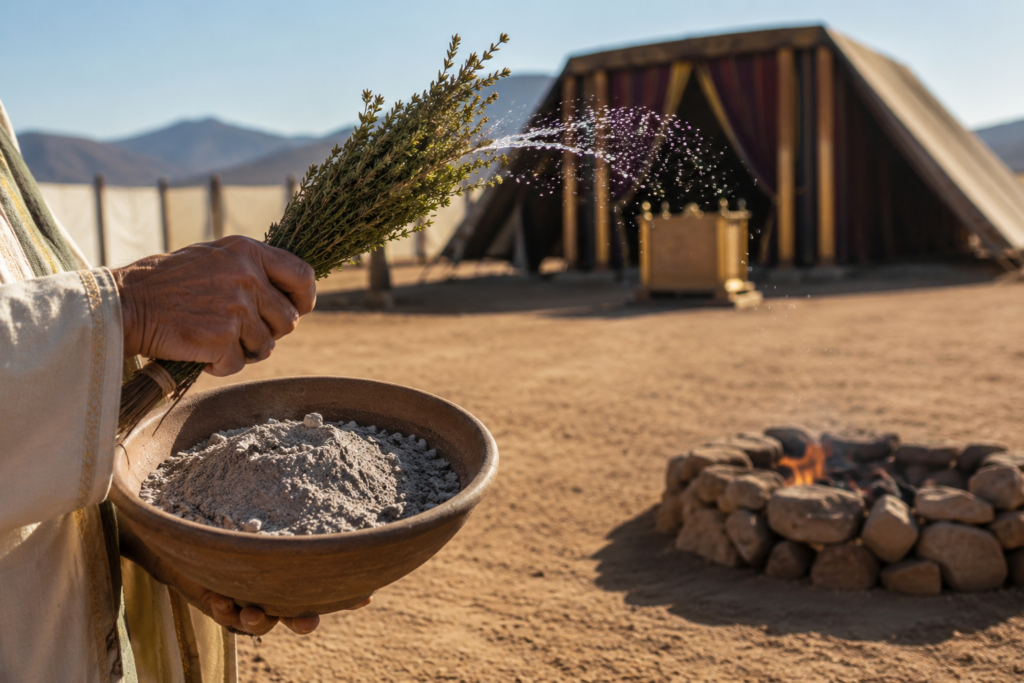
Numbers 19 expands the pattern. Here the issue is no longer disease but death itself. The ashes of the red heifer are combined with living water, and a clean person takes hyssop to sprinkle the tent, its vessels, and everyone defiled through contact with death. The same ritual elements appear again, but the concern now extends beyond individuals to everything associated with God’s dwelling. Death has interrupted covenant fellowship, and the ritual restores what death has defiled.

Every major occurrence of hyssop in the Torah is connected with sacred space—Israelite homes, houses restored after ritual impurity, and the Tabernacle with its furnishings and covenant community. The object of purification is not primarily the individual but the place where God’s presence dwells among His people.

David understands this when he cries, “Purge me with hyssop, and I shall be clean.” No priest stands over him with a bundle of hyssop. David speaks metaphorically, presenting himself as though he has become the sanctuary requiring purification. His deepest longing is not merely forgiveness but restored fellowship with the God whose presence had seemed so distant after his sin.

Hyssop for Consecration

The writer of Hebrews gathers these passages into a single image. Moses took blood, water, scarlet wool, and hyssop and sprinkled both the book of the covenant and all the people. The tabernacle and its vessels were likewise consecrated. The emphasis is not on the plant itself but on the consecration of God’s dwelling and His covenant people through blood and purification.

John alone tells us that the sponge filled with sour wine was lifted to Jesus on hyssop. Matthew and Mark mention only a reed, but John deliberately identifies the plant.

From the opening of his Gospel, John presents Jesus as both the Lamb of God who takes away the sin of the world and the place where God dwells among humanity. Throughout the Torah, hyssop served as the instrument by which covenant blood and the water of purification were applied to houses, sanctuaries, vessels, and God’s covenant people. Now, at the very moment the Lamb bears the sin of the world, that same instrument is lifted to Him. Throughout the Torah, hyssop accompanied the restoration of places where God chose to dwell. Now it is lifted to the One who bears the world’s defilement so that God may once again dwell among His people.

The same instrument that marked Israel’s houses at Passover, purified defiled dwellings, and restored the Tabernacle now appears at the cross. The pattern reaches its fulfillment in the Messiah. The One who bears the world’s sin accomplishes what every earlier act of purification anticipated: the restoration of God’s dwelling among humanity.

The little plant reminds us that God has always been restoring places where He chooses to dwell. The work that began in Israel’s homes reached its fulfillment in the Messiah and now continues in the lives of those who belong to Him. God’s purpose has never changed. He is still restoring His dwelling among His people.

hyssop
temple

Where Chaos Ends, Presence Begins (in God’s Temple)

There is a pattern that runs like a deep current shaping Scripture from beginning to end. In the ancient world, a temple was never built in the absence of conflict. A temple always followed victory. A king subdued a threat, defeated an enemy, secured the land, and by doing so established order. Only then did he take his seat on the throne—his rest—within a house prepared for his presence. The story of the Bible is the story of a God who confronts an enemy, establishes order, and then dwells among His people.

From Chaos to Sacred Space

The opening chapter of Genesis begins with a world that is unformed, unpredictable, and untamed—waters that represent something unstructured and without boundary. The Spirit of God hovers like a mother bird over her nest, preparing a world waiting to be shaped into something that can sustain life. This hovering is a sign of divine intention—the quickening presence of God.

God speaks, and the world takes shape. Light is separated from darkness. Waters are gathered and restrained. Dry land appears, providing a fixed point for new life. Life begins to flourish within the boundaries that have been set. This is the first great act of victory—not through violence, but through sovereign authority. Chaos is brought under control and placed under the rule of God. What follows is sacred space for His divine presence—a garden established on a mountain, a place where heaven and earth meet.

Eden is the first temple where God’s presence dwells, where He walks, and where life flows outward. Within this space, humanity is placed as image bearers. Adam and Eve are installed within the garden temple as representatives of God’s rule, called to extend the order of this sacred space outward into the world.

The story of Noah returns to this pattern in a dramatic fashion. The world once again descends into disorder, where human corruption and violence mirror the chaos of untamed waters. Creation begins to unravel, and the waters return as instruments of judgment and cleansing. Yet even here, the story is one of preservation and renewal. Noah is instructed to build a house, a vessel that will carry life through the flood—a kind of floating temple carrying the presence of God through the chaos.

As the waters rise, the ark is lifted above them, echoing a new beginning. The world is once again covered in water, and once again there is a sign of life returning—a dove sent out over the waters. The dove signals that the waters are receding. The ark comes to rest on a mountain, the place of stability where heaven and earth meet. When Noah emerges, he builds an altar. The re-entry into the world is marked by worship and the recognition that life continues because God’s presence has carried it through judgment.

Victory Leads to Dwelling

With Abraham, the pattern becomes more personal. When he confronts the coalition of kings, he steps into a conflict that mirrors the larger struggle between order and disorder. After his victory, he does not choose the fertile plains. Instead, he moves toward the mountains, toward Hebron. There he dwells in tents, establishing a household that carries the presence forward. The structure may be temporary, but the pattern remains: after victory, a dwelling is established, and the presence of God is carried into the world.

This pattern comes into even greater clarity in the book of Exodus. Chaos is embodied in a system that oppresses, enslaves, and destroys life. Egypt becomes a representation of anti-creation. Yahweh enters as the Divine Warrior, confronting the powers that hold His people in bondage. The plagues dismantle that system, revealing that the gods of Egypt have no real power or authority.

The climax comes at the sea, the ultimate symbol of chaos. The waters are divided at the command of God, and Israel passes through on dry ground, echoing creation itself. The same waters collapse upon the Egyptian army, bringing a decisive end to their power.

The story, however, does not end at the sea. Israel is led into the wilderness and brought to the mountain, where covenant is established and order is defined. Instructions are given for the Tabernacle, a mobile temple reflecting the cosmos, the mountain, and the garden. The presence of God fills this space and becomes the center of Israel’s life. Once again, chaos is defeated, order is established, and a dwelling place for God is created.

The story continues through the conquest and monarchy. Under Joshua, the people cross the Jordan into a new phase of life, with the Tabernacle ensuring the presence of God remains central. David defeats Israel’s enemies and secures Jerusalem. Solomon builds the temple on Mount Moriah—a permanent house for the presence of God. After victory, a house is built, and God dwells among His people.

The Temple Becomes a Person—and Then a People

In the Gospels, this pattern reaches its fullest expression in Jesus. He enters the waters, confronts the adversary in the wilderness, and demonstrates authority over the sea and the demonic realm that manifests in human brokenness. Each act confronts chaos. Each act sets captives free. His greatest victory comes through entering the realm of death itself. The cross becomes the battlefield, and the resurrection the victory over death that results in a new creation temple.

Yeshua embodies that temple. He becomes the place where heaven and earth meet. The temple is no longer confined to a stone building; it is present in a person, and through Him extends into His people.

Revelation brings the story to its conclusion. Chaos rises once more, depicted as beasts and empires, but is ultimately defeated. A city descends—a dwelling place that is also a mountain, a temple, and a garden. The entire city is filled with the presence of God. Heaven and earth are united, and the pattern reaches fulfillment.

If the pattern has always moved from victory to dwelling, where does that leave us now? We do not stand in Eden or gather at a temple in Jerusalem.

The dwelling place of God is now found within His people. The presence that once filled the garden, the ark, the Tabernacle, and the temple now resides within those who have been renewed. With the resurrection, humanity is being restored as the image-bearing temple of God. The Spirit that hovered over the waters now dwells within, bringing life, order, and transformation.

Through regenerated humanity, that presence is carried into every place and every act of faithful living. We become a living temple, bearing the presence of God into a world that still struggles with chaos and very real evil.

The Temple in a World That Still Feels Broken

temple

When we look at the world, it does not feel like chaos has been defeated. Disorder, suffering, and death remain very real. It can appear as though evil is winning and God is absent. But Scripture never presents victory as instant completion. There is always a space between decisive victory and final restoration.

In the Gospels, Jesus defeats death, yet the world is not immediately transformed.

To say we are the temple is not to deny the darkness around us, but to recognize that God has chosen to dwell within humanity and move through it. Like the Tabernacle in the wilderness, the presence now travels into places still marked by chaos.

To those looking toward a future temple in Jerusalem, we are still called not to stand idle, but to live now as the dwelling place of God—carrying His presence into the world even as we watch for what is yet to come.

We carry the presence not because the world is finished, but because God is still restoring it—through us.

Chanukkah

Chanukkah as Exodus Retold: Israel’s Story Repeats, Deepens, and Points Forward

At first glance, the Exodus story and the Chanukkah story seem to belong to completely different worlds. One unfolds in the heat of Egypt and the wilderness of Sinai; the other in the hills of Judea under Greek rule. But when we look closer—through the lens of biblical patterns—the parallels emerge with clarity. Chanukkah is not an isolated historical moment. It is Exodus retold. It is Israel’s foundational salvation pattern replayed in a later generation, with new enemies, new symbols, and renewed covenant purpose.

Scripture repeatedly teaches that the biblical story is cyclical. What God does once, He does again—each time with deeper meaning. Chanukkah stands as one of the clearest re-performances of the Exodus pattern in Jewish history.

Oppression Under a Pagan Empire

Both stories begin the same way: a covenant people crushed beneath a pagan empire determined to erase their worship and identity.

Exodus places Israel in Egypt, living in a world saturated with idols. Pharaoh’s decrees aim to dismantle Israel’s future—enslaving the people, killing the sons, and refusing to allow worship of Yahweh. Pharaoh becomes the archetype of the anti-god ruler, the human face of spiritual chaos.

Chanukkah begins with the rise of Antiochus IV, who behaves like Pharaoh. He renames himself Epiphanes, “God manifest” and demands total allegiance. Circumcision, Sabbath, Torah reading, kosher laws—every covenant identity marker—becomes illegal. And the price of faithfulness—shame, torture, execution. Erasing Israel’s worship is the fastest way to erase Israel.

The Temple at the Center of the Battle

In both narratives, the conflict is political and theological and involves sacred space.

In Exodus, the plagues are not random punishments; they are targeted confrontations with Egypt’s gods. Pharaoh’s refusal to let Israel worship reveals the heart of the conflict: Who is King? Who rules the world? The climax of Exodus is not the Red Sea but the Tabernacle—God dwelling among His people as King.

In Chanukkah, Antiochus pollutes the altar by sacrificing swine, fills the Temple with pagan idols and images of himself to prevent Israel from drawing near to God. The Maccabean revolt is a nationalist uprising, and it is a priestly war to restore God’s dwelling place. Will Israel remain God’s kingdom of priests?

When the altar of the Temple is defiled, the world itself is disordered. When it is cleansed, creation is set right again.

Unexpected Deliverers from the Margins

Exodus and Chanukkah both feature deliverers who rise from unexpected places.

Moses, raised in Pharaoh’s household but living as a fugitive shepherd, becomes the unlikely liberator. No army. No weapons. Just a staff, a calling, and the presence of God going with him to meet the world’s most powerful tyrant.

The Maccabees are rural priests—hardly a military dynasty. Mattathias and his sons arise from a small village of Modi’in. No throne. No army. No political leverage. Yet God chooses them to stand against the powerful Syrian empire.

God consistently raises saviors from the margins so that the victory belongs to Him.

Impossible Odds, Divine Victory at Chanukkah

Both stories highlight the same truth: salvation, deliverance from the clutches of empire is something only God can accomplish.

Israel trapped between Pharaoh’s chariots and the Red Sea has no path forward. The victory at the sea is Yahweh’s alone: “stand still and see the salvation of the Lord.”

During Chanukkah, the Maccabees fight an empire with almost no chance of success. Jewish tradition remembers this not as a triumph of military power but of divine intervention: “Not by might, nor by power…”

When God replays the Exodus pattern, the impossible becomes the stage for His glory to be revealed.

Purification, Rededication, and Covenant Renewal

Both stories climax in the restoration and rededication of sacred space.

Exodus ends with Israel receiving the covenant, building the Tabernacle, consecrating priests, and establishing holy rituals. Creation is restored in microcosm as God fills His house with glory.

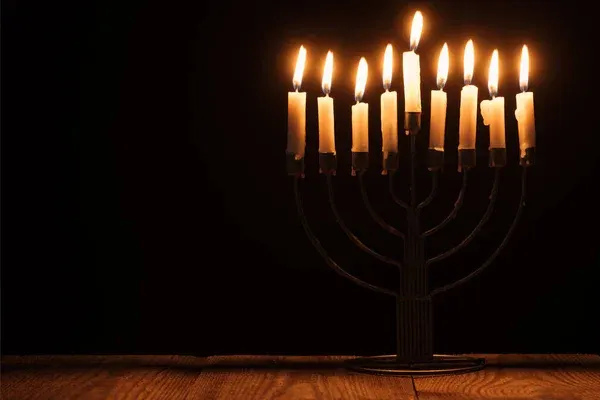
Chanukkah ends the same way. The altar is rebuilt. The Temple is purified. Worship is restored. “Chanukkah” means dedication—a return to holiness, identity, and covenant fidelity. The menorah will burn bright for eight days with freshly pressed olive oil to bring the eternal light into the Holy Temple.

In both cases, God restores His dwelling place and renews His kingdom among His people.

Divine Warrior Over Chaos

Exodus is the original Divine Warrior story: Yahweh confronts Pharaoh, splits the sea, shatters the oppressor, delivers His people from Egyptian slavery, and installs His kingship at Sinai.

Chanukkah is the same pattern. Antiochus behaves like a Leviathan—devouring and destroying.  His empire brings chaos into God’s sanctuary. The Maccabean victory is God’s victory, pushing back the forces of disorder and re-establishing cosmic order from the Temple precincts.

Every time God defeats chaos and restores His Holy House, the Exodus is happening once again.

The Pattern That Leads to Messiah

By the first century, Chanukkah was widely understood as a second Exodus—another moment when God cleansed His people and restored His presence. This is the world in which Yeshua steps into the Temple during Chanukkah (John 10). He goes to the Temple to declare Himself the Greater Temple, the Good Shepherd, and the one who gives eternal light and everlasting life.

Chanukkah as the retold Exodus points to Yeshua and the final Exodus—the Deliverer who defeats the ultimate oppressor, death and cleanses the true Temple (humanity), and restores creation itself.

Chanukkah, the new exodus, is more than a historical memory. It is a prophecy in story form. A rehearsal for the day when the light of the world would step into the Temple and announce the arrival of the Greatest Exodus—the one that leads not just from empire to freedom, but from death to life, from corruption to new creation, from exile to home.

Chanukkah
Skip to content