Tag: sea of Reeds

redeemed

Redeemed: The Great Transfer

What does it mean to be redeemed? We often use the word as another way of saying that someone has been saved or rescued. Rescue is certainly part of redemption, but the biblical story goes much further. To be redeemed is to be reclaimed, possessed, brought back, restored to the One to whom we were always meant to belong. Redemption gives us a new identity because it changes our ownership and, with it, our allegiance.

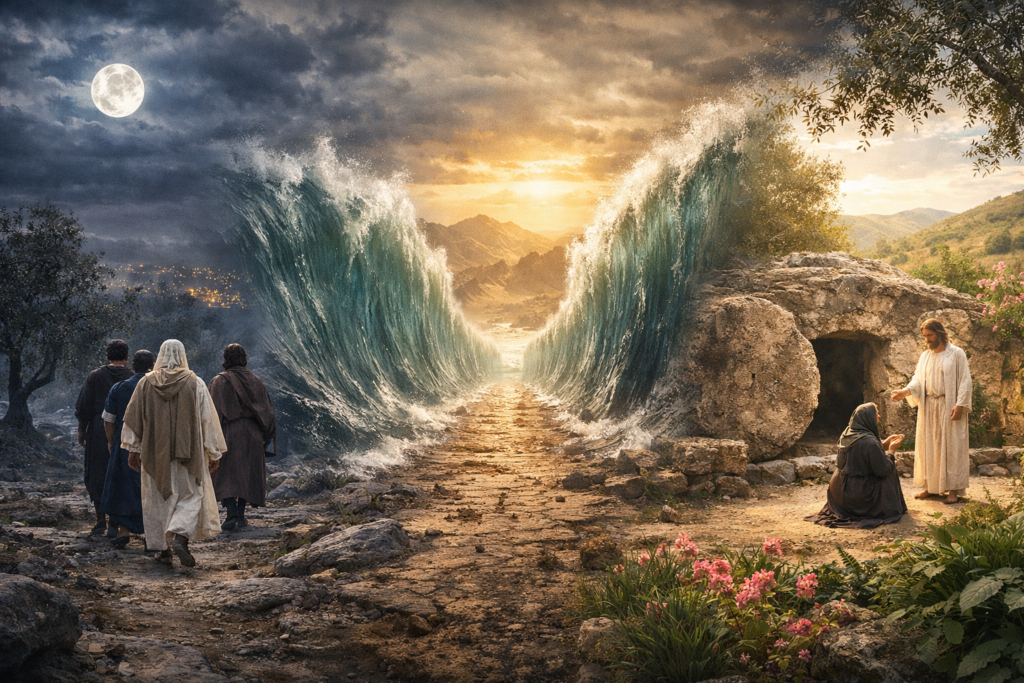
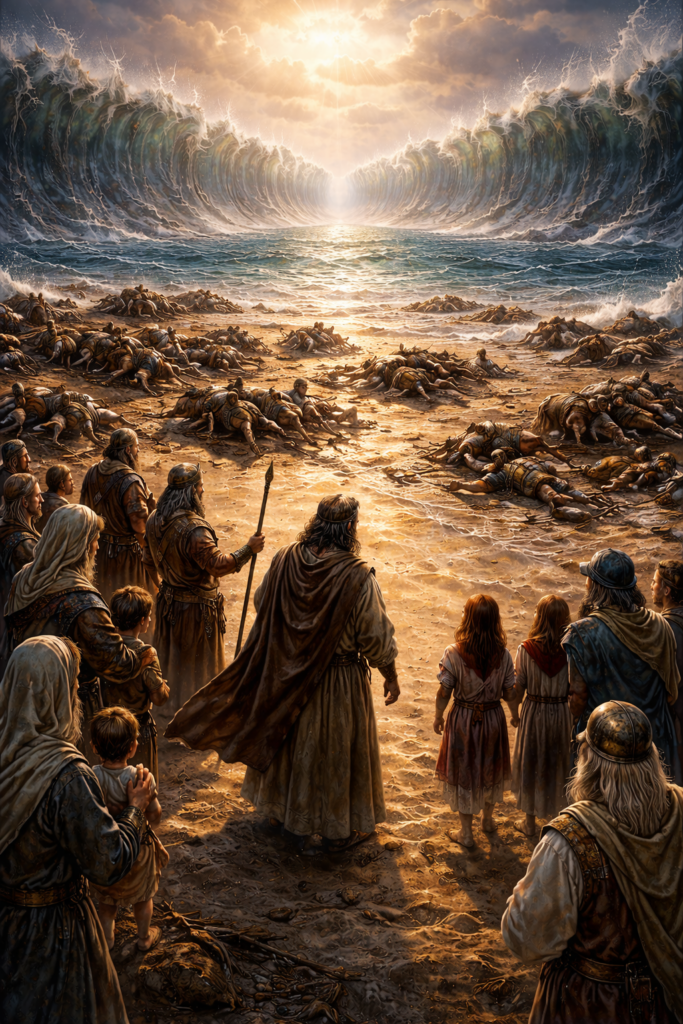
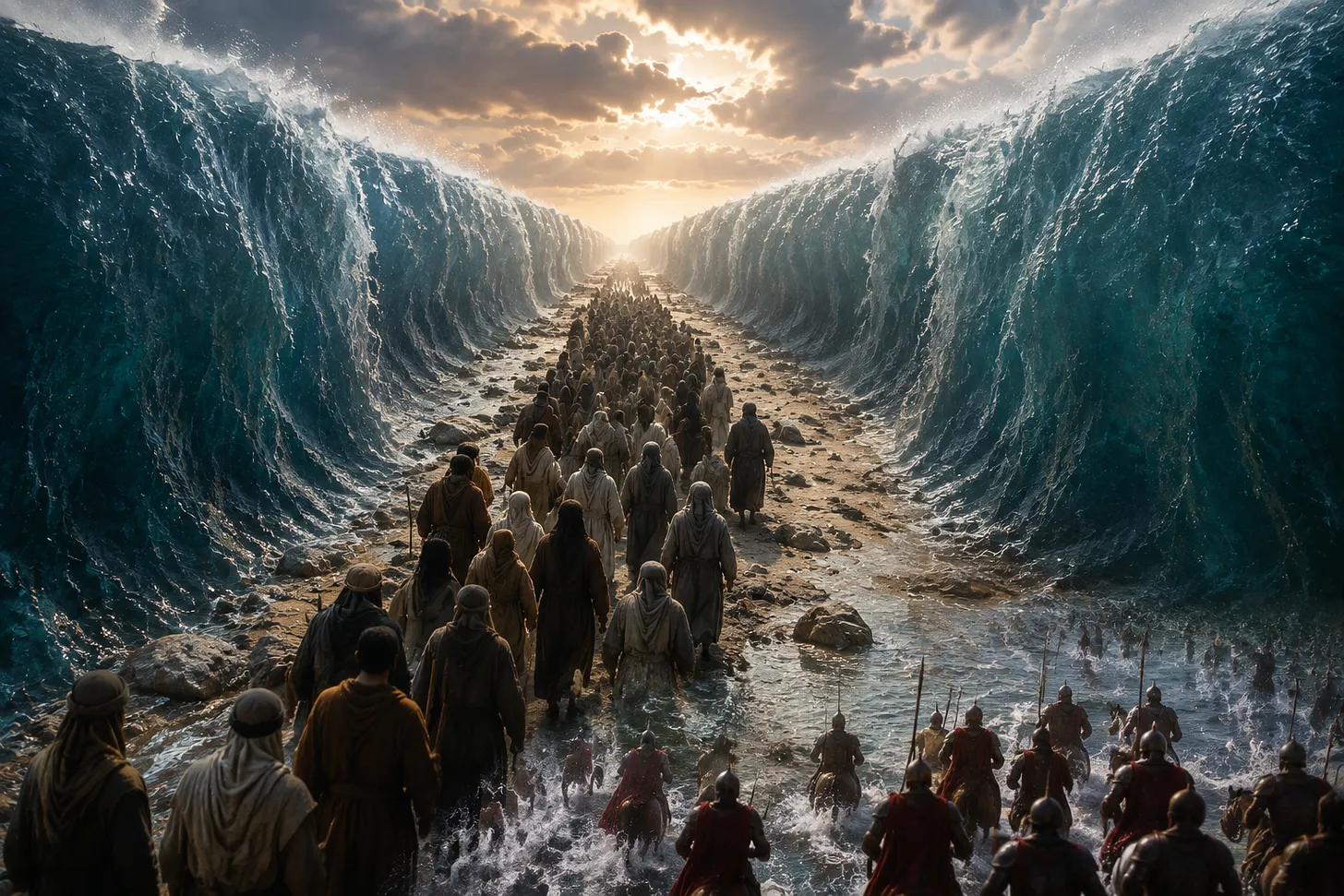
The Exodus gives us the architecture for understanding this larger story. Israel was enslaved in Egypt, serving Pharaoh and living under the shadow of Egypt’s gods. When Yahweh came to deliver them, He confronted not only a political ruler but the entire system of power that held His people captive. The plagues exposed the impotence of Egypt’s gods, while the Sea of Reeds brought the conflict to its decisive conclusion. Israel passed through the waters as Pharaoh’s army pressed close behind. The people emerged alive; the enemy disappeared beneath the deep.

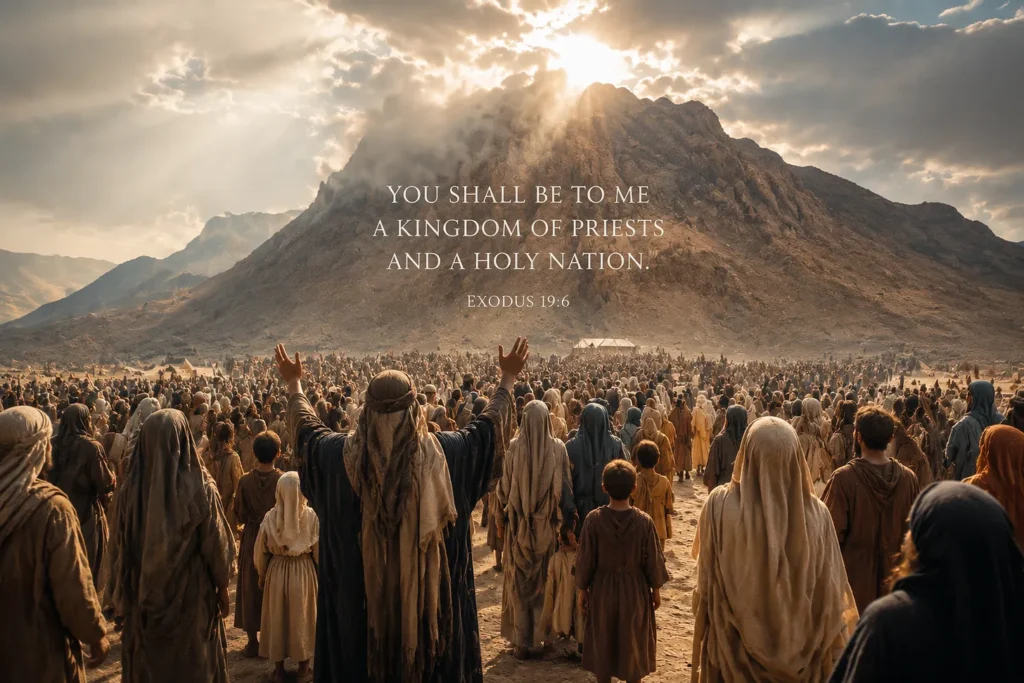
Getting Israel out of Egypt was only the beginning. Had rescue been the entire purpose, the story could have ended on the far side of the sea. Yahweh brought the people to Sinai and declared them His treasured possession, a kingdom of priests and a holy nation. Released from Pharaoh, they were now owned by Yahweh. Their service, allegiance, and identity had been transformed. Rescue brought them out. Redemption claimed them as His own.

Israel’s story, then, becomes a microcosm of the human story. What God began with Israel He intended to extend to humanity and ultimately to creation itself. Exodus was the blueprint for cosmic redemption, not its final fulfillment. Israel became the vehicle through which God would advance His purposes—carrying His presence and making Him known among the nations.

The wilderness became the proving ground for this calling, where God formed a people who could live with Him in their midst. In the barrenness of the desert, the Tabernacle stood as a sign of Eden being reclaimed. God was dwelling with humanity again. Israel was learning to live under His rule, depend upon His provision, and represent Him before the nations.

Yet the larger human captivity remained. Behind Pharaoh, Babylon, Rome, and every other empire stood an enemy no human ruler could defeat. Death held humanity in its grip.

We were created to bear God’s image and extend His life-giving rule throughout creation. Humanity rejected the God of life, distorted His image, and gave itself to other masters. Humans continually exploit, dehumanize, devour, and destroy one another. Violence becomes ordinary. Truth becomes expendable. And Creation bears the wounds of our rebellion. In trying to establish ourselves apart from God, we became slaves to the powers that destroy us.

We needed more than rescue. We needed to be reclaimed.

This is the world into which Yeshua came. Many longed for a deliverer who would free Israel from Rome, but Rome was not the greatest enemy. Yeshua came to confront the power behind every human empire and every grave. His mission was firmly covenantal, rooted in Israel’s longing for Yahweh to return and dwell among His people.

His gathering of twelve disciples was not incidental. The twelve mirrored Israel’s twelve tribes. Around Himself, Yeshua was forming a renewed Israel to carry God’s ancient mission forward. Israel had been called to be a kingdom of priests and a light to the nations. Yeshua was bringing that calling toward its intended fulfillment.

But first the greater Pharaoh had to be defeated.

Yeshua willingly entered the realm from which no human being returns. Death had swallowed every generation before Him and never released its captives. Yeshua entered that realm and broke its power from within. The resurrection is far more than a great miracle. It is the reality that the old master has lost his claim.

Paul describes redemption in precisely these terms: God “rescued us from the domain of darkness and transferred us to the kingdom of His beloved Son” (Col. 1:13). The dominion has changed. We have been repossessed by the living God.

The empty tomb announces a new Exodus. The redeemed belong to another King, bear another allegiance, and carry His presence into the world. The redeemed are His living tabernacle in motion, a kingdom of priests entering contested spaces and establishing signs of His life-giving rule.

The former master has been defeated. The King is alive, and the redeemed belong to Him.
redeemed
Psalm 136

The Song Before the Garden: Jesus Sang Psalm 136 on the Way to Gethsemane!

Matthew records a small detail with enormous implications: “And when they had sung a hymn, they went out to the Mount of Olives” (Matt. 26:30). These were not later Christian hymns. This was not “the old rugged cross” or “I’ll fly away.” They were the Hallel Psalms, and very likely included Psalm 136—the Great Hallel. Psalm 136 is not simply a praise psalm; it is a structured retelling of the biblical story, moving deliberately from creation to Exodus to covenant inheritance, all anchored by the repeated refrain: “For His Chesed (mercy) endures forever.”

This is Israel’s faith acted out in liturgical form through Psalm 136

The psalm begins with creation: “To Him who made the heavens with wisdom… who spread out the earth above the waters… who made the great lights…” (vv. 5–7). Creation is presented as ordered, sustained, and governed by the word of God. It then moves directly to Exodus: “To Him who struck down the firstborn of Egypt… and brought Israel out… who divided the Red Sea…” (vv. 10–15). Creation and Exodus are not separate acts. Exodus is new creation. The God who ordered the waters in Genesis parts them again to bring forth a people. The psalm concludes with wilderness, inheritance, and provision: “who led His people through the wilderness… gave their land as a heritage… remembered us in our low estate… and gives food to all flesh” (vv. 16–25). The goal is not escape. It is a world rightly ordered under God’s presence.

The biblical pattern is creation, deliverance, indwelling, and ongoing provision.

The language of “spreading out the earth upon the waters” echoes Genesis 1, where the waters are gathered and boundaries are established so that dry land can appear. The Hebrew verb used in Psalm 136:6 (רָקַע — rāqaʿ, “to spread out” or “to hammer out”) is closely related conceptually—though not identical in form—to רָקִיעַ — rāqîaʿ (“firmament”) in Genesis 1. Both share the same root and describe the act of spreading, stretching, or forming a boundary that orders creation. The firmament separates the waters above from the waters below; the earth is spread out over the gathered waters. In both cases, God is establishing order over chaos.

It is on the third day of creation that the waters are gathered and the dry land appears (Gen. 1:9–13). It is the first moment where stable, inhabitable ground emerges from the deep. It is also the day when life begins to sprout—seed-bearing plants and fruit-bearing trees. The third day is not simply about land; it is about life emerging from the restraint of chaotic waters.

That pattern is foundational.

Psalm 136 then moves directly to Exodus: “to Him who divided the Red Sea in two… and made Israel pass through the midst of it…” (vv. 10–15). The connection is deliberate. The same God who gathered the waters in Genesis gathers them again in Exodus. The Reed Sea is a replay of creation itself.

Exodus is new creation.

The waters are divided. A path appears. Israel walks through on what is, in effect, newly revealed “dry land.” The enemy—the embodiment of chaos and oppression—is swallowed as the waters return. What Genesis establishes, Exodus then reenacts. The world is being ordered again through the formation of a people.

This is what Yeshua is singing.

On the night of Passover, He is stepping into this pattern fully aware that He is about to embody it. The movement from the table to the Mount of Olives is the continuation of the story He has just sung. He is singing of the God who creates, the God who restrains chaos, and the God who brings His people through the waters and into His presence—because He is about to enact that reality at its deepest level.

The next movement is the garden—Gethsemane, where He will be arrested.

This is not Eden restored yet. It is Eden in exile. It is a place of pressure, sorrow, and the approach of death. Adam was driven out of the garden and could not return. Humanity remained in exile, east of Eden, cut off from the Presence. Yeshua enters Gethsemane not as a restored Adam, but as representative humanity in exile. He steps into the place where the story has been held since Genesis 3.

From the garden, the movement continues toward the grave.

The grave becomes the greater sea. Psalm 136 declares that God divides the waters, defeats the enemy, and brings His people through. In the Gospel account, that pattern reaches its fullest expression. Darkness falls over the land (Matt. 27:45). The earth shakes. The tomb is sealed. Like the sea, it appears final. Death has closed over Him.

But the third-day pattern holds.

Just as in creation the waters are gathered and dry land appears, just as in Exodus the sea is divided and a people emerges, so now, on the third day, the grave is opened. The stone is rolled away (Matt. 28:2). What seemed to be the final boundary is undone. The place that held Him cannot contain Him.

The third day is the day of emergence.

What the Reed Sea was to Pharaoh, the tomb is to death itself. The enemy enters, but does not return. Death is not avoided. It is defeated.

And then, the garden appears again.

In John’s account, Yeshua is encountered in a garden and is even mistaken for a gardener (John 20:15). This is an important detail. In the ancient world, kings were gardeners—horticulturalists who took great pride in their gardens. The story has now come full circle. The One who entered the garden of exile now returns in resurrection life. What was lost in Eden is not merely recovered; it is reestablished on the other side of death itself.

This is new creation.

So, when Yeshua and His disciples sing Psalm 136, He is not recalling Israel’s past. He is declaring what is about to take place. The God who spread out the earth over the waters is about to bring forth life from the grave. The God who split the sea is about to divide life from death. The God who led His people through the wilderness is about to open the way to His Divine Presence.

Creation, Exodus, and resurrection are not separate acts. They are one continuous pattern. And all of it is grounded in the same refrain: “For His steadfast love endures forever.”

Psalm 136
Divine Warrior

Cosmic Combat at the Sea: Yahweh as Divine Warrior

The crossing of the Sea of Reeds in Exodus 14–15 is far more than a dramatic escape from Egypt. It is the climactic battle scene in Yahweh’s war against Egypt and its gods, revealing Him unmistakably as the Divine Warrior. In the ancient world, divine authority was often demonstrated through combat with chaos and frequently personified by the sea. The sea represented untamed disorder, unpredictability, and death. Israel’s stand at the water’s edge places them squarely within this ancient cosmic drama.

Chaos Confronted: The Divine Warrior Battles at the Threshold of Creation

Israel finds herself trapped between two chaos forces: Pharaoh’s military power pressing from behind and the impassable sea blocking the way forward. In this liminal space, fear exposes the grip of Egypt’s worldview on Israel’s heart. The people later cry out that it would have been better to serve Egypt than to die in the wilderness. Though physically freed, they still wrestle with doubt, still uncertain whether Yahweh as Divine Warrior is truly stronger than the forces that once ruled them. Idolatry has not yet been fully uprooted.

Yahweh’s response is a command that initiates cosmic action: “Raise your staff; stretch out your hand.” When Moses obeys, it is Yahweh Himself who engages the battle. The Hebrew verb bakah—to split, tear, or break open describes the parting of the sea. This same verb appears in later messianic contexts linking it to a broader biblical pattern of divine intervention through rupture. In ancient combat myths, victory over chaos often involved cutting or splitting the chaos monster in two. Yahweh’s act fits this while redefining it.

With a blast of His breath, the Divine Warrior piles the waters into walls on either side, an imposing structure. In Torah scrolls the text is written in a brick-like pattern, visually reinforcing the order now imposed on chaos. Dry land emerges—a deliberate echo of Genesis 1, where God gathers the waters so that life can appear. Yahweh is not only rescuing Israel; He is reenacting creation itself.

The crossing is a sacred threshold. Just as blood on the doorposts during Passover marked a boundary between death and life, the parted sea becomes a doorway through which Israel passes from bondage into freedom. The pillar of cloud and fire stands as a divine barrier, casting darkness toward Egypt and light toward Israel—another echo of the creation account’s separation of light from darkness.

When the Egyptians pursue Israel into the sea, the Divine Warrior turns the battlefield against them. Chariot wheels are jammed, the army is thrown into confusion, and the waters are released to return to their place. What unfolds resembles a River Ordeal—a common ancient test of innocence or guilt. Egypt is judged by water and found guilty. The very force meant to assert Pharaoh’s dominance becomes the instrument of his defeat.

As the waters recede, Israel sees their enemies lifeless on the shore. This marks a covenantal threshold. The people now belong to Yahweh, protected by Him and separated from Egypt’s power. At last, they fear Yahweh, the Divine Warrior and believe. The hold of idolatry begins to loosen. Egypt’s gods, manifest in its military, economy, and religious system, have been decisively shattered.

The location of the crossing carries some theological weight. In Egyptian mythology, the Field of Reeds was a realm associated with the afterlife, resurrection, and Osiris, the god of the dead. For Pharaoh and his army to perish there is deeply ironic. They pursued immortality and instead encountered judgment. Yahweh overturns Egypt’s mythology using its own symbols, demonstrating His supremacy over life, death, and the cosmos.

From Victory to Kingship: The Divine Warrior at the Sea

Exodus 15 responds to this victory with the Song of the Sea, a triumph hymn that blends history, theology, and worship. The song proclaims the great victory. It begins with Yahweh’s identity as Warrior and concludes with His eternal reign as King. It announces the restoration of cosmic order. Though rhreats arise and chaos confronts God’s people, Yahweh triumphs, and creation is renewed.

This liturgical moment bridges deliverance and testing. It grounds Israel’s identity in Yahweh’s victory. The Divine Warrior has defeated the sea, overthrown Pharaoh, and opened the way for covenant, worship, and new creation. Yahweh reigns forever and ever.

Divine Warrior
Skip to content