Tag: Redemption

redeemed

Redeemed: The Great Transfer

What does it mean to be redeemed? We often use the word as another way of saying that someone has been saved or rescued. Rescue is certainly part of redemption, but the biblical story goes much further. To be redeemed is to be reclaimed, possessed, brought back, restored to the One to whom we were always meant to belong. Redemption gives us a new identity because it changes our ownership and, with it, our allegiance.

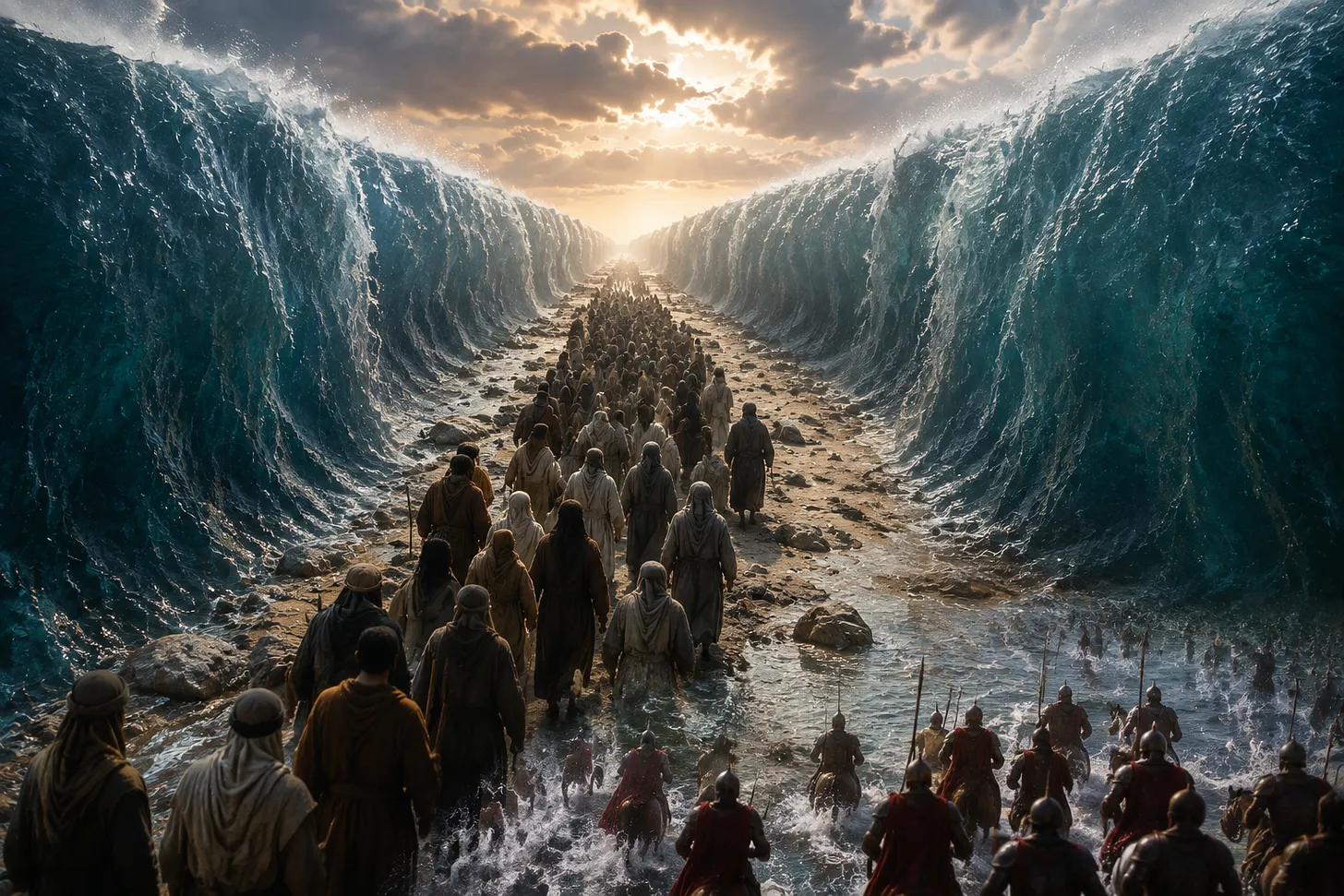
The Exodus gives us the architecture for understanding this larger story. Israel was enslaved in Egypt, serving Pharaoh and living under the shadow of Egypt’s gods. When Yahweh came to deliver them, He confronted not only a political ruler but the entire system of power that held His people captive. The plagues exposed the impotence of Egypt’s gods, while the Sea of Reeds brought the conflict to its decisive conclusion. Israel passed through the waters as Pharaoh’s army pressed close behind. The people emerged alive; the enemy disappeared beneath the deep.

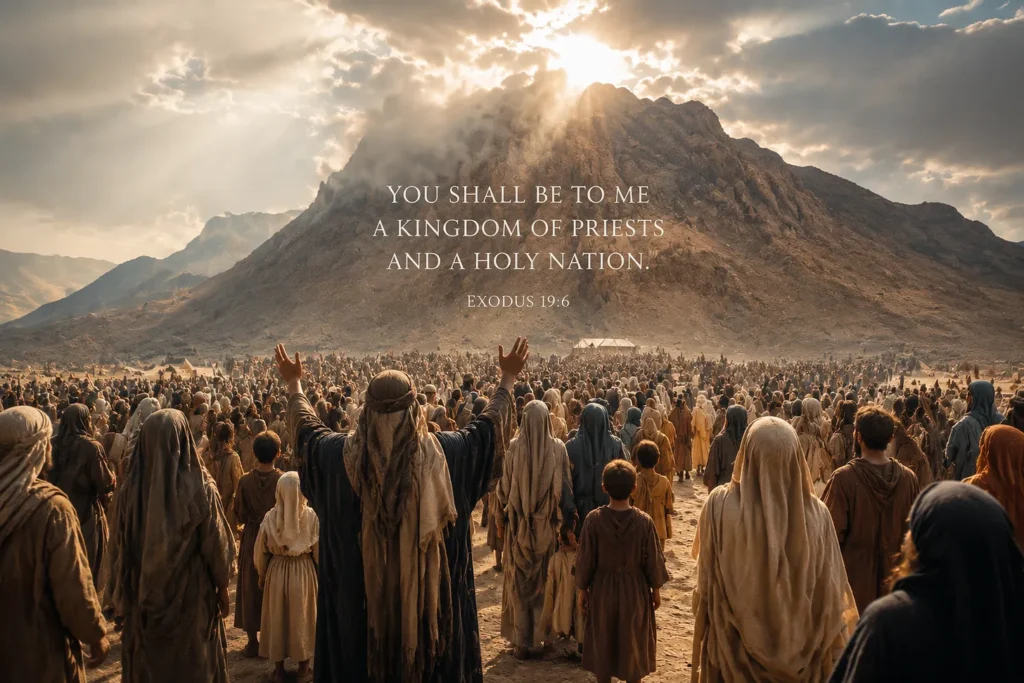
Getting Israel out of Egypt was only the beginning. Had rescue been the entire purpose, the story could have ended on the far side of the sea. Yahweh brought the people to Sinai and declared them His treasured possession, a kingdom of priests and a holy nation. Released from Pharaoh, they were now owned by Yahweh. Their service, allegiance, and identity had been transformed. Rescue brought them out. Redemption claimed them as His own.

Israel’s story, then, becomes a microcosm of the human story. What God began with Israel He intended to extend to humanity and ultimately to creation itself. Exodus was the blueprint for cosmic redemption, not its final fulfillment. Israel became the vehicle through which God would advance His purposes—carrying His presence and making Him known among the nations.

The wilderness became the proving ground for this calling, where God formed a people who could live with Him in their midst. In the barrenness of the desert, the Tabernacle stood as a sign of Eden being reclaimed. God was dwelling with humanity again. Israel was learning to live under His rule, depend upon His provision, and represent Him before the nations.

Yet the larger human captivity remained. Behind Pharaoh, Babylon, Rome, and every other empire stood an enemy no human ruler could defeat. Death held humanity in its grip.

We were created to bear God’s image and extend His life-giving rule throughout creation. Humanity rejected the God of life, distorted His image, and gave itself to other masters. Humans continually exploit, dehumanize, devour, and destroy one another. Violence becomes ordinary. Truth becomes expendable. And Creation bears the wounds of our rebellion. In trying to establish ourselves apart from God, we became slaves to the powers that destroy us.

We needed more than rescue. We needed to be reclaimed.

This is the world into which Yeshua came. Many longed for a deliverer who would free Israel from Rome, but Rome was not the greatest enemy. Yeshua came to confront the power behind every human empire and every grave. His mission was firmly covenantal, rooted in Israel’s longing for Yahweh to return and dwell among His people.

His gathering of twelve disciples was not incidental. The twelve mirrored Israel’s twelve tribes. Around Himself, Yeshua was forming a renewed Israel to carry God’s ancient mission forward. Israel had been called to be a kingdom of priests and a light to the nations. Yeshua was bringing that calling toward its intended fulfillment.

But first the greater Pharaoh had to be defeated.

Yeshua willingly entered the realm from which no human being returns. Death had swallowed every generation before Him and never released its captives. Yeshua entered that realm and broke its power from within. The resurrection is far more than a great miracle. It is the reality that the old master has lost his claim.

Paul describes redemption in precisely these terms: God “rescued us from the domain of darkness and transferred us to the kingdom of His beloved Son” (Col. 1:13). The dominion has changed. We have been repossessed by the living God.

The empty tomb announces a new Exodus. The redeemed belong to another King, bear another allegiance, and carry His presence into the world. The redeemed are His living tabernacle in motion, a kingdom of priests entering contested spaces and establishing signs of His life-giving rule.

The former master has been defeated. The King is alive, and the redeemed belong to Him.
redeemed
Sodom

Sodom: The First Passover and the Pattern of Redemption

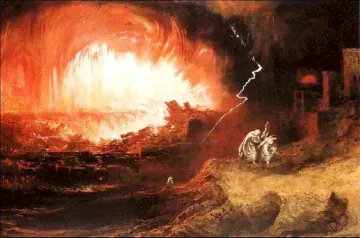
There’s an Exodus thread woven through Genesis, an early current of redemption that flows through the story of Abraham and Lot. It begins not with Moses and Pharaoh but with Lot standing at the threshold of his house before fire and brimstone are poured out in judgment. Before the plagues of Egypt, before the blood on the doorposts, before Israel’s hurried meal in the night, there was another Passover almost hidden from view. The destruction of Sodom in Genesis 19 is a proto-Exodus, a revelation of Yahweh’s redemptive pattern that will echo throughout Israel’s story until it reaches fulfillment in the final deliverance of Revelation.

The First Passover Table

When the angelic messengers enter Sodom, Lot welcomes them into his home with a meal: “And he made them a feast and baked unleavened bread (matzot), and they ate” (Gen. 19:3).

This is the first mention of matzot in Scripture. Why specify unleavened bread unless the writer wants the reader to hear Passover overtones? This detail suggests a comparison: Lot, like Israel centuries later, hosts divine messengers, serves matzot, and stands on the brink of destruction. Both narratives unfold at night, both involve a covenant meal within a protected space, and both end with salvation for those inside and judgment for those who are outside.

Unleavened bread symbolizes a sense of urgency as well as separation from corruption—the bread of exile, eaten by those who must depart quickly because judgment is near. In Sodom it is consumed on the eve of fire; in Egypt, on the eve of deliverance. Lot’s table becomes the first Passover table, the prototype of the meal eaten in haste as divine judgment passes over.

The Shut Door: Threshold for Salvation

The story then turns on a single line: “They brought Lot into the house and shut the door.” (Gen. 19:10)

The closed door becomes a sacred boundary, a separation between chaos and communion—just as the blood-sealed doors of Exodus 12 marked the boundary between life and death. Inside the house lies fellowship and light; outside, blindness and destruction. Lot’s home becomes a miniature sanctuary, a small ark floating in the flood of the corruption of Sodom. His doorway is a symbolic threshold pointing to Passover.

When the men of Sodom press against the door, demanding to defile the messengers, the scene is visually dramatic. The house becomes holy ground; the mob outside represents the world of unrestrained appetite and gratuitous violence. When the angels strike them with blindness, they can no longer find the door.

This moment foreshadows Exodus 12, when Israel’s homes become sanctuaries in miniature, each sealed by blood as Yahweh passes through the land. In both stories, divine protection is localized tied to a dwelling, a table, and obedience to God’s word.

The Fire, the Furnace, and the Plagues

At dawn Yahweh rains down fire and brimstone from heaven (Gen. 19:24), and Abraham later sees “smoke rising like the smoke of a furnace” (19:28). The Hebrew word kivshan, “furnace” will resurface later to describe both Egypt’s brick furnaces (Ex. 9:8–10) and the fiery presence of Yahweh at Sinai. The repetition seems deliberate. What befalls Sodom is not a random natural disaster event but rather covenantal judgment—the consuming fire of a God who binds mercy and justice together.

The plagues of Egypt mirror the same pattern: hail mixed with fire, darkness over the land, and the cry of the condemned. Each episode is a de-creation, the unraveling the ordered world of Genesis 1. Fire replaces light, chaos replaces blessing, and the fertile valley that once looked “like the garden of Yahweh” (Gen. 13:10) becomes a wasteland—a kind of burned-out Eden.

The Righteous Remnant and the Urgency of Escape

The angels urge Lot: “Flee for your life! Do not look back!” (Gen. 19:17). The command anticipates Moses’ instruction to Israel: “Eat it in haste, for the Lord will pass through to strike Egypt.” (Ex. 12:11–12). Both narratives speak of urgency—in this hour of deliverance there is no time for hesitation.

When Lot delays, the angels take him by the hand and send him out. This gesture reappears in Deuteronomy 4:34, where God “takes Israel by the hand” to send them from Egypt, and again in Isaiah 42:6, where Yahweh takes His servant by the hand to bring light to the nations. A visual that is prophetic: humanity is rescued not by merit but by divine compassion.

The same contrast appears in the blindness of the men of Sodom. As they grope for the door, unable to find their way in, Isaiah’s promise echoes that God’s servant will “open blind eyes and bring prisoners out of the dungeon.” It’s the Exodus pattern: the wicked blinded by judgment, the righteous led out by God’s own hand.

Sodom as Egypt: Exodus by Fire

Later, Scripture makes the connection explicit. Deuteronomy 29:23 describes judgment on the land as “the overthrow of Sodom and Gomorrah.” Isaiah 1:9–10 and Jeremiah 23:14 both liken Jerusalem and Egypt to Sodom—symbols of corruption and oppression. In each, divine messengers are rejected, the innocent suffer, and judgment falls from above.

Sodom, then, likened to a future Egypt and an Exodus not through the sea but through fire. Lot and family, a righteous remnant, flee under angelic escort while the city of rebellion is destroyed behind them. The same God who will later split the Red Sea first splits the sky with fire, delivering His people through the judgment rather than around it.

Lot’s wife looks back longing for what she was about to lose and so becomes a pillar of salt—a monument to old ways. She mirrors Israel’s later desire to “turn back to Egypt,” trading freedom for familiarity. Her look backward exposes that which always pulls humanity toward its former bondage.

From Sodom to Sinai to Calvary

The pattern that begins in Genesis 19 continues through the Exodus and reaches its climax at the Cross. In Sodom, angels enter the city to rescue Lot and his household; in Exodus, Yahweh enters Egypt to confront Pharaoh and free His people; in the Gospels, the Word becomes flesh—and God Himself enters the world to redeem humanity.

Each story centers on a sacred meal: Lot’s matzot, Israel’s Passover lamb, and Yeshua’s Last Supper, where He breaks the unleavened bread and declares, “This is My body.” Each features a doorway—Lot’s shut door, Israel’s blood-stained threshold, and the blood on the Cross itself.

In all three, judgment falls as chaos: fire on Sodom, plagues on Egypt, and at Calvary, the full weight of divine justice borne by Christ. And in every case, deliverance follows—Lot from the burning city, Israel from bondage in Egypt, humanity from the dominion of sin and death.

The pattern reveals the architecture of salvation: divine visitation, covenant meal, sealed threshold, judgment outside, and deliverance within. From Sodom’s night to Egypt’s Passover to Golgotha’s hill, God enters the realm of death to rescue the remnant who trust His word.

Revelation: The Final Exodus

The pattern doesn’t end with Egypt. Revelation replays it on a cosmic stage. Babylon (now Rome) is the last empire is called “Sodom and Egypt” (Rev. 11:8), the twin emblems of human rebellion. Fire falls again, the earth shakes, and a voice calls, “Come out of her, My people, lest you share in her plagues” (Rev. 18:4).

The final Exodus is a deliverance not from one city but from the entire corrupted order of creation. The same elements reappear:

  • A divine visitation (the Lamb and His angels),
  • A covenant meal (the marriage supper of the Lamb),
  • Judgment by fire (the lake of fire replacing Sodom’s sulfur),
  • A new household sealed by God’s name, safe within the radiant walls of the New Jerusalem.

What began with a door shut in Sodom ends with gates that never close in the city of God.

From Chaos to Covenant

Sodom’s story becomes a roadmap for redemption—from Lot’s house to Sinai’s mountain, from the Upper Room to the descending city of Revelation. Each stage reveals the same divine rhythm: Yahweh visits, separates, redeems, and dwells among His people. Genesis 19 is the revelation of the Exodus pattern.

God saves a remnant, closes the door behind them, and re-creates the world from the ashes. The story that began with unleavened bread in Lot’s house ends with the feast of the Lamb, when the final Exodus is complete— the redeemed will dwell forever in His house.

Sodom
Skip to content