Tag: pharaoh

redeemed

Redeemed: The Great Transfer

What does it mean to be redeemed? We often use the word as another way of saying that someone has been saved or rescued. Rescue is certainly part of redemption, but the biblical story goes much further. To be redeemed is to be reclaimed, possessed, brought back, restored to the One to whom we were always meant to belong. Redemption gives us a new identity because it changes our ownership and, with it, our allegiance.

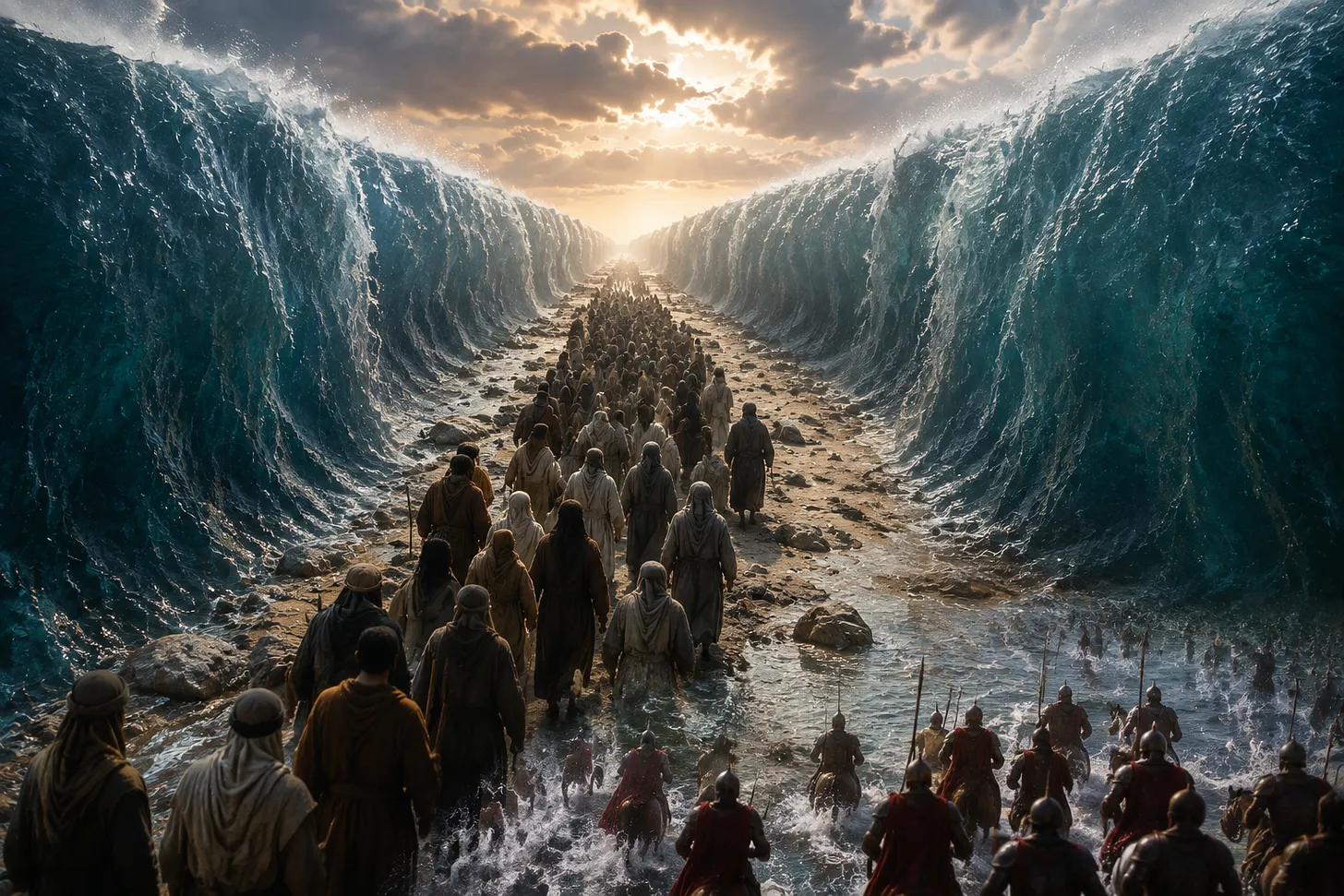
The Exodus gives us the architecture for understanding this larger story. Israel was enslaved in Egypt, serving Pharaoh and living under the shadow of Egypt’s gods. When Yahweh came to deliver them, He confronted not only a political ruler but the entire system of power that held His people captive. The plagues exposed the impotence of Egypt’s gods, while the Sea of Reeds brought the conflict to its decisive conclusion. Israel passed through the waters as Pharaoh’s army pressed close behind. The people emerged alive; the enemy disappeared beneath the deep.

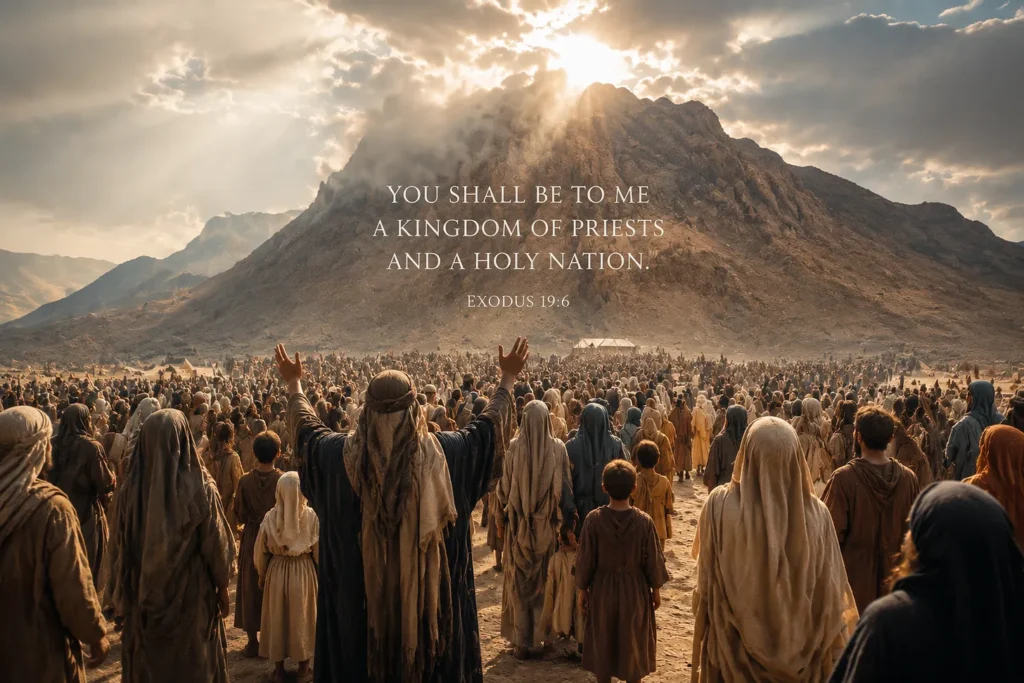
Getting Israel out of Egypt was only the beginning. Had rescue been the entire purpose, the story could have ended on the far side of the sea. Yahweh brought the people to Sinai and declared them His treasured possession, a kingdom of priests and a holy nation. Released from Pharaoh, they were now owned by Yahweh. Their service, allegiance, and identity had been transformed. Rescue brought them out. Redemption claimed them as His own.

Israel’s story, then, becomes a microcosm of the human story. What God began with Israel He intended to extend to humanity and ultimately to creation itself. Exodus was the blueprint for cosmic redemption, not its final fulfillment. Israel became the vehicle through which God would advance His purposes—carrying His presence and making Him known among the nations.

The wilderness became the proving ground for this calling, where God formed a people who could live with Him in their midst. In the barrenness of the desert, the Tabernacle stood as a sign of Eden being reclaimed. God was dwelling with humanity again. Israel was learning to live under His rule, depend upon His provision, and represent Him before the nations.

Yet the larger human captivity remained. Behind Pharaoh, Babylon, Rome, and every other empire stood an enemy no human ruler could defeat. Death held humanity in its grip.

We were created to bear God’s image and extend His life-giving rule throughout creation. Humanity rejected the God of life, distorted His image, and gave itself to other masters. Humans continually exploit, dehumanize, devour, and destroy one another. Violence becomes ordinary. Truth becomes expendable. And Creation bears the wounds of our rebellion. In trying to establish ourselves apart from God, we became slaves to the powers that destroy us.

We needed more than rescue. We needed to be reclaimed.

This is the world into which Yeshua came. Many longed for a deliverer who would free Israel from Rome, but Rome was not the greatest enemy. Yeshua came to confront the power behind every human empire and every grave. His mission was firmly covenantal, rooted in Israel’s longing for Yahweh to return and dwell among His people.

His gathering of twelve disciples was not incidental. The twelve mirrored Israel’s twelve tribes. Around Himself, Yeshua was forming a renewed Israel to carry God’s ancient mission forward. Israel had been called to be a kingdom of priests and a light to the nations. Yeshua was bringing that calling toward its intended fulfillment.

But first the greater Pharaoh had to be defeated.

Yeshua willingly entered the realm from which no human being returns. Death had swallowed every generation before Him and never released its captives. Yeshua entered that realm and broke its power from within. The resurrection is far more than a great miracle. It is the reality that the old master has lost his claim.

Paul describes redemption in precisely these terms: God “rescued us from the domain of darkness and transferred us to the kingdom of His beloved Son” (Col. 1:13). The dominion has changed. We have been repossessed by the living God.

The empty tomb announces a new Exodus. The redeemed belong to another King, bear another allegiance, and carry His presence into the world. The redeemed are His living tabernacle in motion, a kingdom of priests entering contested spaces and establishing signs of His life-giving rule.

The former master has been defeated. The King is alive, and the redeemed belong to Him.
redeemed
resistance

Resistance: God’s Way of Transforming the World

Every year on the Fourth of July, Americans pause to remember an act of resistance. This year, as we celebrate the 250th anniversary of American independence, that remembrance carries even greater significance. We reflect upon ordinary men and women who reached an extraordinary conclusion: there comes a moment when obedience to God and conscience means refusing to conform to the demands of an earthly power.

The signers of the Declaration of Independence understood that resistance would not come without cost. Severe cost. They risked their property, their reputations, and their lives because they believed that liberty was worth more than comfort and truth was worth more than security. We rightly admire their courage because history reminds us that freedom has rarely been preserved by those unwilling to resist the status quo.

Resistance Woven into the Biblical Story

Yet Independence Day raises a much older question, one that reaches far beyond the birth of a nation. Is resistance woven into the very fabric of the biblical story? More importantly, is it woven into the character of God Himself?

The God revealed in Genesis acts in a way the ancient world never imagined. While the surrounding civilizations told of order emerging through violence and conflict among the gods, the Creator simply speaks, and creation obeys. There is no battle because there is no rival. God accomplishes His purposes without adopting the world’s methods.

As the biblical story unfolds, empires trust armies, wealth, and political power. God begins a nation with an elderly couple who cannot have children. Egypt builds its greatness by enslaving others. God demonstrates His supremacy by delivering the slaves. Israel looks for a king who resembles the rulers of the nations. God chooses the shepherd.

Nowhere is this contrast more clear than in the Exodus. Pharaoh builds an empire through fear, oppression, and forced labor. God does not answer by constructing a greater empire or raising a stronger army. He redeems slaves, leads them into the wilderness, and forms a covenant people whose life together bears witness to an entirely different kingdom.

Sinai shows that God not only defeats differently—He governs differently. The laws of the ancient world were written to preserve kings and strengthen their kingdoms. God’s Torah repeatedly moves in a different direction, protecting the widow, the orphan, the stranger, the laborer, and the poor. The measure of His kingdom is not how well it serves the well connected, but how faithfully it protects those with no influence at all.

As centuries passed, the world’s understanding of dominance did not change. By the time Jesus entered history, another empire ruled the land, and once again many expected God to answer power with greater power.

First-century Judea lived beneath the shadow of Rome, the greatest military empire the Mediterranean world had ever known. Many longed for a Messiah who would answer Rome on its own terms. They expected another David, another conqueror, another king who would overthrow the empire through superior force.

A Kingdom Not of this World

But Jesus entered Jerusalem riding a donkey rather than a warhorse. He taught His followers to love their enemies rather than destroy them. Standing before Pilate, He declared that His kingdom was not of this world. Everything about His kingdom challenged the world’s definition of power.

Rome believed the cross displayed its absolute rule. God transformed it into the means by which death itself was defeated. The empire could execute the Son of God, but it could not stop the Creator from bringing life out of death. God overcame Rome without becoming like Rome.

Perhaps this explains why Paul writes to believers in Rome, “Do not be conformed to this world, but be transformed by the renewing of your mind.” Paul places conformity and transformation in direct opposition to one another. Every culture exerts pressure to conform, inviting us to see success and greatness through the world’s eyes. The Kingdom of God calls us to live a different way.

Transformation begins when God’s people refuse to be shaped by the world’s values. Christian resistance is not rebellion; it is the faithfulness of those who belong to another kingdom.

The earliest Christians expressed that faithfulness in a confession that changed the world: “Jesus is Lord.” Those words were far more than a personal statement of faith. They denied Caesar’s claim to ultimate authority and proclaimed that Messiah alone reigns.

The natural world reflects a similar truth. Muscles strengthen by bearing weight. Bones become denser under load. Trees exposed to the wind send their roots deeper into the earth. A butterfly emerges only by pressing through the resistance of its cocoon. Even the flow of energy becomes useful when it encounters resistance. Throughout creation, resistance is not always the enemy of transformation; it is often the means by which transformation occurs.

Israel leaves Egypt before becoming a covenant people. David lays aside Saul’s armor before confronting Goliath. Daniel refuses to let Babylon define his identity. Jesus rejects Satan’s offer of the kingdoms of this world. The apostles refuse to be silenced. The early Church refuses to worship Caesar. In every generation, God’s people are formed by remaining faithful where the world demands conformity. Again and again, God advances His kingdom through people who refuse to conform.

Perhaps this is why Jesus called His followers to take up a cross. The way of His kingdom has never been shaped by the world’s pursuit of power or the path of least resistance. Faithfulness begins with the refusal to conform, trusting that God’s way leads not simply to victory, but to transformation.

As we celebrate Independence Day, it is right to remember those who believed liberty was worth resisting oppression. Their courage deserves our gratitude. Yet the biblical story calls us to an even greater act of faithfulness. The earliest Christians understood that there are moments when allegiance to our Messiah demands resistance to the values and claims of the world.

That challenge has never disappeared. Every generation faces voices that compete for our allegiance and cultures that invite us to conform. We may not be tempted to burn incense before Caesar, but we face constant pressure to measure success by wealth, influence, comfort, and self-interest rather than by the values of God’s kingdom. God’s people transform the world by remaining faithful to the King of Kings.

resistance
chaos

When Chaos Rules the World

Why did the ancient world fill its temples and palaces with strange creatures unlike anything found in nature? Winged lions guarded palace gates. Serpents adorned temple walls. Human-headed bulls stood beside royal entrances, while other composite beings watched over places associated with kings and the divine. To modern eyes they may seem like little more than relics of ancient mythology. To those who carved them, however, they reflected a world in which order was never secure, and the forces of chaos were never far away.

That understanding grew out of everyday experience. A year’s harvest could disappear beneath floodwaters. Drought reduced fertile valleys to dust. Disease swept through villages, and invading armies left cities in ruins with families scattered in their wake. Kingdoms rose only to fall again, and every generation buried its dead. No matter how hard people worked to build a stable world, disorder eventually returned.

Chaos in the Ancient World

Every civilization searched for an explanation. Why did chaos always seem to return? Egypt, Babylon, Assyria, and Canaan answered that question in different ways, but they all shared one conviction: chaos was the great enemy of life. Egypt spoke of Apophis, the serpent of darkness. Babylon told of Tiamat, the chaotic waters. Canaan described Yam, the sea and Leviathan, the twisting sea monster that resisted rulership. The dragon, the serpent, the raging sea, and the monsters of the deep gave visible form to the unseen forces that threatened order. Even the cherubim guarding Eden belong to this larger world of ancient imagery.

It is into this world that the opening pages of Scripture speak. After centuries of stories describing gods struggling against rival deities, the Bible begins in an entirely unexpected way. “In the beginning God created the heavens and the earth.” There is no genealogy of competing gods, no cosmic struggle, and no uncertainty over who will prevail. Before a single creative act takes place, God already reigns.

The earth is tohu va-bohu—unformed and unfilled. Darkness covers the face of the deep, yet none of these things threaten the Creator’s sovereignty. God speaks, and creation responds. Light fills the darkness. Waters are given their boundaries. Dry land appears. Life begins to flourish. What is unformed becomes formed. What is empty becomes full. Step by step, the world is prepared as a place where God will dwell with humanity.

Yet the story immediately presents another question. If God created the world for life, fruitfulness, and His presence, why does chaos continue to dominate human experience? Here the Bible parts company with the stories of the surrounding nations. Chaos does not begin with a battle among the gods. It enters history through human rebellion.

The serpent’s appearance in Eden marks a decisive turning point in the biblical story. What follows is not a collection of unrelated stories but an unfolding pattern. Rebellion gives way to exile. Exile is followed by the murder of a brother. Violence spreads until it corrupts the whole earth. The Flood reverses creation as the waters once again cover the land. Babel fractures humanity into scattered nations. With each generation chaos extends its reach, moving from one couple to one family, from one family to all humanity.

The story continues throughout the Hebrew Scriptures. Pharaoh becomes another face of chaos as he enslaves Israel and orders the death of the baby boys. The sea once again stands as an obstacle to life. The wilderness becomes a place where hunger, serpents, hostile nations, and rebellion continually threaten God’s people. Yet each time the Lord acts, He is reclaiming His creation from everything that opposes His purposes and restoring a people through whom His presence will once again dwell in the midst of the earth.

Chaos in the Gospels

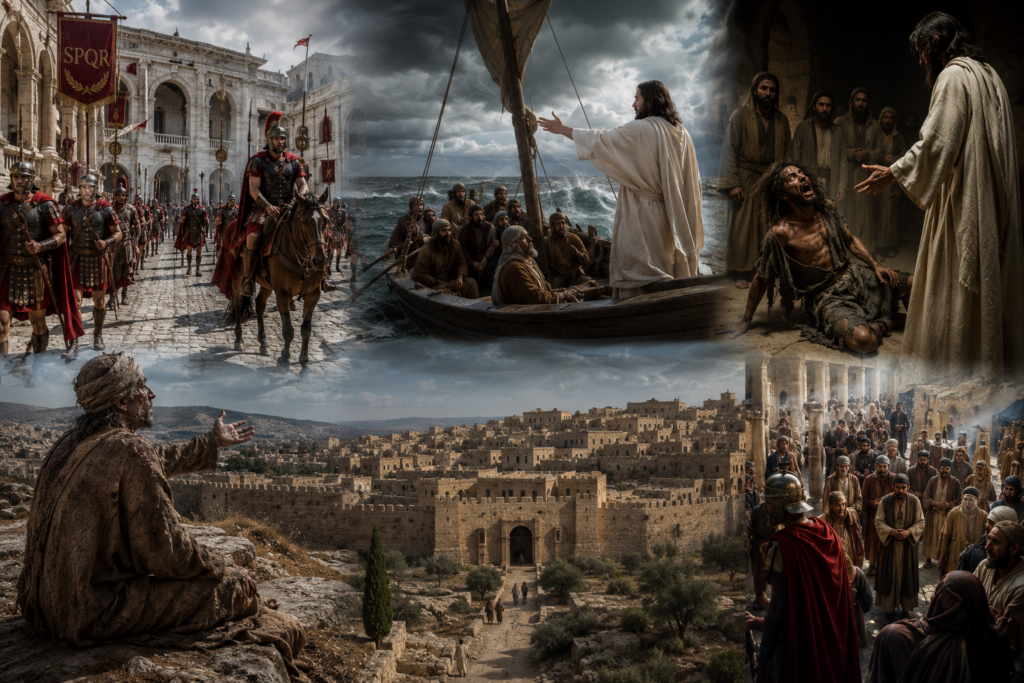
When the Gospels open, the symbols of chaos have become painfully recognizable. Israel lives beneath the weight of Roman occupation. The Temple itself has become entangled with corruption and political compromise. Blind men sit beside the roads. The lame wait outside the gates. Lepers remain isolated from their communities. Demonic powers torment men and women created in God’s image. Storms threaten the disciples on the Sea of Galilee, and death casts its shadow over villages Jesus enters. The biblical story has brought the problem of chaos into full view.

This is why the ministry of Jesus cannot be reduced to a collection of miracles or isolated acts of compassion. Every healing restores life where chaos has left its mark. Every exorcism drives back the powers that resist God’s kingdom. Every calming of the sea reveals His authority over the forces that threaten creation. Even His confrontation with death itself declares that the deepest consequence of humanity’s exile will not be the final word. The same story that began in Genesis continues to unfold as God moves toward the restoration of His creation.

The Bible ends where it began—with God’s dwelling once again among humanity. Death is abolished, mourning gives way to joy, and the exile that began in Eden finally comes to an end. Creation is restored, and the story that opened in a garden reaches its fulfillment in the presence of God.

Our own generation has not escaped the realities that confronted the ancient world. Floods still destroy homes. Wars continue their destructive path. Disease reminds us how fragile life remains. Violence, injustice, and broken relationships leave deep wounds that no generation has been able to avoid. Knowing that these experiences are ancient does not make them easier to bear, nor does it lessen the grief they bring into our lives.

Yet we are invited to see these realities within a much larger story. The chaos we experience today is not evidence that God has abandoned His creation. From Genesis to Revelation, the Bible tells one continuous story of a God who enters history, confronts everything that opposes life, and faithfully accomplishes His purposes. That promise sustained God’s people in the ancient world, and it continues to sustain ours as we await the day when death, sorrow, and exile will finally give way to life in the presence of God.

chaos
Purim

How Purim Replays the Exodus Story

Though the book of Esther and the celebration of Purim is a captivating story about court intrigue and political reversal, it is also an Exodus story revisited. Different empire. Different tyrant. Different geography. Different circumstances. The message, however, is the same: the deliverance of God’s people in exile. The Exodus is the story through which Israel learns how God acts in history. And in Persia, once again under imperial shadow, that story unfolds.

How Esther Replays the Exodus Story

In the opening chapters of Exodus, Egypt is humming along with its building projects. Pharaoh’s power is consolidated. The machinery of his empire is functioning with precision. Then comes the threat: “The people of Israel are too many and too mighty for us.” Israel’s multiplication unsettles Pharaoh — this external challenge could create political instability for the empire.

In Esther, Persia stands equally secure under King Ahasuerus. The empire stretches across many provinces with bureaucratic efficiency. And again, a threat is perceived at Purim. Haman describes “a certain people scattered and dispersed… whose laws are different from those of every other people.” Their distinctiveness is intolerable, embodied most clearly in Esther’s Uncle, Mordecai. Their allegiance to another law exposes the limits of imperial control.

Pharaoh sees Israel as a resource to be exploited and restrained. Haman sees the Yehudi, those belonging to Judah, as politically subversive. In both narratives, the identity of the people of God collides with imperial fortunes. That collision ultimately provokes a genocidal decree. Empire cannot abide a people whose ultimate loyalty lies elsewhere.

The Decree of Death

So, the decrees are issued.

In Exodus, Pharaoh commands the death of Hebrew baby boys. In Esther, Haman seeks the annihilation of every Jew, men, women, and children, all across the empire. Both convert fear into public policy. Both attempt to legislate the erasure of God’s people.

Passover on the Calendar

Then the text of Esther and the story of Purim introduces a detail tied directly to Passover. “The king’s scribes were summoned on the thirteenth day of the first month” (Esther 3:12). The first month is Nisan. The thirteenth day is the eve of Passover. The decree of destruction goes out on the threshold of Israel’s feast of deliverance.

On Nisan 14, Israel remembers a night when earlier another genocidal decree hung over them in Egypt. A ruler had issued a death sentence. The covenant people were targeted. Deliverance came, and the turning point was Passover.

In Esther, the Persian ruler confirms a death sentence. Once again the covenant people are targeted. Deliverance will come — but through hidden providence at Purim And the threat begins at Passover time.

The author of Esther never names God. Never explicitly invokes Passover. Yet the narrative is framed against the calendar of redemption. It is as if another Pharaoh has arisen. The Exodus is being replayed, though without plagues or parted seas.

The connection deepens when we are told that Haman is an Agagite. Amalek was Israel’s first enemy after crossing the Reed Sea. The wilderness conflict in Exodus 17 reverberates through this genealogical detail. Amalek attacked the weary and the vulnerable. Now an Amalekite descendant rises again to threaten Israel’s existence. The ancient enemy has returned. The Exodus is not finished.

Even the deliverers mirror one another. Moses is raised in Pharaoh’s house, positioned inside the structure of empire. Esther — Hadassah — becomes queen in the Persian palace, embedded within imperial power. Both conceal their identities. Both are elevated not by political maneuvering but by providence. Both hesitate. Both must risk death for the sake of their people.

In Exodus, deliverance centers on redemption through the Passover lamb. Death passes over the homes marked by blood. Pharaoh’s army, pursuing Israel into the sea, is swallowed by the waters of the deep, waters that symbolized chaos. The Reed Sea turns back upon him, a reversal of a place that signified paradise in the Egyptian imagination. The empire’s instrument of control becomes its grave.

In Esther, reversal defines the climax. Haman constructs a towering wooden stake for Mordecai. That very structure becomes the site of his own execution. The weapon formed against God’s people collapses upon Haman. There is a pattern — chaos always turns back upon itself when Yahweh is in charge.

Passover on the Calendar

The story of Esther unfolds at a time when the Temple has already been rebuilt. In 515 BCE, under King Darius of the Achaemenid empire, the Second Temple stands in Jerusalem. Sacrifices have resumed. The presence of God dwells in the land in the Temple. And yet many of the Yehudi choose to remain in Persia. They are geographically separated from the central sanctuary.

If God’s presence is enthroned in Jerusalem, what does that mean for those still scattered in exile in Persia?

The book of Esther does not suggest relocating the Temple to Persia. Instead, it reveals something deeper about God’s dwelling. Though His name is absent from the book, His providence saturates His people wherever they settle. The hidden hand of divine presence is evident.

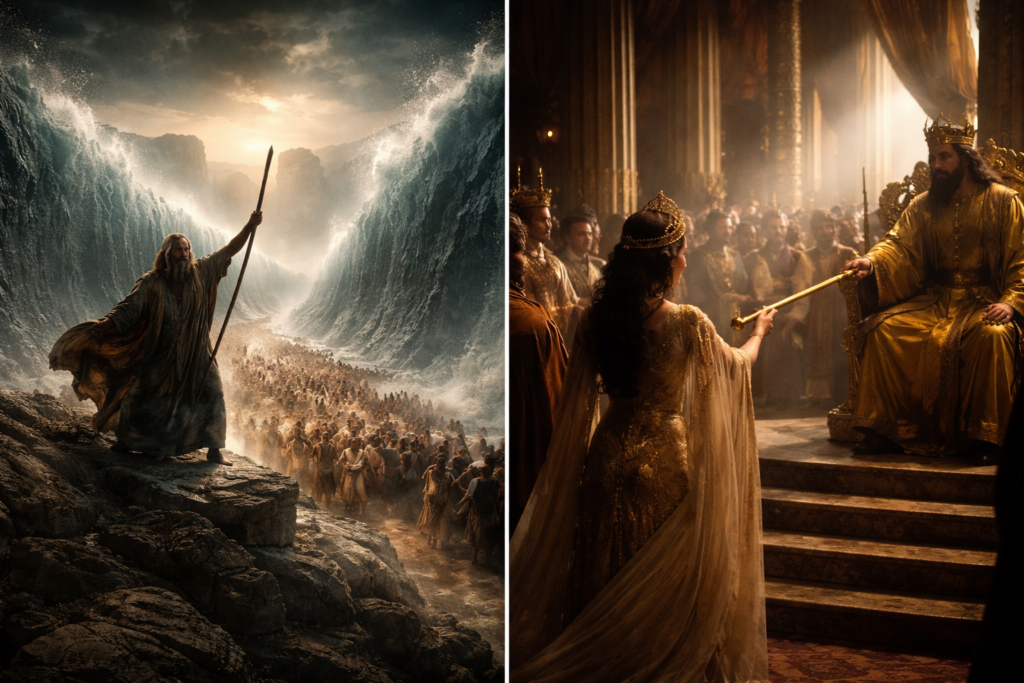
Temple imagery persists even in exile. Instead of sacrifice, there is fasting. Instead of priestly entry into the Holy of Holies, Esther approaches the king’s throne uninvited, risking death. The golden scepter is extended. Acceptance is granted. Like Moses, she stands as mediator between decree and people — a royal high priest in the Persian court.

And though the Temple stands in Jerusalem, God is not confined to Jerusalem.

Exodus culminates at Sinai in a covenant meal. The elders ascend, behold God, and eat in His presence. Deliverance leads to the indwelling presence of Yahweh. Salvation leads to communion. Esther, too, ends with a feast — Purim. Joy replaces mourning. Fear turns into celebration. The people institute an annual remembrance of a mighty reversal.

The date for Purim is set for destruction—Adar 13 becomes a day of Jewish triumph. In Exodus, destruction falls upon those without blood applied to their doorways. In Esther, destruction falls upon those who sought to erase God’s people. Reversal once again marks divine intervention.

The Pattern That Continues

Pharaoh or Haman. Egypt or Persia. Sea or gallows.

The question remains the same: Who has authority over life and death?

Purim answers the same way Passover answered. Certainly not empire.

The Exodus is not a closed chapter in Israel’s history. It is the interpretive lens through which history is understood. Esther and Purim continues the story. God delivers His people so He can dwell with them. In Egypt. At Sinai. In Jerusalem. In Persia.

And perhaps that is why the book of Esther feels so familiar. The names and locations have changed, but the story has not.

Purim
Worship

Worship as the Undoing of Chaos

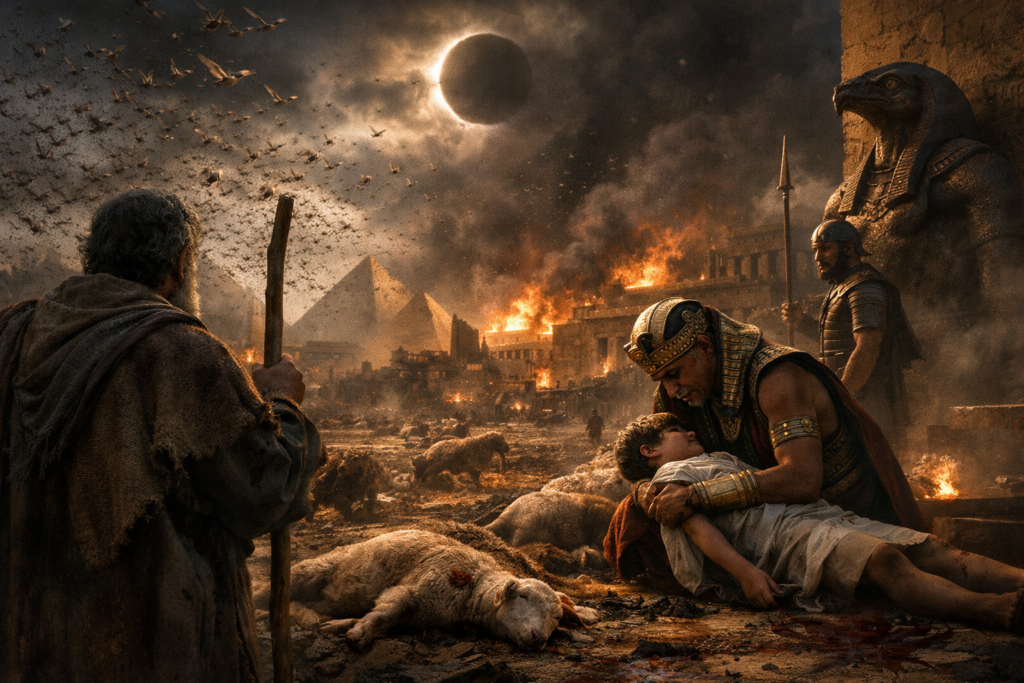
The portion Bo (Exodus 10–13) brings the Exodus narrative to its climax. The final plagues—locusts, darkness, and death are carefully ordered acts within a larger combat narrative and which challenge Israel’s worship. These chapters reveal that the conflict between Yahweh and Pharaoh is not just political but is cosmic. At stake is the question of who rules the world and by what means order is sustained.

Worship as Liberation: From Forced Labor to Avodah

At the center of this struggle stands a repeated divine command: “Let my people go, so that they may serve me.” The Hebrew verb shalach (“send,” “send away,” “let go,” “release”) suggests a forceful removal. Pharaoh must release what he refuses to relinquish. Yet the purpose of this sending is equally important: “so that they may serve me.” The word avad means both labor and worship. Israel is being transferred from one form of service to another, from forced labor under Pharaoh to voluntary worship/service under Yahweh. The Exodus is a movement from oppressive service to restorative service. Worship is the means by which chaos is undone. It is the solution to world crisis.

The plagues of Bo reveal how Yahweh dismantles Egypt’s theology of power. Locusts are announced as an invasion that will “cover the face of the earth” and consume what remains after the hail. This is language of de-creation. Egypt’s agricultural abundance, its control over land and food, is stripped away. The darkness that follows is described as thick and tangible, lasting three days. It is a direct challenge to Ra, the sun god. Egypt’s most revered deity is rendered powerless, while Israel remains in light. Creation itself appears to unravel under Yahweh’s command.

Pharaoh’s negotiations during these plagues expose the true nature of his resistance. He offers partial release: the people may go, but their flocks and herds must remain behind. Livestock represented wealth, stability, and future productivity. Pharaoh’s refusal is essentially economic. He will not let go of his “cash cow.” Egypt has relied on Israel’s labor and expertise, particularly in animal husbandry, and Pharaoh is unwilling to surrender his resources. Moses responds with theological clarity: the people must take sacrifices with them, and they will not know how they are to serve Yahweh until they arrive. Worship cannot be dictated by empire. It cannot be scheduled, minimized, or controlled by the very system it seeks to escape.

Divine Combat and the Dismantling of Egypt’s Gods

The final plague, the death of the firstborn, brings the conflict to its most severe point. Throughout ancient Near Eastern mythology, gods established their right to rule through cosmic combat. Creation and kingship were born of conquest. Egyptian religion reflected this worldview. Myths such as Set murdering Osiris or Sekhmet slaughtering humanity at Ra’s command portray a divine order sustained through violence. Pharaoh, viewed as a living god, maintained this order through domination, coercion, and even mass infanticide. His decree to drown Israel’s sons in the Nile was an act of state-sponsored de-creation.

Yahweh’s judgment responds measure for measure. The death of the firstborn is a direct confrontation with Egypt’s theology of power. Pharaoh’s own house is struck, revealing his impotence. In the ancient world, it was the king’s responsibility to preserve order. By failing to do so, Pharaoh is publicly exposed as a false chaos-tamer. The Egyptian people witness the humiliation of their god-king by the invisible God who acts through Moses.

The structure of the plagues reinforces this message. The first nine are arranged in three cycles of three, each building in intensity and followed by a pause. The final plague stands alone as the climax. This rhythmic progression heightens tension. These are strategic strikes. Yahweh uses nature itself as His weapon turning Egypt’s environment against its own gods. Each plague dismantles a specific aspect of Egypt’s pantheon and worldview in real time.

Yet Yahweh’s aim is not destruction for its own sake. Strike by strike, He is liberating Israel not only from physical bondage but from internal slavery—the mindset of empire that equates power with violence and order with domination. The plagues create space in Israel’s heart for true worship. Before they can be reshaped as a covenant people, the gods of Egypt must be slain.

The Exodus plagues, therefore, are a combat sequence. They are a war between justice and oppression, between creation and chaos. In Genesis, God subdues chaos by separating land from sea and filling the void with life. In Exodus, Yahweh again confronts chaos—this time embodied in empire, idolatry, and false worship. He defeats Pharaoh, judges the gods, liberates the oppressed, and begins the long process of restoring a people who have forgotten what it means to be free.

worship
Skip to content