Tag: persecution

enemy

Who Is Your Enemy…Why Moses and Jesus Are Fighting the Same Battle!

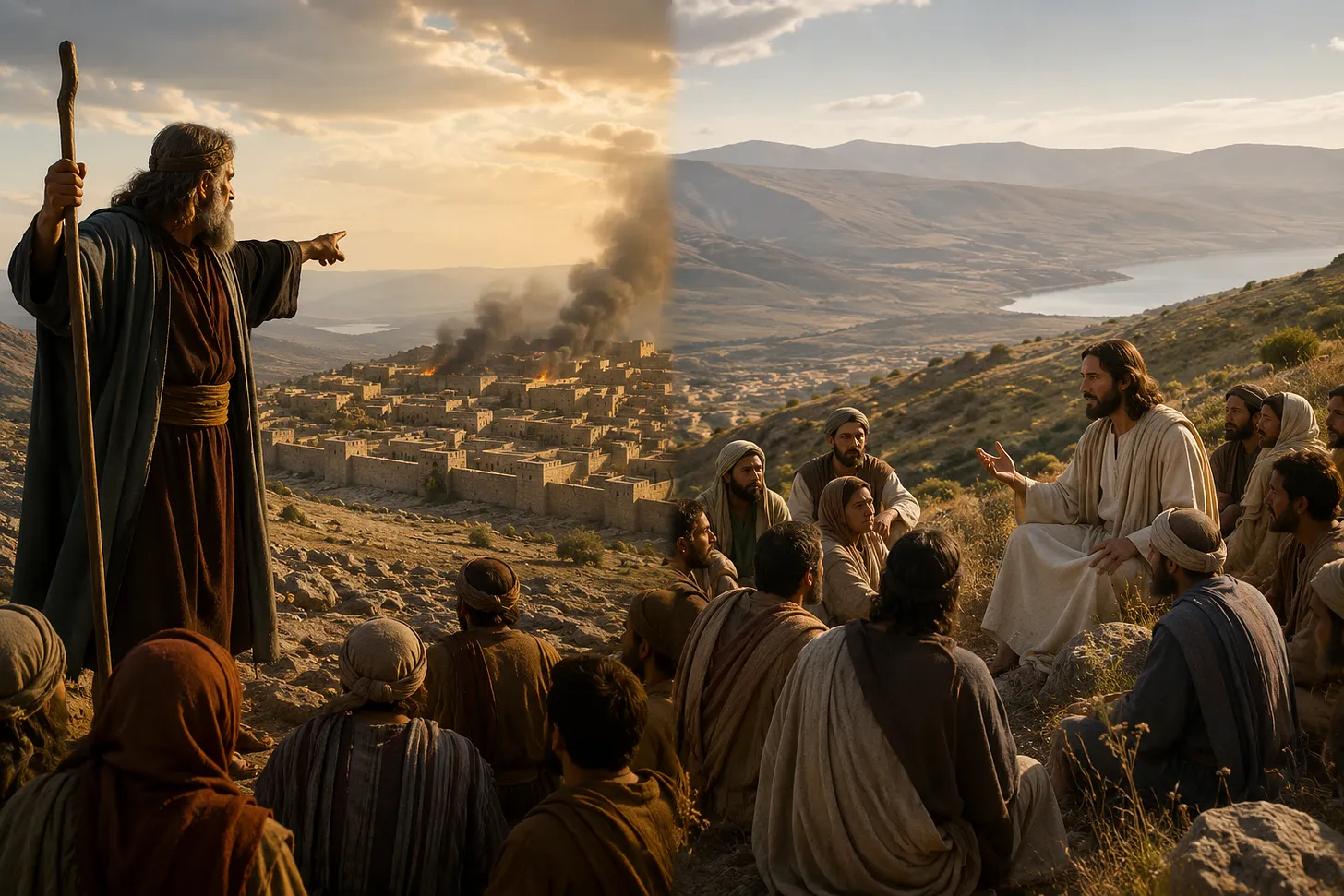
Some of the most difficult passages in Scripture are those that seem to contradict God’s ways. As Israel stands on the plains of Moab preparing to enter the Promised Land, God commands the people to drive out the nations before them, show them no pity, burn their carved images, and leave nothing that might entice them into compromise. Yet in the Sermon on the Mount, Jesus tells His disciples, “Love your enemy and pray for those who persecute you.” At first glance, these commands appear impossible to reconcile. How can the God who commanded Israel to destroy its enemies later command His disciples to love theirs?

The tension begins to disappear once we recognize that the real conflict has never been merely about Israel’s opponents. It has always been about humanity’s greatest enemy.

When Moses speaks about the nations inhabiting Canaan, he is not describing random foreign peoples who happened to occupy the land. They represent a rival kingdom whose worship, values, and way of life threaten everything Israel has been called to become. If Israel embraces their gods, she will inevitably embrace their character, no longer reflecting the God in whose image she was created. The greatest danger is not military defeat but the loss of Israel’s identity as God’s covenant people.

Again and again, Moses warns that these nations will become a snare to Israel. The danger is not simply that they occupy the land but that they will capture Israel’s heart. The people redeemed to bear God’s image will gradually begin to reflect the image of the nations instead. That is the threat Moses sees before them.

This is why Moses commands Israel not to covet the silver and gold that adorn their idols or bring those abominations into their homes. Idolatry rarely begins with outright rebellion. It begins with fascination, grows into compromise, and ends in allegiance. God knew that the greatest victory of the Canaanites would not be won on the battlefield but in the hearts of His own people. The conquest would fail long before Israel lost a battle if Israel became Canaanite in heart.

By the time we reach the Gospels, the political landscape has changed. Rome now occupies the land, and Israel lives under foreign rule. Yet Jesus never commands His disciples to overthrow Rome by force or wage war against Caesar.

Instead, He says something that surprises us. “Love your enemies.”

Has God changed His mind? Not at all. The enemy still represents everything that opposes the Kingdom of God. What changes is the place where the battle is fought.

Under Joshua, Israel entered a physical land that had to be cleansed of idolatry. Under Messiah, God’s people become His dwelling place, and the battlefield moves into the human heart. The greatest threat is not so much the army outside the gates. It is the corruption that enters through the gates we abandoned.

We imagine an external enemy arriving with banners flying and swords drawn.

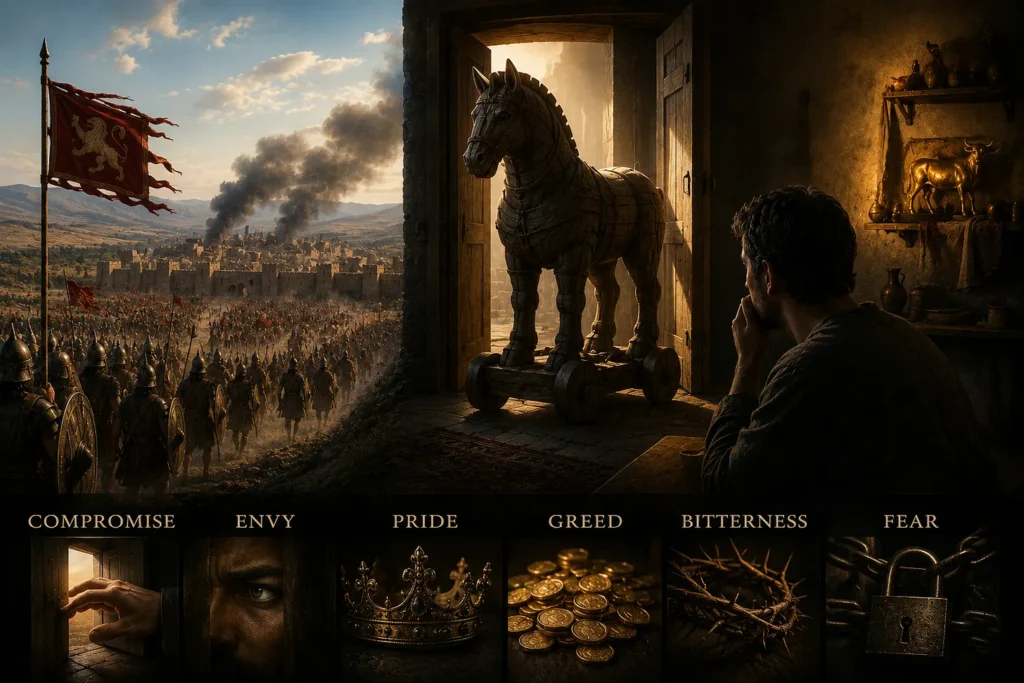
More often, he enters like a Trojan horse.

He comes disguised as compromise, envy, pride, greed, bitterness, or fear. He hides in the small habits we overlook and the subtle beliefs that slowly reshape both our understanding of God and our understanding of ourselves. Every idol begins by asking for just a little room before demanding the whole house.

Our greatest enemy is not the person standing across from us but the desires that rise within us. James writes that temptation begins when each person is drawn away by his own desires. Long before evil becomes visible in our actions, it has already taken root in the heart. Too often, we open the gates ourselves.

Hatred has a way of reproducing itself. Violence forms violent people. Bitterness reshapes the soul. When we answer evil with evil, we allow the kingdom we oppose to take root within us. The Apostle Paul captures this truth in a single sentence: “Do not be overcome by evil, but overcome evil with good.” The real victory is refusing to mirror and become the enemy.

The command to destroy the enemy is a call to remove everything that seeks to destroy the covenant life of God’s people. Israel was commanded to tear down idols because idols deform human beings. They replace the worship of the Creator with the worship of created things. They rob men and women of the dignity for which they were created.

So who is your enemy? It is not your irritating neighbor. It is not your political opponent. It is not the person who insults you on social media.
enemy

Your enemy is every force that seeks to distort the image of God within you—every thought that leads you from the truth, every desire that pulls you toward selfishness, every idol that demands your loyalty, every habit that weakens your walk, every lie that challenges God’s voice, and every fear that causes you to distrust His promises. Anything that diminishes the dignity and calling of an image-bearer is working against the Kingdom of God.

That is the enemy.

This is why Moses repeatedly tells Israel not to fear the nations. The battle belongs to the Lord. Israel’s calling was never to secure victory by its own strength but to remain faithful while God fought on its behalf. Throughout Deuteronomy, Moses returns to the same exhortation: listen, keep, and do.

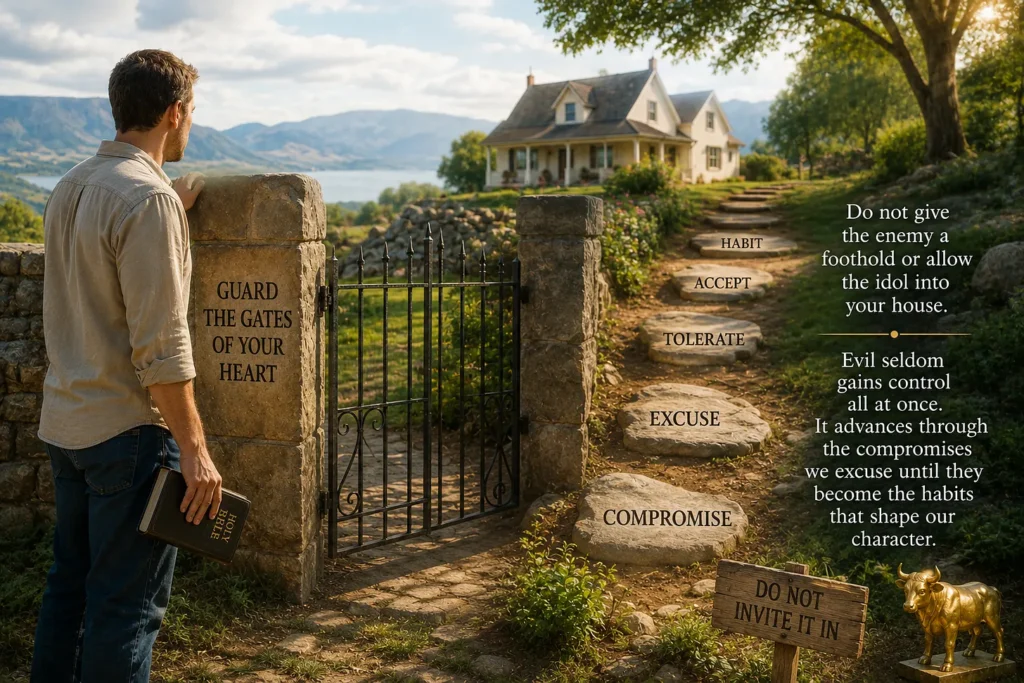
That same calling rests upon the disciple of Jesus. Guard the gates of your heart. Do not give the enemy a foothold or allow the idol into your house. Evil seldom gains control all at once. It advances through the compromises we excuse until they become the habits that shape our character.

The Lord who fought for Israel still fights for His people today. The enemy is whatever seeks to rob us of our calling as God’s image-bearers. Israel was commanded to remove whatever threatened the covenant community from within. Jesus calls His disciples to love those who oppose them while resisting the evil that seeks to deform God’s image in the human heart. Moses and Jesus are not speaking with different voices. They are calling God’s people to the same faithfulness against the same enemy—the one that would destroy God’s image in us.
enemy
Rome

When Believers Look Like Rome

Our culture looks as though its being reshaped into the image of empire. Like Rome of old, it molds humans to look and act less like image-bearers of the Creator and more like subjects of the beast. The latest iteration of Empire continues to rob us of dignity and redefine our very humanity—calling for allegiance that should belong only to the King of Kings. And when people mirror empire, they no longer reflect God’s image but the distorted image of the beast.

This is the central crisis of our time. We are witnessing a culture shift where the foundations of Judeo-Christian faith have been dismantled and replaced with empire’s values: power without justice, pleasure without restraint, freedom without accountability. This isn’t new. Empire has always sought to remake people into its own image. And when God’s people forget their calling, they too can begin to look more like Rome than like Yeshua.

Life Under Empire

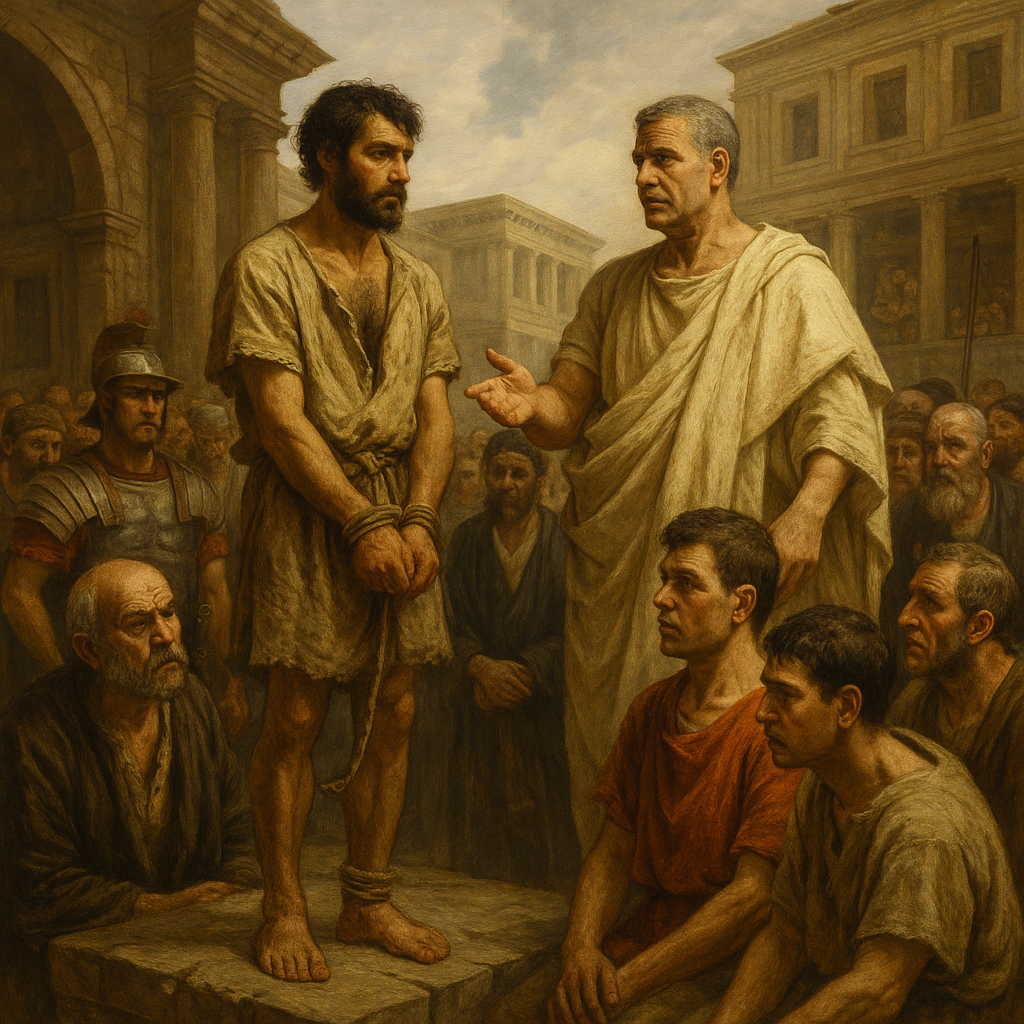
The early church knew this tension firsthand. Their lives were ruled by fear, subject to the whims of emperors who demanded loyalty not just politically but religiously. Caesar was worshiped as “lord and savior.” To refuse was scandalous, treasonous, even dangerous.

For Christians, faith was not a private matter of conscience but a bold declaration of allegiance to God’s kingdom in defiance of Rome’s order. To declare “Yeshua is Lord” was to renounce Caesar’s lordship. It was both a political and spiritual statement rolled into one.

Believers were branded as atheists for denying the gods of Rome. They were charged with cannibalism for celebrating the Lord’s Supper—eating the body and drinking the blood. They were slandered with incest for calling one another “brother” and “sister.” Suspicion hung heavy in the air. A knock in the night could mean betrayal, arrest, or execution.

Persecution was not occasional. Under Rome’s emperors like Nero or Diocletian, Christians lost property, were exiled, tortured, or publicly executed. Crucifixions lined the highways. Others were burned alive as human torches. Still others were thrown to wild beasts in the arena while crowds cheered. These were spectacles of humiliation meant to remind everyone that Caesar, not Christ, was lord.

The Paradox of Persecution by Rome

But there’s a paradox: persecution did not crush the church. It purified it.

Believers cared for widows and orphans, shared food with those who had lost jobs and property and welcomed in the stranger. Facing death, they sang hymns, prayed for their executioners, and held fast to hope. To be baptized was to risk your life. Faith was not cultural habit—it was a costly allegiance.

Tertullian’s words still ring true: “The blood of the martyrs is the seed of the church.” Rome tried to humiliate Christians, but instead the church grew stronger. Humiliation became humility, humility became strength, and strength became bold witness.

Empire’s Playbook

Empire’s methods have never changed. It always follows the same playbook:

  • Dehumanize: Reduce people to tools of production, soldiers for conquest, or consumers for profit.
  • Desensitize: Numb consciences through entertainment, distraction, addictions and violence.
  • Dismantle the family: Undermine the God-given structure of marriage, parenting, and community.
  • Reshape society: Reprogram culture to reflect the beast’s values instead of God’s.

This is not unique to Rome. Abraham lived under the rule of the Chaldeans. Israel endured Pharaoh’s tyranny in Egypt. Judah suffered exile in Babylon. And the early church walked faithfully under Rome. Every generation of God’s people has faced the same challenge: will we bear the image of the beast, or the image of God?

The Image-Bearers’ Call

The Bible declares that humans were created in God’s image, designed to rule creation under His authority with justice, righteousness love, and wisdom. But empire aims to twist our divine vocation. It convinces people that their worth lies in power, status, devotion to the system. It robs humans of their calling to reflect God’s reign.

That’s why the issue is not just survival under empire but identity. Who do we reflect? Who do we serve? The serpent’s deception in Eden was to distort human image-bearing. Pharaoh tried to enslave it. Babylon tried to erase it. Rome tried to humiliate it. And empire today tries to desensitize us until we forget who we are.

Lessons From the Past

So how do God’s people live faithfully under empire? The Bible gives us a roadmap:

  • Abraham trusted God enough to leave his homeland and step into the unknown, building a covenant family in a land he did not know.
  • Israel trusted God to deliver them from Pharaoh, then learned covenant life in the wilderness, where they had to be reshaped and reprogrammed.
  • Exiles in Babylon gathered faithfully, praying, keeping covenant, refusing to bow to idols even when threatened with fire or lions.
  • The early church carried the Gospel into cities across the Roman world, knowing it might cost them their lives, but confident in their true allegiance to Yeshua.

Each generation resisted assimilation by remembering their true foundation.

Our Foundations

Paul put it this way: “For no other foundation can anyone lay than that which is laid, which is Jesus Christ” (1 Cor. 3:11). If empire has robbed us of our foundations, then we rebuild on Him. We don’t return to Caesar’s circus games, Pharaoh’s bricks, or Babylon’s idols. We build on the Cornerstone—the crucified and risen King.

Our current culture has been systematically dismantling the Judeo-Christian guardrails that once protected and held society together. The family is now so fractured. Truth is distorted. Dignity is cheapened. Entertainment desensitizes, politics polarizes, and the economics or corporatism enslaves. But Scripture calls us to resist. To reclaim our true vocation. To be reshaped not by empire but by the Spirit of God.

The Kingdom That Cannot Be Shaken

The book of Revelation presents the great unmasking of empire—showing what it truly is: a beastly power destined to fall. No matter how powerful, no matter how terrifying, empire is temporary. Yeshua is the true ruler whose kingdom will never end. His resurrection broke the back of empire and unveiled the only kingdom that lasts.

That’s why the call of the early church still stands for us: resist desensitization, resist dehumanization, resist the destruction of our covenant life. Cling to Yeshua, the King of Kings.

The choice is clear: will we look like Rome—or will we look like Christ?

Rome
Skip to content