
Tag: Paul

Ephesus

Amazons, Artemis, and Ephesus: The World Paul Entered

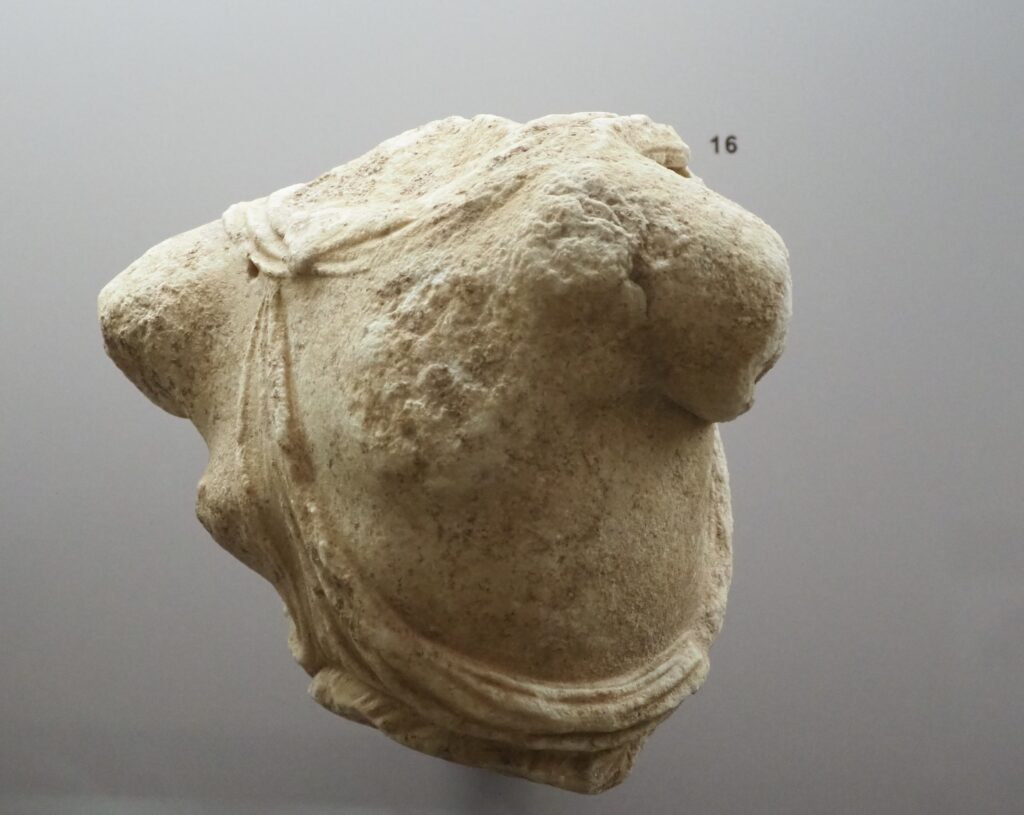
Walking through the museums of Greece was a journey into the ancient world. An ancient world of stone at every turn. Standing in the Acropolis Museum and seeing the remnants of Athena towering over the city. Marveling over the Parthenon friezes. And I noticed something else —carved into marble, painted onto pottery, frozen mid-combat, central to the imagination of the ancient Mediterranean world were the Amazons who settled in Ephesus at one point.

The Amazons were remembered as warrior women from the edges of the known world. Greek writers placed them in Anatolia, around the Black Sea, beyond the boundaries of the polis. Some traditions even said they migrated into parts of Asia Minor and were connected to early Ephesus.

Combat in Stone: How the Ancient World Secured Order

In Greek art, they usually appear in scenes called Amazonomachy — literally, “the battle against the Amazons.” You see it on temple friezes, especially in Athens. The story is consistent: Greek heroes defeat Amazon warriors. Civilization wins. Order pushes back. But the Amazons were only one part of a larger pattern. Everywhere in Greece you also find Gigantomachy — battles between the Olympian gods and the Giants. The Giants rise up from the earth in rebellion. Zeus crushes them. Divine order is secured.

What struck me walking through those museums was how pervasive this combat imagination was. It wasn’t just storytelling. It was a worldview. For most of us, religion often feels private, personal or moral — about beliefs or spirituality. For them, religion was about cosmic stability. It answered the question: why does the world hold together? The friezes were their theology in stone. They reminded citizens who had won and why their city was secure.

Ephesus: A City of Myth, Memory, and Civic Power

Paul writes to Timothy in Ephesus. Ephesus was one of the most symbolically charged cities in the ancient world. It was Roman, yes. But it was also Anatolian and Greek, layered with mythic memory and civic pride.

Ancient writers like Strabo preserved stories that Amazons once settled in parts of Anatolia and were connected to Ephesus. The Amazons were not just warriors; they were symbols of contested order — disciplined, powerful women from the east. Ephesus carried that mythic story.

At the center of the city stood the Temple of Artemis — one of the wonders of the ancient world. Artemis of Ephesus was not merely the bow-carrying huntress of Athens. She was a civic deity, guardian of prosperity and identity. Her image, likely adorned with ornamental pendants and jewels rather than literal breasts, symbolized abundance and divine protection. The temple was not only religious. It functioned as a financial center, a bank, a pilgrimage hub, and a major economic engine.

When Rome absorbed Greek culture, Artemis was identified with Diana. But the Ephesian cult retained its Anatolian character. Artemis shaped the city’s self-understanding.

Ephesus did have prominent women. Inscriptions show female benefactors, priestesses, and patrons. Wealthy women could wield influence within religious and social networks. The cult of Artemis gave women visible roles. But Ephesus was not a matriarchy. Civic authority still rested with male magistrates under Roman rule. The city was patriarchal in structure, even if symbolically centered on a goddess.

Paul in a Combat-Shaped Culture

Paul’s first letter to Timothy reads more like pastoral correction. False teaching was spreading. Speculative myths were circulating. Status and wealth were being displayed in ways that disrupted worship. Certain women appear to have been caught up in teaching error or asserting authority without grounding. Paul tells them to learn. He calls for modesty. He restricts certain forms of teaching authority.

So what was he pushing back against? All women for all time? Or something local?

Scholars debate this. Some argue that Artemis worship fostered an environment where women were accustomed to religious prominence, and Paul was correcting excess. What we can say with confidence is the Ephesus was shaped by the cult of Artemis, that women had visible religious roles, that wealthy female patrons likely influenced house churches. False teaching was present. Paul’s response was not a blanket criticism of women everywhere.  

Writers like S. M. Baugh argue that Artemis shaped the city’s culture in real ways. Paul’s instructions in 1 Timothy reflect local correction — especially regarding modesty, teaching, and authority — rather than universal condemnation.

Others, like Catherine Kroeger, argued more strongly that Artemis ideology promoted female supremacy and that Paul was countering that worldview directly. But that position remains debatable.

The real issue was never male versus female. It was order versus disorder within a very specific civic-religious environment.

Paul and the early Christians preached in a world saturated with the images of gigantomachy, and Amazonomachy. Temple friezes showed divine warfare. Sacred spaces commemorated mythic victory. Art depicted chaos subdued.

So when Christians proclaimed, “Jesus is Lord,” it was heard in a culture accustomed to enthronement through combat. But the Gospel didn’t reject the combat pattern; it reinterpreted it. The decisive victory is not Zeus hurling lightning. It is a crucified Messiah raised from the dead.

In Ephesus, Artemis towered over the skyline. Her temple defined civic identity. Yet Paul proclaimed that the true temple was not marble but people indwelt by the Holy Spirit. Authority would not be secured through mythic battle but through the cross and resurrection.

The Amazon memory in Ephesian tradition does not mean warrior women were running the city in Timothy’s day. But it does mean the city was shaped by stories in which female figures carried symbolic power within a larger combat worldview. Paul’s instructions must be heard against that layered background: Roman administration, Anatolian myth, Greek combat imagination, and a booming temple economy.

In a culture that secured order through stories of divine dominance, Paul quietly reshaped a community around a crucified King.
Ephesus
Corinth

Corinth, Geography, and Paul’s Reorientation of Power

Ancient Corinth (Greek: Korinthos) needs to be understood from its geography. I had the great pleasure of visiting this site (December 2025) and was awestruck by the surrounding landscape. The city’s geographical setting, its economy, and social life were inseparably linked, and Paul’s correspondence with the Corinthian church assumes that his audience knew this well. Rather than describing the city directly, Paul writes into that place, drawing on features of life in this city that would have been immediately recognizable to those who lived there. Just not recognizable for us.

Corinth as a Liminal Crossroads City

Corinth was a liminal city—an “in-between” place. It sat on an Isthmus, a narrow land bridge connecting mainland Greece with the Peloponnese. This strategic location made Corinth a natural crossroads. Two major ports, Lechaion on the western Gulf of Corinth and Cenchreae on the eastern Saronic Gulf, allowed goods and people to move efficiently east–west and north–south. As a result, the city experienced constant traffic: merchants, travelers, Roman officials, religious practitioners, and ideas from all across the Mediterranean world.

This geography shaped the social environment of Corinth. The city was marked by constant movement, competition, performance, and wealth. Status could be gained quickly and lost just as quickly. Public honor mattered. Paul’s repeated concern with factionalism, rivalry, lawsuits, sexual ethics, and the public display of spiritual gifts reflects a community deeply shaped by its environment.

Corinth is a Roman City Built on Anxiety and Aspiration

By the time of Paul’s ministry, Corinth was also thoroughly Roman. The original Greek city had been destroyed by the Romans in 146 BCE and lay largely desolate for nearly a century. In 44 BCE, Julius Caesar refounded it as a Roman colony, officially named Colonia Laus Iulia Corinthiensis. After Caesar’s death, Augustus continued the rebuilding, and it became the capital of the Roman province of Achaia. It emerged as a major administrative, commercial, and cultural center.

Paul arrived in Corinth around 50–52 CE. At that point, the city was less than one hundred years old in its Roman form. Its population consisted largely of Roman veterans, freedmen, merchants, and migrants. This social makeup contributed to the insecurity and status anxiety that permeate Paul’s letters. His statement, “Not many of you were wise by human standards, not many were powerful, not many were of noble birth,” reflects a city where social mobility was visible and honor was constantly negotiated.

The Mountain Paul Refused to Name

One cannot stand in Corinth without noticing the most dominant feature of its landscape: the mountain known as Acrocorinth. Rising nearly 2,000 feet above the city, Acrocorinth is visible from virtually every location. In antiquity it was crowned with fortifications and temples, including a sanctuary associated with Aphrodite. Strategically positioned, it controlled land routes across the isthmus and maritime movement between the gulfs. The mountain functioned as a symbol of security, power, and permanence—a constant visual reminder of authority looming above the city.

Yet Paul never explicitly mentions Acrocorinth in his letters.

This omission seems very significant. Paul does not describe the mountain for the same reason he does not describe the ports, the sea, the Isthmian Games, or any Roman political structures: these were assumed realities. More importantly, Paul does not allow Corinth’s most imposing symbol of power set the theological frame.

In the ancient world, mountains were often associated with divine presence and cosmic authority. They were perceived as places where heaven and earth met. Acrocorinth functioned as a local expression of this idea—a “cosmic mountain” that underwrote Corinth’s identity and sense of protection. Paul’s silence regarding the mountain effectively strips it of theological significance.

Instead, Paul redirects attention to a radically different center of meaning. “I decided to know nothing among you except Jesus Christ—and him crucified” (1 Corinthians 2:2). This is a striking reversal. Corinth’s power was oriented upward, toward the mountain. Paul’s gospel is oriented downward, toward the cross. What the city trusts because it is visible and elevated, Paul refuses to validate. What the city overlooks because it is associated with shame, Paul places at the center.

This reorientation shapes Paul’s entire vision of the church. In a city defined by competition, Paul emphasizes love. In a culture obsessed with honor and visibility, he highlights weakness and dependence on the Spirit. In a fragmented, status-driven environment, he insists on the unity of the body. The church is not to mirror the hierarchies of the city or the power structures symbolized by the mountain, but to embody a new social reality grounded in Christ.

Paul’s language repeatedly draws on Corinth’s physical and cultural environment. His athletic metaphors—running, boxing, training for a crown reflect the Isthmian Games held near the city, second only to the Olympics. These images evoke public competition, honor, and visible winners and losers, which Paul then redefines in terms of self-discipline and love. His building imagery—foundations, materials, and fire testing the work resonates in a city that had been destroyed, rebuilt, and monumentalized under Roman rule. Corinth knew how to build quickly and impressively; Paul warns that only what is built on Christ will endure.

Even the Temple of Apollo, one of Corinth’s most prominent architectural features, illustrates the shifting sacred geography of the city. Originally constructed in the sixth century BCE and accessed by a monumental staircase, it once embodied Corinth’s religious center. Roman modifications altered how the space functioned and how people moved through it. Paul goes further still by redefining sacred space altogether, locating God’s dwelling not in temples on hills but in a community shaped by the Spirit.

In this context, Paul’s silence about Acrocorinth becomes a theological statement in itself. The mountain’s importance is present precisely by its absence. By refusing to name it, Paul effectively dethrones it. The most visible symbol of Corinthian power is rendered irrelevant, while the crucified Messiah becomes the true center around which identity, community, and hope are reorganized.

What became clear to me as I was standing on the ancient ruins of Corinth—something modern readers completely miss—is just how imposing is the Acrocorinth, that towering symbol of domination. But Paul’s message does not compete with this mountain, he redefines power, presence, and permanence in terms of Christ crucified and risen, laying the foundation for a new creation community in the shadow of an old and imposing height.

Corinth
OLYMPUS DIGITAL CAMERA
Skip to content