
When the Foundations Shake
Many people feel as though the very foundations of life are being shaken. They watch the world around them and wonder what comes next. What will remain if the economic, political, and institutional structures that have shaped modern society continue to crumble? Families who spent decades saving for retirement watch the purchasing power of their money steadily decline. Wars drag on with no clear end, enriching powerful interests while ordinary families bear the cost in lives and livelihoods. Fraud, corruption, and the concentration of wealth and power in the hands of a few leave many wondering whether our institutions still serve the people—or merely preserve themselves.
Thousands of acres of productive farmland are being transformed into data centers while drought grips one part of the country, floods devastate another, and wildfires consume millions of acres. Inflation is eating away at people’s savings. Many are in debt living paycheck to paycheck. Trust in governments, financial institutions, corporations, and even religious leaders continues to erode. Everywhere people look, the pillars that once held society together are weakening.
Throughout history, ancient people naturally looked to the heavens to make sense of what was happening on earth. They did not separate the natural world from the spiritual world as neatly as we do. For them, what happened in the heavens revealed the meaning of what was happening on earth. The lights in the heavens proclaimed God’s order, and when the prophets spoke of those lights being shaken, they were announcing that the established order of human rule was about to be overturned.
The signs did not create history.
They revealed its meaning.
This is the world in which Daniel lived. Babylon’s kings identified themselves with the stars. Their empires appeared as permanent as the heavens themselves. Yet Isaiah mocked the king of Babylon as the bright morning star cast down from heaven. Ezekiel described the King of Tyre in similar language before portraying his downfall. The prophets were not describing astronomical catastrophes. They were announcing that proud rulers who imagined themselves untouchable would be humbled before the God of Israel.
The heavenly lights represented earthly thrones.
Daniel watched Babylon destroy Jerusalem and carry away the vessels of the Temple. From every earthly perspective, Babylon’s gods had triumphed over Israel’s God. Yet Daniel’s visions told a different story. The kingdoms of men would rise and fall, but the Ancient of Days remained seated upon His throne. Every beastly empire would eventually lose its dominion because every human kingdom built upon pride ultimately collapses under the weight of its own corruption.
This is the language Jesus inherited.
When the disciples asked about the destruction of the Temple in Matthew 24, Jesus answered with the language of Israel’s prophets. “The sun will be darkened, the moon will not give its light, the stars will fall from heaven, and the powers of the heavens will be shaken.”
Modern readers instinctively look for future cosmic disasters.
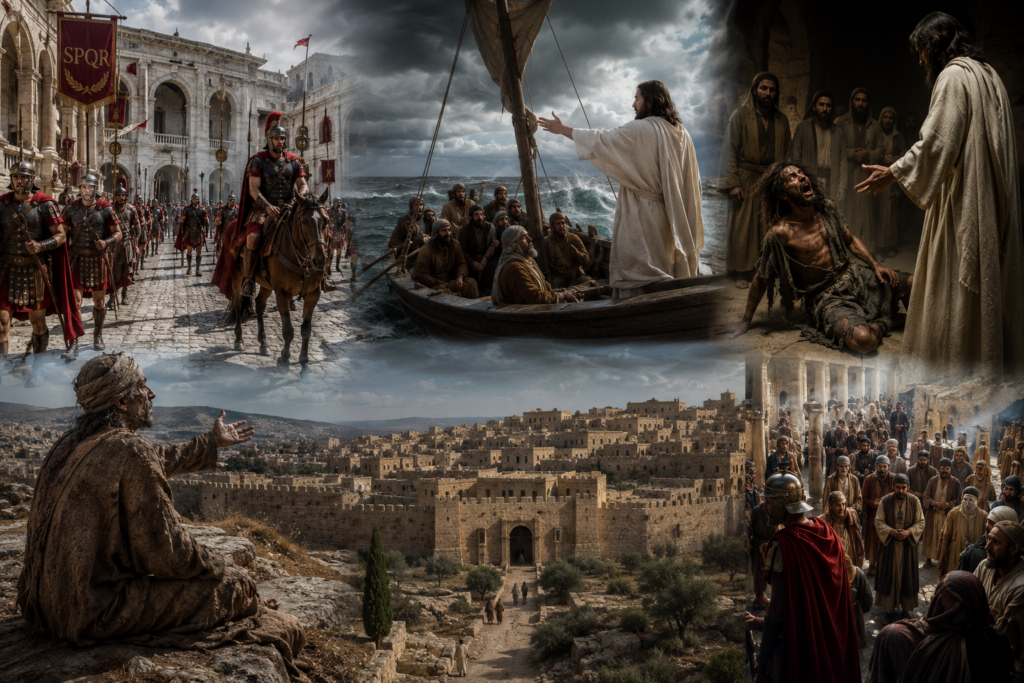
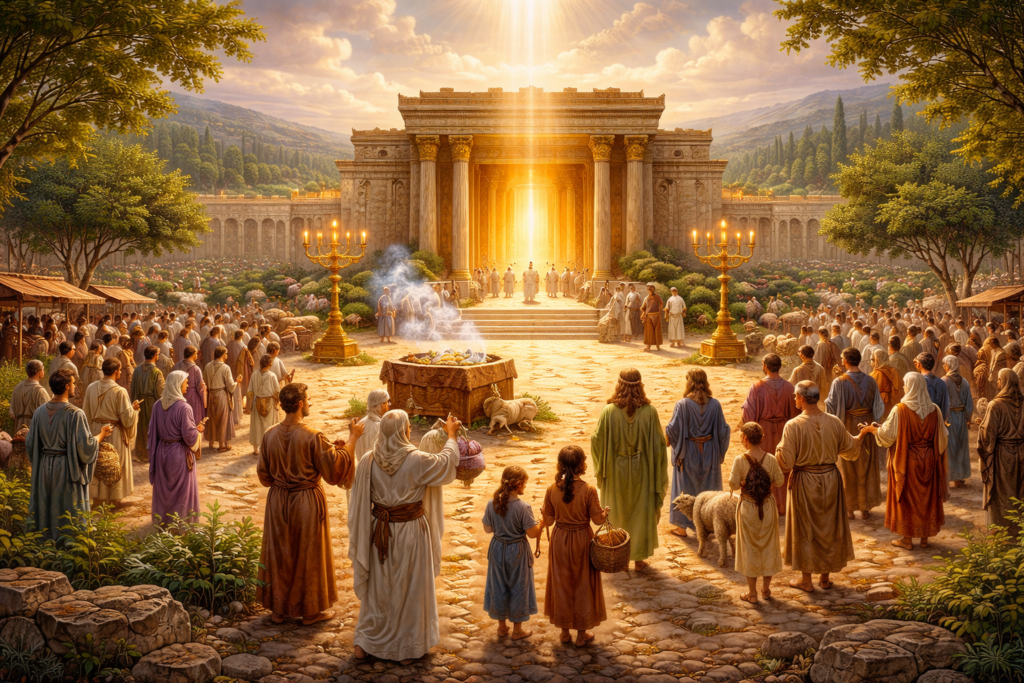
First-century Jews would have recognized prophetic judgment. The Temple stood at the center of Israel’s covenant life. It was the place where heaven and earth met, where God’s presence dwelt among His people. Yet by the time of Jesus, the Temple leadership had aligned itself with political power, burdening the people while protecting its own position. Those entrusted with shepherding Israel had become rulers protecting their own kingdom.
When Jesus announced that the heavenly lights would be shaken, He was declaring that the entire order represented by that Temple system was coming to an end. The destruction of Jerusalem in A.D. 70 was far more than the fall of a city. It was the collapse of a corrupt religious order that had rejected its Messiah.
The cosmic imagery reflected what was happening on earth. Heaven interpreted history.
Daniel’s vision reaches its climax when One like the Son of Man comes with the clouds of heaven to the Ancient of Days. For many modern readers, the clouds immediately suggest the Second Coming. But in Daniel’s vision, the Son of Man is not descending to earth. He is approaching the throne of God to receive an everlasting kingdom. This is the moment of His enthronement.
The New Testament declares that this vision was fulfilled in Jesus’ resurrection and ascension. By His resurrection He conquered death, the final enemy. By His ascension He was enthroned at the Father’s right hand, receiving the kingdom that no earthly empire could ever possess.
This is why the shaking of the heavens is immediately followed by the appearance of the Son of Man. The old order is passing away because the true King has taken His throne.
From His throne the King sends out His heralds. Throughout the ancient world, a newly enthroned ruler announced his reign and summoned his subjects to swear their allegiance. The Gospel follows the same pattern. The King’s messengers go into every nation proclaiming that Jesus now reigns and calling men and women into His everlasting kingdom.
This does not mean Jesus’ words have nothing to say to our generation. They have everything to say.
We also live in a world where institutions lose their way and leaders pursue power instead of justice and people wonder whether the foundations of society are collapsing.
Matthew 24 is not a forecast of modern events.
It is God’s interpretation of one of the greatest covenant judgments in Israel’s history. The lights of heaven were shaken because the old order centered on the Temple was passing away, and the Son of Man had received the kingdom that would never pass away.
Jesus’s words remind us that history has always been marked by the rise and fall of kingdoms, the corruption of institutions, and the collapse of leaders who imagine themselves all powerful. None of those events overturn the reign of the Son of Man. The signs in the heavens do not tell us to fear the future. They remind us that every human kingdom is temporary, but the kingdom of God is eternal.
When the foundations of our world seem to shake, Scripture calls us to lift our eyes to the throne. The heavens still proclaim the same truth they declared in Daniel’s day: the Son of Man reigns. His kingdom alone will endure.