What does it mean to be redeemed? We often use the word as another way of saying that someone has been saved or rescued. Rescue is certainly part of redemption, but the biblical story goes much further. To be redeemed is to be reclaimed, possessed, brought back, restored to the One to whom we were always meant to belong. Redemption gives us a new identity because it changes our ownership and, with it, our allegiance.
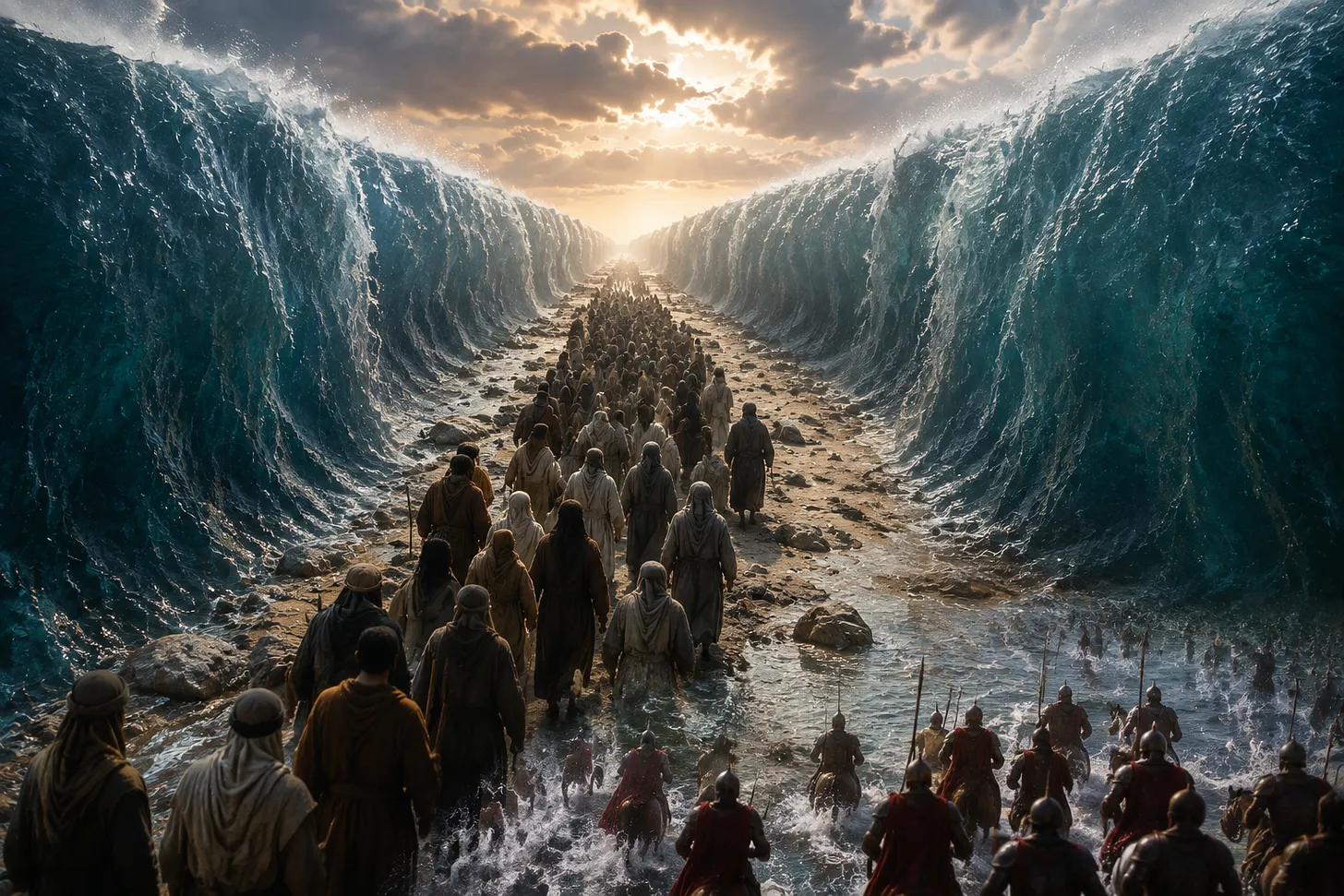
The Exodus gives us the architecture for understanding this larger story. Israel was enslaved in Egypt, serving Pharaoh and living under the shadow of Egypt’s gods. When Yahweh came to deliver them, He confronted not only a political ruler but the entire system of power that held His people captive. The plagues exposed the impotence of Egypt’s gods, while the Sea of Reeds brought the conflict to its decisive conclusion. Israel passed through the waters as Pharaoh’s army pressed close behind. The people emerged alive; the enemy disappeared beneath the deep.
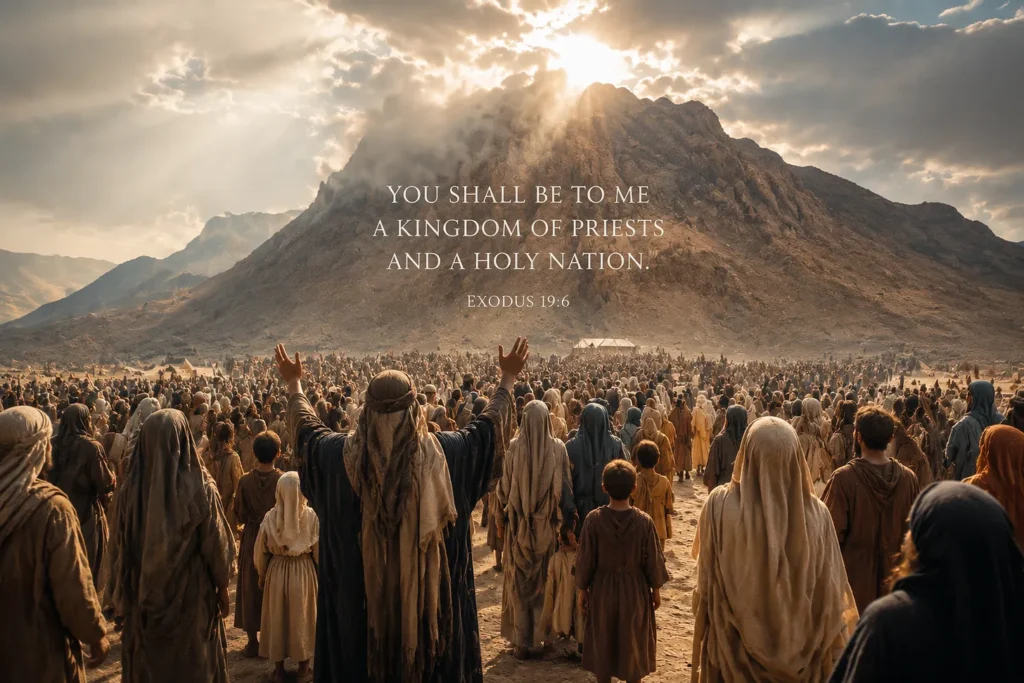
Getting Israel out of Egypt was only the beginning. Had rescue been the entire purpose, the story could have ended on the far side of the sea. Yahweh brought the people to Sinai and declared them His treasured possession, a kingdom of priests and a holy nation. Released from Pharaoh, they were now owned by Yahweh. Their service, allegiance, and identity had been transformed. Rescue brought them out. Redemption claimed them as His own.
Israel’s story, then, becomes a microcosm of the human story. What God began with Israel He intended to extend to humanity and ultimately to creation itself. Exodus was the blueprint for cosmic redemption, not its final fulfillment. Israel became the vehicle through which God would advance His purposes—carrying His presence and making Him known among the nations.
The wilderness became the proving ground for this calling, where God formed a people who could live with Him in their midst. In the barrenness of the desert, the Tabernacle stood as a sign of Eden being reclaimed. God was dwelling with humanity again. Israel was learning to live under His rule, depend upon His provision, and represent Him before the nations.
Yet the larger human captivity remained. Behind Pharaoh, Babylon, Rome, and every other empire stood an enemy no human ruler could defeat. Death held humanity in its grip.
We were created to bear God’s image and extend His life-giving rule throughout creation. Humanity rejected the God of life, distorted His image, and gave itself to other masters. Humans continually exploit, dehumanize, devour, and destroy one another. Violence becomes ordinary. Truth becomes expendable. And Creation bears the wounds of our rebellion. In trying to establish ourselves apart from God, we became slaves to the powers that destroy us.
We needed more than rescue. We needed to be reclaimed.
This is the world into which Yeshua came. Many longed for a deliverer who would free Israel from Rome, but Rome was not the greatest enemy. Yeshua came to confront the power behind every human empire and every grave. His mission was firmly covenantal, rooted in Israel’s longing for Yahweh to return and dwell among His people.
His gathering of twelve disciples was not incidental. The twelve mirrored Israel’s twelve tribes. Around Himself, Yeshua was forming a renewed Israel to carry God’s ancient mission forward. Israel had been called to be a kingdom of priests and a light to the nations. Yeshua was bringing that calling toward its intended fulfillment.
But first the greater Pharaoh had to be defeated.
Yeshua willingly entered the realm from which no human being returns. Death had swallowed every generation before Him and never released its captives. Yeshua entered that realm and broke its power from within. The resurrection is far more than a great miracle. It is the reality that the old master has lost his claim.
Paul describes redemption in precisely these terms: God “rescued us from the domain of darkness and transferred us to the kingdom of His beloved Son” (Col. 1:13). The dominion has changed. We have been repossessed by the living God.
The empty tomb announces a new Exodus. The redeemed belong to another King, bear another allegiance, and carry His presence into the world. The redeemed are His living tabernacle in motion, a kingdom of priests entering contested spaces and establishing signs of His life-giving rule.
The former master has been defeated. The King is alive, and the redeemed belong to Him.
Every year on the Fourth of July, Americans pause to remember an act of resistance. This year, as we celebrate the 250th anniversary of American independence, that remembrance carries even greater significance. We reflect upon ordinary men and women who reached an extraordinary conclusion: there comes a moment when obedience to God and conscience means refusing to conform to the demands of an earthly power.
The signers of the Declaration of Independence understood that resistance would not come without cost. Severe cost. They risked their property, their reputations, and their lives because they believed that liberty was worth more than comfort and truth was worth more than security. We rightly admire their courage because history reminds us that freedom has rarely been preserved by those unwilling to resist the status quo.
Resistance Woven into the Biblical Story
Yet Independence Day raises a much older question, one that reaches far beyond the birth of a nation. Is resistance woven into the very fabric of the biblical story? More importantly, is it woven into the character of God Himself?
The God revealed in Genesis acts in a way the ancient world never imagined. While the surrounding civilizations told of order emerging through violence and conflict among the gods, the Creator simply speaks, and creation obeys. There is no battle because there is no rival. God accomplishes His purposes without adopting the world’s methods.
As the biblical story unfolds, empires trust armies, wealth, and political power. God begins a nation with an elderly couple who cannot have children. Egypt builds its greatness by enslaving others. God demonstrates His supremacy by delivering the slaves. Israel looks for a king who resembles the rulers of the nations. God chooses the shepherd.
Nowhere is this contrast more clear than in the Exodus. Pharaoh builds an empire through fear, oppression, and forced labor. God does not answer by constructing a greater empire or raising a stronger army. He redeems slaves, leads them into the wilderness, and forms a covenant people whose life together bears witness to an entirely different kingdom.
Sinai shows that God not only defeats differently—He governs differently. The laws of the ancient world were written to preserve kings and strengthen their kingdoms. God’s Torah repeatedly moves in a different direction, protecting the widow, the orphan, the stranger, the laborer, and the poor. The measure of His kingdom is not how well it serves the well connected, but how faithfully it protects those with no influence at all.
As centuries passed, the world’s understanding of dominance did not change. By the time Jesus entered history, another empire ruled the land, and once again many expected God to answer power with greater power.
First-century Judea lived beneath the shadow of Rome, the greatest military empire the Mediterranean world had ever known. Many longed for a Messiah who would answer Rome on its own terms. They expected another David, another conqueror, another king who would overthrow the empire through superior force.
A Kingdom Not of this World
But Jesus entered Jerusalem riding a donkey rather than a warhorse. He taught His followers to love their enemies rather than destroy them. Standing before Pilate, He declared that His kingdom was not of this world. Everything about His kingdom challenged the world’s definition of power.
Rome believed the cross displayed its absolute rule. God transformed it into the means by which death itself was defeated. The empire could execute the Son of God, but it could not stop the Creator from bringing life out of death. God overcame Rome without becoming like Rome.
Perhaps this explains why Paul writes to believers in Rome, “Do not be conformed to this world, but be transformed by the renewing of your mind.” Paul places conformity and transformation in direct opposition to one another. Every culture exerts pressure to conform, inviting us to see success and greatness through the world’s eyes. The Kingdom of God calls us to live a different way.
Transformation begins when God’s people refuse to be shaped by the world’s values. Christian resistance is not rebellion; it is the faithfulness of those who belong to another kingdom.
The earliest Christians expressed that faithfulness in a confession that changed the world: “Jesus is Lord.” Those words were far more than a personal statement of faith. They denied Caesar’s claim to ultimate authority and proclaimed that Messiah alone reigns.
The natural world reflects a similar truth. Muscles strengthen by bearing weight. Bones become denser under load. Trees exposed to the wind send their roots deeper into the earth. A butterfly emerges only by pressing through the resistance of its cocoon. Even the flow of energy becomes useful when it encounters resistance. Throughout creation, resistance is not always the enemy of transformation; it is often the means by which transformation occurs.
Israel leaves Egypt before becoming a covenant people. David lays aside Saul’s armor before confronting Goliath. Daniel refuses to let Babylon define his identity. Jesus rejects Satan’s offer of the kingdoms of this world. The apostles refuse to be silenced. The early Church refuses to worship Caesar. In every generation, God’s people are formed by remaining faithful where the world demands conformity. Again and again, God advances His kingdom through people who refuse to conform.
Perhaps this is why Jesus called His followers to take up a cross. The way of His kingdom has never been shaped by the world’s pursuit of power or the path of least resistance. Faithfulness begins with the refusal to conform, trusting that God’s way leads not simply to victory, but to transformation.
As we celebrate Independence Day, it is right to remember those who believed liberty was worth resisting oppression. Their courage deserves our gratitude. Yet the biblical story calls us to an even greater act of faithfulness. The earliest Christians understood that there are moments when allegiance to our Messiah demands resistance to the values and claims of the world.
That challenge has never disappeared. Every generation faces voices that compete for our allegiance and cultures that invite us to conform. We may not be tempted to burn incense before Caesar, but we face constant pressure to measure success by wealth, influence, comfort, and self-interest rather than by the values of God’s kingdom. God’s people transform the world by remaining faithful to the King of Kings.
At first glance, the Exodus story and the Chanukkah story seem to belong to completely different worlds. One unfolds in the heat of Egypt and the wilderness of Sinai; the other in the hills of Judea under Greek rule. But when we look closer—through the lens of biblical patterns—the parallels emerge with clarity. Chanukkah is not an isolated historical moment. It is Exodus retold. It is Israel’s foundational salvation pattern replayed in a later generation, with new enemies, new symbols, and renewed covenant purpose.
Scripture repeatedly teaches that the biblical story is cyclical. What God does once, He does again—each time with deeper meaning. Chanukkah stands as one of the clearest re-performances of the Exodus pattern in Jewish history.
Oppression Under a Pagan Empire
Both stories begin the same way: a covenant people crushed beneath a pagan empire determined to erase their worship and identity.
Exodus places Israel in Egypt, living in a world saturated with idols. Pharaoh’s decrees aim to dismantle Israel’s future—enslaving the people, killing the sons, and refusing to allow worship of Yahweh. Pharaoh becomes the archetype of the anti-god ruler, the human face of spiritual chaos.
Chanukkah begins with the rise of Antiochus IV, who behaves like Pharaoh. He renames himself Epiphanes, “God manifest” and demands total allegiance. Circumcision, Sabbath, Torah reading, kosher laws—every covenant identity marker—becomes illegal. And the price of faithfulness—shame, torture, execution. Erasing Israel’s worship is the fastest way to erase Israel.
The Temple at the Center of the Battle
In both narratives, the conflict is political and theological and involves sacred space.
In Exodus, the plagues are not random punishments; they are targeted confrontations with Egypt’s gods. Pharaoh’s refusal to let Israel worship reveals the heart of the conflict: Who is King? Who rules the world? The climax of Exodus is not the Red Sea but the Tabernacle—God dwelling among His people as King.
In Chanukkah, Antiochus pollutes the altar by sacrificing swine, fills the Temple with pagan idols and images of himself to prevent Israel from drawing near to God. The Maccabean revolt is a nationalist uprising, and it is a priestly war to restore God’s dwelling place. Will Israel remain God’s kingdom of priests?
When the altar of the Temple is defiled, the world itself is disordered. When it is cleansed, creation is set right again.
Unexpected Deliverers from the Margins
Exodus and Chanukkah both feature deliverers who rise from unexpected places.
Moses, raised in Pharaoh’s household but living as a fugitive shepherd, becomes the unlikely liberator. No army. No weapons. Just a staff, a calling, and the presence of God going with him to meet the world’s most powerful tyrant.
The Maccabees are rural priests—hardly a military dynasty. Mattathias and his sons arise from a small village of Modi’in. No throne. No army. No political leverage. Yet God chooses them to stand against the powerful Syrian empire.
God consistently raises saviors from the margins so that the victory belongs to Him.
Impossible Odds, Divine Victory at Chanukkah
Both stories highlight the same truth: salvation, deliverance from the clutches of empire is something only God can accomplish.
Israel trapped between Pharaoh’s chariots and the Red Sea has no path forward. The victory at the sea is Yahweh’s alone: “stand still and see the salvation of the Lord.”
During Chanukkah, the Maccabees fight an empire with almost no chance of success. Jewish tradition remembers this not as a triumph of military power but of divine intervention: “Not by might, nor by power…”
When God replays the Exodus pattern, the impossible becomes the stage for His glory to be revealed.
Purification, Rededication, and Covenant Renewal
Both stories climax in the restoration and rededication of sacred space.
Exodus ends with Israel receiving the covenant, building the Tabernacle, consecrating priests, and establishing holy rituals. Creation is restored in microcosm as God fills His house with glory.
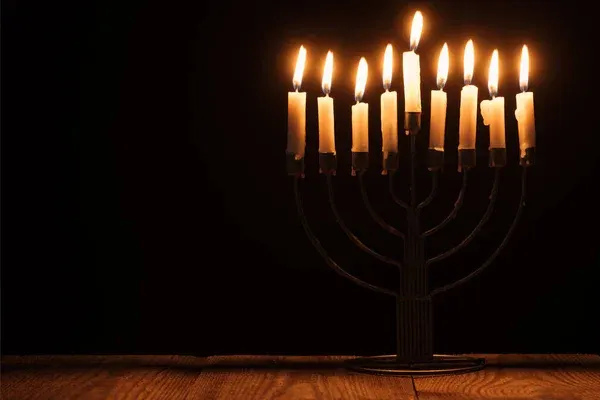
Chanukkah ends the same way. The altar is rebuilt. The Temple is purified. Worship is restored. “Chanukkah” means dedication—a return to holiness, identity, and covenant fidelity. The menorah will burn bright for eight days with freshly pressed olive oil to bring the eternal light into the Holy Temple.
In both cases, God restores His dwelling place and renews His kingdom among His people.
Divine Warrior Over Chaos
Exodus is the original Divine Warrior story: Yahweh confronts Pharaoh, splits the sea, shatters the oppressor, delivers His people from Egyptian slavery, and installs His kingship at Sinai.
Chanukkah is the same pattern. Antiochus behaves like a Leviathan—devouring and destroying. His empire brings chaos into God’s sanctuary. The Maccabean victory is God’s victory, pushing back the forces of disorder and re-establishing cosmic order from the Temple precincts.
Every time God defeats chaos and restores His Holy House, the Exodus is happening once again.
The Pattern That Leads to Messiah
By the first century, Chanukkah was widely understood as a second Exodus—another moment when God cleansed His people and restored His presence. This is the world in which Yeshua steps into the Temple during Chanukkah (John 10). He goes to the Temple to declare Himself the Greater Temple, the Good Shepherd, and the one who gives eternal light and everlasting life.
Chanukkah as the retold Exodus points to Yeshua and the final Exodus—the Deliverer who defeats the ultimate oppressor, death and cleanses the true Temple (humanity), and restores creation itself.
Chanukkah, the new exodus, is more than a historical memory. It is a prophecy in story form. A rehearsal for the day when the light of the world would step into the Temple and announce the arrival of the Greatest Exodus—the one that leads not just from empire to freedom, but from death to life, from corruption to new creation, from exile to home.
A simple birthing stool sat in the center of the mud-brick house. Despite wear and tear from generations of use, the brick stool was still sturdy enough. Many Hebrew babies had passed through it, but another birth was about to take place. Despite the modest surroundings, the birth of Moses would be far from ordinary.
Two Hebrew midwives attended Jochebed as she labored. Their steady hands would remain true to their calling, regardless of what happened next. With one final push, a loud cry filled the house. Exhaustion swept over Jochebed. The color returned to her hands as she slowly released her grip on the birthing stool. Joy and relief were palpable but followed quickly by pangs of fear. She’d given birth to a baby boy and named him Moses.
The midwives nodded in approval. Shiphrah, meaning “brightness like the stars,” placed a hand behind Jochebed’s head and stared knowingly into her eyes. Both women smiled softly at the challenge before them. Though Pharaoh had ordered the death of every Hebrew baby boy, the midwives had never considered obeying him. Their calling was to preserve life.
Puah, meaning “to glitter,” was the younger of the two midwives. She hummed a familiar Hebrew melody as she rubbed the baby Moses with dried myrtle leaf powder. She wrapped him in white swaddling cloth before handing him to his mother. According to the Hebrew sages, it was Adar 7 on the Hebrew calendar—a date that now speaks of the birth of Moses birth and his death.
Big sister Miriam beamed with delight. She watched intently as baby Moses began to nurse. Aharon, just a toddler at the time, cooed loudly to celebrate the arrival of a brother. Their father, Amram, a Levite, sang in hushed tones with priestly dedication: “Hear O Israel the Lord our God is One! Blessed be the Name of His Glorious Kingdom for all Eternity!” Amram sensed the presence of Yahweh in that moment, and his heart swelled with joy. A warm radiance filled their home, and Jochebed and Amram declared, “Glory to God in the highest, and shalom on the earth.” The proud parents saw that their baby Moses was “good”—a reflection of the light at creation, penetrating the chaos of slavery that oppressed their lives.
As the women focused their attention on mother and child, Amram stood watch. He heard the sound of heavy footsteps in the distance—Egyptian soldiers. He looked at his wife and lifted a finger to his lips. The family froze. Even baby Moses grew quiet.
Israelite slaves had built the Pharaoh’s expansive kingdom. Hard work calloused their hands and strengthened their bodies, and now Pharaoh feared an uprising of the enemies he’d created. He sent taskmasters to break their backs, but he could never truly subjugate their hearts. Even in slavery, the Israelites thrived. A population explosion in the Hebrew quarter caused Pharaoh great anxiety, and he convinced himself that his empire was in danger.
Based on their reading of the constellation Orion—the embodiment of their god Osiris—Egyptian astrologers predicted that a liberator would rise up from among the Hebrews. This sign in the heavens only furthered Pharaoh’s obsession. Every night in his private chambers, he stewed over reports of secret births. Realizing the midwives had defied his orders to quietly kill the male infants at birth, Pharaoh decreed all Hebrew baby boys be cast into the Nile—a judgment to be carried out in the name of Amon, the god of divine order. The cries of grieving mothers echoed through the narrow streets of Goshen as babies were drowned in unfathomable numbers. The wailing of her Israelite sisters tormented Jochebed throughout her pregnancy. The sorrow was immeasurable, and it left an indelible trauma that threatened the very social fabric of the Israelite community. Mothers and sisters who had once gathered to support each other found themselves turning away from pregnant neighbors, unable to bear the grief.
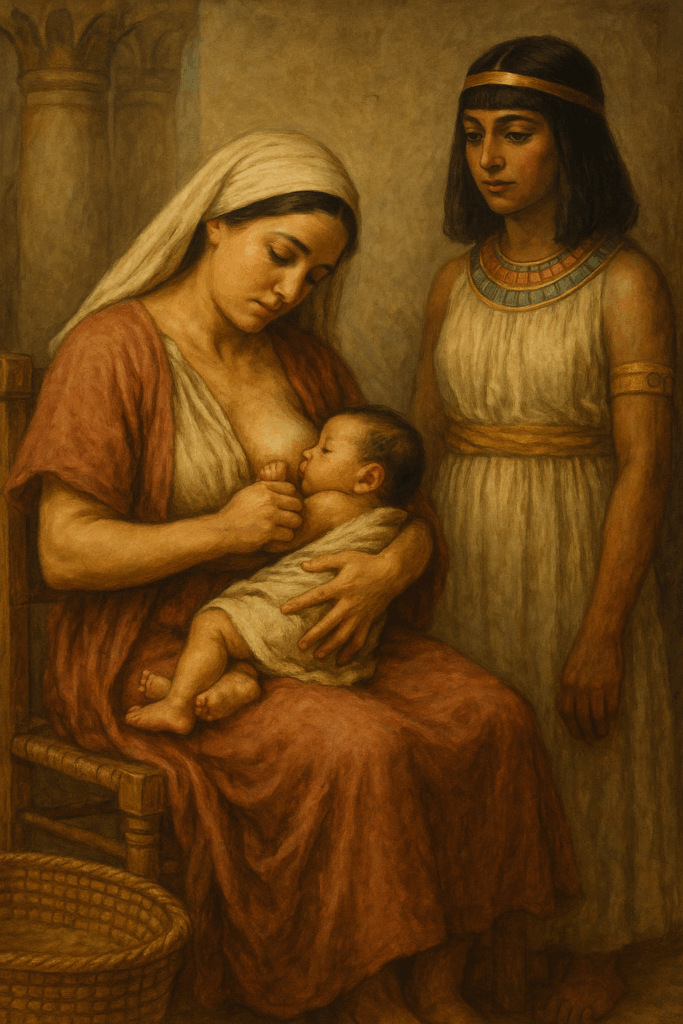
Yet, despite Pharaoh’s best efforts, Moses was born. And his life meant the restoration of Israel’s life. Amram’s skilled hands created a sanctuary for his son. For three months the family hid the growing infant behind a false brick wall covered in papyrus. Jochebed nursed her son Moses in the darkness, her hand readied to cover his mouth if his cries became too loud. Then, on Sivan 6, an auspicious day on the Hebrew calendar, Jochebed knew they could hide him no longer. The baby’s cries grew stronger, and visits to the land of Goshen by the Egyptian soldiers became more frequent.
Jochebed recalled her ancestor, Noah, who built a large floating vessel that carried God’s presence and preserved life. Inspired by this, her husband, Amram, and a few trusted elders constructed a miniature reed hut, sealing it with tar and pitch. They worked at night after long days of labor for Pharaoh.
Pharaoh’s palace dominated the eastern Nile Delta—the part of the land of Goshen where the Israelites had settled. The vast complex consisted of temples, halls, and elite villas centered around a grand ceremonial lake whose waters were connected to the Nile by a series of canals. The Temple of Amon, towering beside the river, welcomed pilgrims who arrived by boat to worship the god and to perform ritual acts of service. Beyond the temple lay Pharaoh’s private bathhouse. The sanctuary-like setting featured beauty treatments for spiritual purification. There, members of the royal household sought connection with the divine through water.
Among those who visited daily was the daughter of Pharaoh—a young woman highly educated in royal protocol. She often watched the reed barges floating downstream from temple to temple, carrying sacred images of Egypt’s gods—like the god Horus, of whom Pharaoh was the incarnation. These floating shrines, built from papyrus, symbolized divine protection and a renewed connection between Heaven and Earth. In observing these quiet morning rituals, the princess found freedom from her royal duties.
The princess’s bathing routine was common knowledge among the Hebrew slaves, whose eyes and ears missed nothing.
Jochebed and Miriam gently nestled Moses into the papyrus hut—the scent of the Nile’s damp reeds hung in the air. A tearful Jochebed pressed her lips to his forehead uncertain if she would ever hold him again. They pushed the basket from the banks of the river, just within reach of the royal bathing site. The little ark blended well with the sacred barges sailing the Nile. Miriam hid nearby in the reeds, watching and waiting—her young shoulders bearing the weight of her brother’s fate.
The princess descended to the river to bathe when her eyes immediately spotted something unusual. As she and her attendants waded into the water, a small reed shrine caught her attention. It was unlike the grander floating oracles for the gods of Egypt that she knew so well—smaller, cruder, yet somehow compelling. She gestured to her maid servant who retrieved the shrine and pushed it to shore. Pharaoh’s daughter hesitated—her hand hovering over the small reed basket. She heard a baby’s cry, faint but unmistakable. As she lifted the lid, she knew at once that she was looking upon a Hebrew child. His dark features bore the marks of a people she had been taught from birth to despise.
The god Horus immediately flashed through her mind. Sky god and protector of Pharaoh, she knew he was the embodiment of kingship. His destiny was to defeat chaos and rule in justice. The parallels were too clear to ignore. Horus had also been hidden among the reeds of the Nile by his mother to save him from his evil Uncle Seth—who tried desperately to prevent Horus from claiming the throne. Isis drew her son out of water, nursed him in secret, and kept him hidden from danger. It was a story the princess had been told since childhood. So, was this infant like Horus under divine protection? Was this a sign from the gods?
Pharaoh’s daughter was highly knowledgeable in the organization of Egypt’s pantheon, but she also remembered the old stories told by senior servants in the royal court—stories of a man named Joseph, who had once risen to second in command under Pharaoh, and of Yahweh, the God whom Joseph worshiped. Staring down at the baby whose bright eyes pierced her soul, she sensed she was looking at a living image of that invisible God, Yahweh.
Miriam took a deep breath and stepped carefully from among the reeds, rehearsing word for word the message her mother had given her.
“I have a Hebrew wet nurse for the child?” she said as the princess caught her gaze.
The princess nodded softly, acknowledging the girl’s connection to the infant. She knew well there were many mothers in mourning from whom to choose—women whose arms ached for their lost babies. She understood this nurse must be tied to the child—perhaps being his own mother.
Before handing him over for a time, the princess named the baby Moses, meaning to draw out of water—an Egyptian name that would bridge two worlds.
Six women had played a role in the birth of Moses: First, of course, were the midwives, whose names spoke of Yahweh’s splendor and whose hands had preserved countless Hebrew sons; his own mother, whose name signified divine glory and whose faith would soon be tested; and his sister, Miriam, whose name meant rebel—a quality expressed through her own defiance of Pharaoh’s decree. Then was the Egyptian princess, the unlikely rescuer of the Hebrew infant. She was recognized in Egypt as the daughter of the hidden one—Amon, the god of Egypt’s creation. Her compassion would obscure the boundaries between oppressor and oppressed. And finally, there was the unnamed handmaiden of the princess.
And so, Moses, the deliverer of Israel, was raised up in Pharaoh’s court—steeped in Egyptian wisdom but bound to Yahweh through an unbreakable bond of faith. During those precious nursing years, Jochebed instilled in her son a deep love for Yahweh and His people. She poured into Moses an innate ability to hear God’s voice amid the noise of the Egyptian gods, and she filled him with the knowledge of his destiny—deliverer and shepherd of his people. The seeds she planted would lie dormant for decades, but they would later take root and grow. They would bloom at the foot of a burning bush where the God of Israel would personally visit Moses.
It was for such a time that Moses, a child of two worlds, was born—saved by water to birth a nation through water.
The identity of the Pharaoh of the Exodus is uncertain. Some Egyptologists, such as David Rohl, argue that Pharaoh Ahmosis I was the most likely candidate. Ancient historian Josephus shared that belief. Josephus was likely influenced by the linguistic similarity between “Moses” and “Ahmosis,” both meaning “to draw out of water.” The Tempest Stele erected by Ahmosis I describes storms and cosmic disruptions reminiscent of the biblical plagues in Egypt. Ahmosis was said to be the incarnation of Horus, the god of kingship, whose birth bore a striking resemblance to that of Moses. I tend to lean toward the Ahmosis I theory, despite its speculative nature.
Pharaoh Ahmosis I (1539–1514 BCE) inaugurated the New Kingdom and 18th Dynasty, aligning perfectly with Exodus 1:8—”a new king over Egypt who did not know Joseph.” Other historical events strengthen this connection. Ahmosis expelled the Hyksos, a Semitic people who had ruled Lower Egypt, and who likely exacerbated tensions in the land. Were they the Hebrew slaves? The Hebrew word for Moses’s basket, “tevah,” is an Egyptian loanword. Rather than the small woven-reed basket we generally imagine, Egyptian tradition reveals that reed hut-like shrines regularly floated down the Nile carrying divine images.
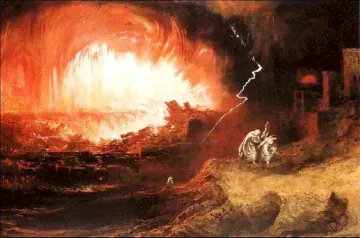
There’s an Exodus thread woven through Genesis, an early current of redemption that flows through the story of Abraham and Lot. It begins not with Moses and Pharaoh but with Lot standing at the threshold of his house before fire and brimstone are poured out in judgment. Before the plagues of Egypt, before the blood on the doorposts, before Israel’s hurried meal in the night, there was another Passover almost hidden from view. The destruction of Sodom in Genesis 19 is a proto-Exodus, a revelation of Yahweh’s redemptive pattern that will echo throughout Israel’s story until it reaches fulfillment in the final deliverance of Revelation.
The First Passover Table
When the angelic messengers enter Sodom, Lot welcomes them into his home with a meal: “And he made them a feast and baked unleavened bread (matzot), and they ate” (Gen. 19:3).
This is the first mention of matzot in Scripture. Why specify unleavened bread unless the writer wants the reader to hear Passover overtones? This detail suggests a comparison: Lot, like Israel centuries later, hosts divine messengers, serves matzot, and stands on the brink of destruction. Both narratives unfold at night, both involve a covenant meal within a protected space, and both end with salvation for those inside and judgment for those who are outside.
Unleavened bread symbolizes a sense of urgency as well as separation from corruption—the bread of exile, eaten by those who must depart quickly because judgment is near. In Sodom it is consumed on the eve of fire; in Egypt, on the eve of deliverance. Lot’s table becomes the first Passover table, the prototype of the meal eaten in haste as divine judgment passes over.
The Shut Door: Threshold for Salvation
The story then turns on a single line: “They brought Lot into the house and shut the door.” (Gen. 19:10)
The closed door becomes a sacred boundary, a separation between chaos and communion—just as the blood-sealed doors of Exodus 12 marked the boundary between life and death. Inside the house lies fellowship and light; outside, blindness and destruction. Lot’s home becomes a miniature sanctuary, a small ark floating in the flood of the corruption of Sodom. His doorway is a symbolic threshold pointing to Passover.
When the men of Sodom press against the door, demanding to defile the messengers, the scene is visually dramatic. The house becomes holy ground; the mob outside represents the world of unrestrained appetite and gratuitous violence. When the angels strike them with blindness, they can no longer find the door.
This moment foreshadows Exodus 12, when Israel’s homes become sanctuaries in miniature, each sealed by blood as Yahweh passes through the land. In both stories, divine protection is localized tied to a dwelling, a table, and obedience to God’s word.
The Fire, the Furnace, and the Plagues
At dawn Yahweh rains down fire and brimstone from heaven (Gen. 19:24), and Abraham later sees “smoke rising like the smoke of a furnace” (19:28). The Hebrew word kivshan, “furnace” will resurface later to describe both Egypt’s brick furnaces (Ex. 9:8–10) and the fiery presence of Yahweh at Sinai. The repetition seems deliberate. What befalls Sodom is not a random natural disaster event but rather covenantal judgment—the consuming fire of a God who binds mercy and justice together.
The plagues of Egypt mirror the same pattern: hail mixed with fire, darkness over the land, and the cry of the condemned. Each episode is a de-creation, the unraveling the ordered world of Genesis 1. Fire replaces light, chaos replaces blessing, and the fertile valley that once looked “like the garden of Yahweh” (Gen. 13:10) becomes a wasteland—a kind of burned-out Eden.
The Righteous Remnant and the Urgency of Escape
The angels urge Lot: “Flee for your life! Do not look back!” (Gen. 19:17). The command anticipates Moses’ instruction to Israel: “Eat it in haste, for the Lord will pass through to strike Egypt.” (Ex. 12:11–12). Both narratives speak of urgency—in this hour of deliverance there is no time for hesitation.
When Lot delays, the angels take him by the hand and send him out. This gesture reappears in Deuteronomy 4:34, where God “takes Israel by the hand” to send them from Egypt, and again in Isaiah 42:6, where Yahweh takes His servant by the hand to bring light to the nations. A visual that is prophetic: humanity is rescued not by merit but by divine compassion.
The same contrast appears in the blindness of the men of Sodom. As they grope for the door, unable to find their way in, Isaiah’s promise echoes that God’s servant will “open blind eyes and bring prisoners out of the dungeon.” It’s the Exodus pattern: the wicked blinded by judgment, the righteous led out by God’s own hand.
Sodom as Egypt: Exodus by Fire
Later, Scripture makes the connection explicit. Deuteronomy 29:23 describes judgment on the land as “the overthrow of Sodom and Gomorrah.” Isaiah 1:9–10 and Jeremiah 23:14 both liken Jerusalem and Egypt to Sodom—symbols of corruption and oppression. In each, divine messengers are rejected, the innocent suffer, and judgment falls from above.
Sodom, then, likened to a future Egypt and an Exodus not through the sea but through fire. Lot and family, a righteous remnant, flee under angelic escort while the city of rebellion is destroyed behind them. The same God who will later split the Red Sea first splits the sky with fire, delivering His people through the judgment rather than around it.
Lot’s wife looks back longing for what she was about to lose and so becomes a pillar of salt—a monument to old ways. She mirrors Israel’s later desire to “turn back to Egypt,” trading freedom for familiarity. Her look backward exposes that which always pulls humanity toward its former bondage.
From Sodom to Sinai to Calvary
The pattern that begins in Genesis 19 continues through the Exodus and reaches its climax at the Cross. In Sodom, angels enter the city to rescue Lot and his household; in Exodus, Yahweh enters Egypt to confront Pharaoh and free His people; in the Gospels, the Word becomes flesh—and God Himself enters the world to redeem humanity.
Each story centers on a sacred meal: Lot’s matzot, Israel’s Passover lamb, and Yeshua’s Last Supper, where He breaks the unleavened bread and declares, “This is My body.” Each features a doorway—Lot’s shut door, Israel’s blood-stained threshold, and the blood on the Cross itself.
In all three, judgment falls as chaos: fire on Sodom, plagues on Egypt, and at Calvary, the full weight of divine justice borne by Christ. And in every case, deliverance follows—Lot from the burning city, Israel from bondage in Egypt, humanity from the dominion of sin and death.
The pattern reveals the architecture of salvation: divine visitation, covenant meal, sealed threshold, judgment outside, and deliverance within. From Sodom’s night to Egypt’s Passover to Golgotha’s hill, God enters the realm of death to rescue the remnant who trust His word.
Revelation: The Final Exodus
The pattern doesn’t end with Egypt. Revelation replays it on a cosmic stage. Babylon (now Rome) is the last empire is called “Sodom and Egypt” (Rev. 11:8), the twin emblems of human rebellion. Fire falls again, the earth shakes, and a voice calls, “Come out of her, My people, lest you share in her plagues” (Rev. 18:4).
The final Exodus is a deliverance not from one city but from the entire corrupted order of creation. The same elements reappear:
A divine visitation (the Lamb and His angels),
A covenant meal (the marriage supper of the Lamb),
Judgment by fire (the lake of fire replacing Sodom’s sulfur),
A new household sealed by God’s name, safe within the radiant walls of the New Jerusalem.
What began with a door shut in Sodom ends with gates that never close in the city of God.
From Chaos to Covenant
Sodom’s story becomes a roadmap for redemption—from Lot’s house to Sinai’s mountain, from the Upper Room to the descending city of Revelation. Each stage reveals the same divine rhythm: Yahweh visits, separates, redeems, and dwells among His people. Genesis 19 is the revelation of the Exodus pattern.
God saves a remnant, closes the door behind them, and re-creates the world from the ashes. The story that began with unleavened bread in Lot’s house ends with the feast of the Lamb, when the final Exodus is complete— the redeemed will dwell forever in His house.