Tag: craftsman

carpenter

From the Son of a Carpenter to Master Builder of New Creation

The Son of a Carpenter— and the Son of the Master Craftsman

We read that Yeshua was a carpenter, the son of a carpenter, and we move on. The Greek word tekton refers to a builder, a craftsman, a construction artisan someone trained to shape raw materials into a structure. His father, Joseph was such a man. But in the larger biblical narrative, Jesus is not only the son of Joseph the craftsman. He is the Son of the Master Craftsman, Yahweh.

Genesis presents God as the One who orders, separates, shapes, and forms creation. The world does not emerge chaotically but through structured building. Six days of intentional work, melachah, culminate in Sabbath rest. The Hebrew Scriptures use the same term to describe skilled construction — purposeful labor that produces structure. Creation itself is the first great act of divine melachah.

Spirit-Filled Craftsmanship in Exodus

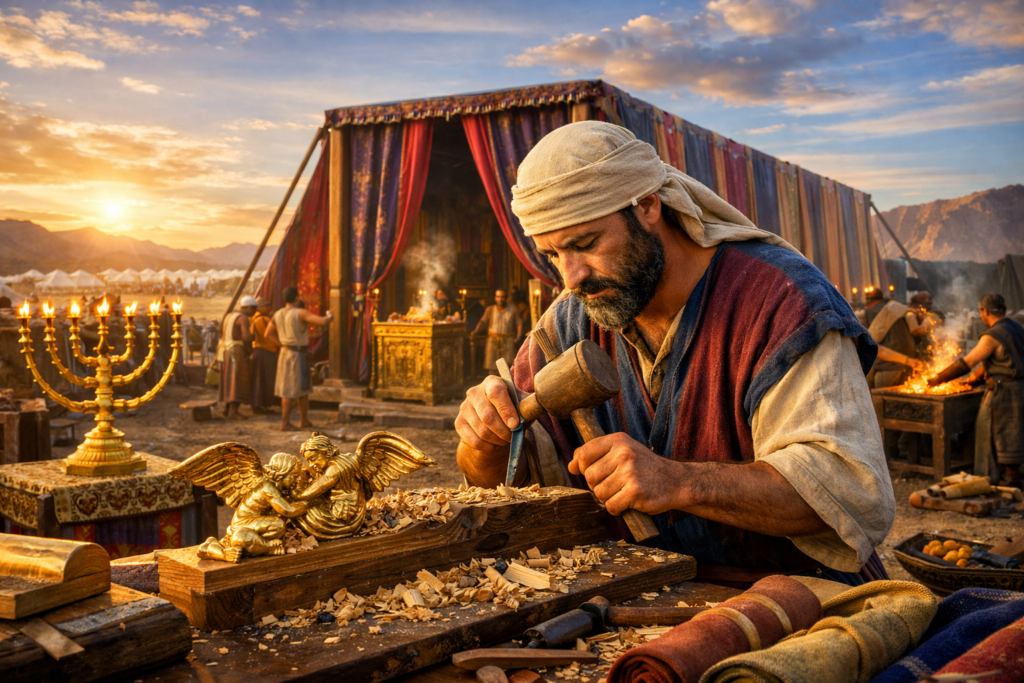
When Exodus introduces Bezalel and Oholiav, the language deliberately echoes Genesis. Bezalel, whose name means “in the shadow (or image) of El,” and Oholiav, “father’s tent,” are filled with the Spirit of God with wisdom (chokmah), understanding (tevunah), and knowledge (da’at) to perform melachah and build the Tabernacle. This is Spirit-empowered craftsmanship. They are master carpenters entrusted with a dwelling place where heaven and earth meet once again.

The placement of the Sabbath command in Exodus 35–40 reinforces the creation pattern. In both Genesis and Exodus, six days of construction precede rest. Completion precedes Yahweh’s indwelling glory.

The parshah Pekudei concludes the book of Exodus. Pekudei means “accounts” or “oversight” and refers to the administrative reckoning of the Tabernacle. The materials are numbered, inspected, and reviewed. The Hebrew root pāqad carries covenantal weight: to visit, to oversee, to reckon. The same word also describes God “visiting” Sarah to bring life and “visiting” Israel to bring deliverance. Divine visitation advances covenant purpose.

Yeshua the Tekton and the True Temple

In the New Testament, Yeshua is called a tekton — a builder, a craftsman, the son of a builder,  and the Son of God, the One who ordered creation itself. Within the broader temple framework this identification is significant. Jesus presents Himself as the true Temple, the locus of divine presence. The Father is the Architect of creation, and the Son embodies that dwelling place.

Greater Works Than This…

Yet the story does not end with Messiah alone. In John 14:12, Jesus, the carpenter states, “He who believes in Me, the works that I do he will do also; and greater works than these he will do, because I go to My Father.” The Greek word for works, ergon, corresponds conceptually to the Hebrew idea of melachah — work accomplished, work that produces structure and result, work that includes worship and sacred action. Yeshua, as carpenter is speaking of the continuing work of New Creation. The ordering, restoring, building work continues.

Paul reinforces this in Ephesians 2:10: “For we are His workmanship, created in Christ Jesus for good works, which God prepared beforehand that we should walk in them.” We are His workmanship, crafted, intentionally formed in order to participate in His crafting work. The language recalls Genesis and Exodus. We were created to create.

Shavuot and the Expansion of Sacred Construction

The Spirit who hovered over the waters in Genesis, who filled Bezalel and Oholiav with wisdom, understanding, and knowledge, and who descended upon Messiah, is poured out at Shavuot upon a gathered people. In the Torah portion V’yakhel, Moses gathers the congregation and declares that work is to be done for six days and rest observed on the seventh. Sacred construction is communal. The skill set for building sacred space does not disappear; it expands.

Wisdom, understanding, and knowledge are the tools of the trade. They are the equipment necessary for sacred craftsmanship. Bezalel worked according to divine pattern. He measured, designed, calculated, and executed with skill. Scripture makes clear that he was Spirit-filled — but he was also disciplined and trained. Gifting requires development. Sacred craftsmanship demands apprenticeship.

Builders of the Greater Tabernacle

We often assume that such building belongs to a spiritual elite — leaders, clergy, scholars. Yet the Tabernacle was constructed in the midst of a gathered congregation. Sacred construction is communal. In the garden, humanity cultivated soil and tended life. In Messiah, that vocation expands. We cultivate communities, restore fractured relationships, construct ordered families, and build just systems. We are builders of the greater Tabernacle — the universal body of Messiah.

This body is structured and ordered. It requires wisdom, understanding, and knowledge. Yeshua’s promise of “greater works” signals expansion because He goes to the Father and the Spirit is poured out universally. The Temple becomes global.

The Ongoing Movement of the Greatest Exodus

Our faith is not passive belief or private spirituality. It is participation in divine melachah. The Father builds. The Son completes. The Spirit equips. The people construct. This is the biblical pattern from Genesis to Exodus to Messiah: God restores His dwelling place by restoring His image in humanity, and that restoration involves skilled, intentional work.

Sabbath marks order. Creation rested because it was complete. The Tabernacle rested because it was finished. Messiah rested in the tomb because His work was fulfilled. Now the work continues through a Spirit-filled people.

The question is not whether renewal is happening. Scripture affirms that it is. The question is whether we recognize ourselves as apprentices in the workshop of the Master Craftsman.

We were created to create. We were formed to build. The tools given to Bezalel and Oholiav — wisdom, understanding, and knowledge remain the equipment of the covenant community. The greater Tabernacle is being assembled. The task before us is faithful construction according to the pattern already given.

This is the ongoing movement of The Greatest Exodus, the rebuilding of humanity into a dwelling place for the presence of God.
carpenter
creation tabernacle

Creation, Tabernacle, and Messiah: The Pattern of Work (Melachah) and Sabbath Fulfilled

From the opening lines of Genesis, Scripture presents God as a craftsman at work. He speaks, separates, shapes, and orders. The Spirit of God hovers over the waters as divine energy poised to create. The refrain repeats: “And God saw that it was good.” The work is good because it is ordered. The work, melachah, the labor of building, moves steadily toward completion. Building creation and tabernacle.

Then comes the seventh day. “Thus the heavens and the earth were finished… and He rested” (Gen. 2:1–2). Creation is an ordered working construction model. The cosmos has become sacred space, and the Sabbath is the sign that the work is complete. Rest is not inactivity. Rest is enthronement. Rest is God’s dwelling place. And he fills it with Himself and his human image bearer artisans who will be responsible to maintain the upkeep of their part of the cosmos – the earth.

Exodus 31: Melachah and the Pattern Repeated

When we turn to Exodus 31, the language is strikingly familiar. Bezalel is “filled with the Spirit of God, with wisdom, understanding, and knowledge” (Ex. 31:3). The same triad used to describe divine creative activity now describes a human artisan serving in a priestly capacity. He is commissioned to perform melachah, skilled work, constructing the tabernacle and its furnishings.

Immediately following this commission comes the command concerning Sabbath (Ex. 31:12–17). The pattern is unmistakable: sacred work followed by sacred rest.

In the narrative, another craftsman tradition stands in the background. The god Ptah was revered as a creator-deity and master artisan in Egypt. He fashioned the world through wisdom and speech, and his earthly manifestation was the Apis bull — a living symbol of strength, fertility, and divine presence. The Pharaoh of Moses’ generation would have known this cult well. It is therefore difficult to ignore the proximity between Israel’s construction of a golden calf and the Egyptian bull imagery that had shaped their former world. Several scholars have noted that the calf of Exodus 32 almost certainly reflects Egyptian iconography, likely drawing upon the Apis tradition. Israel does not invent a new symbol at Sinai; they revert to one they knew.

The juxtaposition is striking. In Exodus 31, Bezalel is filled with the Spirit of God, endowed with wisdom, understanding, and knowledge to construct sacred space according to a heavenly pattern. In Exodus 32, those same human capacities are redirected toward crafting an image — an attempt to localize divine presence through familiar form. One act of craftsmanship prepares a dwelling for the invisible God; the other reduces divine glory to visible representation. Sacred melachah can either order space for God’s indwelling or distort worship through imitation—what we would call idolatry. The question at Sinai is not whether Israel will build, but what kind of dwelling their work will produce.

It Is Finished: Creation, Tabernacle, and the Work of the Craftsman

Scholars such as Naftali Cohn observe that the tabernacle instructions are arranged in a seven-fold structure mirroring Genesis 1, culminating in the Sabbath command. He notes that the narrative of building the tabernacle “echoes the creation story in Genesis 1–2:4a,” suggesting that the tabernacle is portrayed as a new creation—a microcosm of ordered sacred space. The language of completion reinforces this connection. In Genesis, God “finished” (kalah) His work and rested. In Exodus 39–40, Moses inspects the work, sees that it is done, and the work is “finished.” The verbal parallels are deliberate and theological.

G. K. Beale goes further. In The Temple and the Church’s Mission, he argues that the tabernacle represents a symbolic cosmos. Eden was the first sanctuary; the tabernacle replicates that reality in portable form. The sacred structure embodies the ordered world in miniature. As Beale writes, “The tabernacle and temple were microcosmic models of the universe… symbolizing that God’s dwelling place was intended to encompass the whole creation.” If creation culminates in divine rest, then the tabernacle culminates in divine indwelling.

Exodus 31 places Sabbath immediately after the artisan’s commission for a reason. Sacred construction does not eclipse sacred rest. The work of building God’s dwelling culminates in Shabbat. The Sabbath is called a “sign” between God and Israel—a reminder that creation and covenant share the same rhythm. Work that orders space for divine presence is followed by rest that acknowledges completion. Melachah leads to kalah. Completion leads to filling. And filling requires the ongoing maintenance of sacred space through ritual re-enactment—what Scripture calls worship.

This pattern does not end in the wilderness at Sinai.

The Word Tabernacled Among Us

John’s Gospel opens with unmistakable Genesis language: “In the beginning.” But John 1:14 intensifies the pattern: “The Word became flesh and tabernacled among us.” The Greek verb eskēnōsen deliberately evokes tabernacle imagery. The dwelling of God in the wilderness now takes on human flesh. Jesus does not merely visit sacred space; He embodies it.

If the tabernacle was a microcosm, Jesus is the living temple. Beale states plainly, “Jesus is the true temple… the locus of God’s dwelling presence.” In Him, heaven and earth meet again. The creative Word through whom all things were made now stands within creation as the true sanctuary.

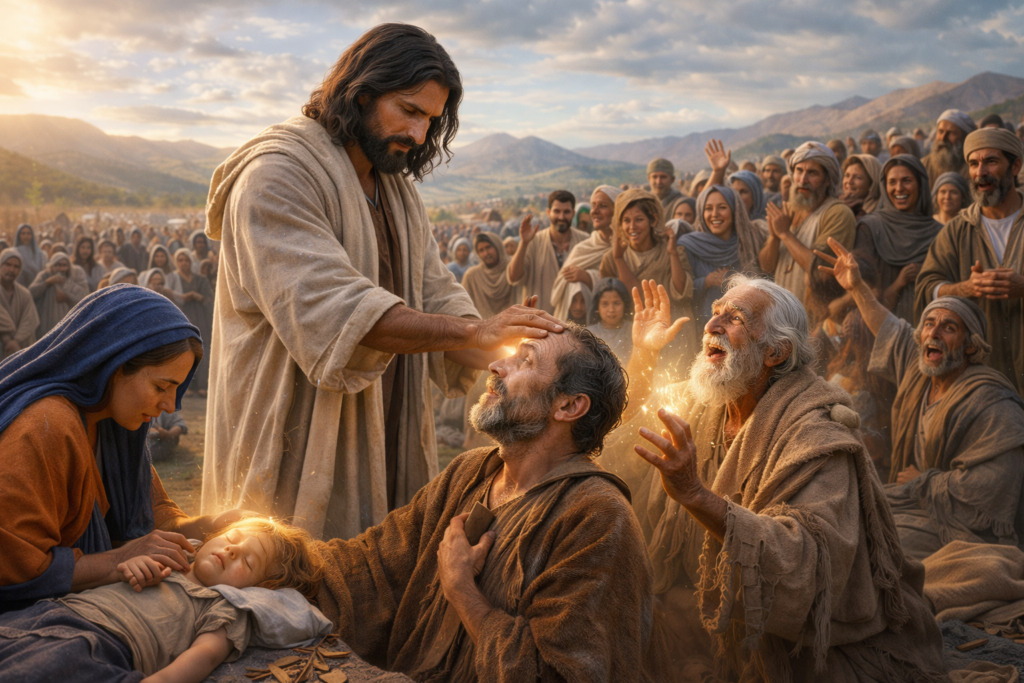
Notice the language of work in John’s Gospel. Yeshua repeatedly speaks of the “works” the Father has given Him to accomplish (John 5:36; 17:4). Though the Greek term differs from Hebrew melachah, the echo is unmistakable. The Son carries out the Father’s work of restoring and reordering creation. His miracles are acts of construction—rebuilding human beings into sacred space for the indwelling of the Holy Spirit. Sight is restored. Flesh is healed. Chaos is rebuked. Bread multiplies in the wilderness. The waters obey. Each sign reveals the Craftsman at work, shaping lives into places fit for divine presence and worship.

Bezalel was filled with the Spirit to construct sacred space. Jesus is anointed by the Spirit at His baptism and begins His ministry of holy work. Wisdom, understanding, and knowledge characterize the Spirit’s activity in Exodus 31. In the Gospels, the crowds marvel at Jesus’ wisdom, and the Spirit descends upon Him. The pattern continues—but now at a cosmic scale.

In Genesis, God finishes His work and rests. In Exodus, the tabernacle work is completed and the glory fills the tent. In John 19:30, Jesus declares, “It is finished.” The Greek tetelestai carries the weight of completion. The work entrusted to Him has reached its appointed end. The mortal body—the true tabernacle—is offered. The veil will soon be torn, opened for access.

If Sabbath in Genesis signified completion, and Sabbath in Exodus marked covenant fulfillment, then the death and resurrection of Jesus announce the completion of the greater pattern. Hebrews 4 speaks of a “rest that remains” for the people of God, tying that rest back to creation and forward to Christ. The new creation emerges from resurrection morning. The Craftsman has finished His work.

The Work of the Living Tabernacle is Finished

The pattern of work and rest does not end with crucifixion; it culminates in resurrection and ascension—divine enthronement once more. The rest of God becomes the rest of Messiah. The tabernacle of flesh gives way to the indwelling Spirit. The Gospels present Jesus as the living tabernacle who performs the Father’s work and declares its completion. Creation, tabernacle, and Messiah form a single theological arc.

Work, melachah, is the building of sacred space so that God may dwell. Rest—Shabbat is the sign that what was intended has been brought to fulfillment.

And when He says, “It is finished,” we are hearing the Craftsman announce that the true dwelling place of God among humanity has been established. The greater Bezalel has finished His work. God’s glory will fill the house.

creation tabernacle
Skip to content