Tag: beloved son

Joseph

When the Sun, Moon, and Stars Bowed

Joseph’s Dream and the Pattern of the Beloved Son

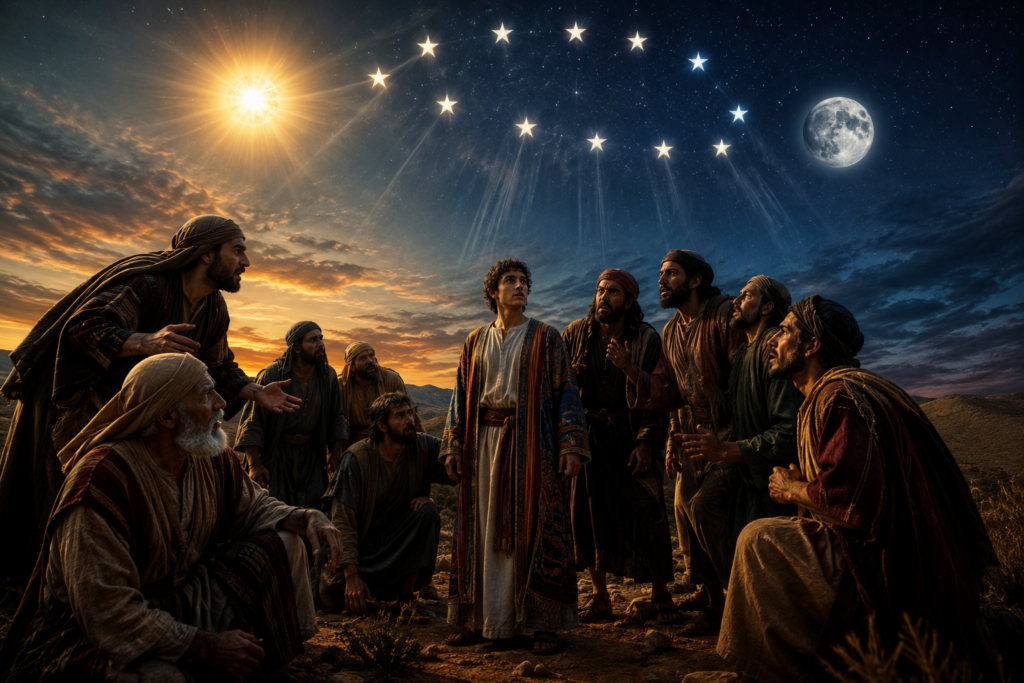
Joseph’s dream has long been read as a story of family rivalry. The sun, moon, and eleven stars bow before him, provoking jealousy and anger among his brothers. Jacob himself questions whether Joseph expects his father and mother to bow before him. Yet the dream announces something far greater than family authority. It introduces one of Scripture’s most enduring patterns: the beloved son who descends into suffering before being exalted to rule.

It begins with Isaac, the beloved son through whom the covenant continues. It is developed in Joseph, echoed in Moses and Joshua, and reaches its fulfillment in Yeshua. Throughout Scripture, God repeatedly chooses a royal heir whose path to authority leads first through rejection, humiliation, and apparent defeat.

Modern readers often miss another dimension of Joseph’s dream because we no longer live in the world of the ancient Near East. In Egypt, Mesopotamia, and later Rome, the sun, moon, and stars were not merely heavenly bodies. They formed the political language of empire. Kings associated themselves with the sun. Queens and royal households were linked with the moon. The stars represented princes, rulers, and members of the royal court. Joseph’s dream unfolds within that symbolic world.

When God commands Abraham, “Take your son, your only son, whom you love—Isaac,” most readers hear only the language of parental affection. Ancient audiences heard something more. Throughout Egypt and Mesopotamia, kings described the heir to their throne as the “beloved son,” the one chosen to inherit the dynasty and continue the royal line.

Genesis draws upon that same royal language

Isaac is not simply Abraham’s cherished child; he is the covenant heir through whom God’s kingdom purposes will continue.

The same pattern appears when Joseph is introduced. Genesis opens the story with, “These are the generations (toldot) of Jacob,” yet the narrative immediately turns to Joseph. Although Jacob has twelve sons, Joseph becomes the focus through whom the covenant story moves forward. In Genesis, the toldot formula consistently signals how God’s redemptive purposes advance. Joseph is presented as the beloved son, clothed with the ketonet passim, the long sleeved robe—a distinctive garment that marks his unique status within the family.

Then comes the dream.

Joseph dreams that the sun, moon, and eleven stars bow before him. Traditionally, the symbols are identified with Jacob, Rachel, and Joseph’s brothers. That interpretation is certainly correct, but it is not complete.

In the world of Egypt and Mesopotamia, the same heavenly bodies carried royal meaning. The sun symbolized supreme authority. The moon represented the royal household and its stability. The stars portrayed princes and rulers who surrounded the throne. Joseph’s dream therefore speaks the symbolic language of kingship.

His brothers immediately understand its implications. Their response is not simply wounded pride but more likely political outrage.

“Are you indeed going to reign over us?”

They recognize the dream as a claim to royal authority.

And they are right.

God is revealing the destiny of the beloved son. Joseph will one day stand at the right hand of Pharaoh himself, exercising authority that preserves the covenant family during famine. The dream announces not personal ambition but divine appointment.

Yet Joseph does not move from dream to throne in a single step. Before the beloved son is exalted, he must first descend.

Ancient Near Eastern royal ideology often reflected this same pattern. Before a king received the symbols of authority, he first passed through ritual humiliation. Royal garments were removed, insignia stripped away, and only afterward was he clothed anew and invested with the signs of kingship. Humiliation preceded exaltation.

Joseph’s life embodies that royal pattern. His distinctive robe is stripped from him. He is cast into a pit, sold into slavery, carried into Egypt, falsely accused, and confined to prison. Only after this long descent is he summoned before Pharaoh, clothed in fine linen, given the royal signet ring, and elevated to rule over the land.

Joseph’s dream was never merely about one young man rising to power in Egypt. From the beginning, it pointed beyond Joseph himself. The beloved son would be rejected before he was exalted. He would descend before he ascended. Through his suffering, God would preserve His people and advance His kingdom.

That pattern reaches its fulfillment in Yeshua.

The pit gives way to the tomb, the prison to the grave, and the throne of Pharaoh to the throne of heaven itself. What began with eleven stars bowing before Joseph ends with every ruler, every authority, and every power acknowledging the Beloved Son.

Joseph saw the pattern in a dream. The Beloved Son now reigns from the throne of heaven, and one day every ruler, every kingdom, and every power will bow before Him.

The Beloved Son is not simply a pattern we should find fascinating; He is the King we are called to follow. From Joseph to Yeshua, Scripture tells the same story. The pit gives way to the palace. The prison gives way to the throne. God brings His purposes to completion in His own time, and no earthly power can prevent what He has determined to accomplish.
Joseph
Joseph's dream

Joseph’s Dream, the Beloved Son and the Final Exaltation

The pattern of the beloved son is often portrayed in Scripture. He is the chosen heir whose path begins with suffering before it ultimately ascends to authority and nobility. That pattern shows up first with Isaac, intensifies with Joseph, echoes through Moses and Joshua, and reaches its climax in Yeshua. What modern readers often miss is that all of this unfolds inside a world shaped by empire, where sun, moon, and stars were not just orbs in the sky but symbols of kingship, hierarchy, and cosmic order. All this is reflected in Joseph’s dream.

Your Only Son, Whom You Love: The Kingship Formula

When God tells Abraham, “Take your son, your only son, whom you love—Isaac” (Gen 22:2), we generally approach this as parental emotion. But in the ancient Near Eastern world, people also heard royal succession language. Kings across Mesopotamia and Egypt used phrases like “my beloved son” or “my only son” to identify and adopt their chosen heir—the one who would carry on the dynasty and inherit the throne.

Genesis taps into some of that same vocabulary. Isaac is the covenant heir, the one through whom the royal seed will continue. This also appears at the beginning of Joseph’s story. Genesis 37 opens with, “These are the toldot of Jacob—Joseph.” Not the genealogy of the family, just Joseph. In Genesis, toldot marks how the covenant story moves forward. Jacob has twelve sons, yet only Joseph is named as his toldot. In the world of the Bible, that functions much like a public announcement of heirship.

Everything in Joseph’s introduction reinforces that status. He is the beloved son. He receives the ketonet passim, a special tunic that signals his elevated position. And then comes Joseph’s dream.

Joseph’s Dream: Family Drama or Throne Vision?

Joseph’s dream consists of the sun, moon, and eleven stars bowing down to him. We normally tie that to the family: Jacob as sun, Rachel as moon, the eleven brothers as the stars. But in Joseph’s world—Egypt, Mesopotamia, and later Rome—sun, moon, and stars were the shared symbolic language of kingship.

  • The sun embodied supreme royal authority: Ra in Egypt, Shamash in Mesopotamia, later Sol Invictus in Rome.
  • The moon represented feminine order and royal household—queen, mother, stability, the rhythm of time and fertility.
  • The stars were princes, nobles, members of the divine council and royal court.

Joseph’s dream is that kind of language. His family likely understands it and so they object to his future kingship. “Will you really reign over us?” they ask. In other words: “Are you claiming the throne?” The brothers are fuming.

And he is claiming the throne. God is revealing his royal calling in Joseph’s dream. He will eventually rise to stand at the right hand of Egypt’s sun-king, Pharaoh. The dream is a throne vision, announcing that the beloved son will be lifted into extraordinary authority—not for personal glory, but to preserve and protect the life of Yahweh’s covenant people.

Descent Before Ascent: The Royal Road of Suffering

In the ancient world, the chosen heir often followed a pattern: descent before ascent. Joseph’s story traces that path in detail. The beloved son is stripped of his robe, thrown into a pit, sold for silver, carried off into Egypt, falsely accused, and finally imprisoned. Only from that depth does he rise—interpreting Pharoah’s dreams, being exalted to viceroy, given Pharaoh’s signet and a new name. The rejected brother becomes the savior of the very family who betrayed him.

Joseph is not an exception; he is a template. His life sets the framework for how God confronts empire and rescues His people:

  1. The beloved son is chosen and marked for royalty.
  2. He is rejected by his brothers and handed over to foreign power.
  3. He descends into humiliation and apparent defeat.
  4. God vindicates him by raising him to rule.
  5. Through his exaltation, many are preserved and delivered from the clutches of empire.

Joseph helps bring Israel down to Egypt, where they survive famine but enter exile. His descent becomes the reason Moses must later rise. Joseph’s success sets up the next conflict with Pharaoh, the new “sun-king,” who will not let God’s people go to worship Him.

From Joseph to Moses to Yeshua: Empire as the Stage

Joseph’s dream points to his rise in Egypt and forms the architectural blueprint for the rest of Scripture’s drama: God vs. empire. Joseph descends into Egypt and rules under Pharaoh, preserving life. Moses confronts Pharaoh then leads Israel out of Egypt. But a greater Joseph and a greater Moses will ultimately be needed to deliver God’s people once and for all.

By the first century, Rome has become Egypt reborn: divine emperors, cosmic imagery, military domination, humiliation as public policy. Jewish writers routinely compare Rome to Egypt and Babylon. Caesars are the new Pharaohs; the Roman empire is the new house of bondage.

Into this world, Yeshua steps onto the stage. At His baptism, the heavens open and a voice declares, “This is My beloved Son, in whom I am well pleased.” The kingship formula of Genesis 22 and 37, the royal language of Psalm 2, the pattern of the chosen heir are revisited. Yeshua is the Beloved Son—the true royal heir.

Like Joseph, He is rejected by His brothers and sold for silver. Like Moses, He survives a murderous king as an infant and later confronts the empire’s god-like representative. Like both, He is handed over to foreign power and humiliated. But His resurrection and ascension break the pattern wide open on a cosmic scale. He doesn’t rise to sit beside Caesar. He rises to sit at the right hand of God, far above every ruler and authority.

Revelation 12: Joseph’s Dream Goes Cosmic

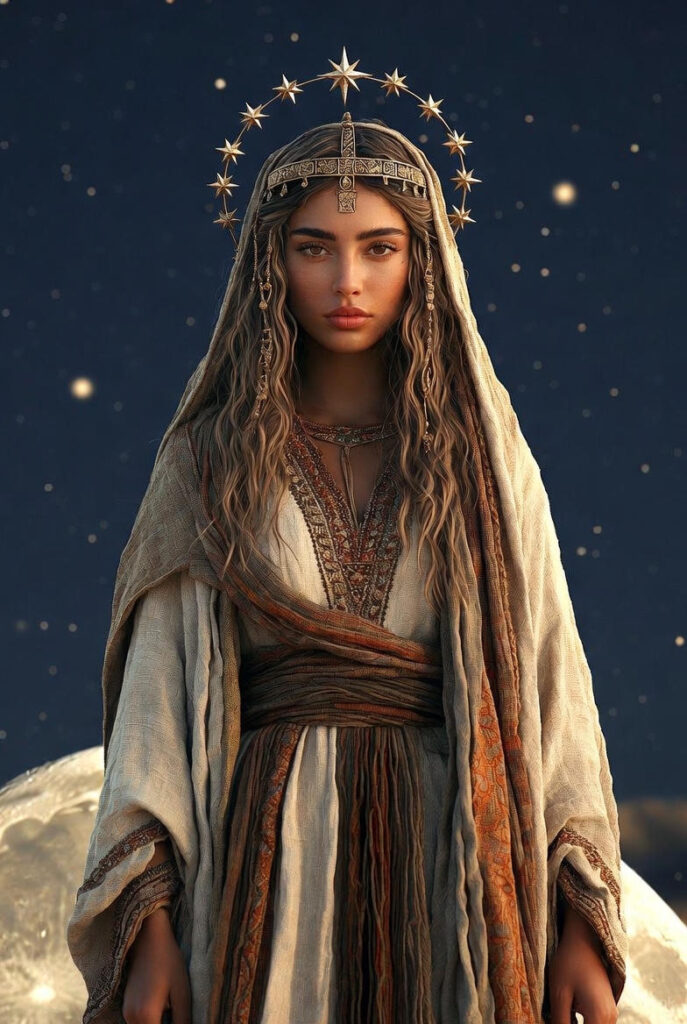
The Book of Revelation pulls this biblical patterning together into an apocalyptic vision. In Revelation 12 we see: A woman clothed with the sun, with the moon under her feet, and on her head a crown of twelve stars.

This is Genesis 37 rewritten for this later generation. The woman is Israel—the covenant people. The twelve stars echo the tribes, the brothers, the royal family. The sun and moon again signal kingship and covenant order. Joseph’s dream has expanded from one favored son to the entire people of God. A kingdom of priests and a holy nation.

The woman gives birth to a male child “who is to rule all nations with a rod of iron.” This is Yeshua, the Beloved Son, now clearly identified as the messianic king. The dragon—the ancient serpent, once Pharaoh now Caesar—appears in his demonic fullness ready to devour the seed. That is what every empire has tried to do: crush the seed, extinguish the heir, erase the beloved son of Yahweh.

But the child is “caught up to God and to His throne.” Ascension language. The throne vision given to Joseph reaches its climax. The Beloved Son does not simply become second to Pharaoh; He takes His seat at the center of the universe. The sun, moon, and stars serve as His inferiors, not as His rivals.

The woman flees into the wilderness—a new Exodus. The dragon goes off to make war on “the rest of her offspring”—those who keep God’s commandments and hold fast to Yeshua. Revelation shows us that the Joseph pattern has been enlarged. The beloved Son still suffers under empire, still rises to rule, and still preserves a people—only now the scale is cosmic, and the people include every tribe, tongue, and nation.

One Pattern, One Story, One King

Joseph’s dream, ancient imperial symbolism, and Revelation’s vision all fit together.

  • The beloved son is the royal heir.
  • He is rejected and handed over to empire.
  • He descends into suffering—pit, prison, cross, tomb.
  • God vindicates Him, raising Him to true kingship.
  • Through His exaltation, God’s people are preserved, delivered, and brought toward rest.

Though Joseph’s dream had originally resulted in family jealousy and brotherly anger. It was now a much bigger reality: the day when all sun, moon, and stars—every ruler, every power, every system—would bow before the Beloved Son, Yeshua the Messiah Son of the Living God.

Joseph's dream
Skip to content