
When Patterns Converge
Preparedness, the fragility of our institutions, and the urgent need to rebuild community
I have spent much of my life studying biblical patterns, and I’ve always been fascinated by the symmetry of nature. Individual events take on greater meaning when we recognize how they relate to one another and to the larger story unfolding around them. Patterns invite us to look beyond isolated incidents and ask whether something more significant is taking shape.
That approach informs how I view the world today.
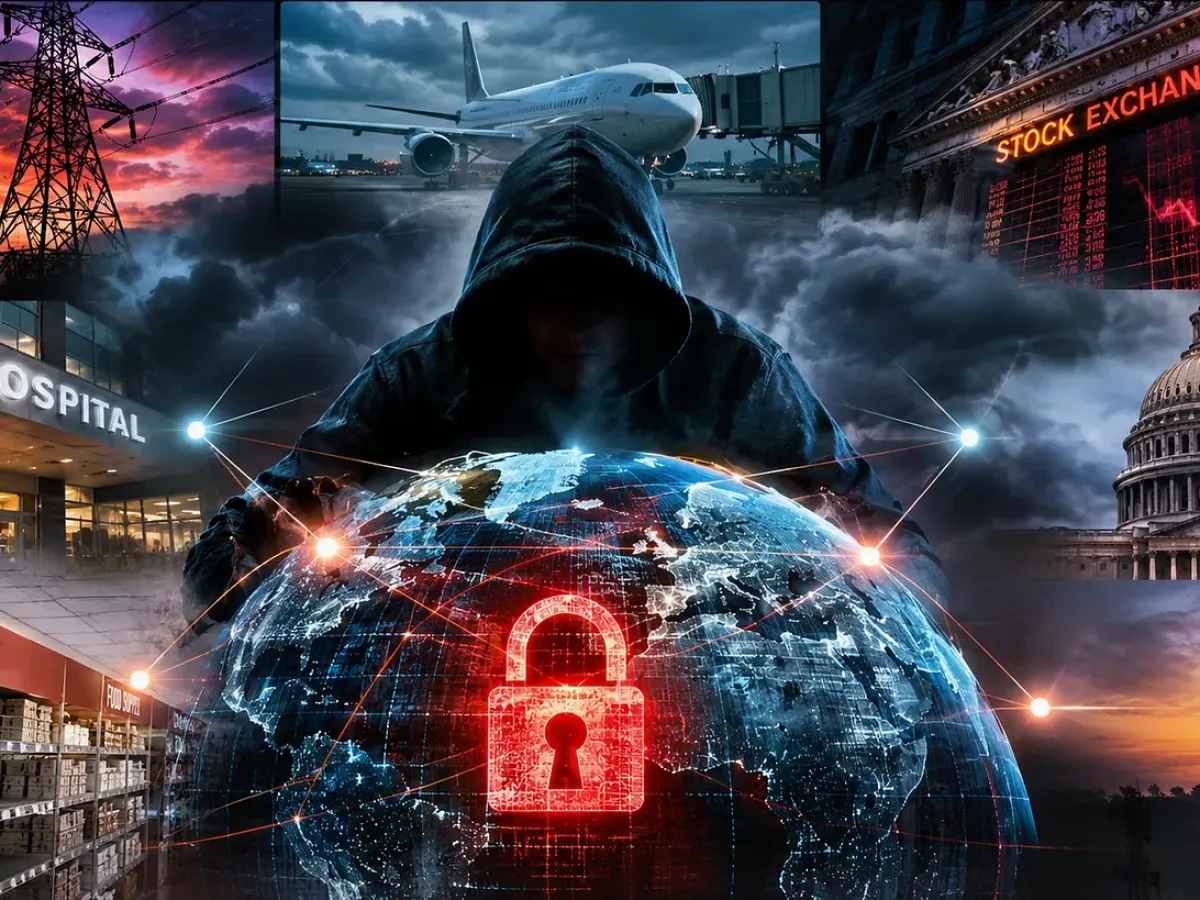
Something is shifting. No doubt about it. I cannot tell you precisely what it is or where it will lead. But when technological failures, geopolitical tensions, economic instability, government warnings, and growing public distrust begin converging, I believe we would be foolish to ignore them in the hope they will go away.
Recently, we have seen a spate of reported disruptions involving Microsoft, aviation communications, banking systems, internet providers, major media organizations, and other essential services. Ed Dowd recently examined this clustering of events, questioning whether we are witnessing unrelated technical failures or indications of deeper vulnerabilities. General Michael Flynn has raised similar concerns about possible cyberattacks and the preparedness of our national security institutions.
Are these incidents connected? Are adversaries probing our infrastructure? Are we witnessing the consequences of aging systems, human error, or something more deliberate?
I don’t know. I’m not smart enough to know. But the patterns deserve examination.
Add to this escalating tensions between nations, the possibility of wider military conflict, and growing uncertainty surrounding the global economy. None of this establishes that catastrophe is imminent, but it reveals how vulnerable our modern civilization has become.
We live in a “just-in-time” supply chain world, a frightening prospect when those chains are interrupted. Electricity, communications, banking, transportation, food distribution, and medical services depend upon one another. Disrupt one essential system, and the consequences spread quickly. Most people are simply not ready.
Our technological sophistication has far outpaced our capacity to function without it.
The Pattern of Institutional Distrust
There is another element in this convergence that I cannot ignore: the continuing erosion of confidence in our institutions.
I have serious concerns about the integrity of our elections, particularly the recent election. I remain convinced that it was stolen. The anomalies being discussed, including allegations concerning electronic tabulators, unusual voting patterns, and possible algorithmic manipulation of vote totals, raise questions that I believe deserve rigorous, independent investigation.
You can disagree, but the patterns speak otherwise to me. I am not prepared to dismiss questions about election integrity merely because they are politically inconvenient.
For me, this belongs within the larger pattern of declining trust in institutions that exercise enormous power over our lives.
We are repeatedly asked to trust government agencies, intelligence organizations, financial institutions, and technological systems while having limited ability to examine their operations or hold decision-makers accountable.
That loss of trust is itself a serious national problem, particularly when the systems supporting daily life are simultaneously demonstrating their fragility.
Pattern recognition requires discernment, not the assumption that every coincidence proves coordination. But neither should we become so fearful of asking uncomfortable questions that we cease examining what is happening around us.
Preparedness Is Not Fearmongering
Where we live in rural New Mexico, power outages are a fact of life. Our local electric co-op seems to be constantly dealing with aging equipment. Sometimes the electricity is off for more than a day. During winter, when temperatures fall well below freezing, an extended outage can become serious. That’s why we installed a wood-burning stove.
Over the years, my husband and I have invested in our infrastructure, acquired additional supplies, and considered how we would function without the conveniences we take for granted.
And when the power has gone out, we have been fine.
Experience has taught us that preparedness reduces anxiety because many decisions have already been made. We don’t have to worry about how long the power will be out. There is nothing extreme about having additional food and water, alternative sources of heat and light, medical supplies, cash, and a means of receiving information without internet access.
This is common sense. I’ve been sounding this warning for some 20 years. Most people nod and agree, but few have done much to shore up their resources to protect family and friends.
Proverbs 22:3 reminds us that the prudent person sees danger and takes refuge, while the simple continue on and suffer the consequences.
Every family should ask some basic questions. What happens if electricity is unavailable for days or weeks? What if electronic payments fail, grocery deliveries stop, or communication networks become unreliable? We do not need to predict a catastrophe to prepare for disruption. But preparedness involves something far more important than storing supplies.
We need to recover the meaning of community.
We Cannot Do This Alone
One of the most troubling developments in American society is the erosion of genuine community.
Political loyalties, theological disagreements, cultural differences, and personal grievances have divided us into increasingly isolated groups. I think it has all been done on purpose. We surround ourselves with people who think as we do and have little patience for those who don’t.
If serious disruptions occur, the people who matter most are likely to be the neighbors down the road, families in our congregations, and those we have barely taken the time to know.
Some may hold beliefs we strongly oppose. We had better learn how to work together anyway.
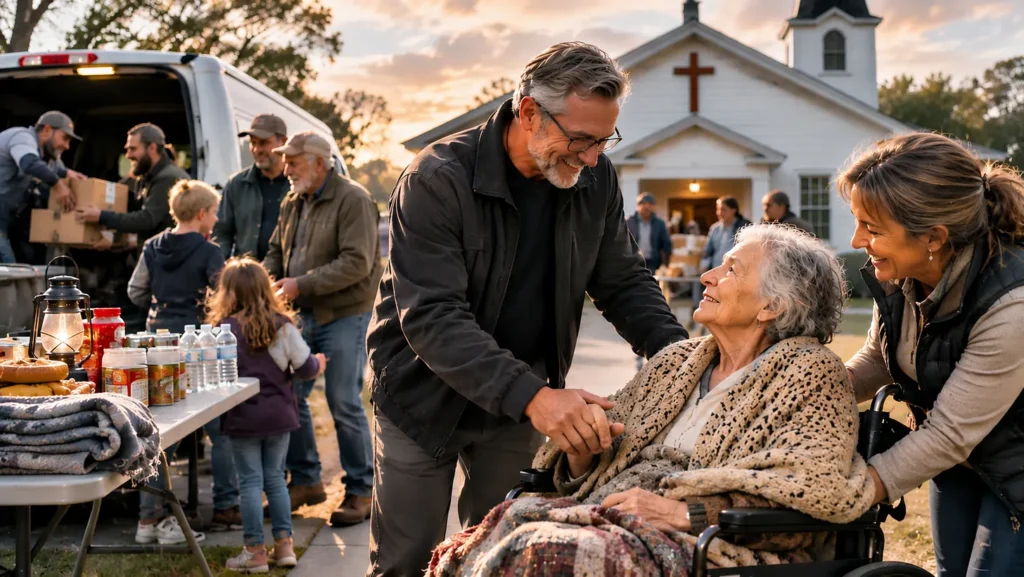
This is no time to retreat into our pet doctrines, political identities, or personal disagreements. We do not have to abandon our convictions to cooperate with people whose perspectives differ from our own. A neighbor without heat does not need a theological debate. An elderly person without food does not need to be questioned about political affiliation.
They need our help.
Do we know who lives alone in our communities? Who depends upon electrically powered medical equipment? Which families are struggling financially? Who has resources to assist others?
These relationships cannot be manufactured overnight when an emergency arrives. They must be cultivated now.
Where Are the Shepherds?
I have become increasingly disturbed by the failure of many faith leaders to demonstrate genuine courage and leadership.
Too many seem more concerned with preserving their institutions, protecting their reputations, and avoiding controversy than strengthening the communities entrusted to their care.
Biblical shepherding demands considerably more than preaching sermons and organizing religious activities.
Ezekiel 34 delivers a devastating indictment against shepherds who cared for themselves while neglecting the weak, the sick, the injured, and those who had wandered away.
Where are the shepherds who know the condition of their people?
Faith leaders should be gathering their communities, encouraging practical preparedness, identifying vulnerable households, establishing emergency communication, and bringing people together in prayer.
They should be helping congregations find common ground rather than reinforcing divisions. And their concern must extend beyond their own membership. They should not be afraid to speak the truth even when it’s unpopular.
Yeshua’s parable of the Good Samaritan confronts our tendency to place religious and cultural boundaries around compassion. The Samaritan did not demand agreement before assisting the wounded man. He recognized a human being in need and accepted responsibility.
That is the kind of leadership we desperately need.
They say courage is contagious. Now is the time for bold and courageous leadership.
A Nation Worth Saving
I believe our country is worth saving. But restoring a nation involves far more than winning elections or defending political parties.
As believers, our ultimate calling is not to politics. It is to righteousness, justice, mercy, and faithfulness.
The biblical prophets repeatedly measured Israel’s spiritual condition by its treatment of the widow, the orphan, the stranger, the vulnerable, and the poor.
Every public policy should be evaluated in light of its consequences for these people. What happens to the elderly, the disabled, struggling families, and children who will inherit today’s decisions? We have been called to intercede on behalf of others, not merely defend our own interests.
A nation cannot be made strong through political victories while its communities remain fractured and its most vulnerable citizens are neglected. Nor can religious institutions claim spiritual authority while failing to demonstrate the compassion and courage demanded by Scripture.
We need leaders who understand that authority carries responsibility, truth requires courage, and genuine strength is expressed through service. And making hard decisions when no one else agrees.
The Lord Is Sovereign
I do not know what is coming. Perhaps geopolitical tensions will ease and the economic outlook will improve.
I certainly hope so. Not merely for my own comfort, but so those who are hurting and struggling financially can prosper and thrive.
The Lord is sovereign. He is not surprised by the condition of the nations or unaware of the forces shaping our world.
That confidence should produce neither complacency nor fear.
Joseph prepared Egypt for famine. Nehemiah organized the rebuilding of Jerusalem while remaining alert to threats. The early believers shared their resources so those in need would not be abandoned.
In each case, faith was expressed through practical responsibility.
We cannot control governments, financial markets, or the electrical grid. But we can prepare our households, strengthen our communities, rebuild relationships, and care for those who cannot care for themselves.
Some families cannot afford emergency supplies. Some elderly people cannot carry water or maintain alternative heating systems. Some live so close to the edge that even a brief disruption could be devastating.
Our preparations are incomplete if they protect only ourselves.
I keep returning to the patterns unfolding around us. I do not claim to understand their ultimate significance. But I believe they call us to pay attention, exercise discernment, and take responsibility for the people God has placed in our lives.
The question is not simply whether we are prepared to survive a crisis. It is whether we have become the kind of community that will refuse to abandon one another when the crisis comes.
And remember that our hope rests not in the permanence of human institutions, but in the faithfulness of the Lord.
Leave a Reply