

Reading Daniel’s Cosmic Language in Its Ancient World Setting
Cosmic Lights and Fallen Kings
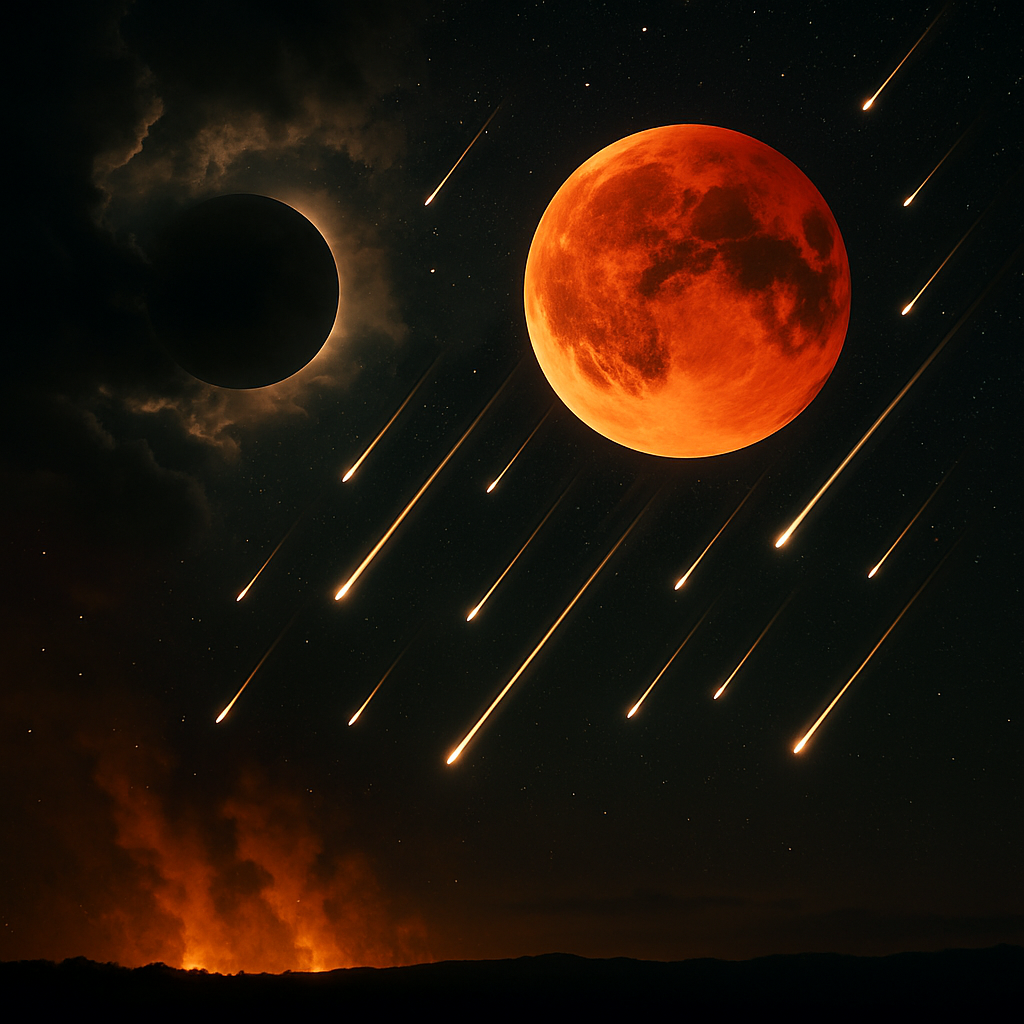
When Scripture speaks of the sun darkening, the moon turning to blood, stars falling, and the powers of heaven shaking, our modern sensibilities picture complete cosmic collapse. But Daniel, the prophets, and Yeshua’s disciples would not have heard such astronomical disaster. Instead, in the ancient imagination, heaven was the political sphere for kingship. Sun, moon, and stars symbolized thrones, rulers, and gods. Their dimming meant rulers falling, kingdoms collapsing, and idols being dethroned.
The rhythms of life—planting, growing, and harvesting cycles were all evidence of divine order. When those cosmic rhythms were shaken, it suggested something amiss in the political realm. When the prophets spoke of lights failing, they weren’t warning of eclipses necessarily. They were declaring that human systems were crumbling under the weight of their own corruption.
Babylon’s kings took on starlike identities, tying their glory to the patterns in the skies. Nebuchadnezzar himself is the image of a fallen star in Isaiah 14: exalted, then humiliated. This is Daniel’s cosmic language—heaven shaking because thrones are shaking, dominions are failing because tyrants are failing.
Daniel’s Visions and the Fall of Empire
Daniel’s life unfolded in Babylon, the empire that razed the temple and hijacked temple vessels for its own purposes. In his visions, the shaking of heaven means the shaking of empire itself. The gods of Babylon, linked to lights in the sky, seemed triumphant when Jerusalem fell. But Daniel saw differently: the heavens would tremble, for Yahweh’s kingdom cannot be overthrown. His cosmic kingdom will endure forever. This language unmasks the fragility of every empire boasting eternal dominion.
The Son of Man Enthroned in Glory
Into that cosmic drama rises Daniel’s mysterious figure: the Son of Man. In Daniel 7, He comes “with the clouds of heaven” to the Ancient of Days. Modern readers hear second coming language. But Daniel saw it in terms of enthronement.
In Israel’s world, clouds belonged to Sinai and ascents to holy ground: Moses climbs into a cloud to encounter Yahweh. So, the Son of Man ascends in clouds to the throne room, receiving kingdom, dominion, and everlasting authority. Greek uses the word parousia to describe the royal arrival of kings. This is Daniel’s vision: the regal arrival of One like the Son of Man at His enthronement.
The apostles declared that this took place through resurrection and ascension. His rising is victory over the enemy that is death; His ascension is coronation. What Daniel foresaw in symbols, the Gospels proclaim through a visible manifestation.
Heralds, Kingdom, and the Gathering of the Loyal
Daniel’s vision continues with the nations mourning and the angels gathering the elect. When kings fell, entire tribes lamented; their security and identity died with the throne. Yet the Bible reshapes this lament: the fall of tyrants is the dawn of hope for the nations. The heavens shake because the true throne stands.
Then come the messengers. Angels are dispatched for proclamation. They are heralds, announcing victory and summoning the faithful to gather around the enthroned King. Ancient kings sent envoys ahead to declare triumph and assemble subjects for procession. Daniel’s imagery draws from the same ritual.
The biblical story reveals: Sinai formed a covenant assembly at the mountain. Zechariah foresaw Yahweh standing in triumph upon the Mount of Olives. Yeshua ascended from that same mountain with the promise of return. Heaven and earth meet in the King’s enthronement.
And beneath that vision is another pattern: whenever God moves to establish His reign, chaos rises to resist. The serpent in Eden. Pharaoh in Egypt. Amalek in the wilderness. Satan in the desert. Yet the pattern always ends the same: the King defeats the adversary and rest and enthronement follow.
Daniel’s cosmic language does not forecast the end of the universe. It announces the end of every rival throne. The heavens shake because the Son of Man has taken His seat. His kingdom is the one that advances.
Leave a Reply