

Amazons, Artemis, and Ephesus: The World Paul Entered
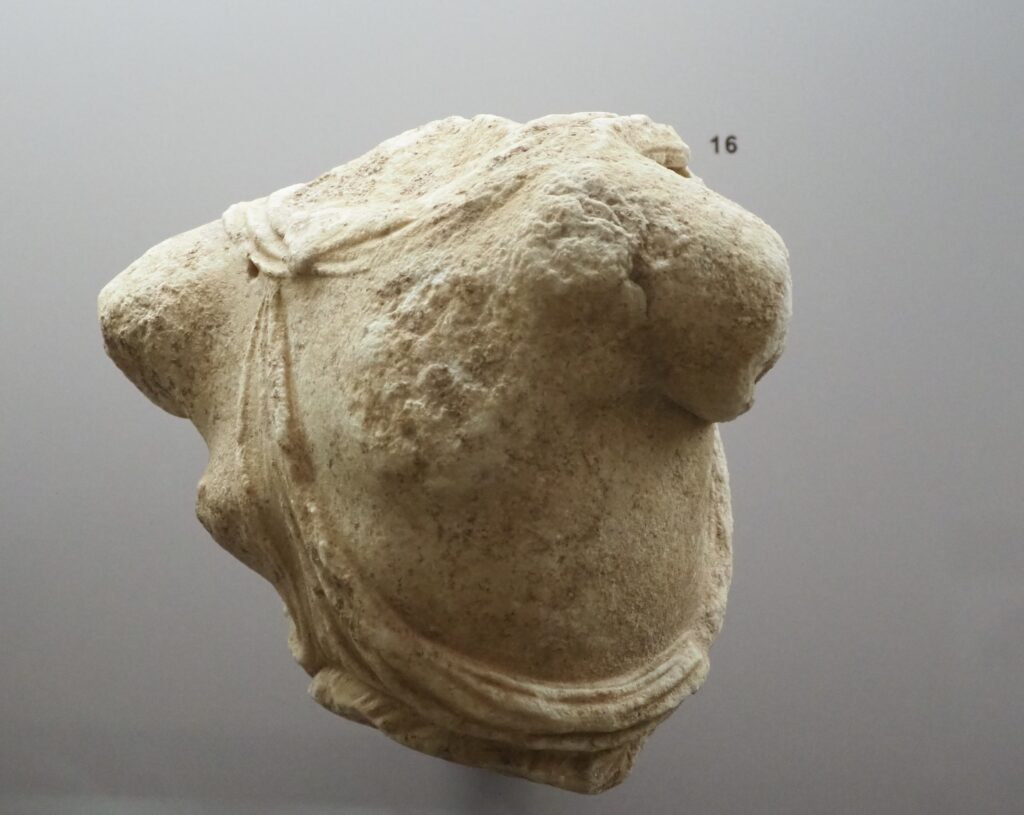
Walking through the museums of Greece was a journey into the ancient world. An ancient world of stone at every turn. Standing in the Acropolis Museum and seeing the remnants of Athena towering over the city. Marveling over the Parthenon friezes. And I noticed something else —carved into marble, painted onto pottery, frozen mid-combat, central to the imagination of the ancient Mediterranean world were the Amazons who settled in Ephesus at one point.
The Amazons were remembered as warrior women from the edges of the known world. Greek writers placed them in Anatolia, around the Black Sea, beyond the boundaries of the polis. Some traditions even said they migrated into parts of Asia Minor and were connected to early Ephesus.
Combat in Stone: How the Ancient World Secured Order
In Greek art, they usually appear in scenes called Amazonomachy — literally, “the battle against the Amazons.” You see it on temple friezes, especially in Athens. The story is consistent: Greek heroes defeat Amazon warriors. Civilization wins. Order pushes back. But the Amazons were only one part of a larger pattern. Everywhere in Greece you also find Gigantomachy — battles between the Olympian gods and the Giants. The Giants rise up from the earth in rebellion. Zeus crushes them. Divine order is secured.
What struck me walking through those museums was how pervasive this combat imagination was. It wasn’t just storytelling. It was a worldview. For most of us, religion often feels private, personal or moral — about beliefs or spirituality. For them, religion was about cosmic stability. It answered the question: why does the world hold together? The friezes were their theology in stone. They reminded citizens who had won and why their city was secure.
Ephesus: A City of Myth, Memory, and Civic Power
Paul writes to Timothy in Ephesus. Ephesus was one of the most symbolically charged cities in the ancient world. It was Roman, yes. But it was also Anatolian and Greek, layered with mythic memory and civic pride.
Ancient writers like Strabo preserved stories that Amazons once settled in parts of Anatolia and were connected to Ephesus. The Amazons were not just warriors; they were symbols of contested order — disciplined, powerful women from the east. Ephesus carried that mythic story.
At the center of the city stood the Temple of Artemis — one of the wonders of the ancient world. Artemis of Ephesus was not merely the bow-carrying huntress of Athens. She was a civic deity, guardian of prosperity and identity. Her image, likely adorned with ornamental pendants and jewels rather than literal breasts, symbolized abundance and divine protection. The temple was not only religious. It functioned as a financial center, a bank, a pilgrimage hub, and a major economic engine.
When Rome absorbed Greek culture, Artemis was identified with Diana. But the Ephesian cult retained its Anatolian character. Artemis shaped the city’s self-understanding.
Ephesus did have prominent women. Inscriptions show female benefactors, priestesses, and patrons. Wealthy women could wield influence within religious and social networks. The cult of Artemis gave women visible roles. But Ephesus was not a matriarchy. Civic authority still rested with male magistrates under Roman rule. The city was patriarchal in structure, even if symbolically centered on a goddess.
Paul in a Combat-Shaped Culture
Paul’s first letter to Timothy reads more like pastoral correction. False teaching was spreading. Speculative myths were circulating. Status and wealth were being displayed in ways that disrupted worship. Certain women appear to have been caught up in teaching error or asserting authority without grounding. Paul tells them to learn. He calls for modesty. He restricts certain forms of teaching authority.
So what was he pushing back against? All women for all time? Or something local?
Scholars debate this. Some argue that Artemis worship fostered an environment where women were accustomed to religious prominence, and Paul was correcting excess. What we can say with confidence is the Ephesus was shaped by the cult of Artemis, that women had visible religious roles, that wealthy female patrons likely influenced house churches. False teaching was present. Paul’s response was not a blanket criticism of women everywhere.
Writers like S. M. Baugh argue that Artemis shaped the city’s culture in real ways. Paul’s instructions in 1 Timothy reflect local correction — especially regarding modesty, teaching, and authority — rather than universal condemnation.
Others, like Catherine Kroeger, argued more strongly that Artemis ideology promoted female supremacy and that Paul was countering that worldview directly. But that position remains debatable.
The real issue was never male versus female. It was order versus disorder within a very specific civic-religious environment.
Paul and the early Christians preached in a world saturated with the images of gigantomachy, and Amazonomachy. Temple friezes showed divine warfare. Sacred spaces commemorated mythic victory. Art depicted chaos subdued.
So when Christians proclaimed, “Jesus is Lord,” it was heard in a culture accustomed to enthronement through combat. But the Gospel didn’t reject the combat pattern; it reinterpreted it. The decisive victory is not Zeus hurling lightning. It is a crucified Messiah raised from the dead.
In Ephesus, Artemis towered over the skyline. Her temple defined civic identity. Yet Paul proclaimed that the true temple was not marble but people indwelt by the Holy Spirit. Authority would not be secured through mythic battle but through the cross and resurrection.
The Amazon memory in Ephesian tradition does not mean warrior women were running the city in Timothy’s day. But it does mean the city was shaped by stories in which female figures carried symbolic power within a larger combat worldview. Paul’s instructions must be heard against that layered background: Roman administration, Anatolian myth, Greek combat imagination, and a booming temple economy.
In a culture that secured order through stories of divine dominance, Paul quietly reshaped a community around a crucified King.
Very interesting.
When reading the Bible one does not think of the ancient cultures. We have a western 2026 mind set. Much to learn of back in those days we know little of.
Good work and thank you.
Thanks you. It’s so true and I just keep plugging along to help folks see how important it is to appreciate those ancient cultures.